











“Healthcare construction is a constant balancing act”
Text Tim JanssensImage Louwers Mediagroep
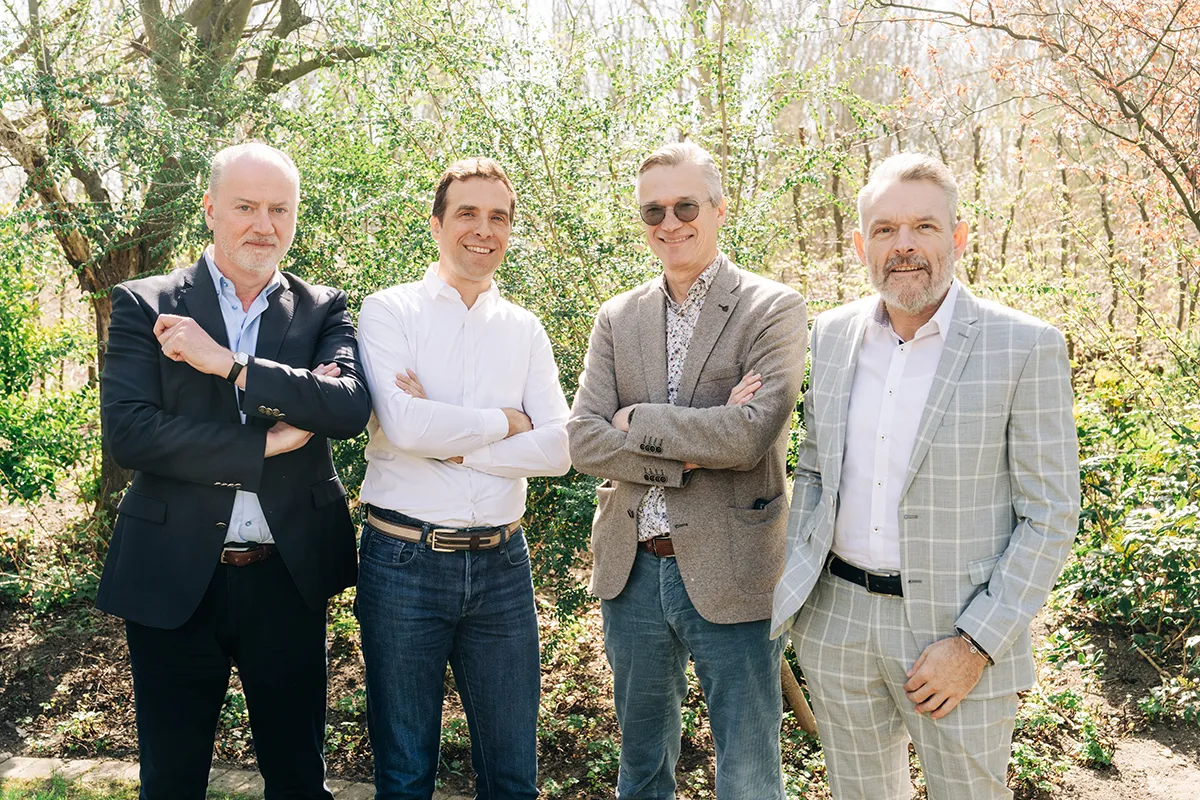
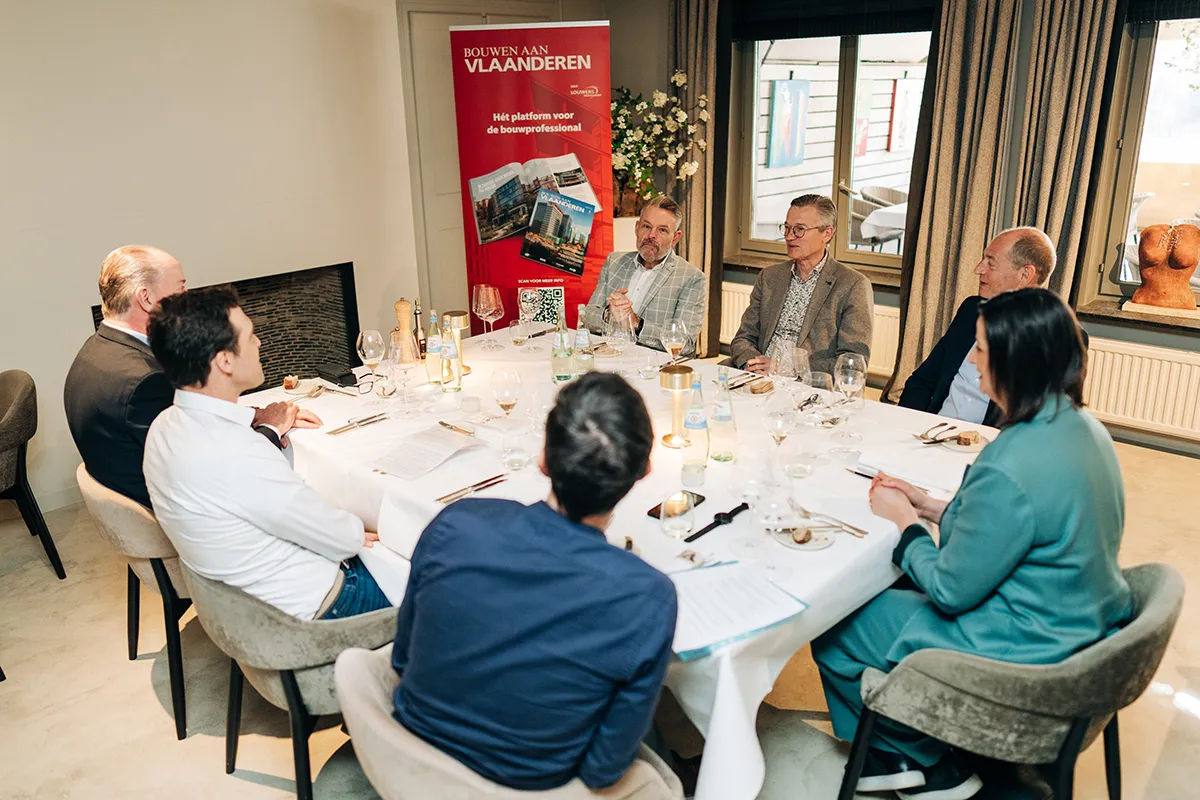
In March 2020, the world came to a brief standstill. The coronavirus pandemic cast its shadow over modern society and shook the foundations of everything we held dear. Five years later, COVID-19 is a virus like any other, but the effects of this unprecedented crisis are still being felt, including in Flanders’ healthcare construction sector. Is our healthcare infrastructure still seriously ill, or is it gradually on the mend? This is a pertinent question that provided the immediate impetus for an insightful round-table discussion with four renowned experts from different fields, each helping to shape the healthcare environment of the future in their own way. “Experience is the new key word.”
Participants
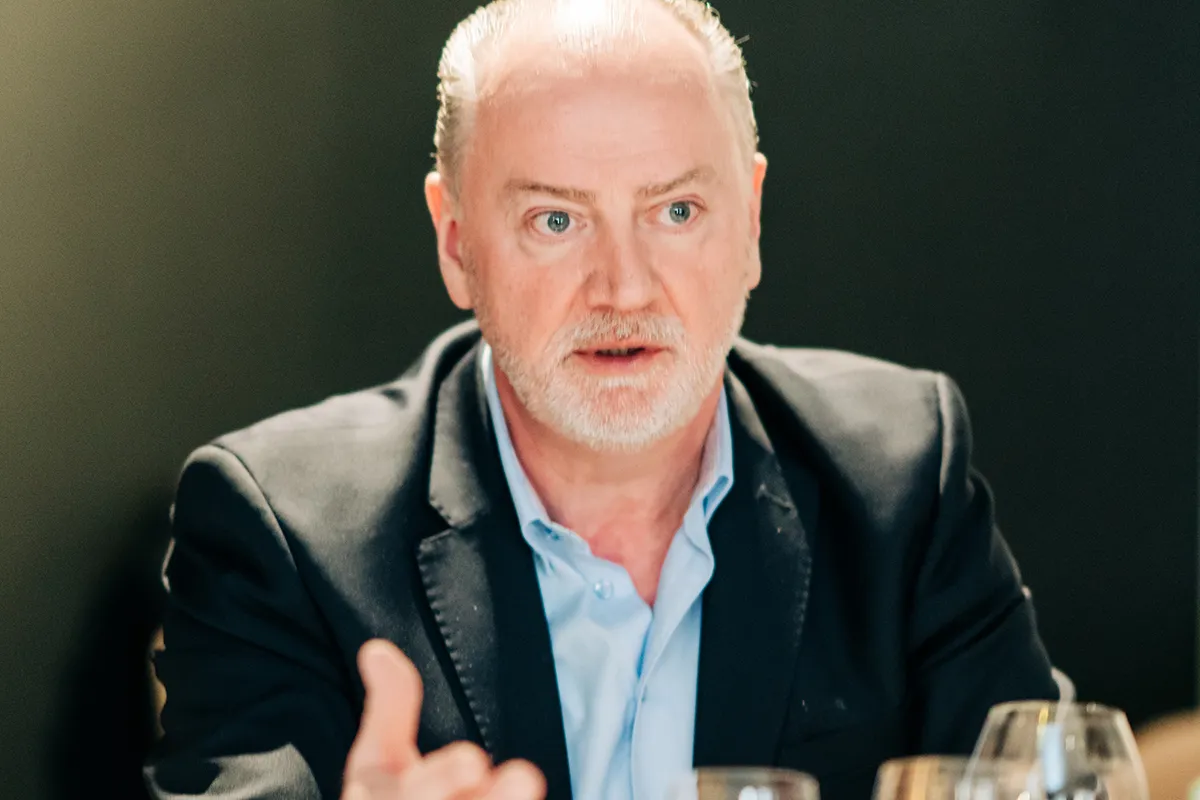
• Stéphane Vermeulen, director Healthcare at VK architects+engineers, part of Sweco
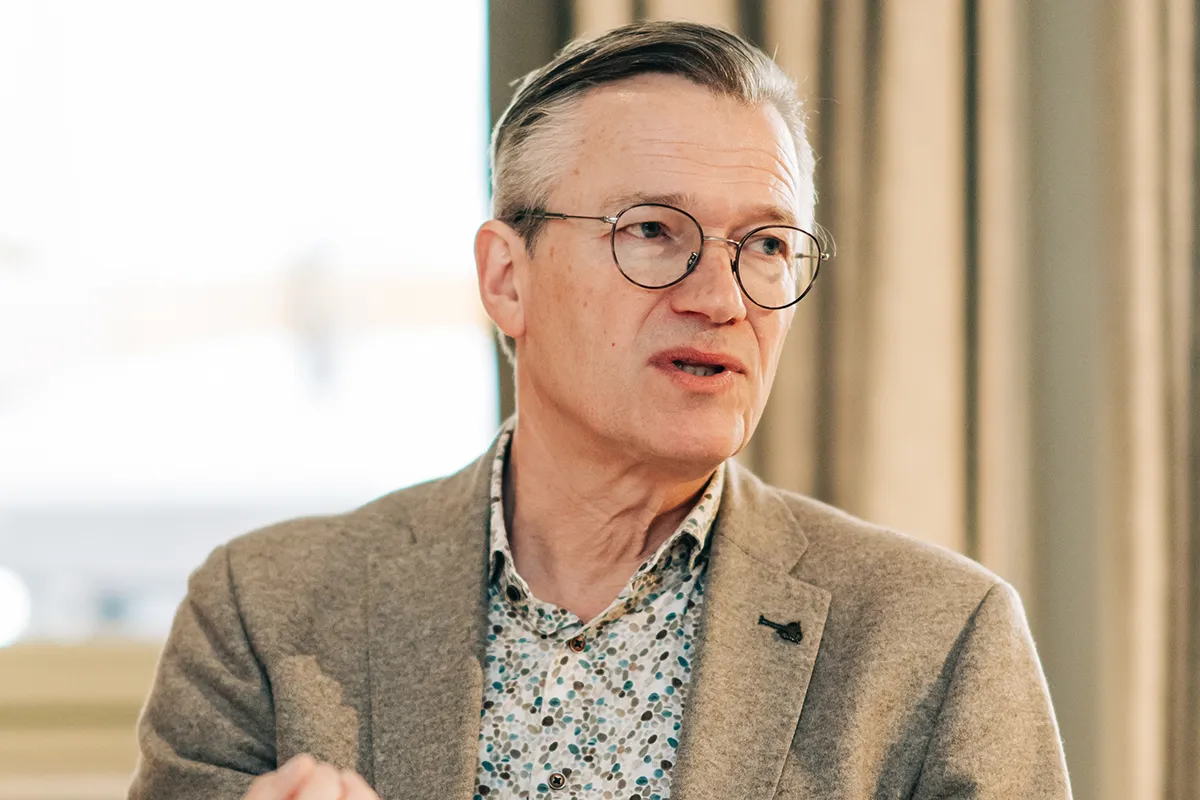
• Tom Mertens, project manager at BOTEC
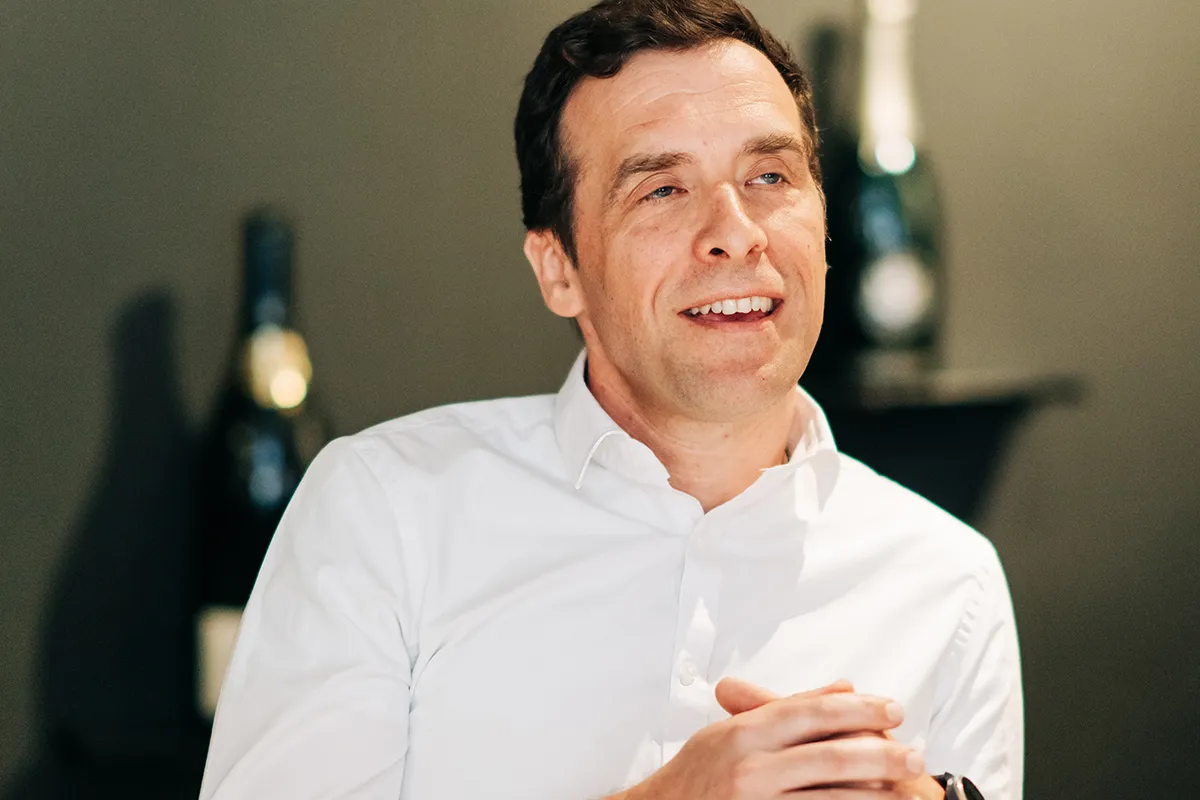
• Koen Lismont, sales manager at VDL De Meeuw
• Frank Desmet, sales director at Delabie Benelux
Gentlemen, let’s get straight to the point. How would you describe the current healthcare construction landscape in Flanders? Where are we doing well, and where are we falling behind?
Stéphane Vermeulen: “There are positives and negatives. Let’s start with the latter. If there is one defining feature of healthcare construction in our country, it is slowness. Delivering a large-scale project takes years. As an old hand, you can put that into perspective, but some younger colleagues find it hard to accept that, at certain points, things seem to make no progress at all. Healthcare is a very conservative sector with little long-term vision. As a multidisciplinary design practice, Sweco is therefore genuinely doing pioneering work. As a designer, you have to take the lead in raising the bar, otherwise you risk simply replicating existing concepts and giving them a contemporary makeover.”
Frank Desmet: “The force of habit is indeed a common affliction in healthcare. Some specifications are simply copied and pasted from the past. We also find that standard solutions are still regularly chosen, even when they have not necessarily been developed for the specific target group of healthcare facilities. Raising awareness, or in some cases even re-education, is a major challenge in this respect for specialist manufacturers such as Delabie. The added value we bring in terms of functionality, hygiene, sustainability and so on is not always recognised.”
Koen Lismont: “Those long lead times are also a challenge for healthcare facilities themselves, because they obviously don’t have a crystal ball. While waiting for major master plans to be implemented, a process that can take ten to twenty years, they are left wondering what to do in the meantime. That also makes it difficult for manufacturers and specialist contractors such as VDL De Meeuw to know exactly where to focus. Our modular construction concept allows us to move faster than traditional construction. This helps healthcare facilities bridge both temporary and permanent needs intelligently, without compromising on quality or comfort.”
Tom Mertens: “At BOTEC, healthcare accounts for half of our turnover. What still strikes me is the complexity involved in healthcare construction projects: administration, legislation, stricter standards, strict procedures for inspections … This creates a very rigid framework, making it difficult to take a different approach and come up with innovative solutions. As a consultancy, you can simply hit a wall when you want to think beyond what the regulations specify. And sometimes, just to tick every box, we have to make efforts that cost money but do not always add value. I think the rationale is sometimes hard to find.”
Stéphane Vermeulen: “The current funding model makes it difficult to keep our hospital infrastructure up to date. Healthcare construction is a constant balancing act, with cost still carrying a great deal of weight. While northern countries such as Denmark are investing heavily in sustainable, future-proof buildings that also make an architectural statement and are, in a sense, temples of wellbeing, we have to build to VIPA standards at 2,500 euros per square metre. There are also other political priorities for public investment now. It is alarming, because we could put those billions to very good use upgrading our healthcare infrastructure. Especially when you consider that it takes at least ten years to transform any hospital. Yet healthcare property strategy is not high on the priority list, either for hospital networks or for the government.”
Are there also aspects that characterise Flanders’ healthcare construction landscape in a positive way?
Stéphane Vermeulen: “Absolutely. It may sound strange at first, but it is actually a very good thing that we are forced to work with limited resources here in Flanders. It has made us very good at making the most of budgets and coming up with innovative solutions. Compared with many other European countries, we stand out for our expertise and conceptual approach. Since VK architects+engineers became part of the Sweco group and our partnerships have become much more international, that has become even more apparent. We are used to thinking across borders, fostering collaboration, reaching compromises … The countries around us clearly find that much harder. They still look on in amazement at what we manage to deliver with our budgets.”
Frank Desmet: “I have a daughter who lives in Germany, and she is always surprised by the attractive appearance of our new healthcare facilities: spacious rooms, warm interiors with colour and wood accents, the odd touch of greenery … A homely feel has become the norm. We see that too when sanitary accessories are ordered. Even grab rails for toilets are expected to offer something extra aesthetically.”
Tom Mertens: “That is certainly noticeable. Hospitals used to consist of white corridors with harsh lighting, whereas much more emphasis is now placed on stylish interior design. The focus on comfort has also increased enormously. That, in turn, leads to more complex installations and higher maintenance and energy costs, making it a challenge for healthcare facilities to keep everything manageable and affordable.”
Stéphane Vermeulen: “Alongside this homely feel, ‘experience’ has become the new key word in healthcare. Not only for patients, but also for healthcare staff, who need to be valued more than ever. That is why, for example, much more attention is now being paid to the design of the surrounding environment, with reducing hard surfaces, greening and permeability among the key priorities. Healthcare facilities are increasingly being integrated into parks or arranged around courtyards.”
What other current trends do you think will make a lasting difference over the next ten years?
Koen Lismont: “We are seeing more attention being paid to reuse and circular construction principles. Take the temporary entrance pavilion we built for UZ Gent while awaiting further implementation of its ambitious master plan. In terms of functionality and aesthetics, it is indistinguishable from a permanent building, yet we can quickly dismantle and remove it when it is no longer needed. The shift from ownership to use is a pivotal moment in healthcare construction. Our modular system is circular from the design stage: buildings can be relocated, adapted or reused as needs change. This avoids waste and means you are always anticipating future models of care.”
Stéphane Vermeulen: “Flexibility and adaptability are essential for all healthcare buildings built from now on. It all starts with a good structural grid that allows for a wide range of uses and can be extended both horizontally and vertically. That is why, in recent years, we have consistently opted for an open-ended column structure. In a hospital, that is no luxury, because changes in policy and capacity are commonplace. A newly completed hospital may, so to speak, already be undergoing renovations the following year. By building in the necessary flexibility, we prevent healthcare facilities from carrying a heavy infrastructure legacy, buildings from becoming structurally outdated, wayfinding from becoming confusing, and so on. Another advantage is that the façade finish can easily be adapted to new climate requirements.”
Tom Mertens: “Since architecture and building services are so closely intertwined, we too often stress the importance of a logical shell structure, which should in principle be able to last a hundred years. Unfortunately, buildings are still being constructed today that risk causing enormous problems at the first renovation, because the design stage did not take sufficient account of the future. It is also up to the client to look beyond the short term and advocate for buildings and spaces that can later be given a different function without major structural, technical or architectural alterations.”
Frank Desmet: “In the sanitary sector, touch-free taps, antibacterial materials and the circular economy are not passing fads, but essential developments. We are responding by investing in innovative products such as touch-free mixer taps, antibacterial materials, drainage systems and sustainable, easy-to-maintain sanitary solutions. The focus is increasingly on wellbeing, experience and destigmatisation.”
We are now five years on from the outbreak of the coronavirus crisis. How are its effects still being felt?
Frank Desmet: “Specialists like us have been working on this for a long time, but the coronavirus crisis did raise general awareness of infection prevention. The importance of hand hygiene is now well known, but other risks still fly under the radar. Contaminated air or splashes of dirt can also have harmful consequences. In many healthcare facilities, the condition of toilets, washbasins, taps and drains is a cause for concern, particularly in terms of preventing bacteria and biofilm from developing, water stagnation and so on. One solution is to equip toilets with a direct-flush system. But the pipe diameters have to be designed to accommodate it, of course.”
Tom Mertens: “Infection prevention has brought much greater attention to indoor air quality. Like temperature, it is something that people want to be able to monitor on displays. The downside is that increased ventilation requires a huge investment, and there is often no space available for air handling units and ductwork.”
Stéphane Vermeulen: “That is why new-build projects are once again opting more often for opening façade elements. Opening a window makes it possible to ventilate certain spaces quickly, while also creating a psychological sense of freedom. Mechanical ventilation systems take much more time and energy to achieve the same result. Another development is the provision of more different entrance doors to improve patient triage, allowing potentially infected people to follow a separate route. This could prevent unpleasant situations such as those during the coronavirus crisis, when people had to wait months for scheduled operations. Unfortunately, existing healthcare buildings are not yet designed for this, so we are absolutely not ready for another pandemic.”
Tom Mertens: “Five years is a short time, but it is also quite a long time ago now. You can see the impact starting to fade. Issues that were pressing in 2021, such as mobile sluices at the entrance to a room, seem much less urgent again four years later. If another global health crisis were to break out tomorrow, I fear we would once again be caught off guard.”
Koen Lismont: “That is understandable to some extent. These are often huge investments in things you may never even need. Given the tight budgets, it is hardly surprising that some initiatives to make healthcare facilities ‘pandemic-proof’ fall by the wayside. This is especially true given how much construction costs have risen since the coronavirus crisis. That makes ambitious healthcare construction projects even less straightforward than they already were. In this context of rising construction costs and uncertain long-term planning, a modular approach is particularly interesting: we build only what is needed today and can expand or reuse it later. This allows healthcare facilities to remain as flexible as possible and avoid overinvestment.”
What are the biggest differences in how healthcare construction projects are approached today compared with, say, ten to fifteen years ago? Where has the greatest progress been made?
Stéphane Vermeulen: “Payback period and total cost of ownership are more important considerations for clients today. That is a good thing, as it can help secure more budget for a project and encourage long-term thinking. Choosing a better solution may require a higher initial investment, but the positive impact on maintenance and operating costs will be proportionate. We are pleased that this sometimes leads to higher-quality and/or more sustainable choices
being made.”
Frank Desmet: “We have also noticed greater attention being paid to the total long-term cost. People are increasingly trying to strike a balance between hygiene, safety and cost-efficiency. There is also room for improvement in standardisation, and awareness is growing of Legionella prevention and the importance of hygienic design in sanitary spaces.”
Koen Lismont: “Maintenance is also approached differently. Previously, the hospital’s technical services department handled all the maintenance, whereas in recent years this has increasingly been outsourced and maintenance contracts have become much more commonplace. This results in better technical installations. Modular buildings also make it easier to manage building services centrally and efficiently. With our integrated Building-as-a-Service approach, from design through to maintenance, we offer solutions that require less maintenance and are easier to adapt.”
Tom Mertens: “The growing use of the DB(F)M model for major healthcare construction projects is contributing to this. Personally, though, I do have reservations about the associated tender process. Structural engineering and building services account for 50 % of the budget, yet decisions are often made solely on the basis of the architecture. What is the point of investing so much time and energy in building services and maintenance in advance? If our team is not selected, that means a lot of wasted hours that we have to make up for elsewhere.”
Stéphane Vermeulen: “It is positive in itself that many new forms of collaboration have become possible over the past ten to fifteen years. Design & Build does have some important advantages: it can improve the schedule, reduce the price and make a project more feasible without compromising on quality … Even so, I have mixed feelings about it, because as architects we suddenly become subordinate to the contractor. That has certain implications, because ultimately it comes down to figures and returns. As a result, making certain changes can be expensive, and it is not always easy to meet our own quality standards. Engineering & Build, on the other hand, is governed by performance criteria, which means we can no longer put our stamp on the products or materials selected. If performance specifications of this kind are not sufficiently detailed, there is a risk that quality will be affected. Just because a contractor proposes similar items does not mean they are equivalent …”
‘The healthcare environment of the future’ is a popular buzzword in healthcare construction. What do you think it will look like?
Koen Lismont: “The experience of the healthcare environment will become even more important in the future. The idea of a ‘healing environment’ will be developed further, with greater attention to greenery and a more pleasant living environment. Healthcare buildings will also be used for multiple purposes, so that they benefit the neighbourhood even outside healthcare hours or functions.”
Stéphane Vermeulen: “If new designs do not take greenery into account, the project is already outdated before it is built. In addition, as part of the move towards ‘smart hospitals’, we will see healthcare become digitalised and personalised, which in turn will affect the range of services offered and the scale of hospitals. Giants such as the Gasthuisbergcampus of UZ Leuven will become the exception. For 90 % of healthcare services, people will be able to turn to smaller, more humane satellite facilities closer to home, digitally connected to primary care. ‘More bytes, less bricks’, as they say.”
Care homes became residential care centres, and service flats are now called assisted living facilities. Will the term ‘hospital’ remain in use for much longer?
Stéphane Vermeulen: “I do not think so. People are already talking about ‘health houses’, which of course fits much better with the philosophy of comfort, a homely atmosphere and user experience that we are busy putting into practice. It sounds even better in English, naturally: ‘health houses’. These facilities will, however, be smaller in scale and more humane in character. A related development is the rise of multidisciplinary out-of-hours GP services, where people are increasingly able to consult a nurse, psychologist, physiotherapist … This is the primary care of the future taking shape.”
Finally, what would you change about healthcare construction if you did not have to take budgetary or regulatory constraints into account?
Stéphane Vermeulen: “Hospitals, or health houses, if you prefer, should be showcases. If budgets were not capped, we could create an even more pleasant healthcare environment that would immediately put many patients at ease. You could accommodate all kinds of health-related services there, including wellness practices, so that the focus was not exclusively on ‘cure & care’, but on physical and mental wellbeing more generally. I would also like to refer to a remark by Marc Noppen, until recently CEO of UZ Brussel. He believes that every healthcare facility, and by extension every company, should appoint a Chief Innovation Officer (CIO). They could then follow the 70-20-10 rule: spend 70 % of their time fine-tuning and improving ongoing processes, 20 % proactively thinking about the future, and 10 % on research, innovation, transformation and thinking outside the box.”
Frank Desmet: “In our view, every healthcare facility should be equipped with innovative, hygienic sanitary solutions that maximise both patient safety and ease of use, while taking account of quality, sustainability, a long-term approach to maintenance, water conservation and so on. When it comes to health, only the best is good enough. Price should not be a limiting factor in that respect.”
Koen Lismont: “Healthcare facilities are generally very large consumers of energy, water, consumables, medication, materials … When it comes to materials, our modular concept is already helping to make healthcare more sustainable. But there is certainly room for much greater (cost) efficiency in other areas.”
Stéphane Vermeulen: “That is a good point, because according to a study by the French think tank The Shift Project, the healthcare sector is responsible for 8 % of total CO2 emissions. That is why the government is encouraging healthcare facilities to reduce their environmental footprint. These processes are also being introduced gradually in our country. One example is a waste-sorting system in the operating theatre, where not everything is simply thrown into the bin after an operation, but recyclable items are collected separately. That is also why we advocate smaller-scale healthcare, as it has a positive impact on the environment too.”
Frank Desmet: “In conventional non-residential buildings, water consumption is around 200 litres per person per day, but in healthcare facilities it is twice that. There is certainly considerable scope for savings here too. In any case, it is something we are trying to help address with our solutions.”
Stéphane Vermeulen: “In my view, there is also huge potential for savings in building services. In this respect, it would be worth adopting a low-tech approach and going back to basics. Why, for example, do we have washbasins with both hot and cold water everywhere? And why not simply opt for a small water heater in places where hot water is needed, rather than constantly circulating hot water throughout the entire building, which causes huge energy losses? The same applies to showers, which are often not used by patients with bandaged limbs. This would significantly reduce the cost of building services and allow greater investment in architectural quality.”
Tom Mertens: “Since we are talking about building services, we should really be able to choose geothermal energy without compromise whenever the required space is available, for both heating and cooling. Conventional cooling systems cost a fortune and are largely due for replacement after twenty years, while there is a free source of cooling beneath our feet. Of course, installing a BEO field requires a substantial investment, but it more than pays for itself in the long run, especially as climate disruption means we will face heatwaves more often. The financial and environmental benefits of geothermal energy are commensurate.”
Stéphane Vermeulen: “Finally, reforming both our hospital funding and the hospital landscape must become a top priority, as Minister Frank Vandenbroucke recently emphasised. As in the Scandinavian countries, we need a clear long-term vision, underpinned by cooperation within the 25 hospital networks. At the same time, we must respond to evolving care models in mental health and primary care. This is a shared responsibility that directly contributes to a more inclusive society.”
Koen Lismont: “I would also like to take a moment to consider public procurement law and the complex situations that can sometimes arise from it. Public-sector clients are too often restricted in their freedom of choice, even when previous collaborations have delivered positive results and valuable insights. That is a shame, because having to reinvent the wheel every time costs time, money and quality. In some cases, clients are even required to work again with parties they would rather not engage with. We believe there is another way. Framework agreements are a powerful tool for us to ensure continuity, safeguard best practice and improve efficiency. They make it possible to continue building on the knowledge gained with trusted partners, which not only results in higher quality but also in faster, more consistent delivery. We believe there should be greater flexibility in applying certain rules when this benefits the quality and efficiency of public projects. Let that be the conclusion: building on trust pays off.”
Question about this story? Ask your question
Companies in this story
Keep following this
Get an email when a new story is published. No account needed.
- SubjectGeneral
- CompanyVK architects+engineers







