Electric solar shading as an answer to overheating in school buildings
Text and images DUCO
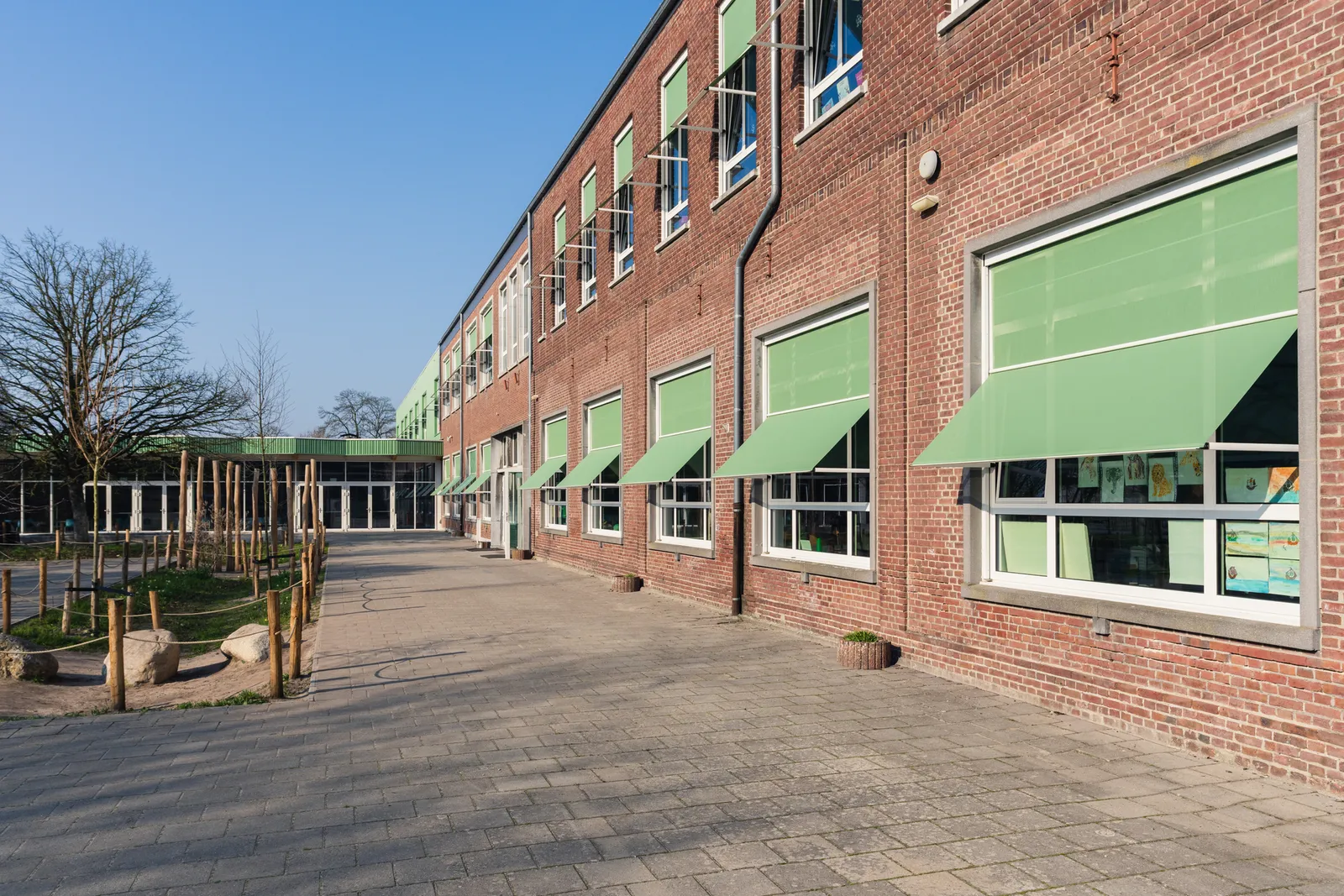
When external solar shading is the only way to guarantee thermal comfort, it calls for a carefully considered system. Vrije basisschool De Robbert in Hamont-Achel opted for electric external solar shading that keeps out the heat without sacrificing a sense of openness. This project shows how drop-arm awnings add value to both renovation and new-build projects.
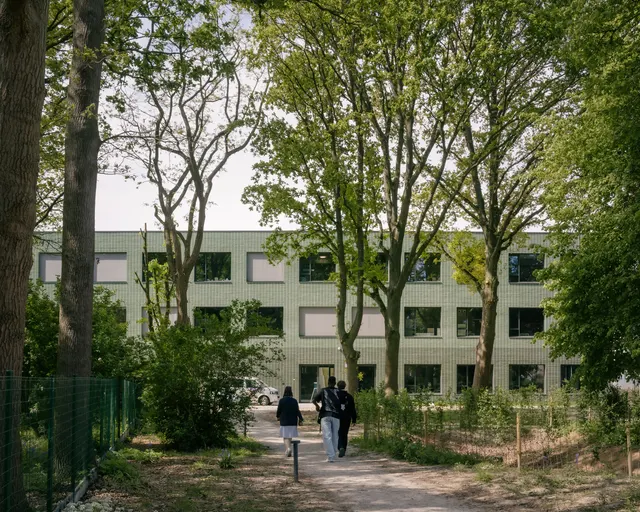
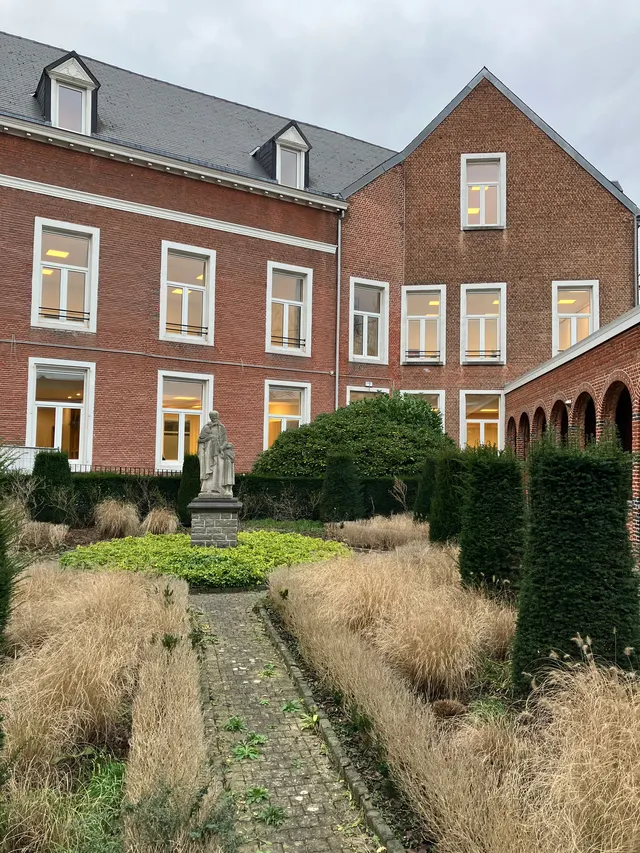
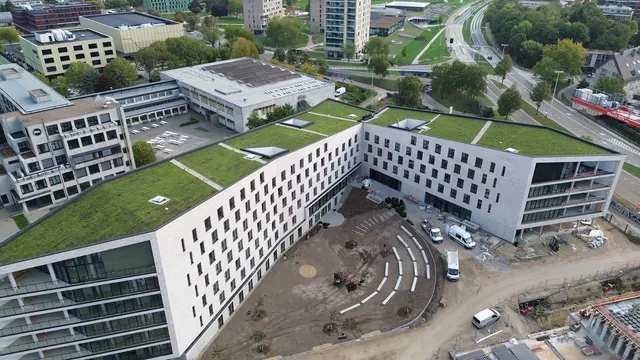
De Robbert is undergoing a thorough transformation. The primary school run by Katholiek Basisonderwijs Hamont-Achel has grown over time into a series of interconnected buildings. In consultation with the city and the school board, a vision was developed for reintegrating public space around the school.
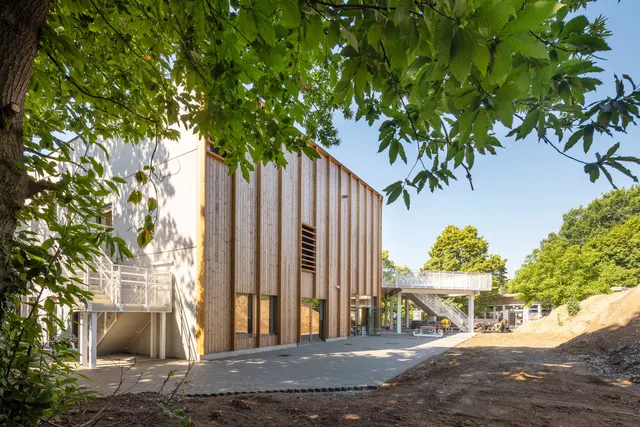
Architecture practices M10 architecten and hvh-architecten opted for a radical transformation: the concept of the ‘open school’. Demolition and new construction have made the school more visible and accessible. This also created the potential to repurpose the new public space between the school and the buildings on Wal, including a visual link with the town centre.
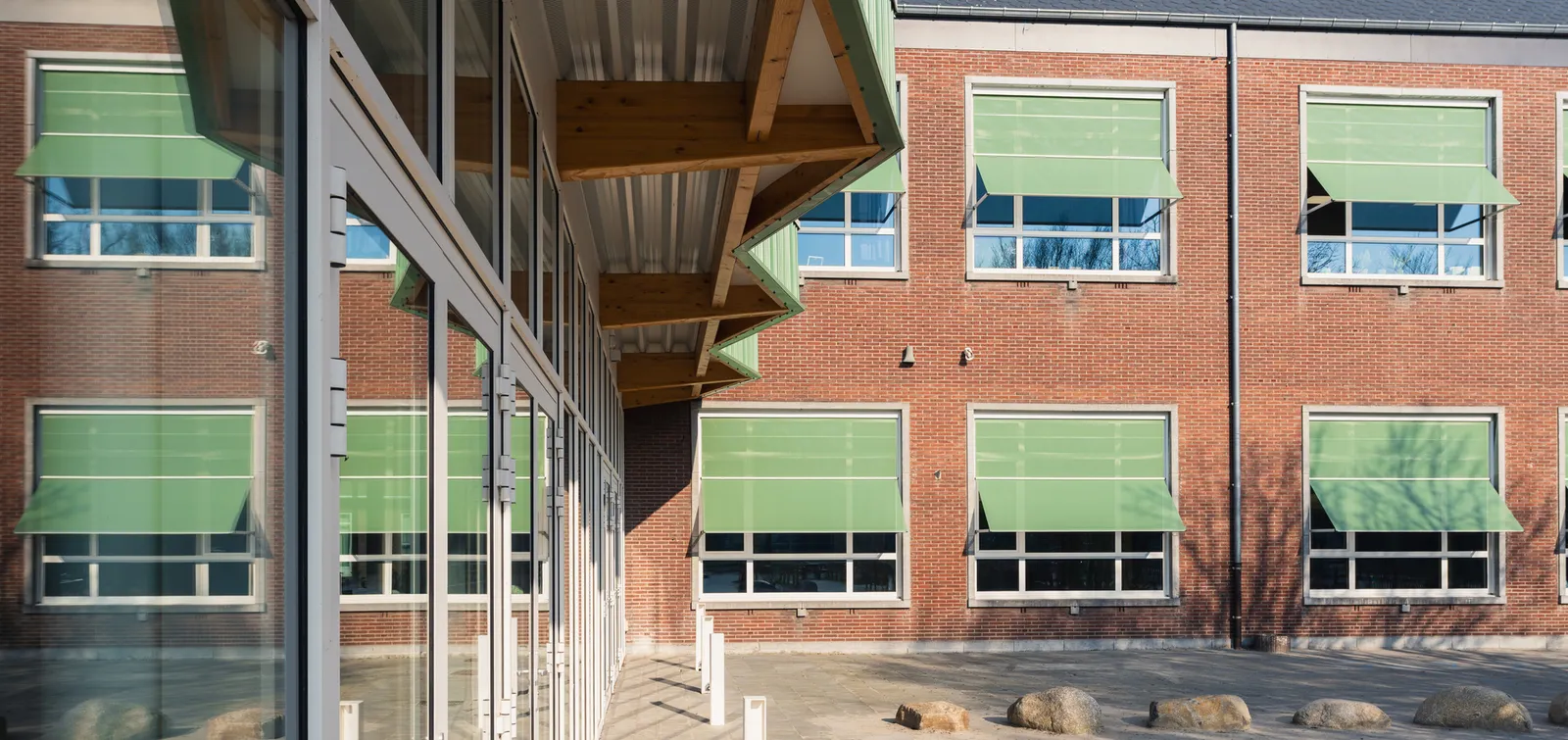
External solar shading supports the educational concept
The south-facing façade and exceptionally tall windows in the existing A-block presented a challenge for architect Elisabet Viérin (M10 architecten). Overheating was a real problem, incoming sunlight made digital whiteboards barely visible, and heat build-up affected classroom comfort. At the same time, the solution had to fit the open-school concept and avoid creating a closed-in, stuffy feeling. One of the key design questions was how to install solar shading on the outside of the windows that would keep out the heat while preserving daylight and views.
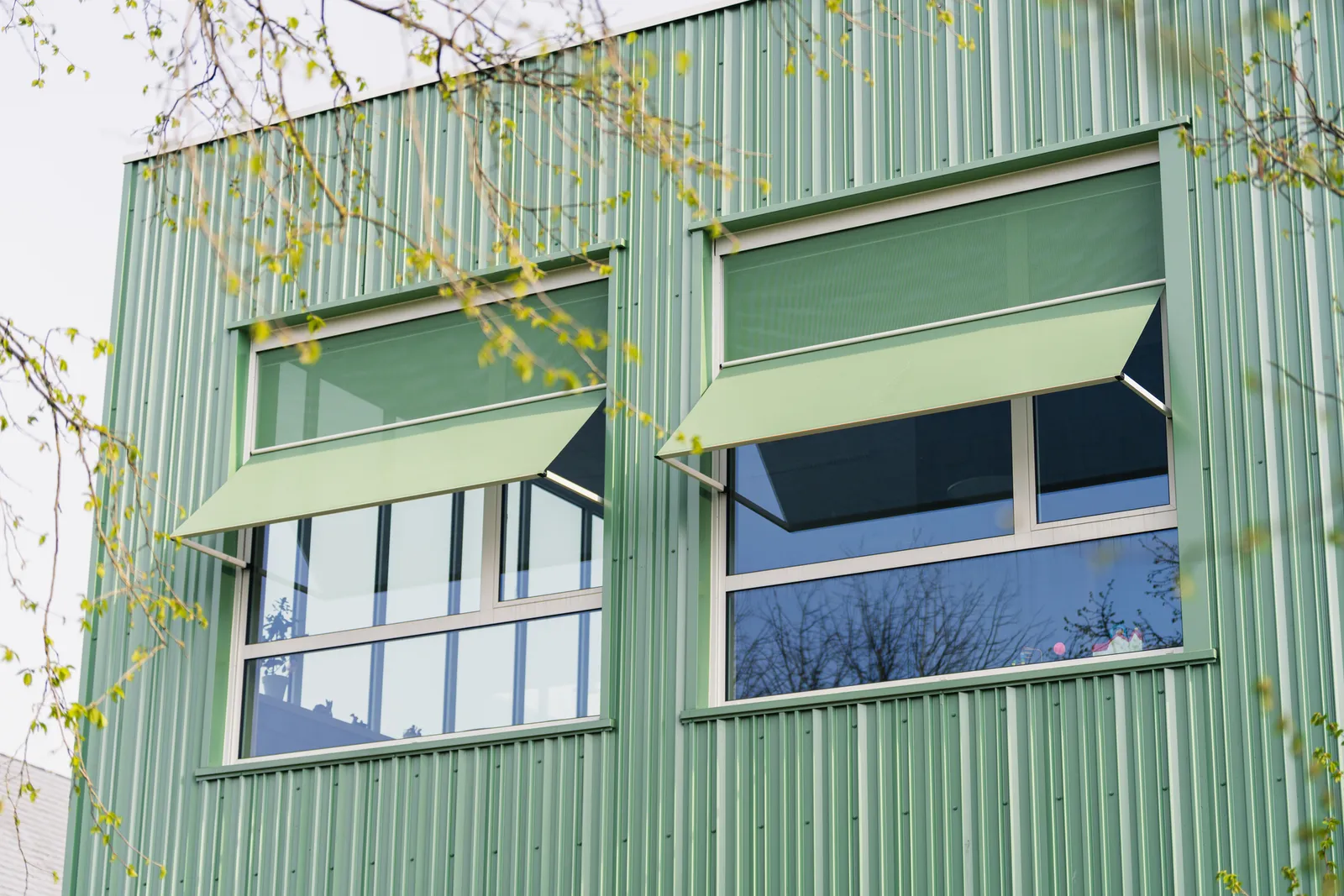
Following a comparative assessment, the DucoScreen Top 120 CAP was selected. This electrically operated drop-arm awning combines effective solar shading with daylight and views, exactly what the educational concept called for.
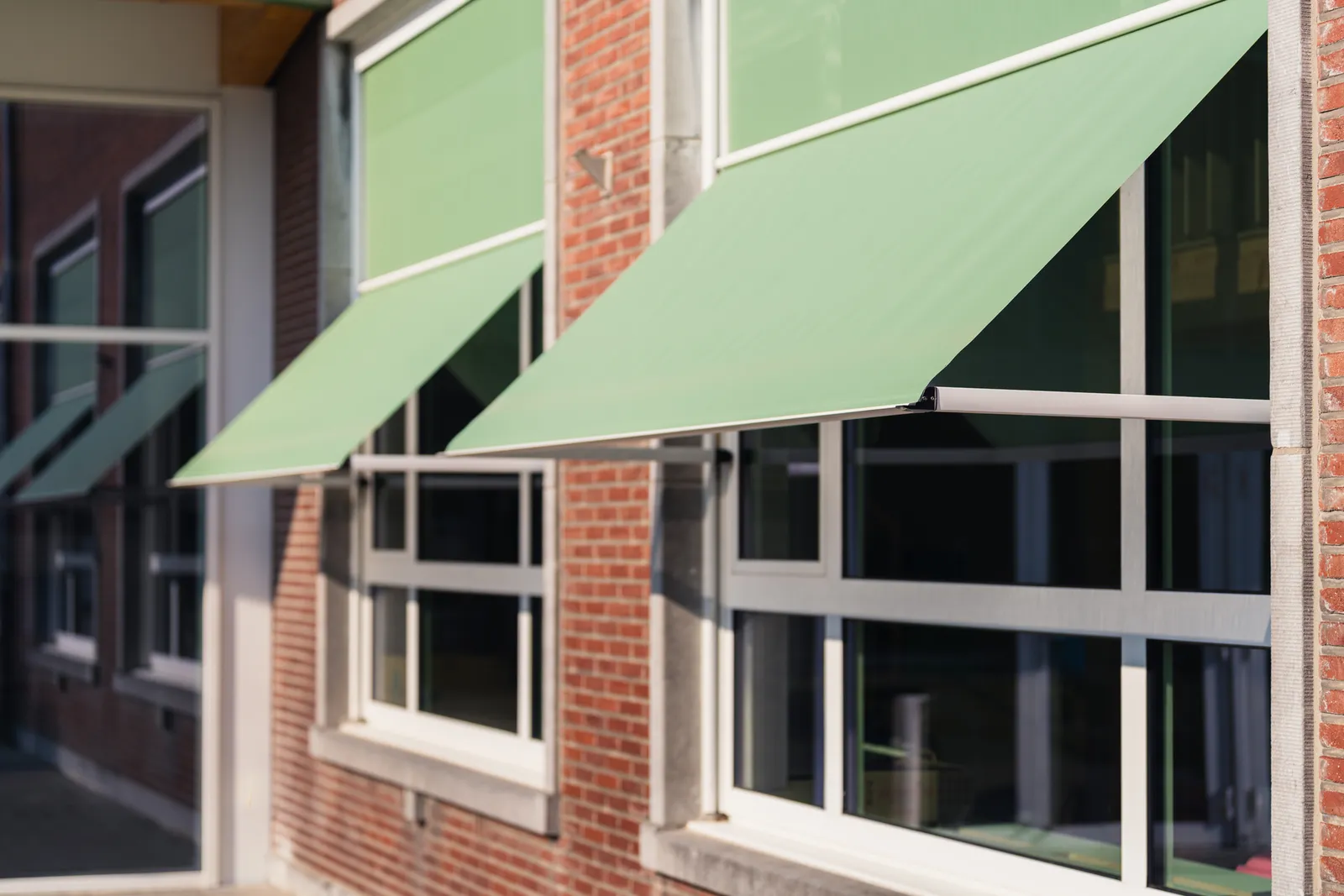
How the drop-arm awning works
The DucoScreen Top 120 CAP’s solar shading fabric is mounted on a drop arm that first descends vertically and then automatically projects out at an angle of up to 90°. This movement creates a shading plane that effectively blocks the sun’s heat before it reaches the glass, preserves natural daylight and maintains views to the outside, all essential for the wellbeing of pupils and staff. “We used to have conventional fabric blinds (screens), but they close everything off. With the drop-arm awnings, you can still see through them and keep the heat out, even with very tall windows,” says Elisabet Viérin.
The fully electric, motorised shading systems offer wind protection up to 50 km/h (standard for the CAP version), are suitable for both renovation and new-build projects, can be combined with natural ventilation and are effective even on exceptionally tall windows where other shading systems fall short. The colour of the shading fabric is also matched to the façade architecture, while the slim profile enhances the building’s open appearance. The drop-arm mechanism perfectly supports the intention to avoid a ‘closed box’, a core design principle. The external solar shading therefore contributes directly to the project’s architectural identity.
Investing in long-term comfort
Although specific costs depend on the project, De Robbert shows that external solar shading offers a long-term solution that supports energy efficiency. By blocking solar heat before it reaches the building, the system significantly reduces the cooling load, a crucial factor in the energy policies of educational institutions. The robust DucoScreen Top 120 CAP is also low-maintenance and built to withstand Belgian weather conditions.
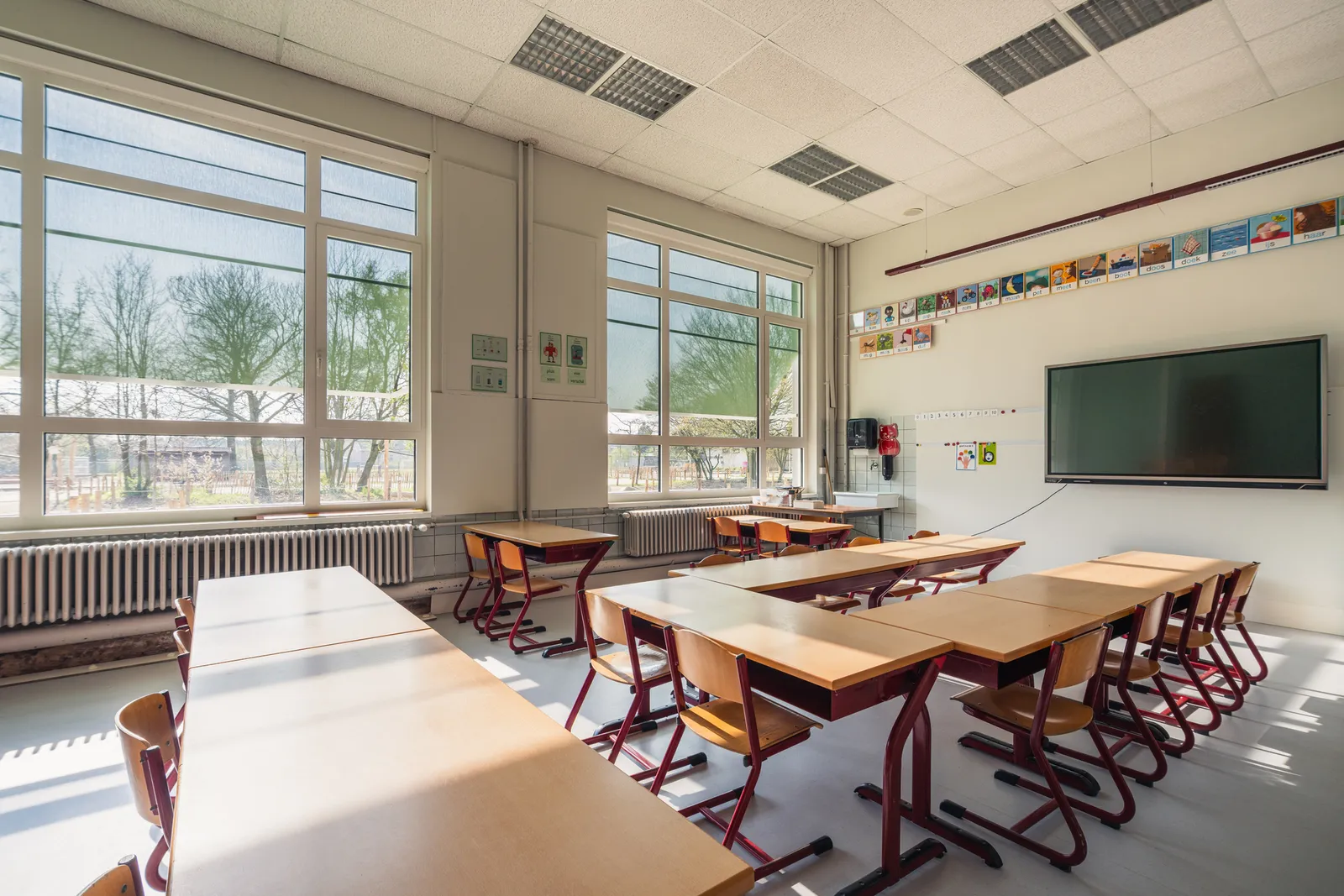
Whatever the season or the intensity of the sun, the external solar shading ensures thermal comfort in the classrooms. It also keeps digital learning resources visible and preserves the visual connection with the outdoors. Internal curtains were added for complete blackout, for example during presentations.
One solution for all buildings
The client and school staff are pleased with the system. The electric shading systems work as intended: the heat stays out, the light comes in and the learning environment retains its open character. Close collaboration during the design and construction phases gave DUCO valuable insights to further improve its service and on-site support, an undertaking that lays the groundwork for future projects.
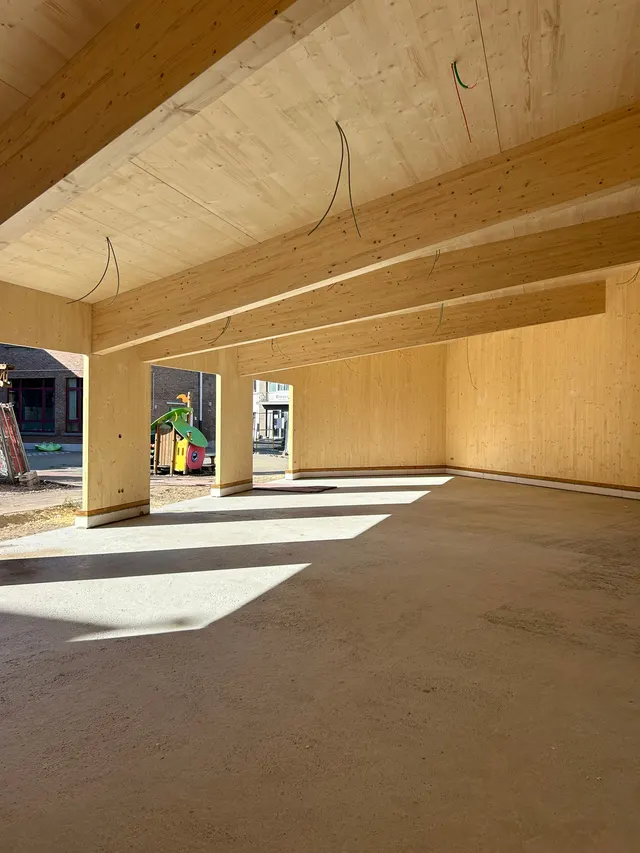
One notable decision was to use the DucoScreen Top 120 CAP consistently across different parts of the building. The same shading system was installed in both the renovated A-block, with its exceptionally tall windows, and the new-build section, with or without integrated ventilation grilles (DucoTwin). The visual difference is barely noticeable, preserving the architectural unity. This consistency also brings benefits in terms of maintenance, spare parts and user experience. In short, De Robbert shows that solar shading for comfort is not an afterthought, but an integral part of contemporary school design. The choice of external solar shading with a drop-arm mechanism combines thermal performance with architectural quality and ease of use.
Have a business enquiry for DUCO? Get in touch
Who worked on it
De Robbert in Hamont-Achel
- DucoScreen Top 120 CAP
 DUCO
- architectM10 architecten
- architecthvh-architecten
Keep following this
Get an email when a new story is published. No account needed.
- ProjectDe Robbert
- SubjectEducation
- CompanyDUCO
- CompanyM10 architecten
- Companyhvh-architecten