Aachen Battery, Ostend | Subtle restoration improves the legibility of a historic site
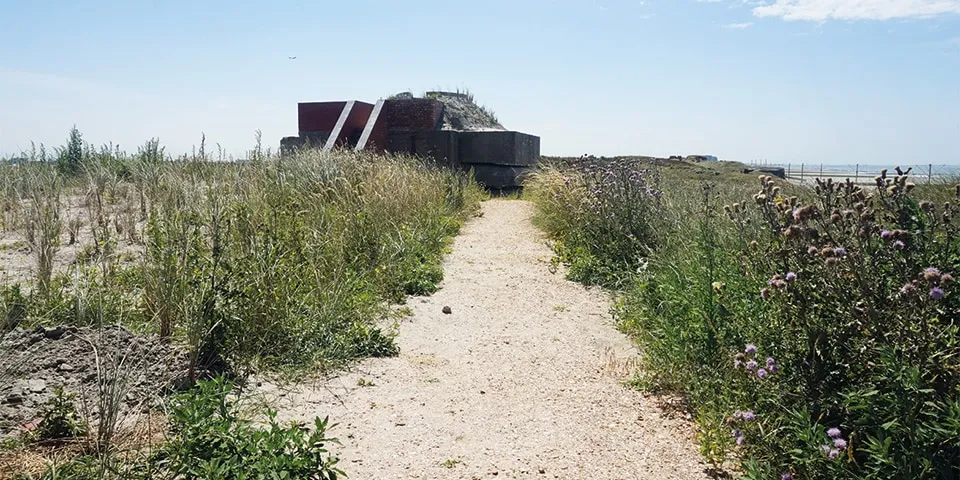
Bunkers, observation posts and gun emplacements, linked by underground passages and trenches: at Provinciedomein Raversijde you can visit the German Aachen Battery, part of the Atlantic Wall. Following its recent restoration and opening to the public, a visit to the open-air museum is now an immersive experience, bringing both the First and Second World Wars clearly into focus.
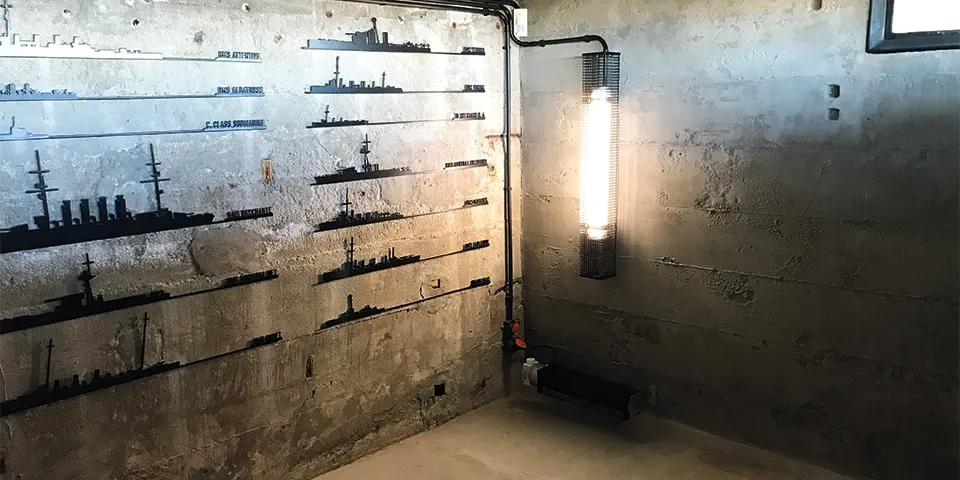
“In fact, it was more a case of consolidation than restoration,” says Elisabeth Lehouck.
“In fact, the entire project was more about consolidation, slowing the deterioration, than restoration,” stresses Elisabeth Lehouck of aNNo architecten, who coordinated the project at Raversijde. “We surveyed everything and, on that basis, determined which works were genuinely necessary. The roofs and ceilings, for example, were made watertight, while the walls were restored in a few places on a limited scale. In addition, the First World War limewash was exposed wherever possible. Later paint layers were therefore removed. This revealed, among other things, a mural,
whose historical significance is still being investigated.”
Focus on the First World War
The aim of the restoration was to demonstrate the different layers of the site. Throughout the battery, remains from the First World War give way to those from the Second, and vice versa. At the start of the project, the focus was mainly on the First World War. The architect’s task was therefore to make the First World War remains visible amid the surviving traces of the Second World War. Elisabeth Lehouck: “Concrete models tell the story and enhance the visitor experience. In one of the bunkers, for example, a concrete model shows a cross-section of the bunker. The difference in colour illustrates its transformation.”
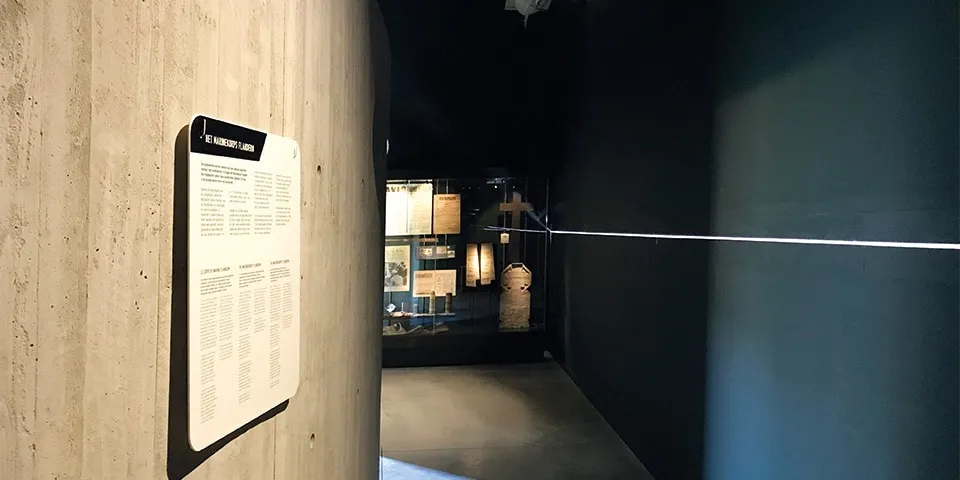
Information panels and models enhance the visitor experience.
Maximum integration into the surroundings
As with the authenticity of the artefacts themselves, the credibility of the landscaping was also a priority. For the paths, aNNo architecten took inspiration from historical images from the First World War, while naturally taking accessibility and heritage into account. “We laid out the visitor route in the opposite direction to the former route. This makes it easier to explain how the battery and its various bunkers operated historically.”
Regular consultation with various partners was needed to achieve this in a sound and historically accurate way. “The excellent cooperation with the contractors, the client and public bodies such as Agentschap Onroerend Erfgoed (buildings, landscape and archaeology) and Inter helped lay the foundations for the successful outcome,” concludes Elisabeth Lehouck.
Question about this story? Ask your question
Who worked on it
Batterij Aachen in Oostende, restauratie
- architectaNNo architecten
Keep following this
Get an email when a new story is published. No account needed.
- ProjectBatterij Aachen
- SubjectMonuments
- CompanyaNNo architecten