Close the Loop by Hydro: a circular success story
Text Bavo BoutsenImage Sapa
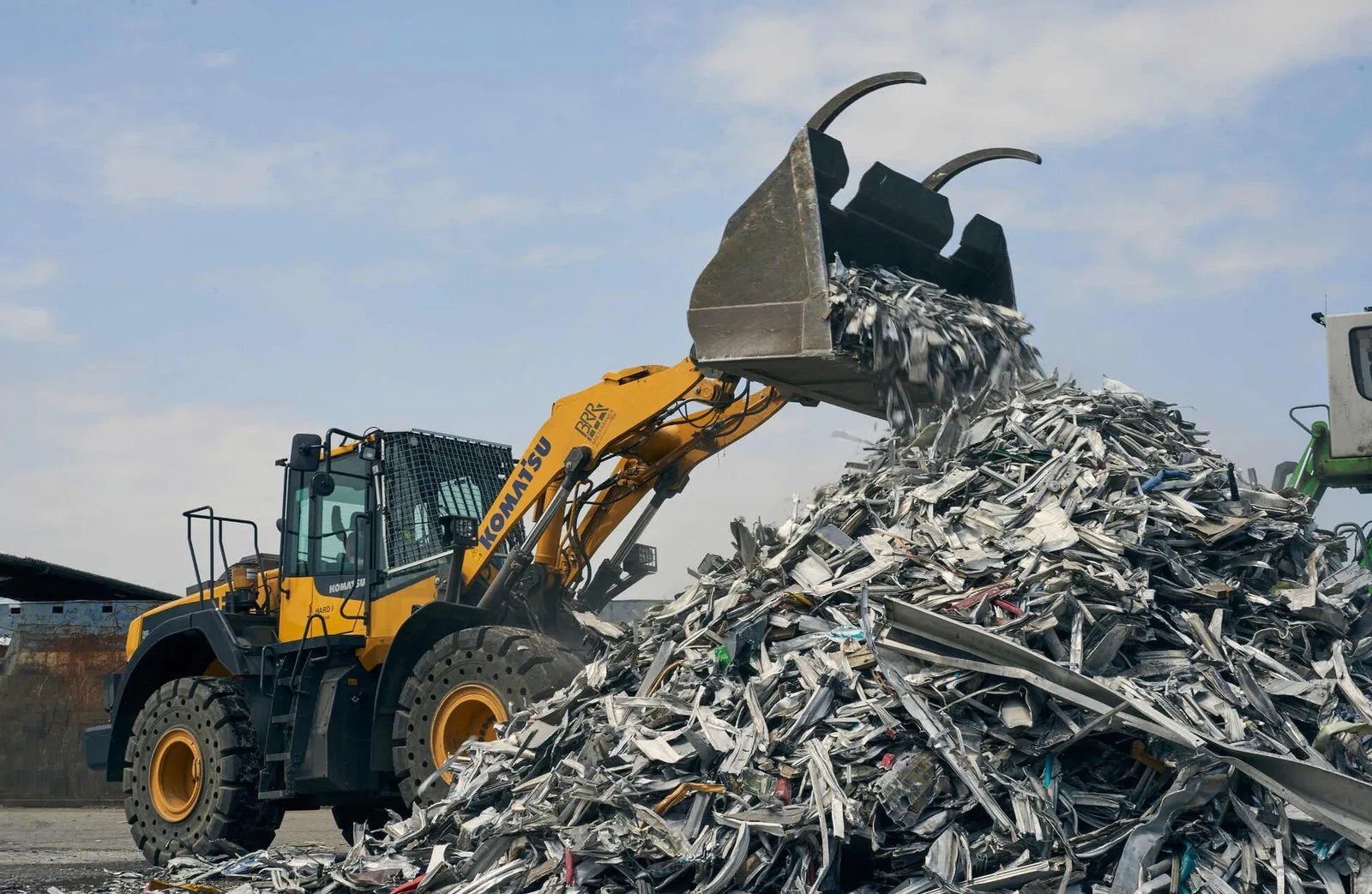
For Sapa, circularity is more than ever the starting point. The trade name of Hydro Building Systems Belgium manufactures aluminium profiles and supplies semi-finished products for sustainable joinery, such as windows, doors and façade systems. With the Close the Loop by Hydro programme, the company is now also involving its customers directly in the collection and high-quality recycling of aluminium.
“Sustainability is deeply embedded in our group’s DNA,” begins Danny Decaluwaert, project manager and circularity expert at Hydro Building Systems. “It starts with the production of primary aluminium. Hydro relies heavily on renewable energy for this, with hydropower as its historical foundation. That also explains the name of our parent company.”
Bringing customers on board
“Under our Sapa trade name, we put this philosophy into practice by firmly committing to circularity. For us, that means reusing aluminium without any loss of quality. We deliberately avoid downcycling, where recycled material ultimately ends up in a lower-grade application,” he continues. “As window and façade profiles are constantly exposed to the weather and are expected to last at least fifty years, it is essential that recycled post-consumer aluminium scrap is of the highest possible purity.”
A few years ago, the company decided to go a step further. Until then, it had to buy scrap back from customers in order to recycle it. “That didn’t make sense, so we wanted to develop a system that would allow us to close the loop together with our customers,” explains Danny Decaluwaert.
That ambition led to the launch of Close the Loop by Hydro three years ago. Sapa customers, manufacturers of windows, doors and façade systems, collect their aluminium offcuts in separate material streams. These are then returned to Sapa, so the aluminium can be recycled under controlled conditions and used again.
Showing that it can be done
Although the concept sounds relatively simple, putting it into practice required the development of an entirely new logistics and industrial chain, with the direct involvement of the supply chain proving crucial. The recycling process is particularly complex when it comes to old aluminium scrap. Different alloys and materials have to be carefully separated to prevent the quality of the end product from being compromised. The incoming material streams are also thoroughly scanned and checked.
“It is a particularly intensive process,” says Danny Decaluwaert. “But by far our greatest achievement is that, despite their initial doubts, we have managed to persuade our customers to take part.” In his view, the initiative above all demonstrates that circularity in construction is possible when companies look beyond their own production processes and take responsibility for the entire value chain. Sapa is uniquely positioned to do so thanks to its parent group Hydro’s full vertical integration.
In other words, with Close the Loop by Hydro, Sapa also wants to raise awareness of what sustainability means in the construction sector. “And that is urgently needed, because too often claims are made here without supporting evidence, such as certificates and labels,” says Decaluwaert. “But when you look behind the communications, the foundations can sometimes prove extremely shaky. These unsubstantiated sustainability claims are far from harmless. They give customers and clients the impression that all sustainability communications are little more than marketing. And that is extremely damaging.”
Close the Loop by Hydro’s ambitions now extend beyond aluminium alone. Suppliers of technically more complex components, such as rubber seals and other parts of window and façade systems, are also to be brought into the circular model in time. The Belgian site has a pioneering role within Hydro Building Systems. Sapa wants to retain and build on this position. “We have proved that you can bring your customers into a circular supply chain model. Now we want to extend the loop further,” concludes Decaluwaert.
A business enquiry for SAPA? Get in touch
Companies in this story
Keep following this
Get an email when a new story is published. No account needed.
- SubjectCircular construction
- CompanySAPA