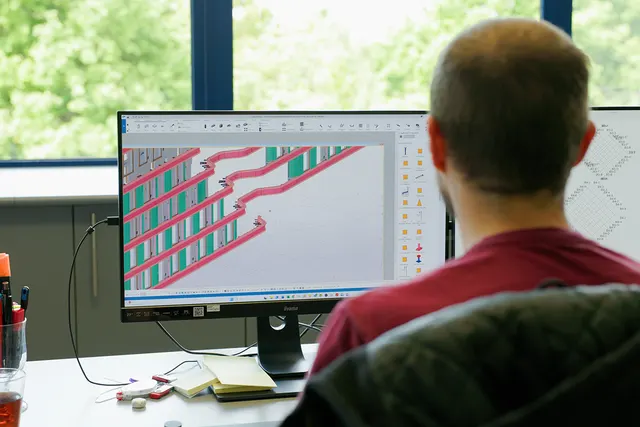
BIM in offsite production: efficiency or added complexity?
Text Tim JanssensImage digitaalbouwteam.be
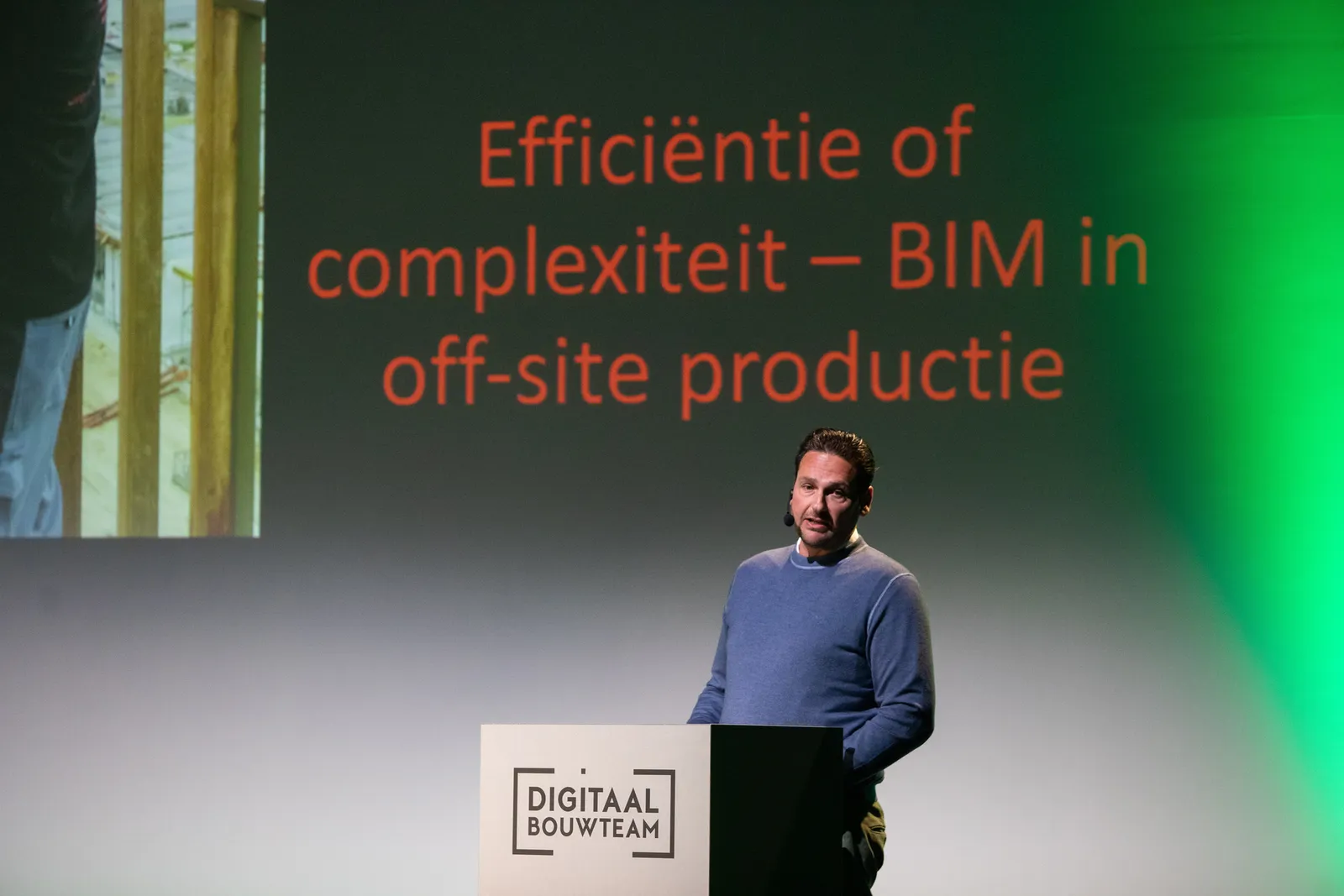
Offsite production and prefabrication are generally associated with efficiency. But is that also true when BIM is involved? Or does it make everything more complicated? Ives Vanhauwenhuyse and Brecht Haelewyck of Decat, a class 8 MEP contractor, took a critical look at this question during the latest inspiration event organised by Het Digitaal Bouwteam. “The question is not so much whether BIM can lead to efficiency, but rather whether we are willing to manage the complexity required to achieve it.”
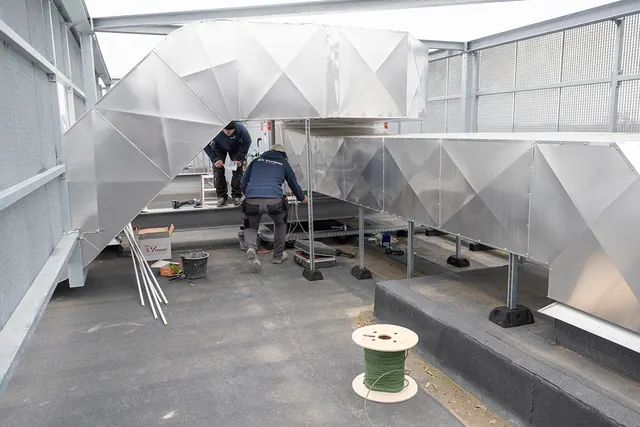
In 2020, Decat installed prefabricated service risers on a construction site for the first time. Today, this is standard practice for the forward-thinking MEP contractor. Prefabricated risers continue to grow rapidly in popularity, in both residential and non-residential construction. “They are particularly useful on projects where speed, precision and quality control are important. They offer many benefits, including quality, safety and predictability. We continually refine the production process in our workshops based on our experience on site,” says Ives Vanhauwenhuyse.
When we talk about offsite production, the word efficiency almost goes without saying. But that is not necessarily the case, Vanhauwenhuyse emphasises. “One crucial factor determines everything: good information management. And BIM plays a key role in this. BIM promises clarity and predictability, with a 3D model serving as the ‘single source of truth’ for design, engineering, production and installation. In theory, this is a smooth process, as every component is known before anything is manufactured. In practice, however, a tension arises between this efficiency and the growing complexity involved in processing data in a BIM model, since more data means more to manage, validate and update.”

Time, expertise and clear agreements
For offsite production, BIM models also need to contain far more information and be more accurate than for a traditional construction project. “That takes time, expertise and clear agreements. The predictability required for offsite production depends directly on the quality of the 3D drawings. A small error can lead to a very costly solution or even re-manufacture. That is why we need to ask ourselves whether BIM always leads to greater efficiency, or instead introduces a new layer of digital complexity,” says Ives Vanhauwenhuyse.
The strength of BIM-based offsite production lies not only in technology, but also in collaboration and process discipline. “It only works effectively when different teams work together early in the construction process, responsibilities are clearly defined and everyone knows their role. Data quality is also very important,” says Vanhauwenhuyse. “In short, without the right level of detail, clear agreements and ongoing coordination, BIM can actually be counterproductive. So the question is not so much whether it can result in efficiency, but rather whether we are willing to manage the complexity required to achieve it.”
Cost-effective from three storeys up
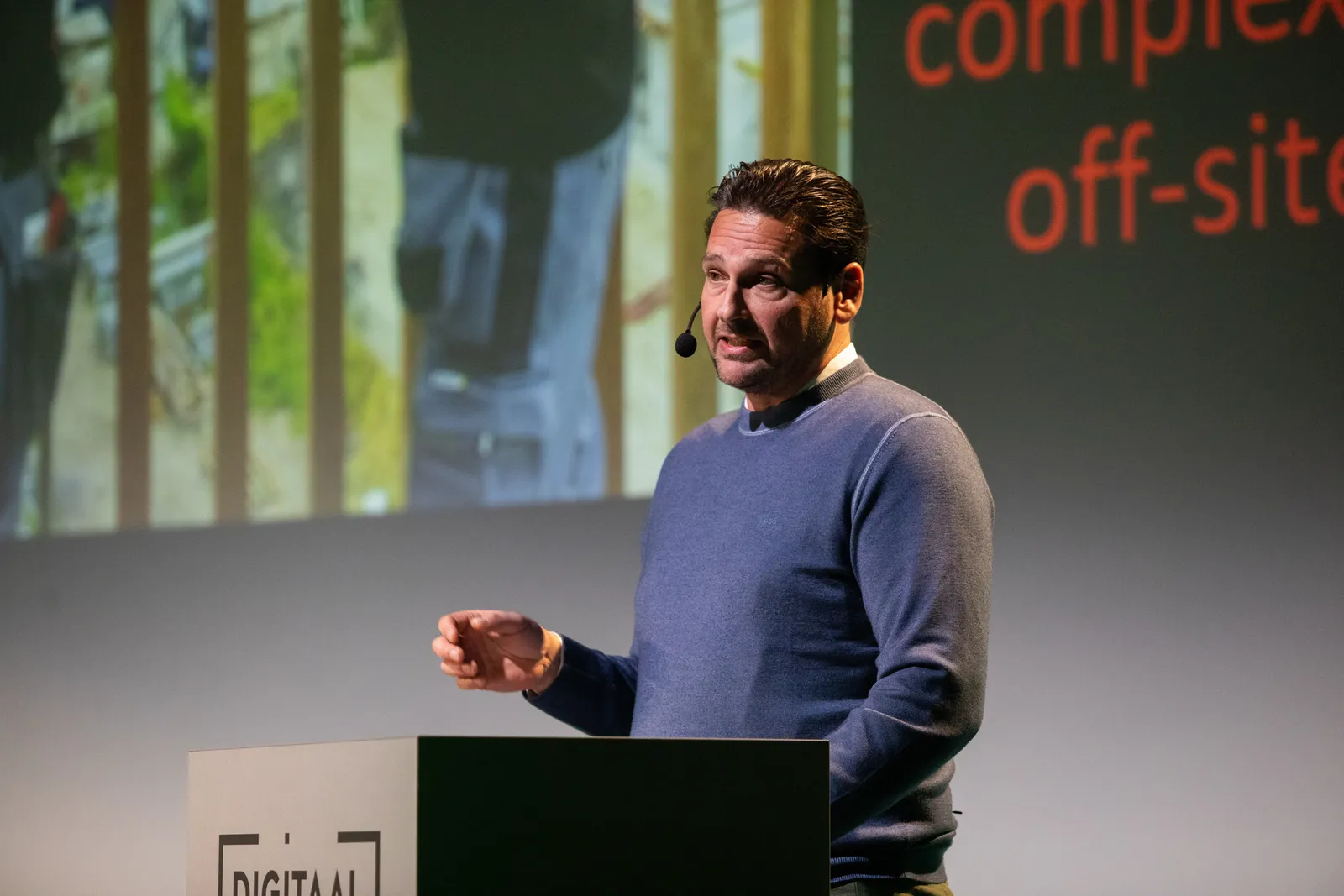
Brecht Haelewyck, in turn, explained this complexity in concrete, clear terms. “In practice, several hurdles need to be overcome to make the best use of BIM for offsite production,” he says. “The first challenge is data management: there is often an overload of information, which is not always easy to read or well structured. Coordination between different software packages also regularly results in mismatches. The human factor plays a part too, as not everyone in the project team has the right BIM expertise. In the case of our prefabricated risers, this expertise has more to do with product design than building drawings. Finally, there is the pressure to make changes: because modifications can be made with just a few mouse clicks, there is a risk of ill-considered changes that require a great deal of rework later.”
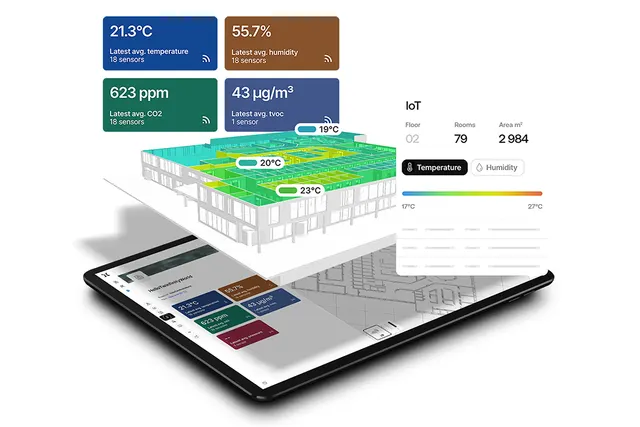
At Decat, they keep a tight rein on the process. “To achieve a high-quality result every time, you need clear procedures to fall back on,” Haelewyck stresses. “That is why we work within a single software ecosystem as much as possible, allowing us to move from design to production without intermediate steps. We also make maximum use of pre-assembled units to save time and ensure consistent execution. In addition, we have deliberately chosen to manage everything in a common data environment, enabling all parties to work with one shared, reliable dataset. The BIM model is also linked to business intelligence, so dashboards can provide specific insights based on the filters applied. This allows us to get the data to the people who need it, without relying on the BIM team. Once the 3D model has been drawn and all the necessary data is available, we can use automation to generate high-quality drawings quickly. In short, by focusing on making high-quality 3D drawings with the right data available on a single platform, we can solve that complex puzzle more easily.”
“The conclusion is that time savings are certainly possible, but good communication is essential, and the resulting data must be accurate and processed intelligently. Quality improves markedly as data reliability improves. We can say that BIM becomes cost-effective and efficient in offsite production from three storeys up, assuming we are talking about fully equipped prefabricated risers containing several building services,” concludes Ives Vanhauwenhuyse.
HET DIGITAAL BOUWTEAM
Het Digitaal Bouwteam is a knowledge platform that offers inspiration and solutions for designing, building and managing with BIM. Find out more at www.digitaalbouwteam.be.
Question about this story? Ask your question
Keep following this
Get an email when a new story is published. No account needed.
- SubjectBIM