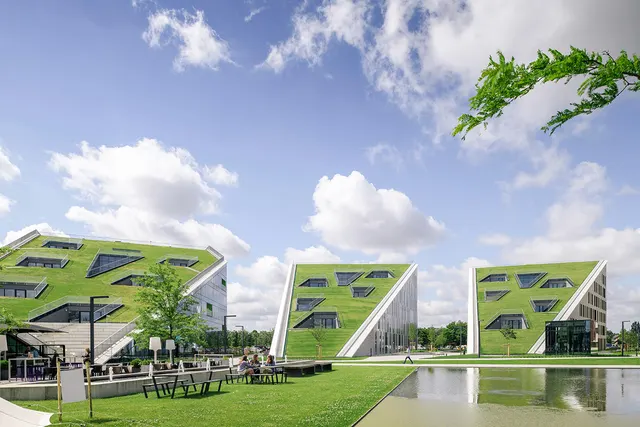
“Green roofs raise public space to a higher level, literally and figuratively”
Why should a roof be just a roof? Why not give it another useful function and turn necessity into virtue, with all the benefits that brings? These were the central questions at the interactive webinar on ‘active roofs’ recently organised by FOAMGLAS and Palindroom. The many possibilities and benefits of green roofs were also discussed in depth. “Given today’s pressure on housing and the need for urban densification, a rooftop garden in the city is an obvious solution.”
“Active roofs play an increasingly important role in insulating and making use of buildings. Unfortunately, many architects and contractors still lack some of the knowledge and experience needed to realise the full potential of certain roofs,” said Frank Vanhove of FOAMGLAS when asked how he came up with the idea of organising an interactive webinar on active roofs. The initiative proved popular, with 233 viewers watching the webinar live from start to finish. This was undoubtedly helped by the fact that several speakers explored the added value of green roofs, an important subcategory of ‘active roofs’, and cited numerous inspiring examples.
Good for people, society and the environment
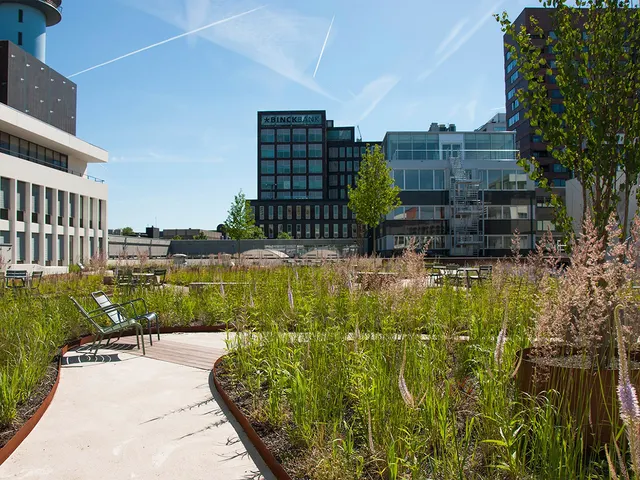
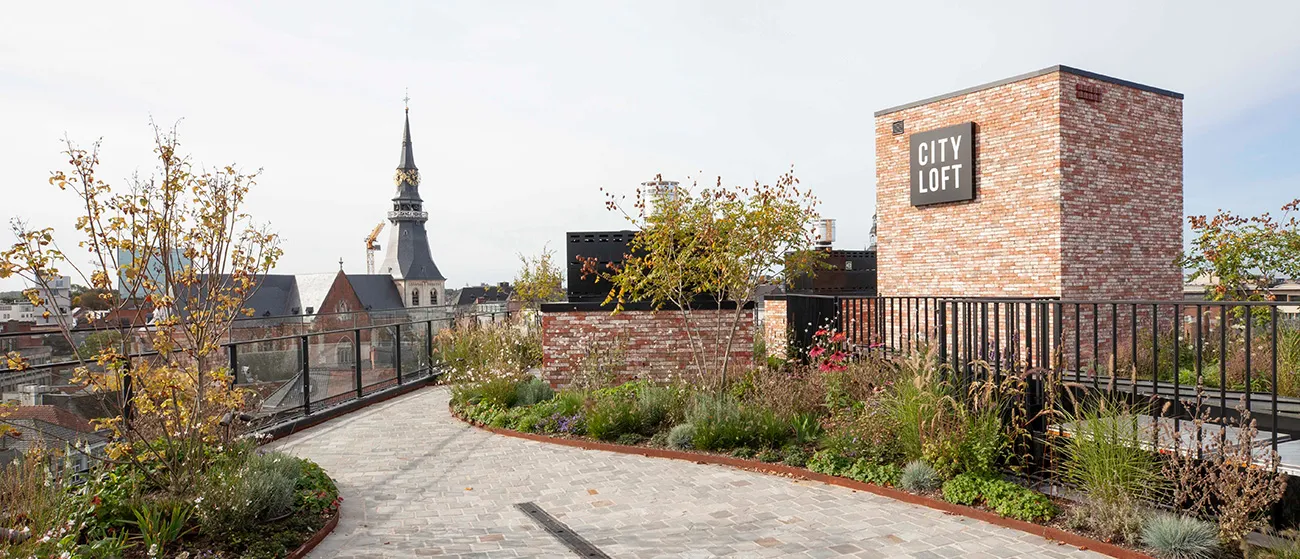
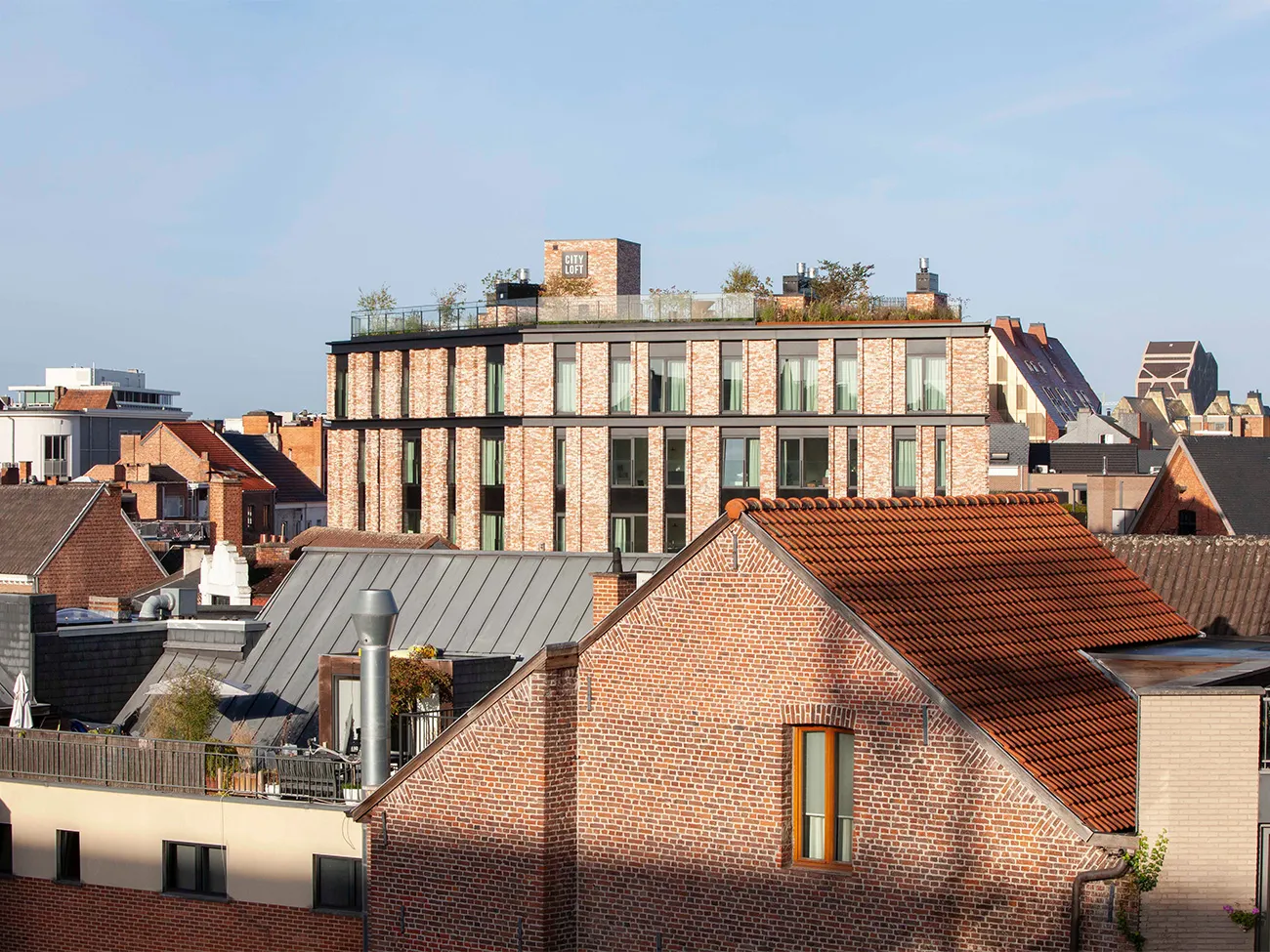
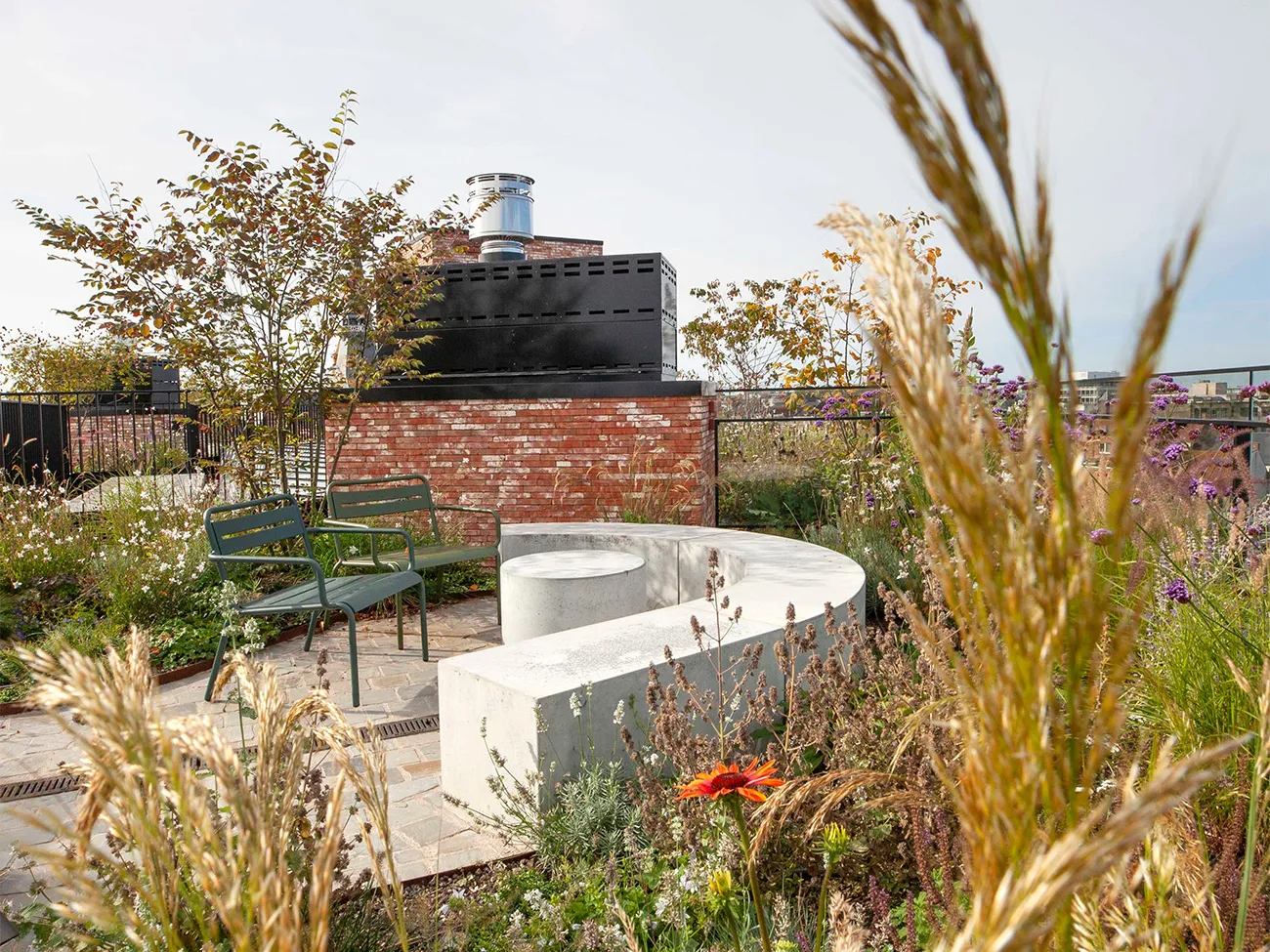
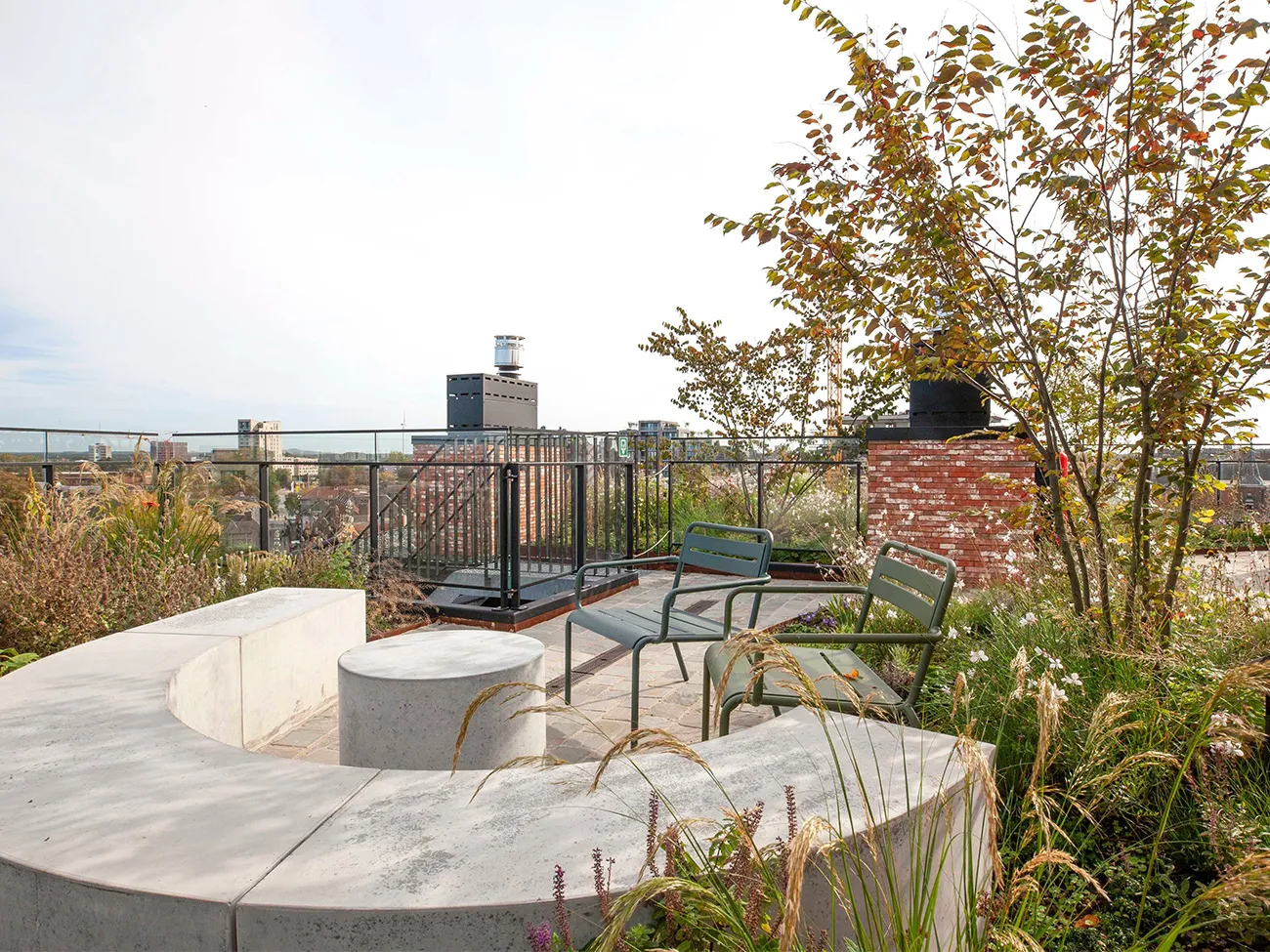
One of the expert speakers was Bert Smets of architecture firm UAU collectiv. “In every project, we emphasise the roof as an additional ground plane, raising public space to a higher level, literally and figuratively. This creates added value not only for users, but also for the surrounding area and, by extension, society as a whole. Upgrading roofs can also bring unused upper floors back into use, for example vacant space above shops or hospitality venues.” One project in which UAU collectiv put this into practice is CityLoft in Hasselt. This former urban eyesore provides affordable homes in the heart of the city. At ground level, the public realm continues through a passageway. “On the top level, we created a high-quality communal rooftop garden for residents, where they can enjoy an aperitif, have a barbecue together … It’s been a great success! And it immediately adds a green hue to the skyline. Given today’s pressure on housing, the need for urban densification and the current climate crisis, it is essential to bring nature back into the city. In that respect, a rooftop garden is an obvious solution.”
At one with the ground
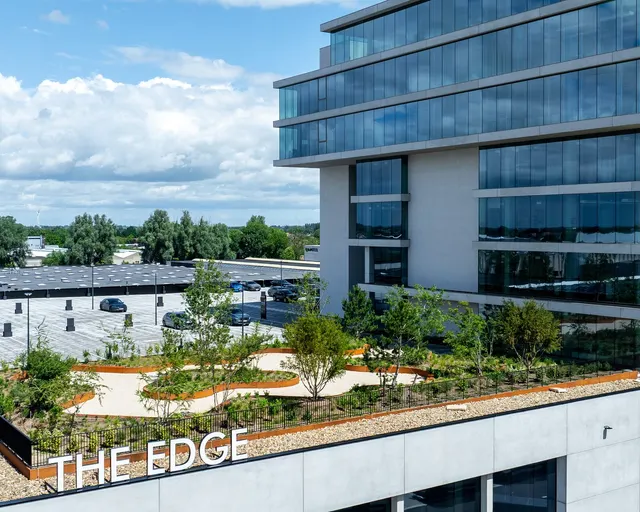
Cuypers & Q Architecten also has extensive experience with green roofs and rooftop gardens. “We place great importance on integrating landscape features and structures. And for us, a roof is a fully-fledged usable space,” says Sofie Borré, architect and adviser on climate-resilient and circular construction. This philosophy is fully expressed at Kindercampus Theodoortje on the VUB site in Jette, which houses a childcare centre, a primary school, offices and even scout premises. “We had to bridge a 10-metre level difference, so each floor connects to ground level via greenery, blurring the distinction between the roofs and the ground. The additional cost of a green roof is relatively limited when it is seamlessly integrated into the design. Unfortunately, budget constraints are still often a stumbling block, as is safety. Roofs accessible to more than 49 people require a second fire escape and a lift. However, if you can make a roof space flow into the ground plane, you can cleverly overcome these challenges. So here’s a tip: treat the (green) roof as a fifth façade, make it accessible and ensure that it connects to a usable space or the surrounding public realm.”
Benefits and misconceptions
In short, when green roofs form an integral part of the design, they add significant value both functionally and architecturally. And that is not all. “Green roofs promote biodiversity and can also help reduce the ‘urban heat effect’. Especially when combined with an irrigation system or designed as a retention roof, they act like natural air conditioning, quickly making a difference of a few degrees,” says Bert Smets. “Green roofs can also enable different forms of housing, such as cohousing or alternative social housing. Allotments, greenhouses, play areas … the possibilities are endless, and social cohesion benefits too,” adds Sofie Borré. The final word goes to Sally Lierman of Atelier Romain. “When it comes to making use of roof space, designers have an important responsibility. Unfortunately, there are many unfounded misconceptions about the usability and feasibility of green-roof projects. For instance, it is often decided too quickly that a roof cannot be used. With a few minor adjustments or some architectural creativity, for example, by designing some areas as extensive green roofs and others as intensive ones, there is usually scope to do something. Clients with an open mind are therefore at least as important as visionary architects.”
Question about this story? Ask your question
Who worked on it
CityLoft in Heusden-Zolder
- architectUAU collectiv
- architectCuypers & Q Architecten
- architectAtelier Romain
Keep following this
Get an email when a new story is published. No account needed.
- ProjectCityLoft
- SubjectGreen roofs
- CompanyUAU collectiv
- CompanyCuypers & Q Architecten
- CompanyAtelier Romain