Passive cooling with a ground source heat pump: an expert’s view
Text Wouter PolspoelImage Itho Daalderop en iStock

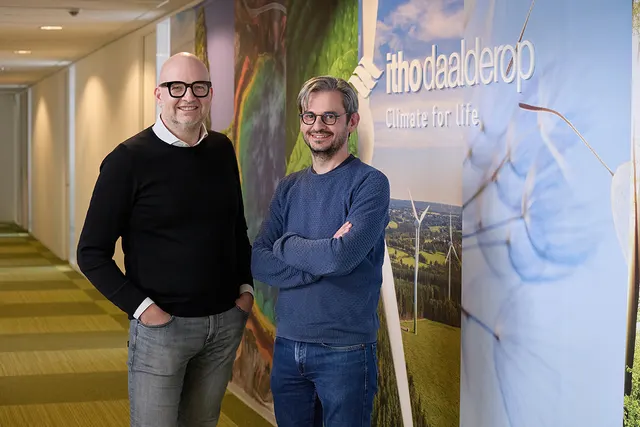
A ground source heat pump can do more than heat a building: it can also provide passive cooling. But what exactly does this involve? How does passive cooling differ from active cooling? And why is passive cooling considered sustainable? Olivier Van Vooren, Business Developer at Itho Daalderop, sets the record straight and explains how Itho Daalderop is seeking to make a difference in passive cooling with its ground source heat pumps.
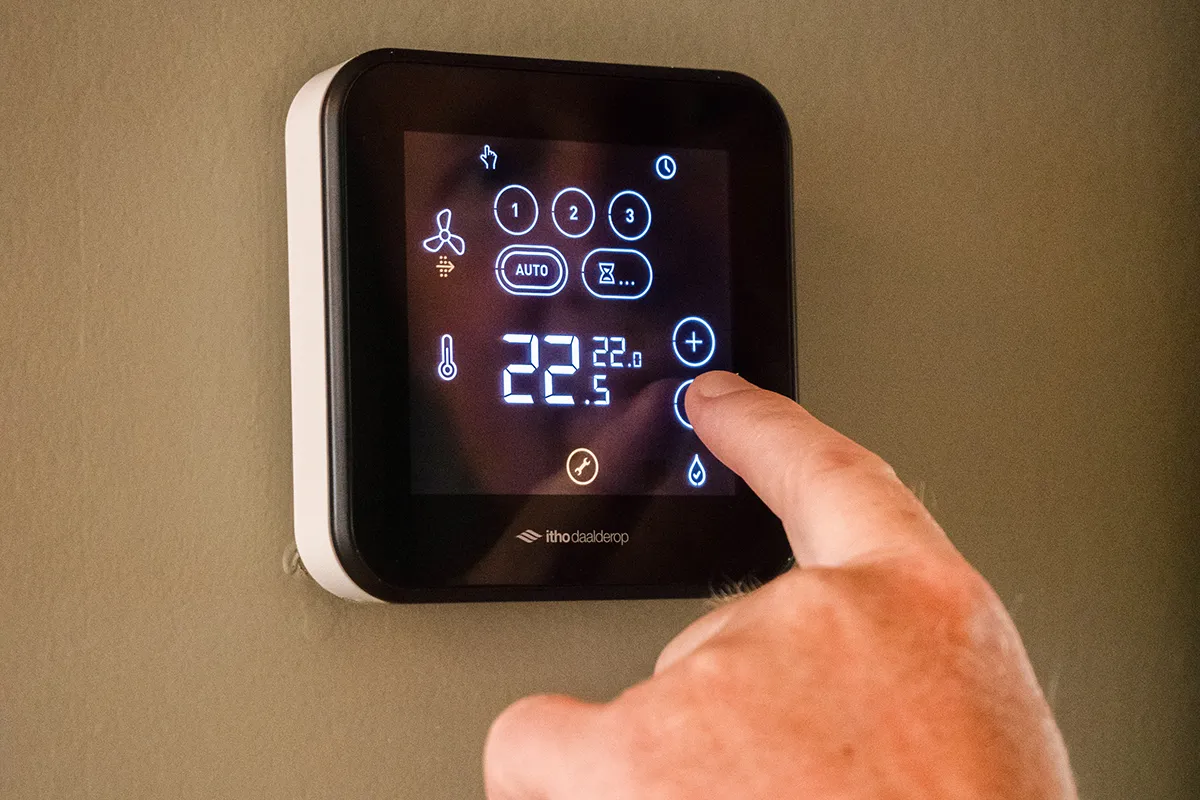
“With passive cooling, the ground source heat pump, or more precisely a water-to-water heat pump, uses the natural temperature of the ground to cool the building without switching on the compressor,” explains Olivier Van Vooren, who is a product specialist in geothermal energy at Itho Daalderop, an HVAC solutions developer. “Only two small circulation pumps run, using a negligible amount of energy. That is the fundamental difference from active cooling, of which conventional air conditioning is the best-known example. Passive cooling also produces no condensation.”
“Geothermal systems make use of the ground temperature, which remains relatively constant throughout the year at between 7 and 12 °C,” he explains in more detail. “With passive cooling, the ground source heat pump uses this ground temperature to cool the water circulating through the emitter system, whether underfloor heating, fan coil units or climate ceilings. This is done via a water loop in the ground. The cool water then absorbs heat from the indoor air, and the same water loop carries that heat away into the ground. All this happens without the heat pump compressor having to run or consume electricity. When a heat pump is cooling passively, it essentially operates in reverse to heating mode: instead of extracting heat from the ground, which is possible in winter because the ground is often warmer than the air, it transfers excess heat back into the ground. The difference is that, during passive cooling, the heat pump itself does not have to operate.”

Extracted heat remains available
According to Olivier Van Vooren, the sustainability of passive cooling is not just down to its exceptionally low, almost non-existent electricity consumption. “With active cooling, the heat removed is released into the outside air. With passive cooling, the ground acts as thermal storage,” he explains. “Heat removed from the building in summer is transferred to the ground and stored around the ground loop, without disturbing the average ground temperature. In winter, this stored heat can be used alongside the natural heat in the ground to warm the building. The ground thus acts as a natural seasonal battery: what you put in during summer, you take out again in winter. This prevents thermal imbalance in the ground loop, even with frequent passive cooling.”
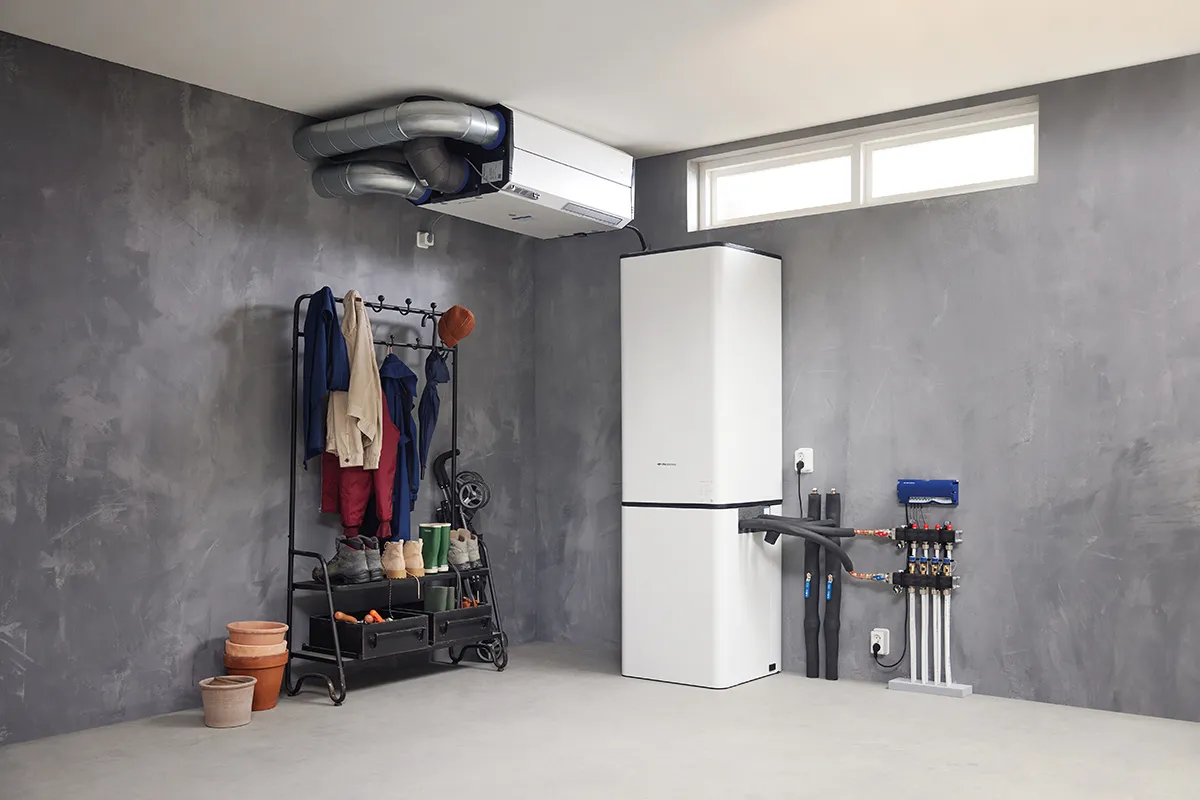
Itho Daalderop’s ground source heat pumps also offer an additional advantage. Olivier Van Vooren explains: “Our units come as standard with an integrated cooling heat exchanger, whereas some brands offer this as an optional extra. The integrated cooling heat exchanger also switches on automatically as soon as passive cooling is needed. With most geothermal systems, users have to activate passive cooling manually, which means it often starts too late. By then, the indoor temperature is already so high that it is difficult to bring it back down to a comfortable level through passive cooling.”
Thanks to this automatic control, Itho Daalderop’s heat pumps also offer a higher cooling capacity than the market average. “We achieve up to 22 W per m², while standard installations often manage only 12 to 16 W per m²,” says the Business Developer.
Tangible comfort
Olivier Van Vooren also wants to qualify a statement about passive cooling that is often heard. “Specifically, the claim that active cooling systems can achieve lower indoor temperatures than passive cooling,” he says. “That is true: passive systems are not designed to deliver the same cooling performance as conventional air conditioning. But comfort is about more than just the temperature on the thermometer,” he stresses. “With passive cooling via underfloor heating, heat is transferred directly to the body by conduction. A cooler floor therefore often feels more refreshing than cool, dehumidified air. Passive systems also avoid draughts and noise, two drawbacks that can occur with air conditioning.”
According to Olivier Van Vooren, passive cooling is becoming increasingly popular, partly thanks to energy performance regulations. “Passive cooling contributes to a better EPC rating, which is a decisive factor for many clients. And with ever stricter insulation standards and hotter summers, some form of cooling is simply becoming essential,” he concludes.
Have a business enquiry for Itho Daalderop? Get in touch
Companies in this story

Keep following this
Get an email when a new story is published. No account needed.
- SubjectHVAC
- CompanyItho Daalderop