Smart workspaces as a catalyst for the offices of tomorrow
Text Tim Janssens, PamiImage Pami
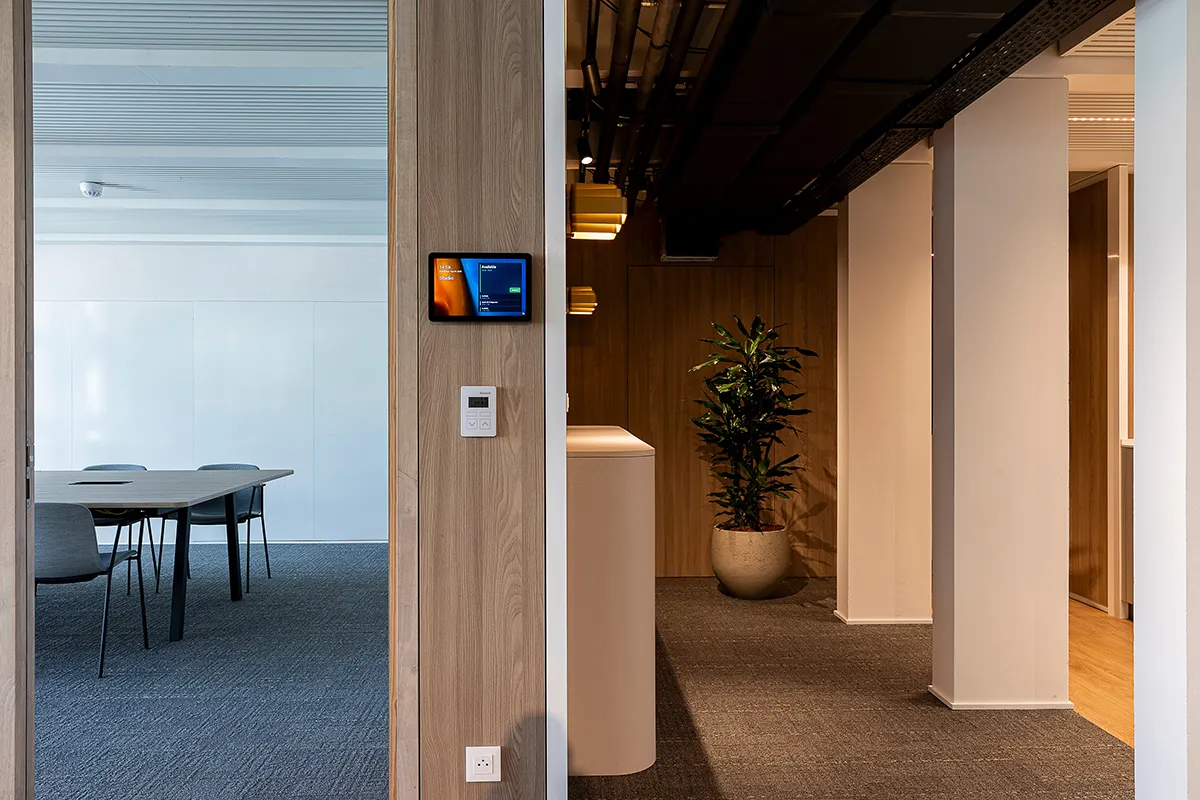
As hybrid working models become the norm, demand is growing for intelligent offices that support flexibility, connectivity and sustainability. Smart office technologies are a crucial part of the solution. As a renowned workspace designer, Pami has been responding to this evolution for many years with integrated solutions that combine advanced technology with functional, ergonomic design. With its in-depth expertise, extensive experience and personalised approach, the company has established itself as a leading player in high-end smart office fit-outs.
Today’s offices are no longer static spaces with fixed workstations. Employees alternate between working in the office, at home or on site, calling for flexible, technologically advanced interiors. Smart office applications are the backbone of this new model. They make it possible to manage workstations and meeting rooms efficiently, while also facilitating smoother collaboration between employees and teams, wherever they are. “Hybrid working brings different requirements for office design,” says Christophe van Hees of Pami. “Adaptability, digital support and ease of use are central. By integrating a range of smart technologies, we can create bespoke office environments that respond optimally to users’ day-to-day needs.”
Technology integration as a design principle
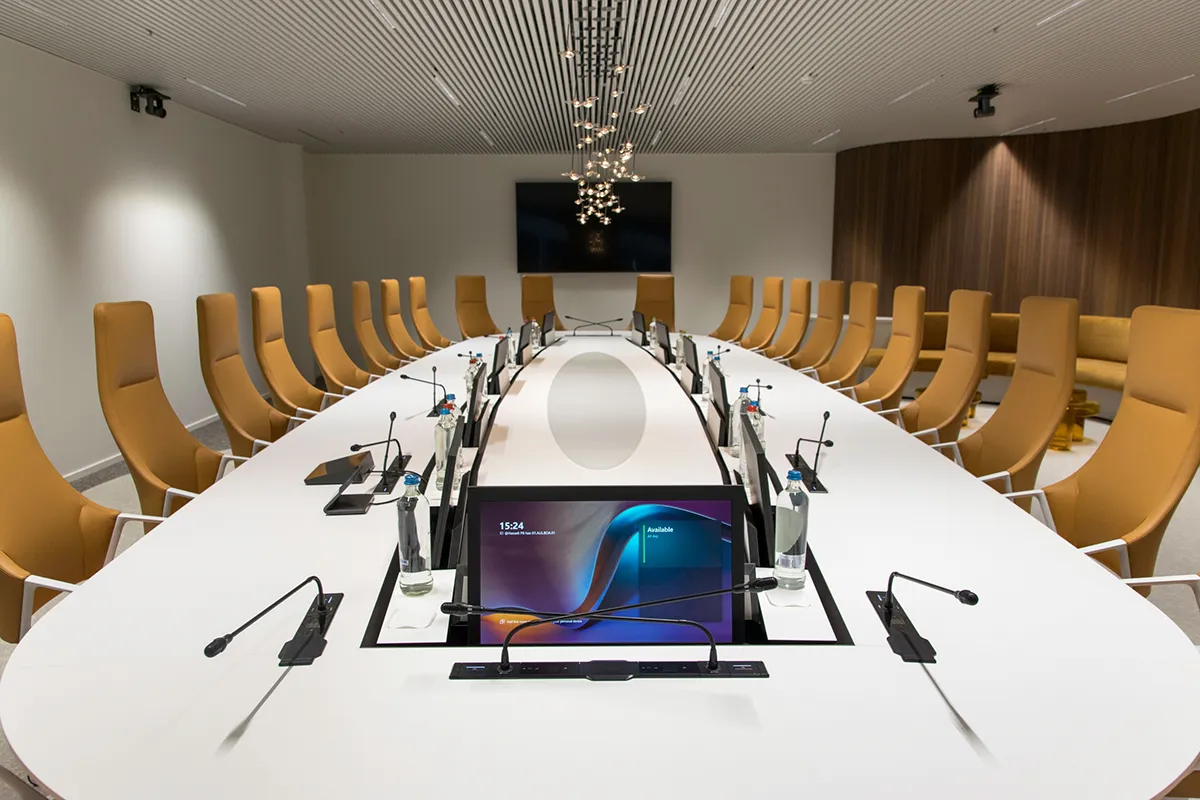
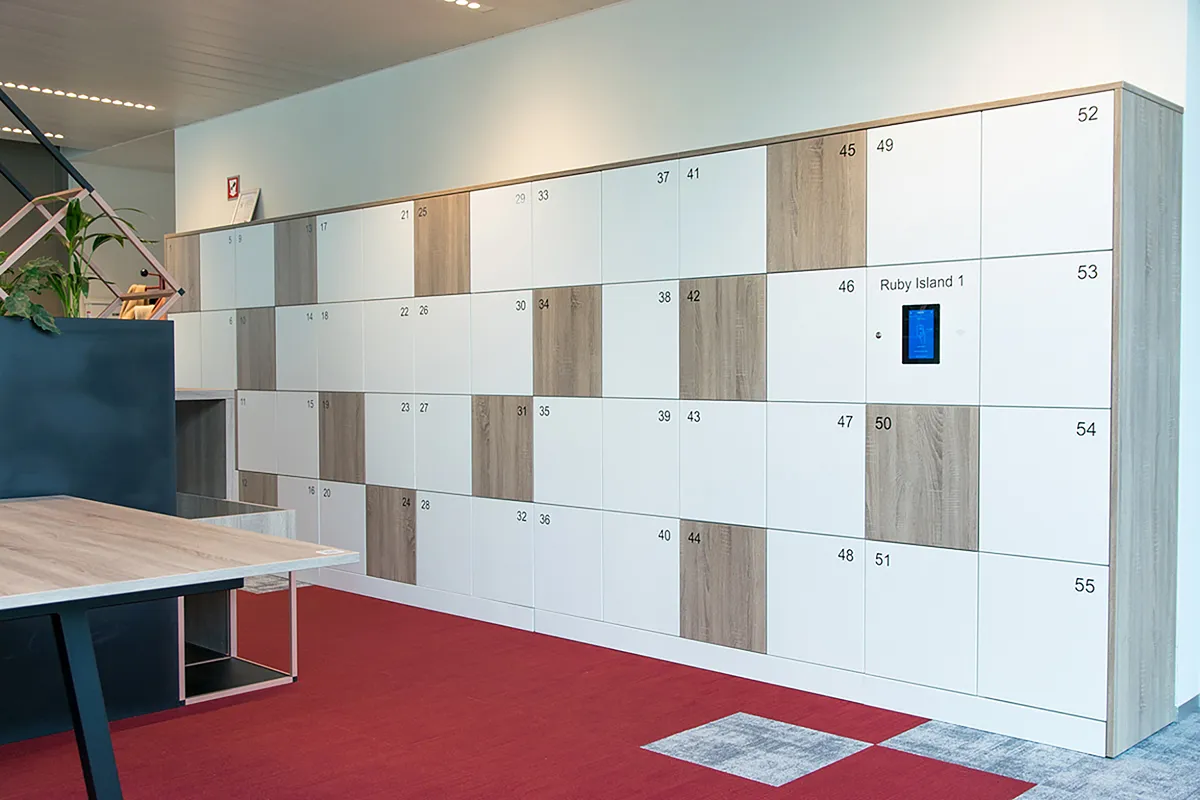
Pami’s added value lies not only in the design and manufacture of high-quality, bespoke office furniture, but also in the in-depth integration of technology. Solutions range from AV-integrated executive and meeting tables to smart LED lighting, digital signage, interactive screens, video conferencing facilities and workplace apps that let users quickly find colleagues or available desks, book meeting rooms and streamline asset management. All these smart office solutions help create intelligent, high-performance office environments that not only enable employees to work more efficiently, but also enhance their comfort and wellbeing. “Our smart locker systems are another excellent example. Easy to operate via smartphone or access badge, they support a dynamic office layout without fixed workstations and meet the need for secure, personal storage. The entire locker system can be monitored centrally, making management simpler and more efficient. In addition, integrated sensor technology makes these lockers ideal for large organisations that want to manage, share or exchange valuable devices such as smartphones, laptops and other equipment securely,” explains Christophe van Hees.
Data as a management tool
In smart offices, data play a key role in optimising the working experience. Occupancy sensors and specialist software tools, for example, can monitor in real time how specific spaces are used and how users behave. This information gives facilities and IT managers valuable insights, enabling them to assess whether spaces are being used optimally and where changes may be needed. “If you can measure it, you can manage it,” emphasises Christophe van Hees. “Data analysis enables companies to continually improve their office infrastructure, not only in terms of efficiency but also with a view to users’ wellbeing. Artificial intelligence will undoubtedly play an important role in this in the future. AI could, for example, predict which spaces are used most often, allowing the office layout to be adjusted dynamically. This leads to every workstation being used optimally at any time of day.”
Sustainability as a driver of innovation
Alongside technology, sustainability remains an essential consideration for Pami. In line with the European CSRD directive, the company places great importance on circular and energy-efficient solutions as part of modular, flexible office designs. Examples include circular, lightweight #GREENGRIDZ desk and table tops, made using 60 to 90 % fewer raw materials and producing 60 % lower CO2 emissions. Or large-scale 3D printing using waste streams of polypropylene, PET, rPET/carbon, hemp, paper or cardboard. Technology can also contribute to sustainability: smart lighting, automatic climate control and sensor-based energy management adjust temperature, light levels and ventilation according to the presence or preferences of employees. This reduces energy consumption and increases comfort. Another example is the integration of the latest generation of Linak drives, which Pami will be among the first in the market to use. These innovative drives consume up to 30 % less electricity, combining top performance with sustainability and user comfort. “They enable us to develop efficient, future-proof solutions that raise the industry standard. We see sustainability not as a box-ticking exercise, but as a driver of innovation,” says Christophe van Hees.
The result: bespoke, end-to-end concepts
To enable seamless technology integration, Pami works closely with partners such as Ricoh and Vecos. The resulting solutions are incorporated into bespoke, end-to-end concepts. What makes Pami’s approach particularly distinctive is that the entire production process for its office furniture takes place in Belgium, as do concept development, R&D and logistics. This allows the company to respond quickly, meet project-specific needs and deliver innovative solutions without relying on external suppliers. “We combine the flexibility of a workspace designer with the control of a manufacturer,” concludes Christophe van Hees. “With our integrated approach, a unique combination of interior design, technological expertise and production capacity, and our focus on innovation, we are ready for the office environment of tomorrow, where connectivity, flexibility and sustainability go hand in hand.”
Question about this story? Ask your question
Companies in this story
Keep following this
Get an email when a new story is published. No account needed.
- SubjectSmart building
- CompanyPami