Four persistent acoustic misconceptions debunked
Text Tim JanssensImage Philippe van Gelooven – Jaspers-Eyers Architects, Jean-Michel BYL – Jaspers-Eyers Architects, Houben, Pexels

Building owners and users are placing increasing importance on acoustic comfort. But achieving it requires a great many conditions to be met. What is more, a small mistake can have major consequences, because acoustics is a broad and complex subject. With this article, we hope to finally put four persistent misconceptions to rest.
Sound absorption versus airborne sound insulation
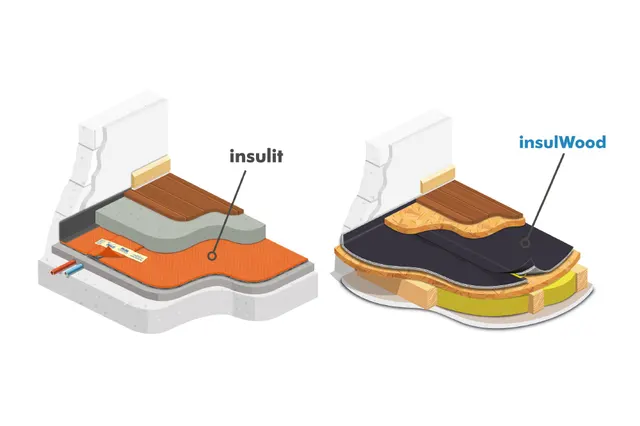
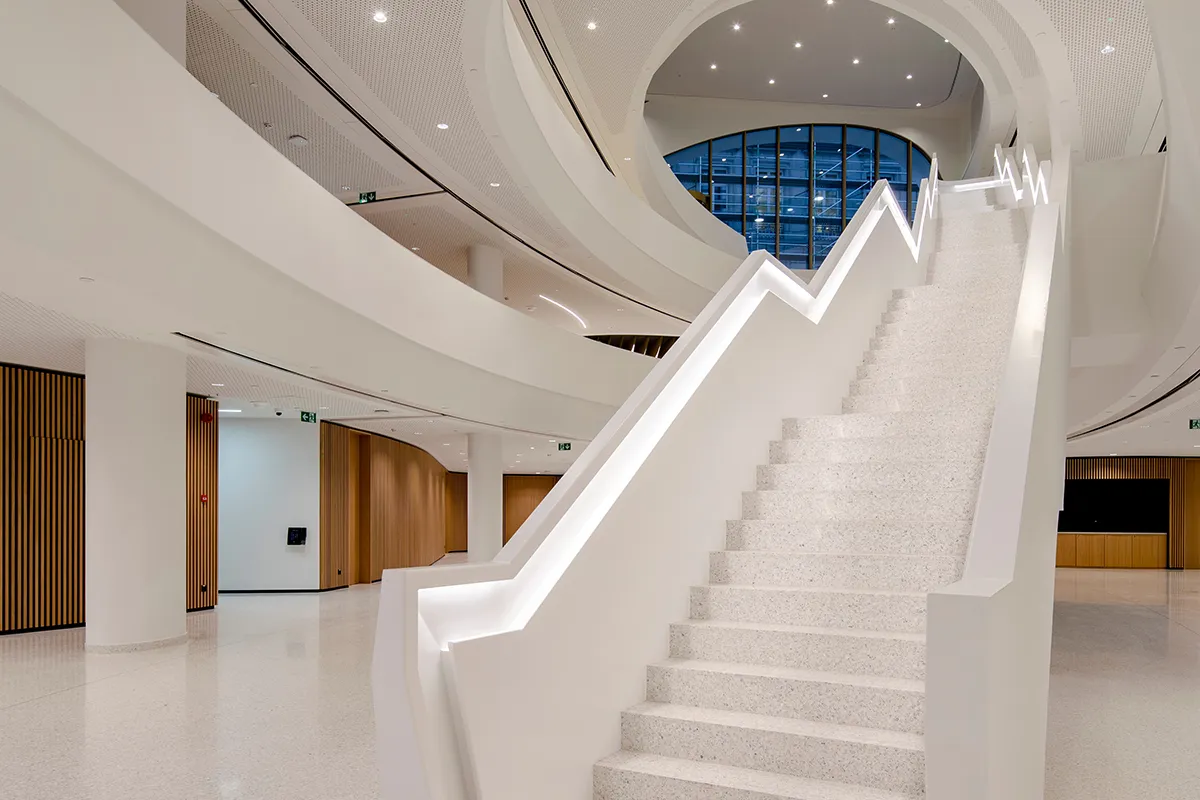
Acoustics is an umbrella term covering many different aspects, which can sometimes lead to confusion. Sound absorption and sound insulation, for example, are often confused, even though they are two separate parameters. Airborne sound insulation is the first step towards optimum acoustic comfort. This means ensuring that sound stays within the space in question and cannot spread to adjoining or nearby spaces. Once that has been achieved, the next step is to prevent disturbing reverberation by absorbing sound within the space. These are two aspects that require entirely different solutions and cannot be combined. Airborne sound insulation mainly relies on mass or mass-spring-mass systems to create an enclosed space and prevent so-called sound leaks, whereas sound absorption is primarily achieved through perforated materials, open structures and soft surfaces. Perforating a sound-insulating structure to improve sound absorption is therefore out of the question.
Acoustics versus aesthetics
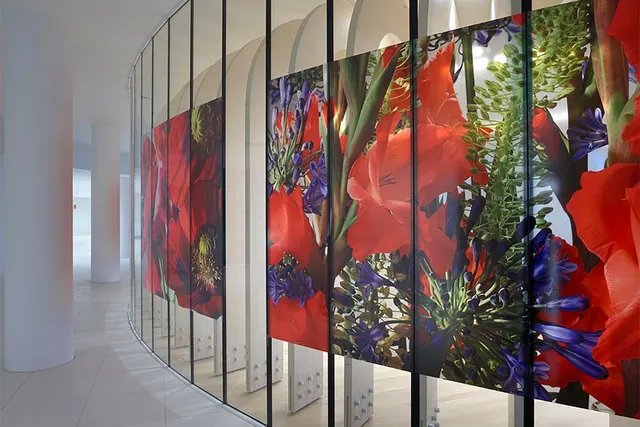
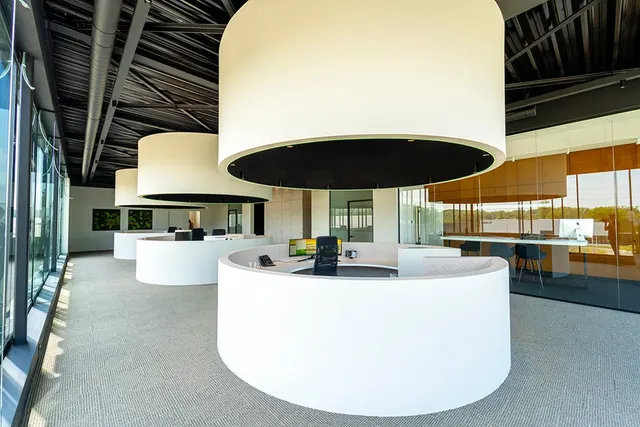
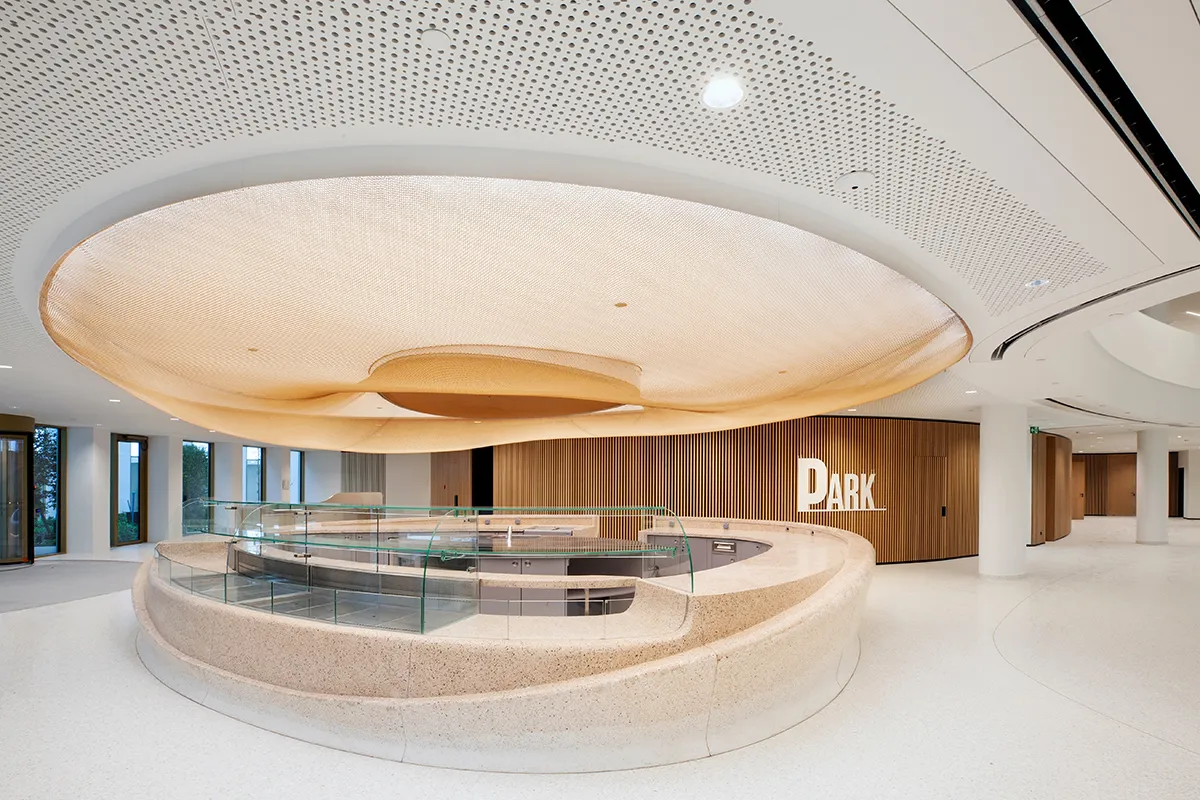
The days when acoustic interventions had a negative impact on aesthetics are long gone, yet some people still cling to the persistent misconception that the two are difficult or even impossible to reconcile. This is, of course, incorrect. What is more, elements such as acoustic ceiling and wall panels or sound-absorbing fabrics can actually add character to a space. The important thing is to make them an integral part of the interior design from the outset, rather than simply adding or adapting them later to solve an acoustic problem. Otherwise, of course, there is a risk that the aesthetics will suffer …
Not an isolated parameter
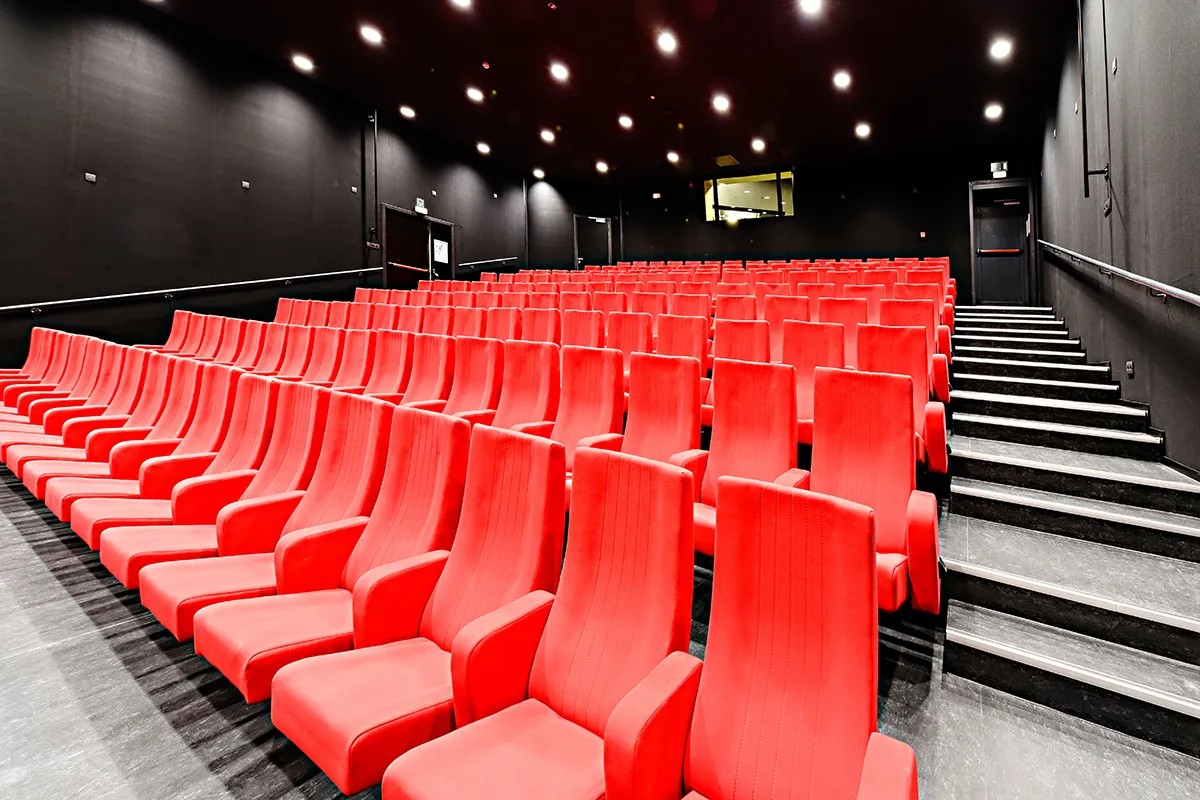
Acoustics affects entire projects, but projects also affect acoustics as a whole. This calls for an integrated approach, yet the different acoustic aspects, room acoustics, airborne and impact sound insulation, façade insulation and noise from building services, are still too often treated separately. This is a misconception, because these aspects do indeed influence one another. A typical example is an apartment building with highly effective façade insulation, making the interior very quiet and potentially causing residents to be more easily disturbed by sounds coming from neighbouring apartments. Other technical aspects, such as thermal insulation and fire resistance, must also be taken into account in this holistic approach. It often takes some searching to find solutions that combine all these elements, rather than tackling each point separately and ending up with a much higher bill.
The price tag
While we are on the subject of money, acoustics is often seen as an expensive undertaking, but it certainly does not have to be. At least, not if it is taken into account in good time. If acoustics is factored in from the outset when creating and fitting out a space, it will not entail exorbitant extra costs. If, on the other hand, it is only considered at the last minute, many additional constraints may already be in place and there will be less flexibility. As a result, more substantial interventions may even be needed to achieve the desired acoustic comfort, or people may have to make do with stopgap measures. In short, the earlier, the more cost-effective! That said, the cheapest solution is generally not the best. Anyone looking for flawless acoustics must also be prepared to invest in it …
Question about this story? Ask your question
Keep following this
Get an email when a new story is published. No account needed.
- SubjectAcoustics