Offsite timber construction: a double lever for more sustainable, smarter building
Text Marlies DecavelImage Siemon Vanderhulst/WOOD.BE
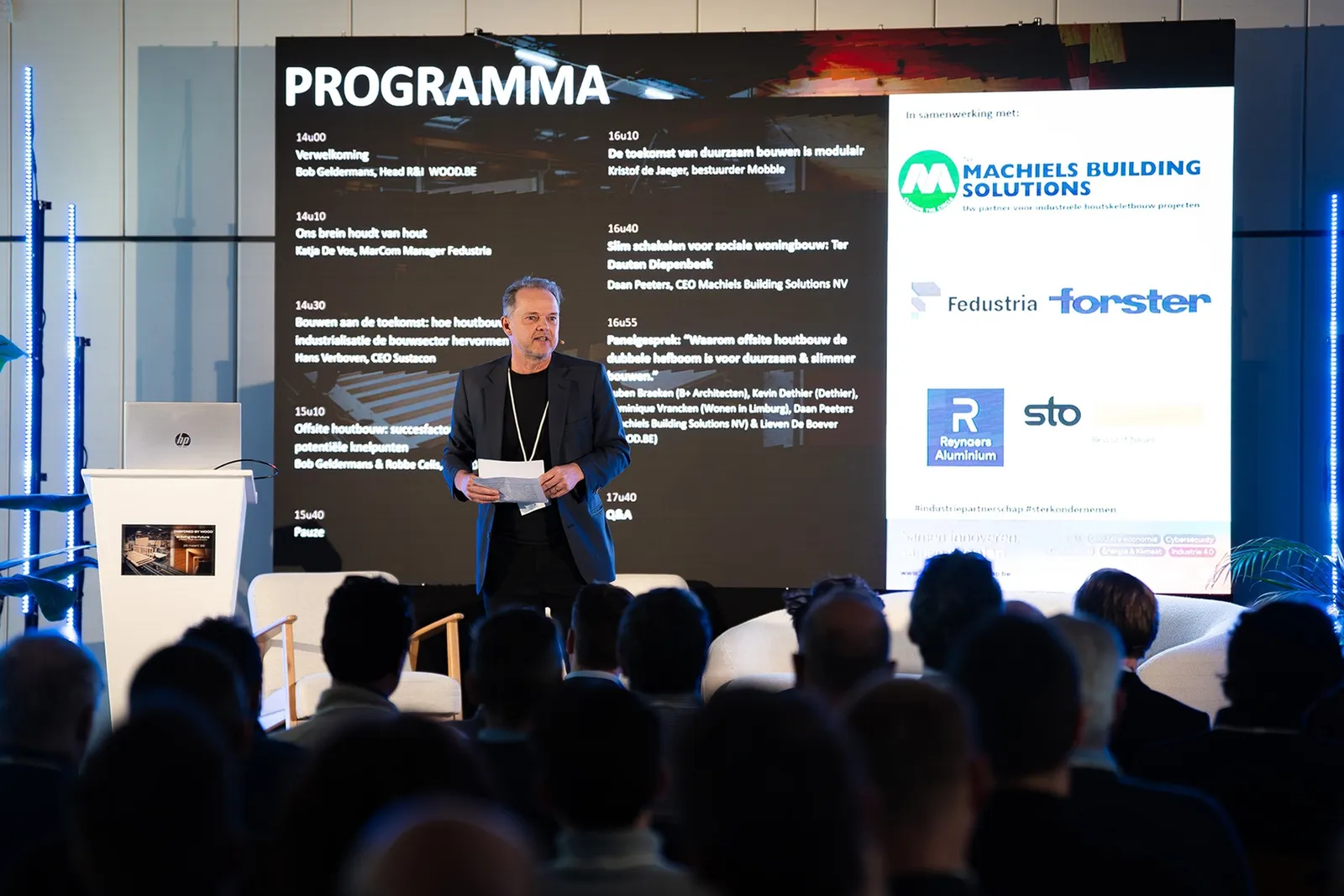
At the latest edition of Inspired by WOOD, held at Fedustria’s premises, WOOD.BE once again brought together professionals from the timber and construction sectors. The study day centred on the theme Building the future: IMPACT with timber construction. Insights from research, practical case studies and a panel discussion showed that the transition towards faster, more sustainable and smarter building is already well under way. The day’s conclusion: timber and construction industrialisation together provide a powerful lever for the future.
The construction sector is under pressure from increasingly stringent sustainability requirements, economic challenges and growing demand for affordable housing. At the same time, there are significant opportunities to do things differently. This new approach starts with a clear shift: away from traditional, fragmented construction towards a more controlled, industrial and circular way of working, with more systems thinking and collaboration across the value chain.
Our brains love wood
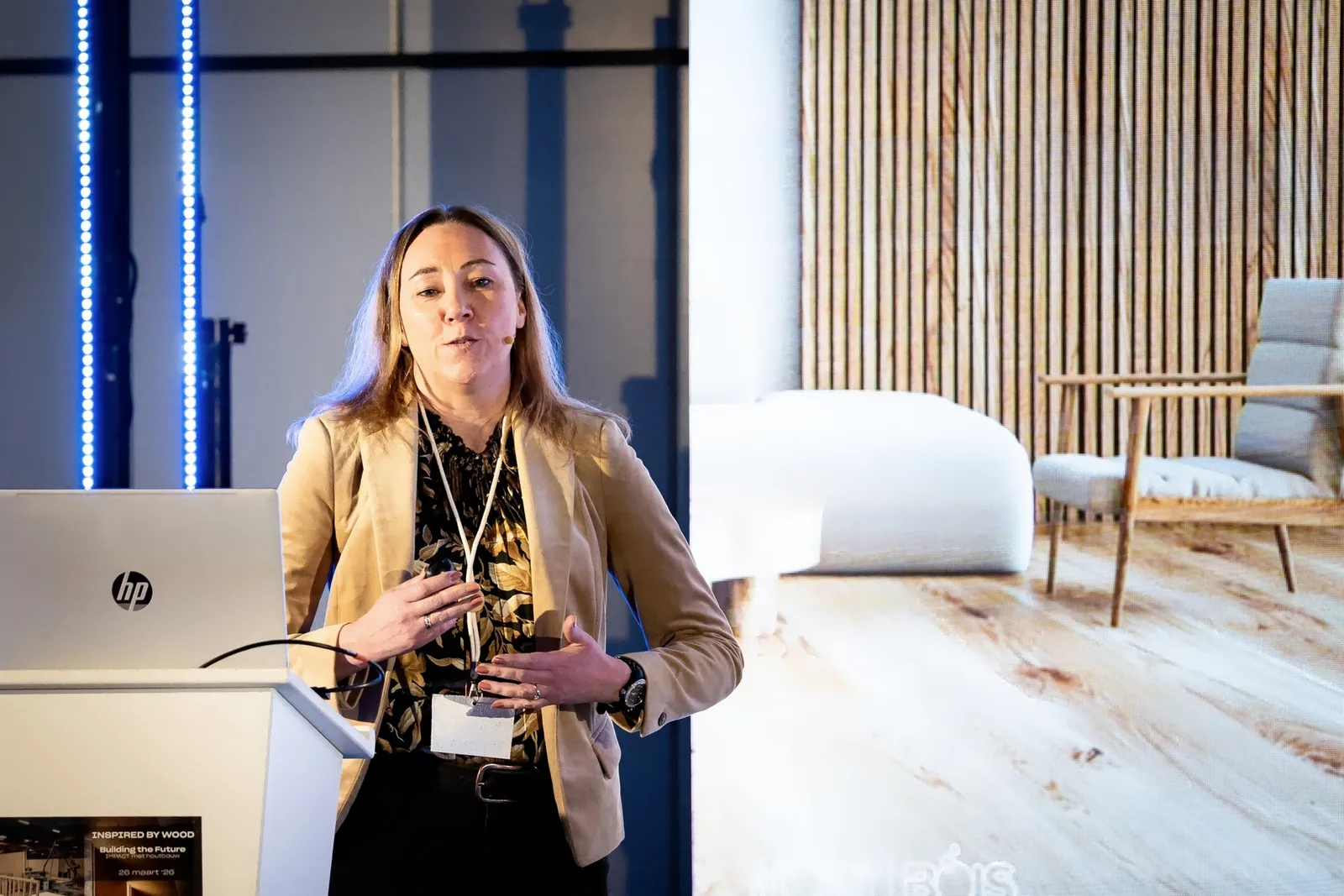
An inspiring first perspective came from Katja De Vos (Fedustria), who presented the research study ‘Our brains love wood’
. fMRI scans were used to examine how people respond to different materials in a range of settings. The results paint a strikingly consistent picture. Wood has a clearly positive impact on wellbeing: in homes, it creates a sense of safety and connection; in offices, it encourages creativity and trust. In classrooms, wood reduces stress and boosts self-confidence, while in healthcare settings it fosters social interaction and calm. “Our brains demonstrably respond differently to wood than to other materials,” said De Vos. Her message is clear: material choice matters. Neuroarchitecture offers practical guidance for designing buildings that are both functional and people-centred.
Construction industrialisation as a necessity
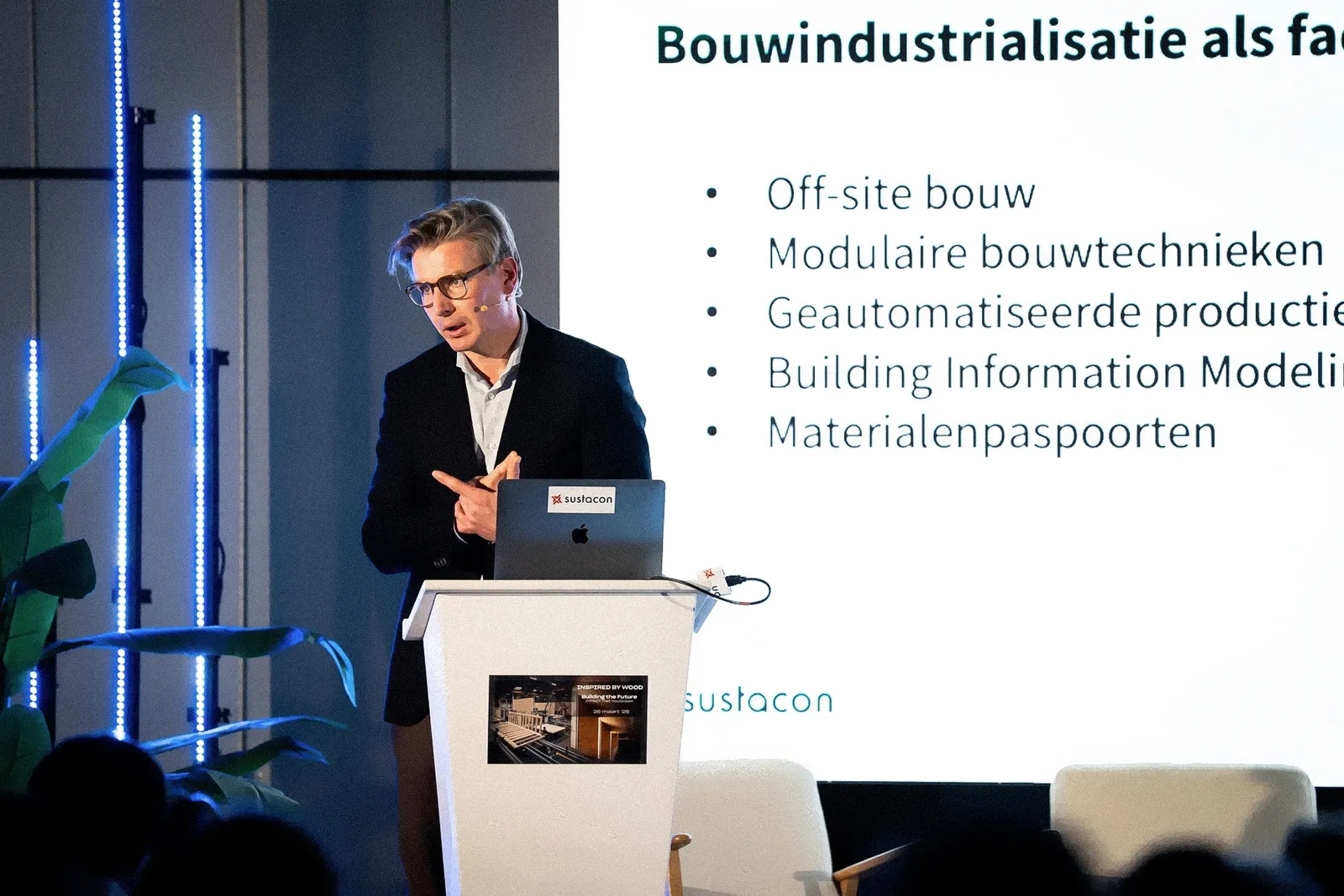
In the theoretical part, Hans Verboven (Sustacon / University of Antwerp) outlined the broad direction of the transition. The traditional construction sector faces structural problems, including complex logistics, fragmented communication and defects and rework costs that can sometimes reach as much as 20 %. Add stricter regulations, sustainability pressures and economic uncertainty, and it is clear that change is inevitable. “This is not a perfect storm heading our way, but a full-blown hurricane,” he said.
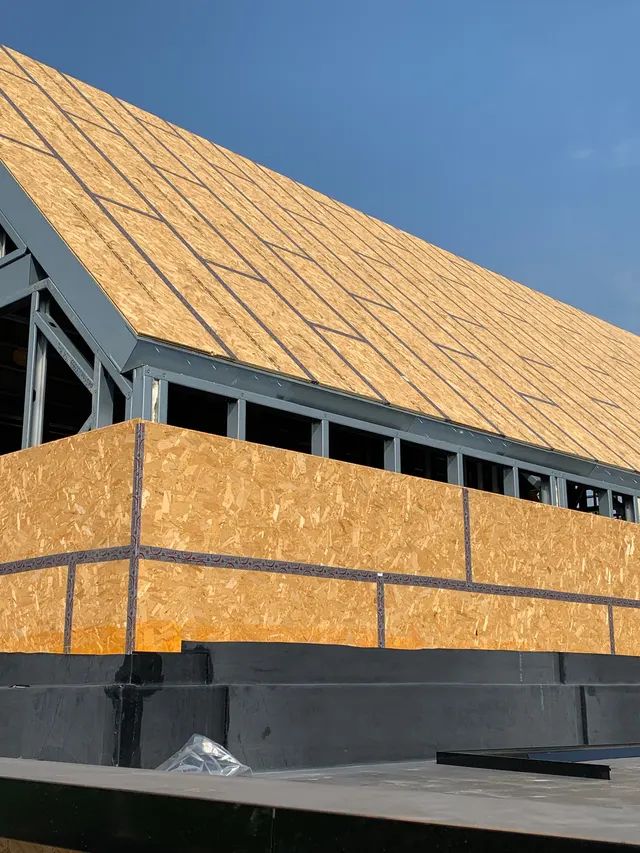
Construction industrialisation offers an answer, in his view. “We need to move towards a way of building that gives us greater control and fewer surprises. That means more control over the process, lower costs from defects and rework, shorter lead times, improved safety and predictability, and more efficient energy use.” Offsite construction plays a key role in this. “By moving production to a controlled factory environment, you shift complexity away from the site and into a manageable setting.”
Wood as a catalyst
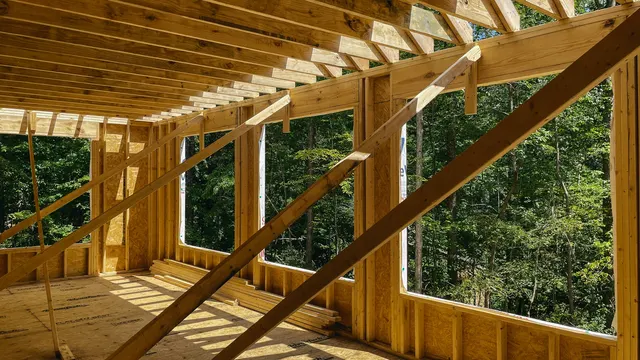
According to Verboven, wood is the ideal material to support this evolution. “Wood combines speed, precision and a high degree of traceability, making it particularly suitable for industrial construction processes.” It also has significant advantages in terms of circularity. He stressed the importance of a pragmatic approach. “It’s about the bigger picture. Hybrid forms of construction, combining wood, concrete and steel, remain relevant when seeking the best solution. A full life-cycle assessment (LCA) provides the basis for making the most sustainable choices.”
The European taxonomy is also accelerating this shift. It raises the bar for CO2 reduction, circularity and documentation. “By investing in modular systems, BIM and material passports, you can create sustainable buildings with clear economic added value.”
Prefab versus traditional construction
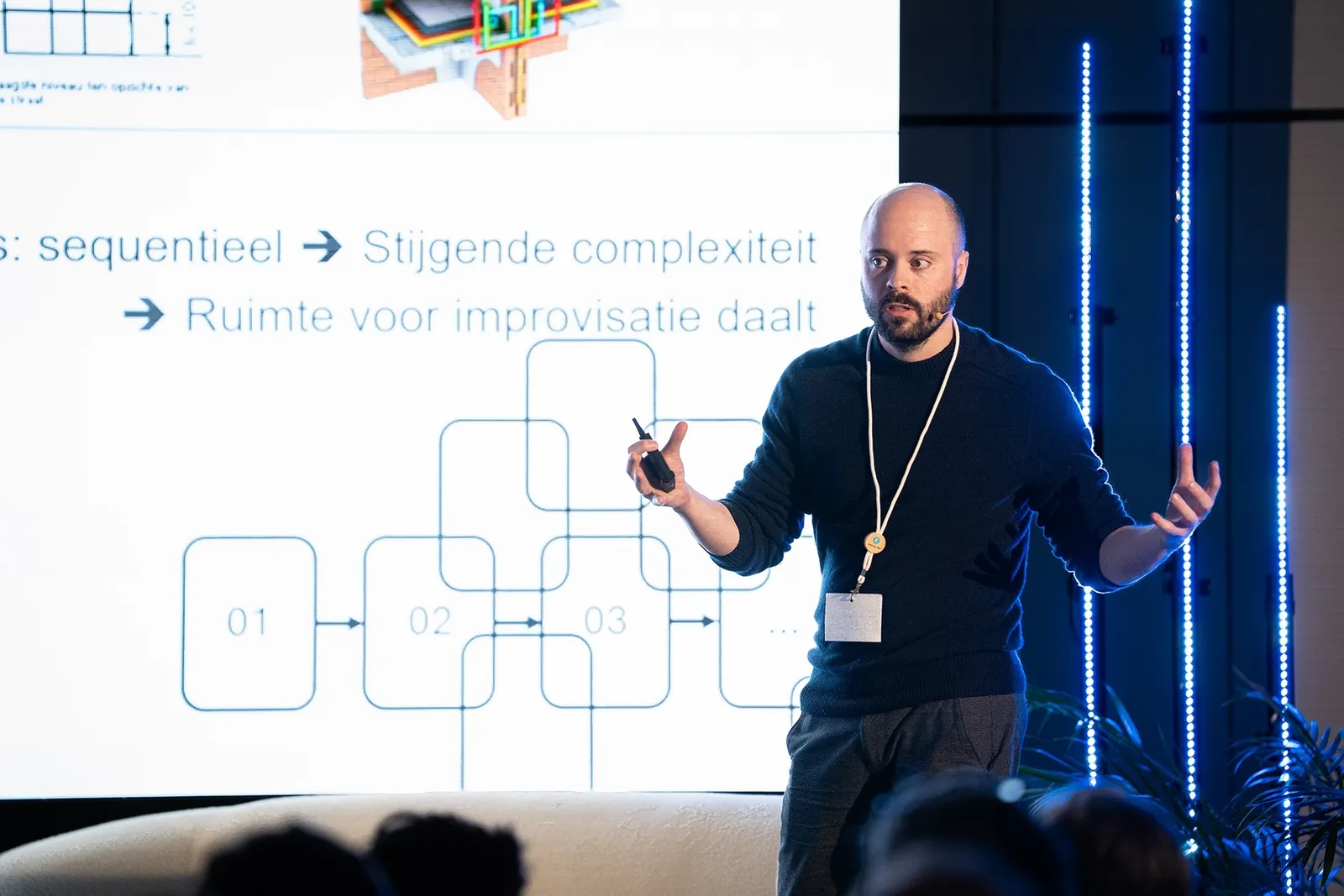
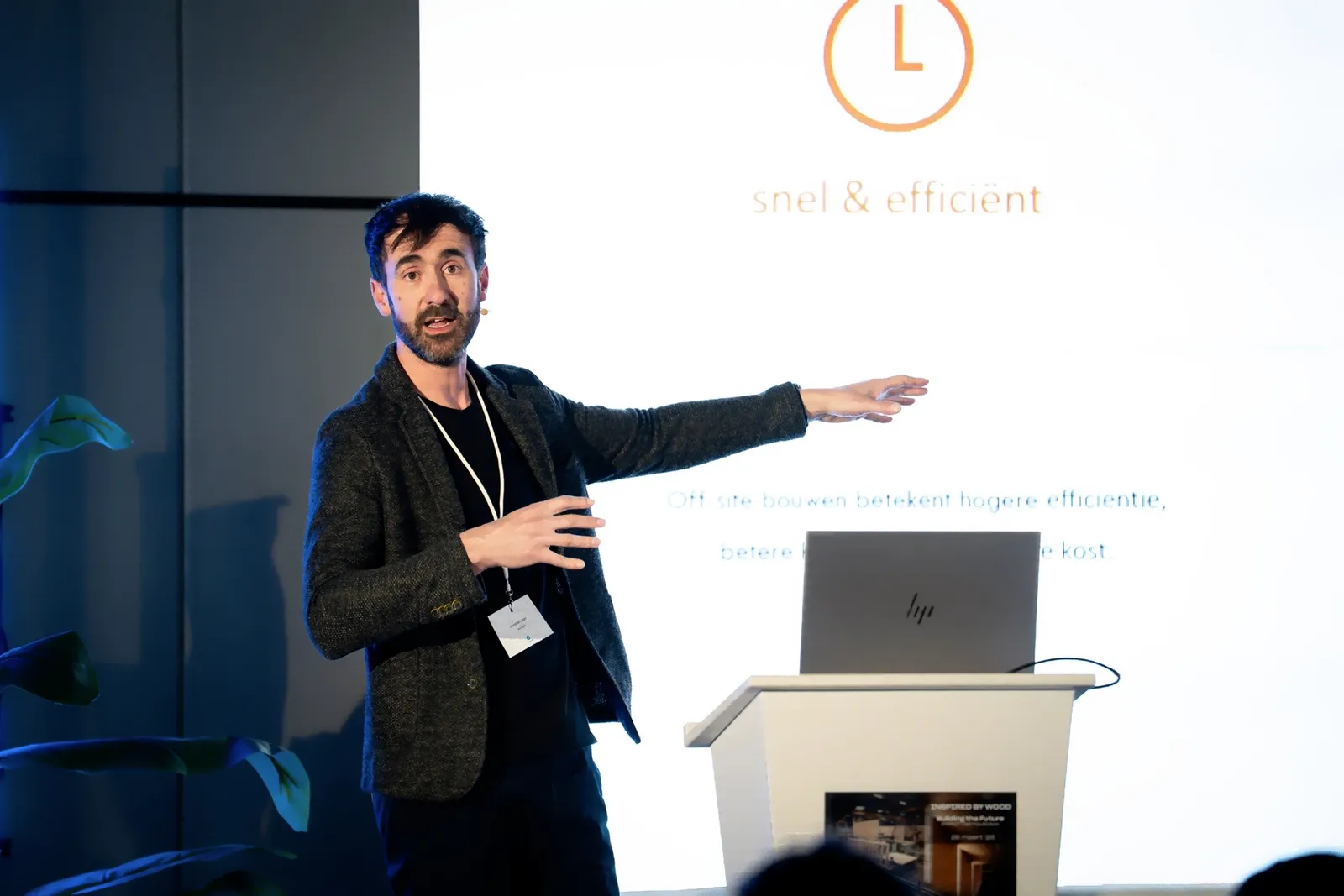
Bob Geldermans (head of research & innovation) and Robbe Celis (research & innovation expert), both from WOOD.BE, translated these insights into practice by comparing traditional and prefabricated construction methods.
Traditional construction follows a linear, fragmented process, from one contractor to the next and from foundations to finishing, with plenty of scope for improvisation and the associated risks. Prefabricated construction, while still largely linear, is much more controlled and more closely links design and execution. “You shift much of the uncertainty to a stage where it can be managed,” says Robbe Celis. “The design process does require more preparation, but execution is faster and more efficient.”
At the same time, the experts remained realistic. “In Belgium’s context, with its strong renovation market, every project calls for its own approach. A hybrid way of working, with onsite where necessary and offsite wherever possible, is often the most appropriate solution.”
Modular construction in practice
Two practical case studies showed that the theory discussed in the first part of the afternoon is already being put into practice.
Think first, then act
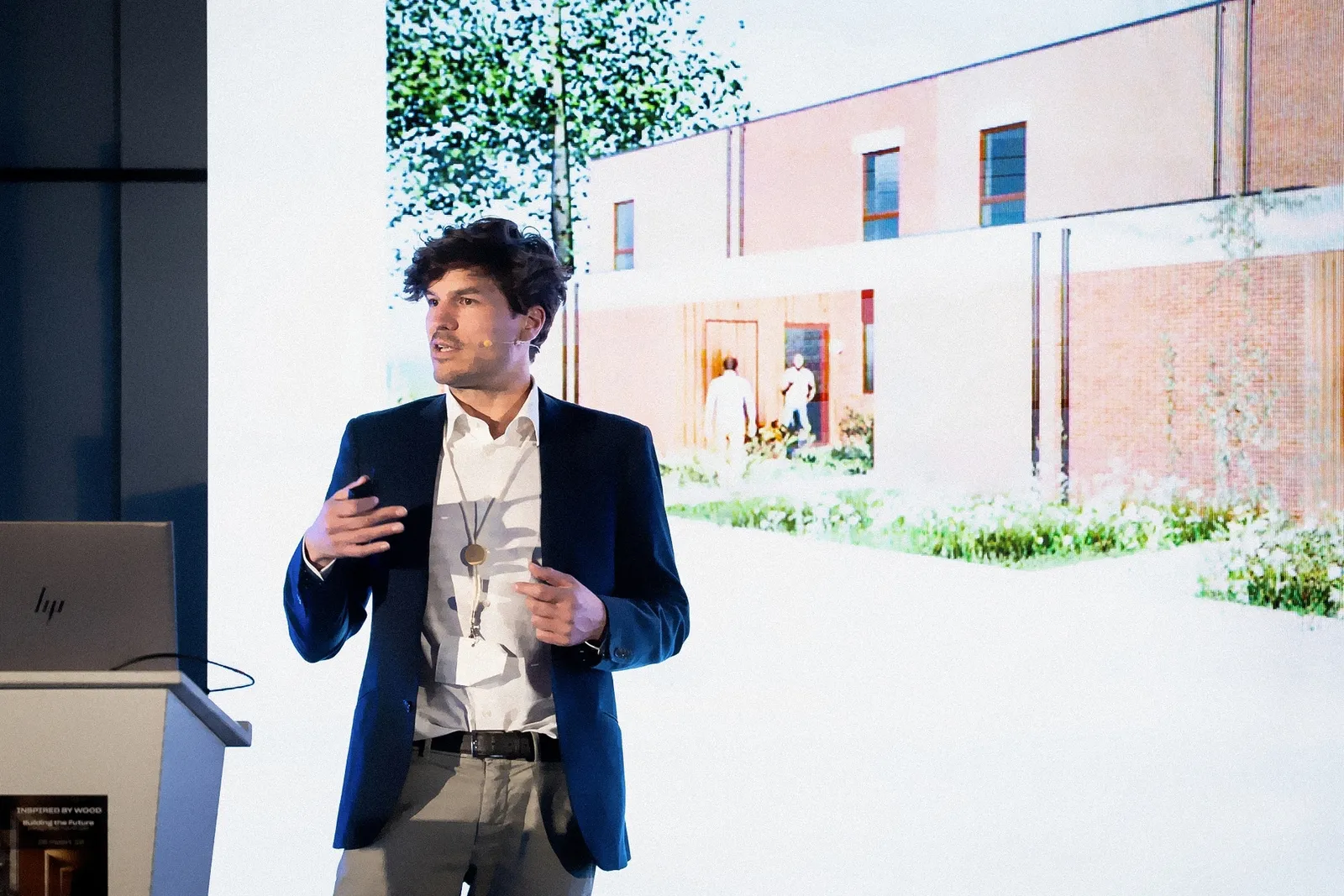
Kristof de Jaeger (InHout/Mobble) outlined how modular timber construction is responding to today’s challenges. According to international studies, the construction sector is still responsible for a significant share of CO2 emissions, more than 40 %, while construction methods have changed little over the past few decades. “We still build too much as we did in the 1990s, even though the solutions have been around for years,” says de Jaeger. “Modular construction must not be dismissed as a pipe dream. It is already happening, and it is urgently needed.”
The key lies in taking a different approach to the process. From the outset, work in a construction team where the client, architect and contractor make decisions together. Every choice is carefully considered and agreed in advance, after which construction takes place in a controlled environment. “Think first, then act. It takes more effort at the start, but brings huge gains in time, quality and predictability later on.”
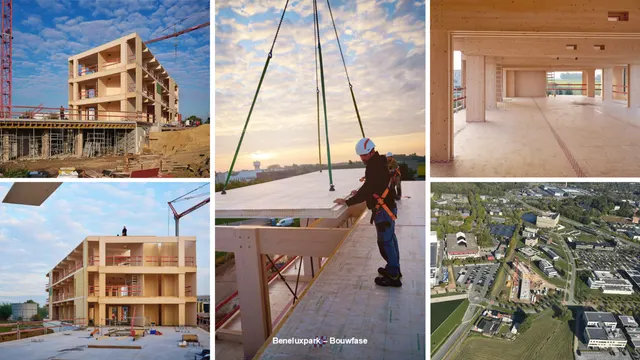
Although each project is designed to meet specific requirements, the construction process is largely standardised. This delivers efficiency without sacrificing flexibility. A striking example is their inschuifhuis: a modular terraced house that replaces an existing home that cannot be renovated. Thanks to extensive preparation, from 3D scanning to a demolition inventory and design, Mobble can build one of these homes in just seven weeks, including finishing. Compared with traditional construction methods, this saves up to nine months.
Moving beyond prototype thinking
Daan Peeters (Machiels Building Solutions) also demonstrated how industrialisation can speed up construction, including in social housing. For a
Design & Build project
for Ter Dauten in Diepenbeek, the team used a growing library of standardised building components that can be reused and refined from one project to the next. Peeters said: “We need to move away from the idea that every project is a prototype. Working with reusable elements means learning from every project and achieving ever greater efficiency gains.”
This approach delivers strong results. A residential project was completed in around three months. “Everything is clarified in advance. That means we can move faster and avoid surprises on site.”
Sustainability also plays an important role. Using wood as a local, renewable material, reducing costs from defects and rework, and optimising processes all significantly reduce environmental impact. “Speed, quality, sustainability and affordability are not mutually exclusive. With a well-organised process, they go hand in hand.”
Panel discussion: from ambition to reality
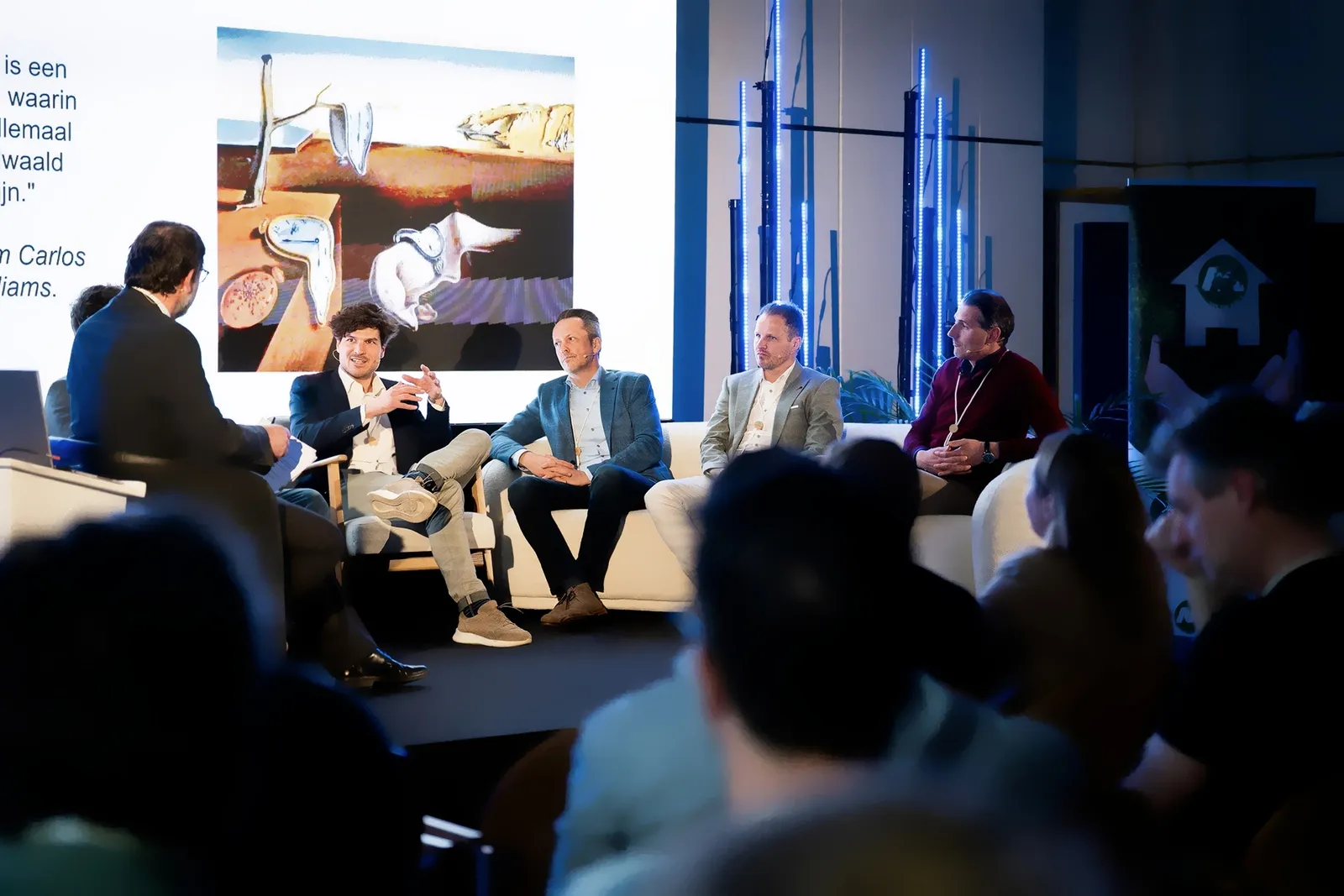
The closing panel discussion brought together different links in the value chain around one conclusion: offsite timber construction is speeding up the sector while raising quality and sustainability to a higher level. Projects with lead times of around three months show that this speed is already achievable, provided there is thorough preparation, clear decisions and close collaboration. Working with standardised elements and a growing library of solutions creates a learning process that delivers efficiency gains with every project. This acceleration also has an economic impact: buildings reach the market sooner, increasing their usability and value.
At the same time, comfort and technical performance remain at a high level thanks to rigorous process control and an integrated approach to design and execution.
Standardisation and architectural freedom reinforce one another in modular systems that allow for variety and customisation. Progress is also being made on sustainability, with certification as a starting point and growing attention to reuse and local, regenerative materials. In light of future challenges such as renovation and densification, adaptable and modular building concepts are becoming increasingly important. The levers are in place; the next step is to scale up further.
In his closing remarks, Chris De Roock, general manager at WOOD.BE, urged attendees to turn these insights into action. Inspired by WOOD aims not only to inspire but also to activate. He concluded with an open invitation to the audience: which topics deserve a place at the next edition, and which challenges can we tackle together? Let WOOD.BE know.
This edition of Inspired by WOOD was organised as part of the #industriepartnerschap, with the support of VLAIO. In collaboration with Machiels Building Solutions, Fedustria, Forster, Reynaers Aluminium & Sto NV.
Question about this story? Ask your question
Companies in this story
Keep following this
Get an email when a new story is published. No account needed.
- SubjectTimber construction
- CompanyForster
- CompanyReynaers Aluminium