Access control 3.0: the future of biometrics
Text Tim JanssensImage AI
Biometric access control is no longer a novelty. Fingerprint scanners and iris recognition have found their way into numerous office buildings, airports, data centres and more in recent years. Yet these seemingly ultra-reliable security methods are not 100% foolproof, since they rely on a visible and, theoretically, reproducible characteristic. However ingenious people with malicious intent may have to be to get around them, misuse cannot be ruled out entirely. That is why considerable effort is going into developing biometric techniques that go much further. The thinking behind them is that what you present is not what matters: it is who you really are …
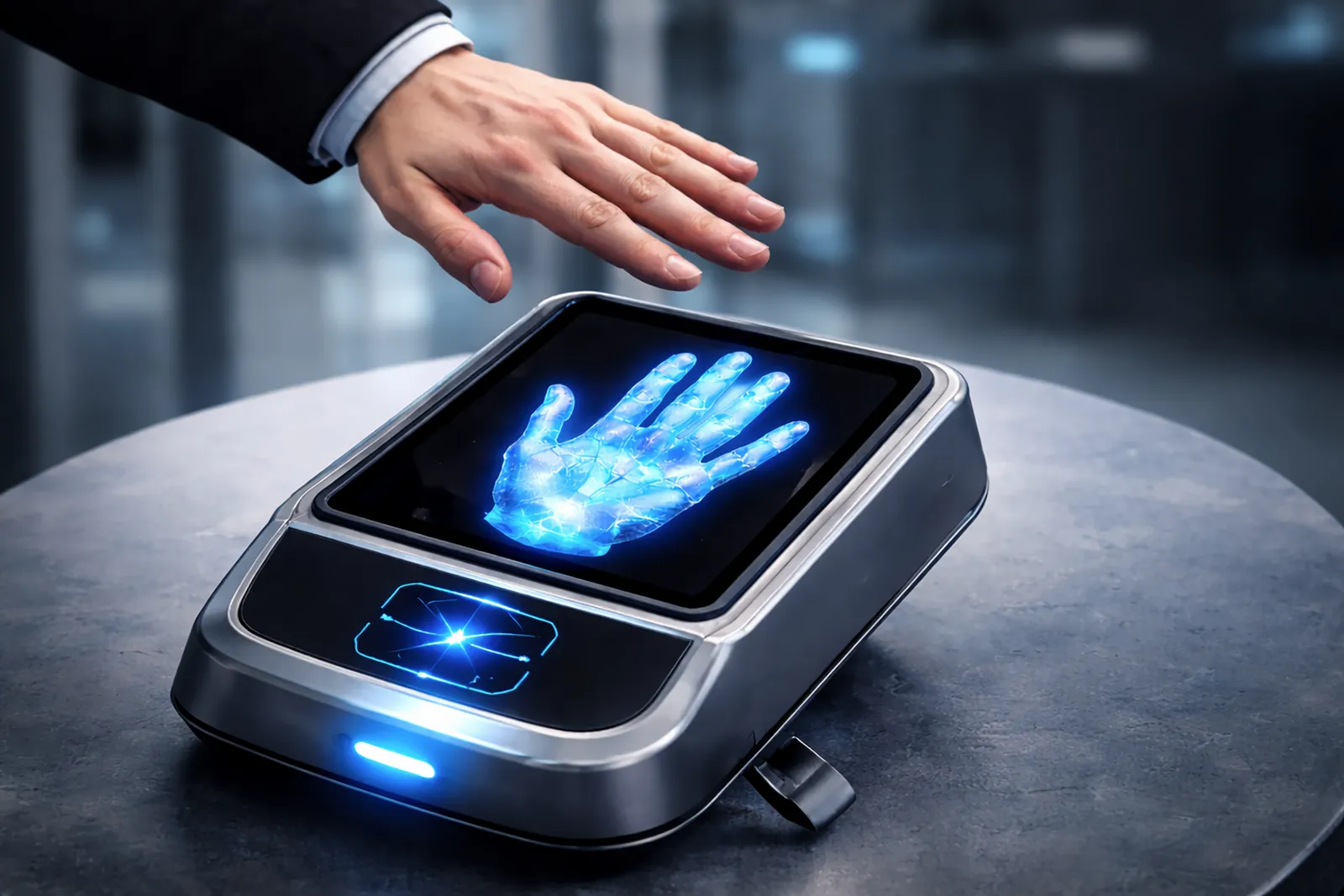
Those who spend time at Corda Campus in Hasselt may already be used to it, but for many of us, the access control there will seem like something from the future. It is based on an infrared scan of the blood vessels and nerve pathways on the inside of the palm, which is translated into a unique identification key using 3D imaging and triangulation based on 5 million reference points. While most recognition systems focus on external physical features and therefore, by definition, remain at the surface, this innovative concept literally goes deeper to verify a person’s identity. Ultra-secure, lightning-fast, contactless and hygienic too! That is why a pilot project is now also under way to enable people to pay using just the palm of their hand, which could prove a real game-changer at large venues or mass events such as festivals and concerts.

Promising innovations
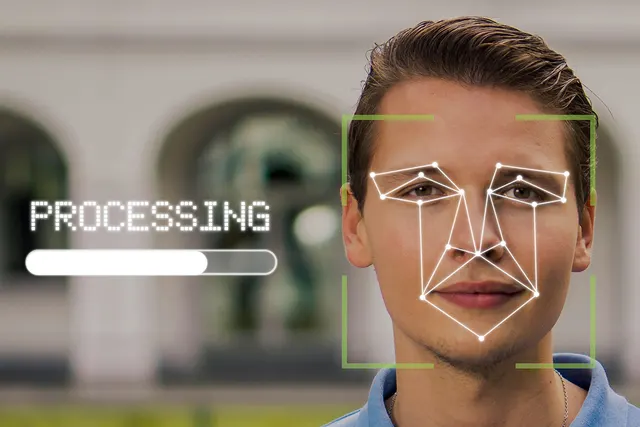
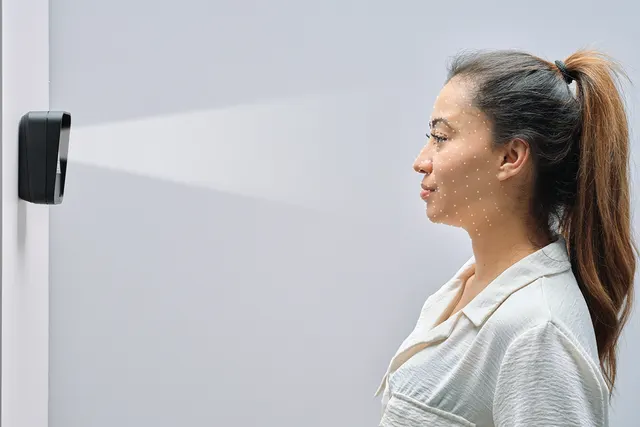
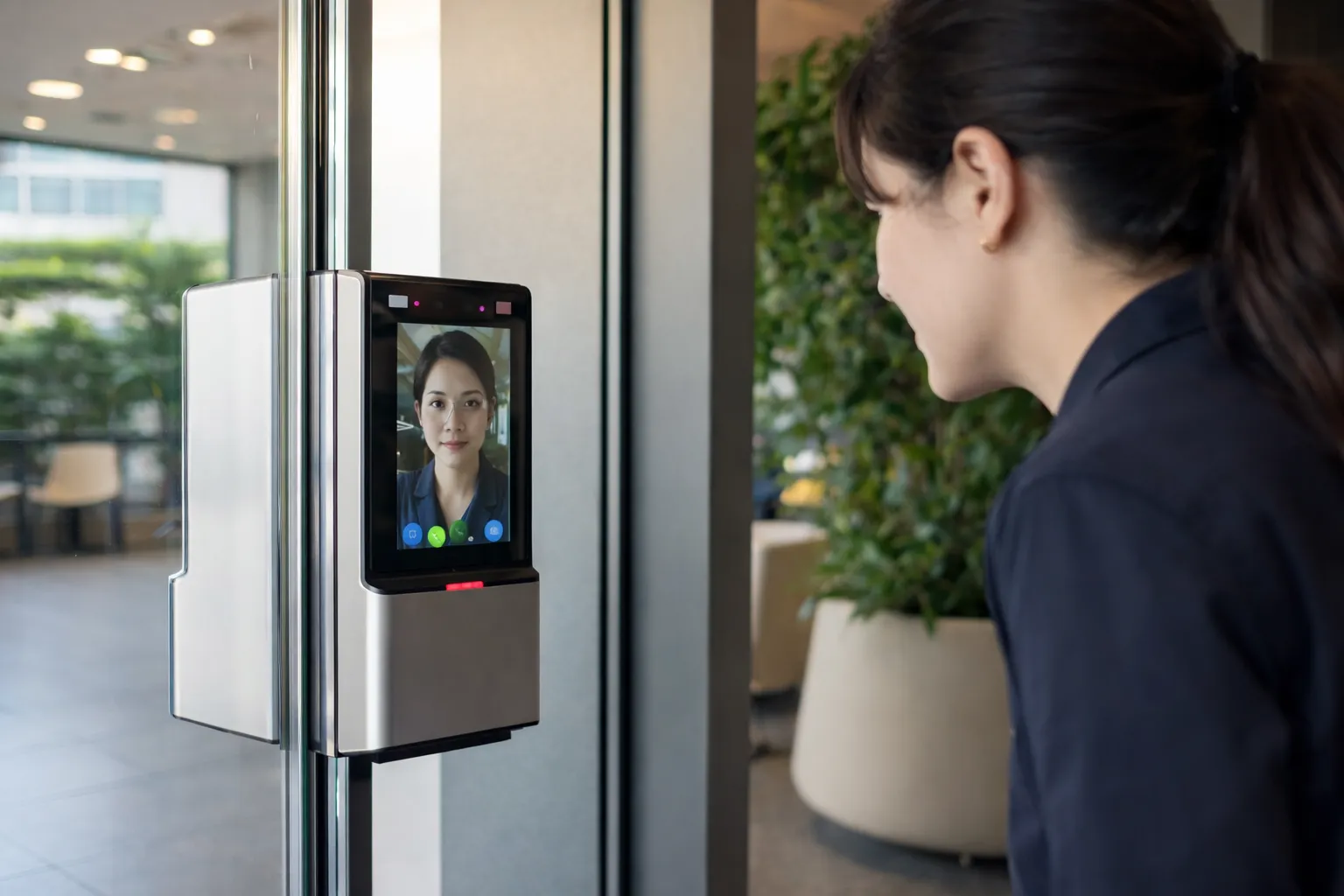
This is part of a broader trend: vascular biometrics. Vein recognition in the fingers or wrist is also gaining ground, particularly in environments where safety is the highest priority, such as laboratories, healthcare facilities, military bases and critical infrastructure. Because the infrared scanner reads internal patterns, resistance to spoofing is greater. Another promising innovation is advanced facial recognition with so-called ‘liveness detection’. This uses a 3D facial scan with depth measurement, combined with the detection of micro-movements such as blinking, skin texture and body heat. Even more subtle is behavioural biometrics, which identifies people based on factors such as their gait or movement patterns. Heart-rate or ECG biometrics are even appearing in research settings. The heart’s electrical signature, after all, turns out to be as unique as a fingerprint. And who knows, perhaps in the future we will see DNA matching using saliva or skin cells?
What many of these potential new developments have in common is their multimodal nature. The future of access control lies less in a single, all-encompassing technology than in a combination of different methods, without losing sight of ease of use. After all, systems like these must not only make buildings and environments safer, but also easier to access. That is why they should ideally be invisible and contactless, or even frictionless.
More than just a gadget
However, all this sounds simpler than it is in reality, as there are also caveats. The underlying technical complexity is immense and raises several important issues, including substantial IT infrastructure, integration with existing access control systems, fire safety, evacuation procedures and scenarios involving power cuts or network problems. In addition, watertight cybersecurity is crucial, as data breaches can have disastrous consequences. You can change a password, but obviously not a palm or vein scan. Finally, there is the human factor: it must not feel too intrusive, or it risks provoking resistance and aversion.
Whether, and to what extent, we will see these innovations put into practice remains to be seen. But one thing already seems certain: in the future, access control will involve much more than installing a simple reader or scanner by the door. Advanced biometrics have a direct impact on design and subsequent operation, including circulation concepts, entrance areas, data networks and technical rooms. Anyone planning future-oriented projects today would therefore be wise to see it not as a gadget, but as an integral part of the building or environment concept.
Question about this story? Ask your question
Keep following this
Get an email when a new story is published. No account needed.
- SubjectAccess control