AI facial recognition on construction sites: what are the rules?
Text Tim JanssensImage Salto, Pixabay
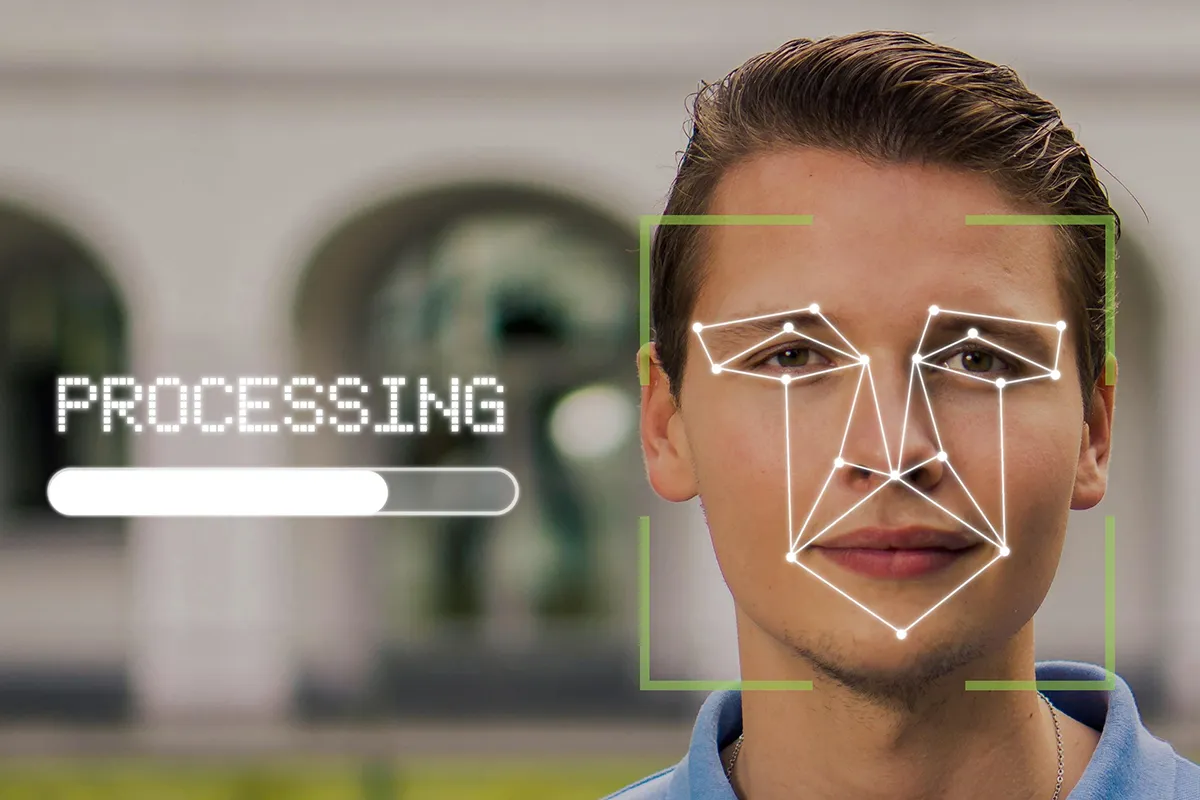
New obligations under the European AI Act have applied since 2 February 2025. The Act entered into force on 1 August 2024 and means that the use of certain AI systems is now strictly regulated to prevent misuse. Facial recognition technology has also come under scrutiny, in addition to the GDPR requirements that already applied. What does this mean for access control using AI facial recognition on construction sites? Is it still allowed, and if so, under what conditions? We investigated.
Efficient access control, watertight site security, fraud prevention … AI facial recognition offers construction companies plenty of ways to better protect their sites from unauthorised access. Some have already been experimenting with the technology. Take the recent construction site at PLOT in Genk, where main contractor Democo and sister company AEW Security successfully tested it last year while building a new training centre for the police, fire service and ambulance crews. The trial was part of a project to combat social fraud and was conducted under the auspices of Jo Brouns, the Flemish Minister for Work, Economy and Innovation at the time. However, the recent entry into force of the AI Act may have a deterrent effect. Fortunately, we found that there is no need for concern when we examined the new EU guidelines, provided you follow the rules …
What is prohibited?
The AI Act prohibits the use of real-time biometric identification in public spaces, except in exceptional law enforcement cases. This means that AI facial recognition systems that continuously scan and identify people on construction sites accessible to the public are no longer permitted. In other words, sites that are not fully enclosed and are located in public spaces cannot be secured using real-time facial recognition based on AI technology. Employees and visitors must therefore be identified automatically by other means, for example using a conventional badge system.

What is permitted?
The AI Act is strict, but fair. The EU has not banned all facial recognition applications. AI facial recognition that does not operate in real time, for example a system in which an employee or visitor actively registers at an access terminal, is permitted, but is classed as ‘high risk’. Strict rules therefore apply. First, construction companies must be able to demonstrate that the system operates safely, transparently and fairly. Second, strict requirements apply to documentation, risk analysis and oversight. Last but not least, users must be explicitly informed about how the system works and give their express consent to the processing of their biometric data. This data must not simply be stored automatically, let alone shared.
Conclusion
Does the AI Act mean that AI facial recognition on construction sites is a thing of the past? Certainly not. Its use is no longer unrestricted and is now strictly regulated, but companies that implement it properly and correctly have nothing to fear. Construction companies that ask people authorised to enter their enclosed sites to register in advance, and obtain their explicit consent to the temporary and clearly defined use of their biometric data, are fully compliant if they also provide a terminal or other registration point where authorised employees and visitors can voluntarily have their faces scanned to gain access. This can be combined with a second authentication method, such as scanning a badge, QR code or fingerprint. In this respect, the additional measures or any necessary changes are outweighed by the many benefits of access control using AI facial recognition: efficiency, ease of use, enhanced security and fraud resistance. All this while respecting users’ privacy.
Question about this story? Ask your question
Keep following this
Get an email when a new story is published. No account needed.
- SubjectAccess control