“Circular construction is not rewarded enough today”
Text Tim JanssensImage Dieter Meyns
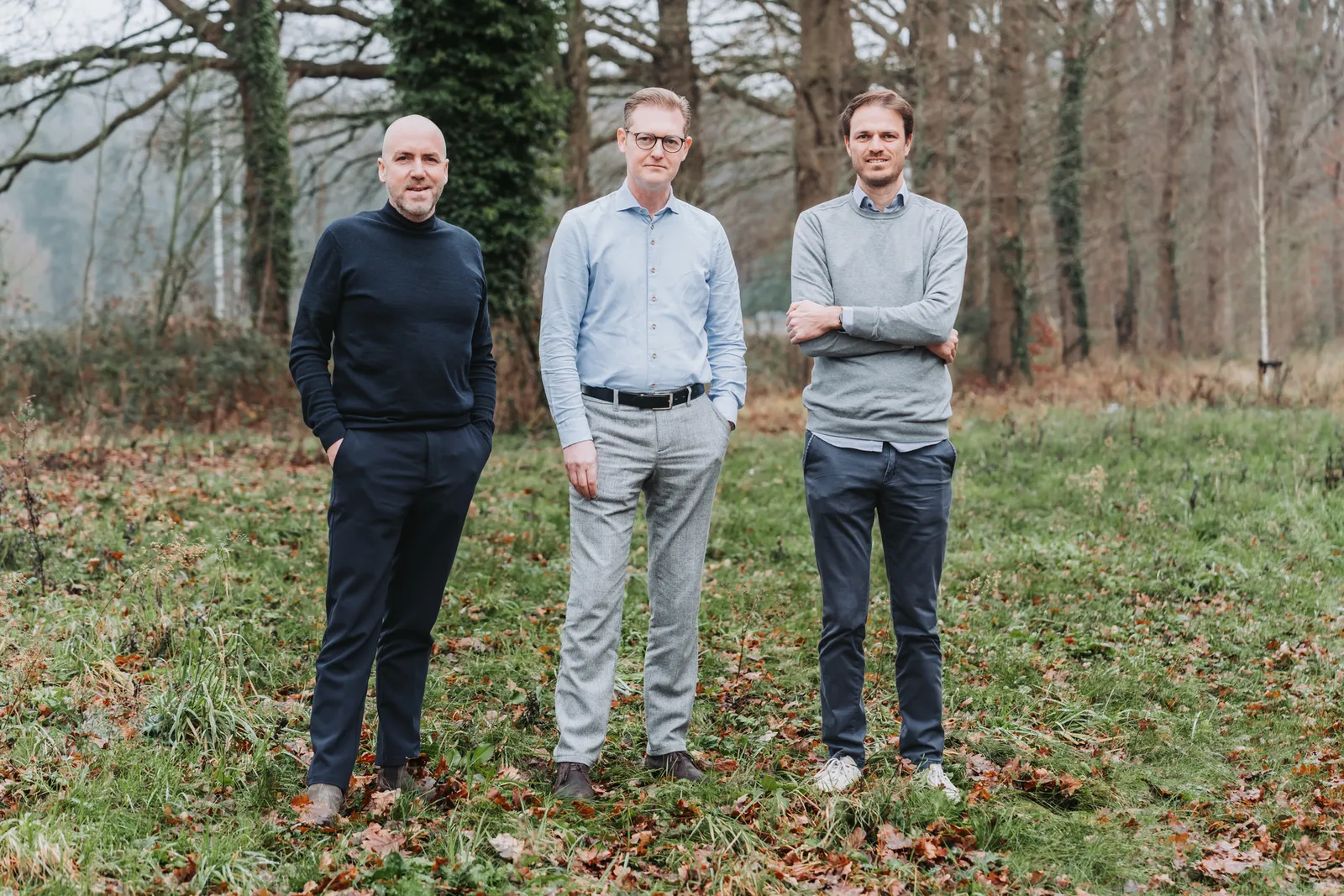
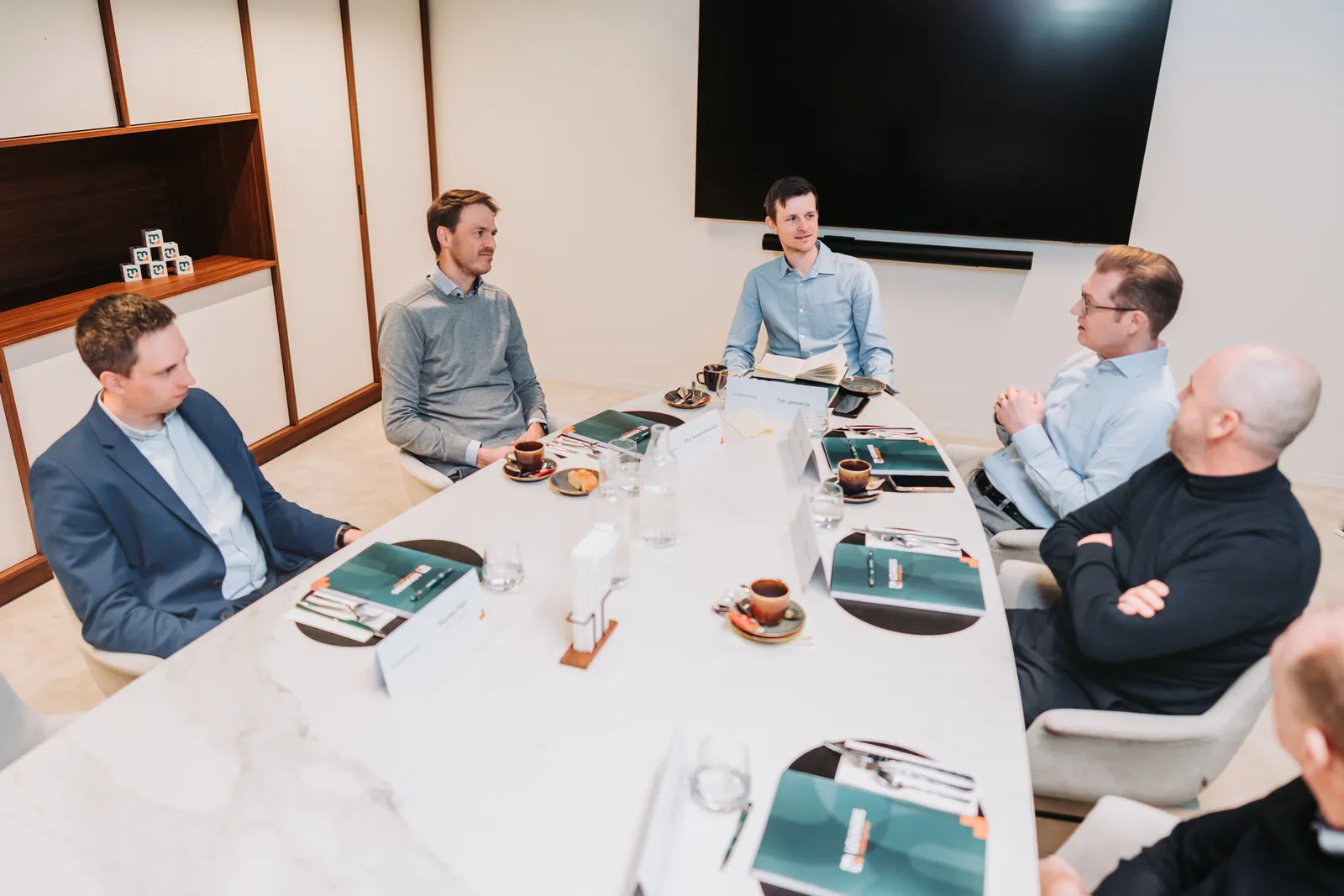
Circular construction starts at the design stage, or so we often hear. But turning theory into practice also requires companies involved in material production, product development and construction to help shift the goalposts and push boundaries. At our first round-table of the new year, we brought together three parties that each contribute in their own way: Elfver Vandenbraembussche (Director of R&D, Technology and Quality at AC Materials), Ruben Snurawa (Quality and ESG Manager at Aliplast Aluminium Systems) and Joeri Beneens (CEO at Beneens Bouw en Interieur). They discussed, among other things, how far the circular mindset has spread across the sector. “Generally speaking, the will is there, but short-term thinking still gets in the way all too often.”
Gentlemen, let’s start at the beginning. How and when did circularity first come onto your radar? And what motivates you to make it such a priority today?
Ruben Snurawa: “As part of the Corialis Group, Aliplast is not only an aluminium joinery systems house, but also has its own extrusion division. One of aluminium’s major advantages is that it can be recycled indefinitely. So, ever since we began extruding in the early 2000s, we have consistently incorporated 20 % of our own process scrap into our profiles, supplemented by additional recycled content. This laid the foundations for the leading role we are seeking to play as a supplier today.”
Joeri Beneens: “Our company has been around for ninety years and, alongside a class 8 construction company, includes, among other things, a subsidiary that manufactures and installs aluminium windows (Beneens Alucon). The circular philosophy we follow today, and make a genuine KPI, has evolved naturally from our earlier activities, which have always been geared towards sustainability. At the materials level, for instance, we began using environmental certificates and our own waste facility at a very early stage. We handled 35 different waste streams and sought solutions to return them to the relevant suppliers. In this way, we encouraged them to embrace the Cradle to Cradle mindset too. This is, of course, an added advantage when tendering. To extend that circular mindset to the projects we deliver, we focus strongly on Design & Build contracts, which give us a say when the key decisions are made during the preparatory phase. That includes using standardised grids, making extensive use of timber, and focusing strongly on disassembly and reusability …”
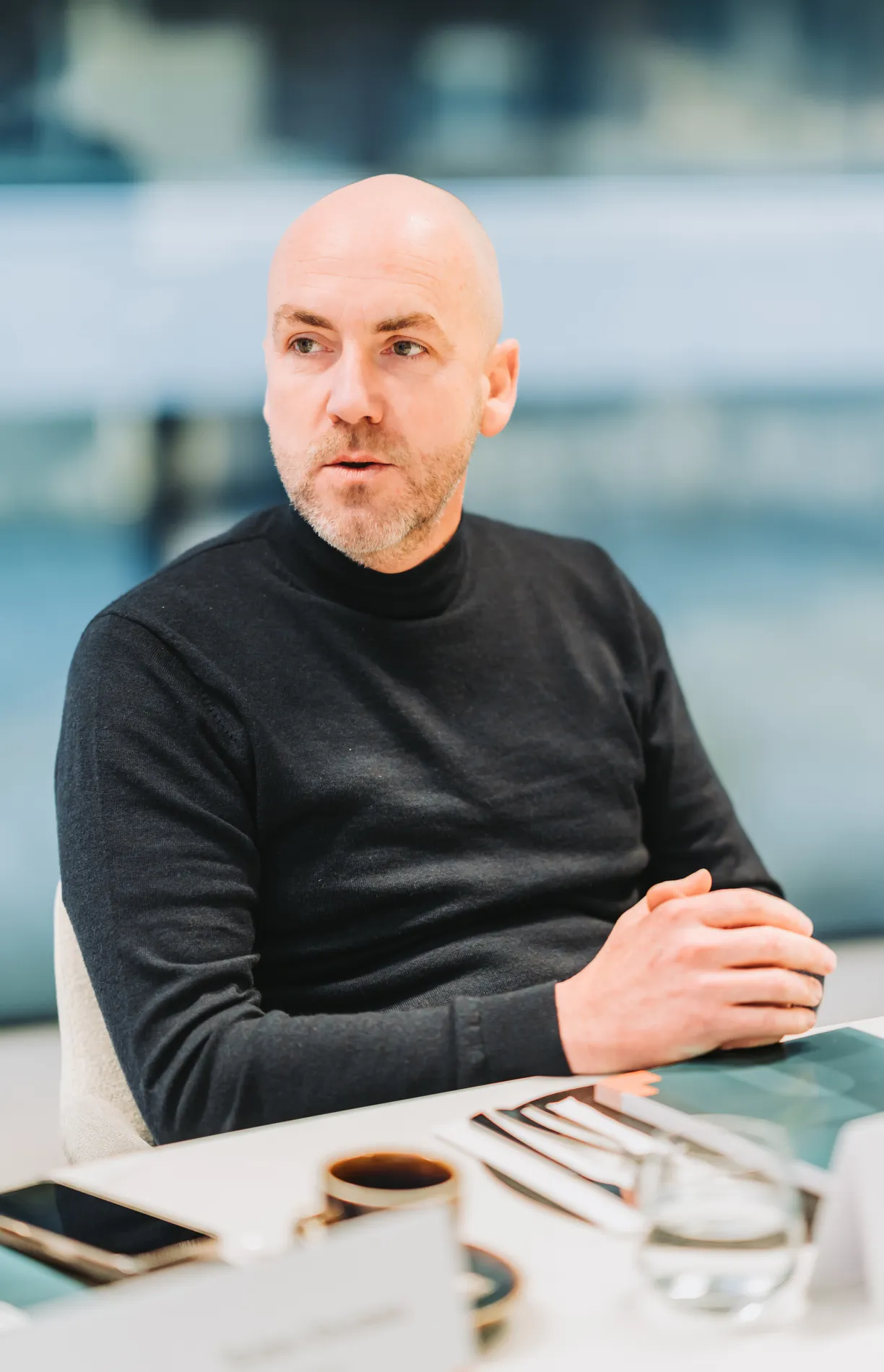
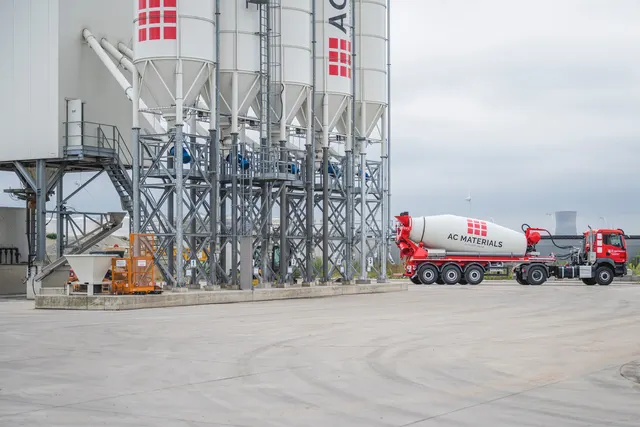
Elfver Vandenbraembussche: “AC Materials is part of the Square Group, whose subsidiaries cover the entire construction chain. The circular approach is one of the founding principles behind our company and our activities. At our five sites in Flanders, we crush, screen and grade construction and demolition waste for reuse, including in ready-mixed concrete.
We produce the latter at our own concrete plant, along with lean mixes, sand-cement, foundation material and lean concrete. In doing so, we aim to avoid downcycling as much as possible and to use our aggregates to the fullest in high-quality new building materials and components. We can also supply these products, as we now have BENOR certification. Finally, we are actively involved in studies and VLAIO projects to explore how the permitted replacement percentage can be increased in the near future. We have already managed to replace 75 to 80 % of the limestone and marine sand with crushed concrete aggregates and concrete sand.”
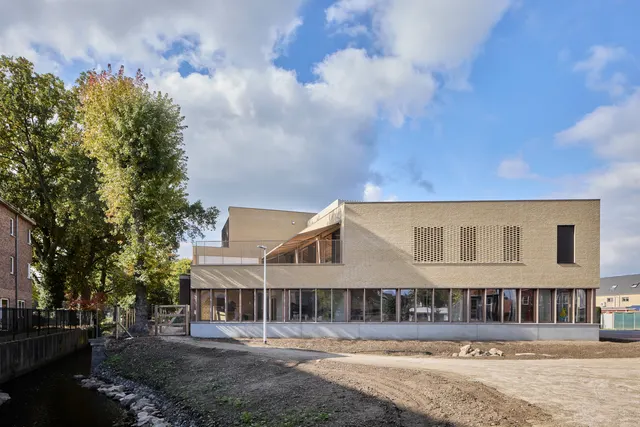
Joeri Beneens: “Pioneering projects like these are, and will remain, crucial to shifting the dial. For us, the completion of ’t Centrum at the Kamp C site in Westerlo was such a milestone. Using the most sustainable materials, we built a demountable, relocatable structure that retains the value of its materials, with cement-free geopolymer concrete and more. Since its completion in 2021, we have built on this experience, both literally and figuratively, and now have four further projects using the same construction system.”
You are clearly already fully on board with circular construction, but have your partners, and the wider sector, also come round to the idea?
Elfver Vandenbraembussche:
“In a conservative sector like construction, it takes a long time for things to get moving in practice, but over the past two to three years I have seen a cautious shift begin. The government, for example, is gradually starting to take sustainability and circularity into account in its tenders. Unfortunately, our customers themselves are still showing very little demand for circular applications. So, generally, it is on our own initiative that we use recycled aggregates in our ready-mixed concrete.”
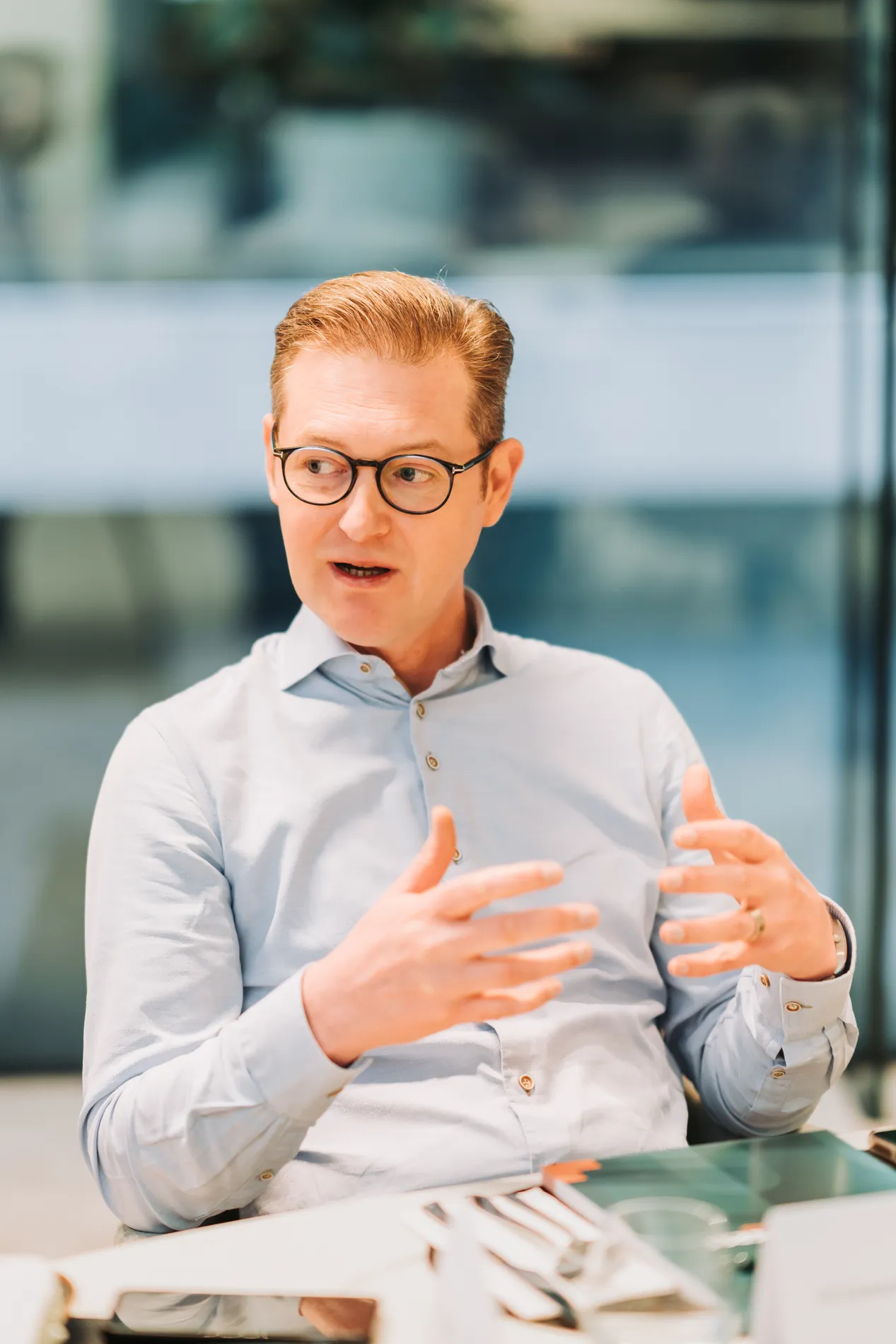
Ruben Snurawa: “Unfortunately, that sounds familiar. In 2019, we started getting a number of products C2C-certified on our own initiative, and even today it is still largely a one-way street, although a few customers are beginning to show interest. When we raised the importance of recycled scrap some five years ago, it was met with raised eyebrows. Fortunately, the tide is turning, and we are now rolling out our AluLoop recycling programme in earnest. Our aim is to create a closed-loop aluminium system within our value chain. Scrap from our customers is remelted into low-carbon billets, which we then process into new profiles. In any case, I believe we need to keep driving this forward as a manufacturer of semi-finished products. At some point, circularity will be a crucial condition for a company’s survival, so we might as well be ready for it.”
Joeri Beneens: “I feel as though the pause button has been pressed on the whole environmental agenda. One reason is the turbulent geopolitical climate, which is delaying the regulations Europe had been preparing. Nevertheless, we continue to make the case, because sooner or later the realities of climate change will catch up with us again and this issue will return to the top of the agenda. What is more, a whole new generation is coming through that is genuinely aware of the urgency. Fortunately, there are also some positive developments in the meantime. Take the Regie der Gebouwen, for example, which since the end of last year has been awarding notional discounts in public tenders when comparing prices, based on how well a bidder scores on the CO2-Prestatieladder. Above all, the government should continue to pursue such incentives and deliver flagship projects.”
Elfver Vandenbraembussche: “Indeed, we are gradually seeing projects emerge that deliberately go a step further. For example, the construction of Broeklin, the successor to Uplace in Machelen, requires the use of both precast and ready-mixed concrete with a substantial proportion of recycled content. More than three years after it was signed, the Vlaams Betonakkoord is finally beginning to deliver tangible results too. And the forthcoming EU taxonomy, which will give circular reuse a major boost, is also helping to drive change.”
What is the main remaining obstacle to circular construction becoming standard practice on a large scale?
Joeri Beneens: “In my view, it is traditional short-term thinking, which is still widespread. 90 % of tenders are still based on the principle that ‘the lowest price wins’, even though that is simply no longer defensible today and can lead to Kafkaesque situations. But the problem is not confined to the public sector. Many property developers have the same mindset. They look solely at the rent they can charge and then try to build the property as cheaply as possible, without considering what future generations might be able to do with it. Yet exceptions that prove the rule, such as Nextensa, show that a circular, long-term vision really does pay off. They have deliberately chosen to build all their new offices in timber, as they did at Gare Maritime in Brussels. The result: the entire building is let before the first spade hits the ground, and they can charge higher rents simply because it is a much more pleasant place to work, while its positive, sustainable image also rubs off on the companies based there.”
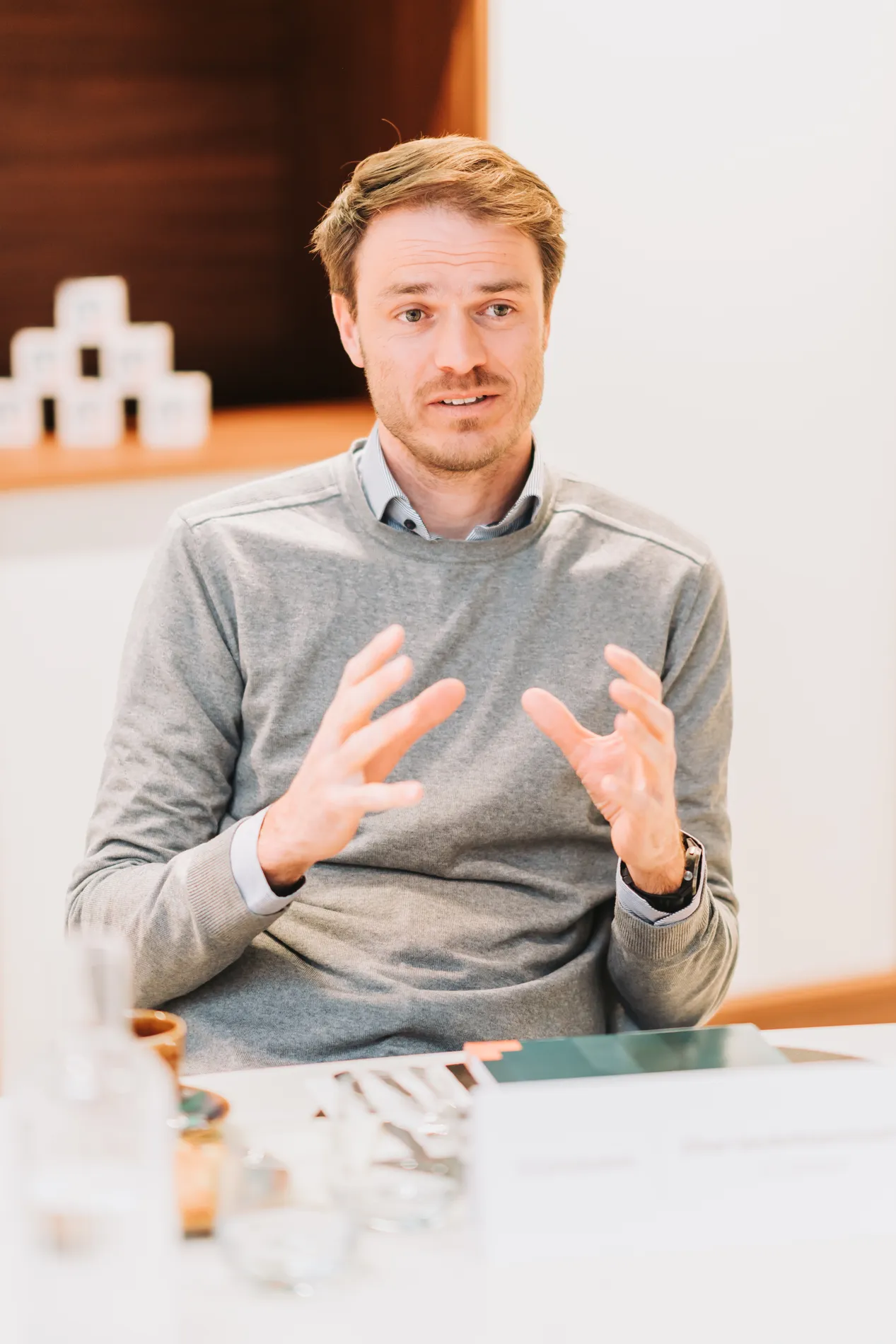
Ruben Snurawa: “In general, too little attention is paid to the total cost of ownership. Many sustainable investments eventually pay for themselves, especially when it comes to circular measures. There are also a few technical hurdles to overcome. Creating fully demountable curtain walls, for example, remains a major challenge, partly because the requirements for airtightness and watertightness are so stringent.”
Elfver Vandenbraembussche: “Current standards are holding us back. The BENOR guidelines for reusing concrete are very strict. Recycled concrete aggregate has to meet the same requirements as limestone. That is pure ‘overshooting’. Some situations naturally call for a stricter framework, such as high-strength concrete or the highest environmental classes, but in other cases you can produce excellent products with a fairly high proportion of recycled aggregates.
In 2025, steps were finally taken to change this. We are now also allowed to reuse fine aggregate in BENOR concrete, thanks to the tests we conducted with, among others, Buildwise and OCW as part of the RecySand study. In terms of price, there is no difference between our ready-mixed concrete made with 100 % limestone and the version containing recycled aggregates. In the long term, the latter will probably even become cheaper, owing to the growing scarcity of natural aggregates.”
What do you think will be the next major breakthrough in circular materials, technologies or business models? Could AI play an important role in this?
Ruben Snurawa:“I’m eagerly awaiting a system suited to modular façade construction. But there is still a long way to go before that becomes a reality. As for AI, I think its main application for us will be to streamline and fine-tune production processes on a large scale. It seems less relevant to product development at present, despite the rapid advances in artificial intelligence.”
Joeri Beneens: “Thinking in modular terms is indeed crucial if we are to give materials and building elements a second or even third life in the long term. Separately, we see a lot of potential in developing building passports, not least to demonstrate the retained value of materials and guarantee their traceability. We have already drawn up a few and are gradually getting into the routine of it. That is just as well, because it is a labour-intensive task. In the
future, AI could be a great help in speeding up the process. The first tests in this area look promising. For building owners and users, it would certainly add considerable value when it comes to maintenance or future modifications. What is more, we can now also issue CO2 certificates on request, which we can then auction to the chemical industry or the concrete industry. We will be applying this concept for the first time soon, at a community centre in Diest that we are currently building.”
Elfver Vandenbraembussche: “For our part, we hope to see a major shift in public-sector specification practices, making it possible to implement concrete with a higher recycled content more widely. While we wait, we are working on software that will allow us to generate an LCA easily for our ready-mixed concrete, in the hope that our customers will recognise its added value. Automatic detection of impurities in the rubble streams we receive is also high on our wish list. This is partly in response to brick manufacturers, who need very clean fractions if they are to achieve the mandatory recycled-content target in the future. In this connection, we are working closely with VITO, Buildwise and KU Leuven to explore how we can separate different streams on our conveyor belt to obtain more reusable concrete and bricks, using a combination of different detection methods and an AI system. I hope it comes to fruition, because I certainly see a future in it.”
Ruben Snurawa: “We will also increasingly see dismantled or reclaimed materials and building elements reused directly in new projects, on the same site if possible.”
Joeri Beneens: “That ties in with the deposit scheme we now routinely offer as part of tenders. If we can build to our preferred layout, that is, a 5 x 5 or 5 x 7 grid, we pay a certain residual value for the beams, columns, floor slabs and timber-frame walls attached to it, should they ever become available again, simply because we can then reuse them in their entirety. The precise amounts for each component are listed in the building passport. This does not mean, incidentally, that we will only build structures made up 100% of that grid from now on. A combination that includes some bespoke elements is always an option. In any case, we will aim to apply this concept as widely as possible in Design & Build projects, as an added benefit for the client and an extra incentive to adopt circular construction practices. I hope as many architects and contractors as possible follow our example and build to the same grid, because that greatly increases the chances of reuse later on.”
Finally, what would you like to be able to say in about five years’ time: “We really achieved that”?
Ruben Snurawa: “I would be very proud if, by then, we had a system on the market that could be completely dismantled after fifty to sixty years, the average life cycle of aluminium joinery. That would be a huge step forward in the circular transition. What we would actually do with it in the future is, of course, another matter.”
Joeri Beneens: “I hope that by then the concepts we are pioneering now will be more widely adopted, so that we can actually reap the benefits, both in tenders and in day-to-day construction. For now, we are still introducing these kinds of innovations mainly because we believe in them or to anticipate developments on the horizon. In five years or so, there should really be a reward for doing so. As for the circular transition in general, I hope that initial cost will no longer be the deciding factor, and that greater weight will be given to the long-term value of the materials used in buildings. There are certainly many developments now under way that make it possible to take future reuse into account from the outset. Think of online platforms that offer dismantled or reclaimed materials and products for sale. That is a positive step in the right direction, as are tenders that specify a certain percentage of reused materials.”
Elfver Vandenbraembussche: “If we can replace 30% of virgin aggregates with recycled aggregates in Flanders by around 2030, that would already be a significant improvement, even though in theory we could set the bar considerably higher. Combined with more appropriate standards, a more ambitious procurement policy and a greater emphasis on selective demolition, this would accelerate the circular transition. We will have to wait and see whether this actually happens within the next few years, but one thing is certain: anyone who does not want to miss the boat will have to make an effort. There is no getting around that …”
Een zakelijke vraag aan AC Materials? Get in touch
Companies in this story
Keep following this
Get an email when a new story is published. No account needed.
- SubjectCircular construction
- CompanyAC Materials
- CompanyAliplast Aluminium Systems