Cathodic protection at unprecedented heights
Text and images Sanacon
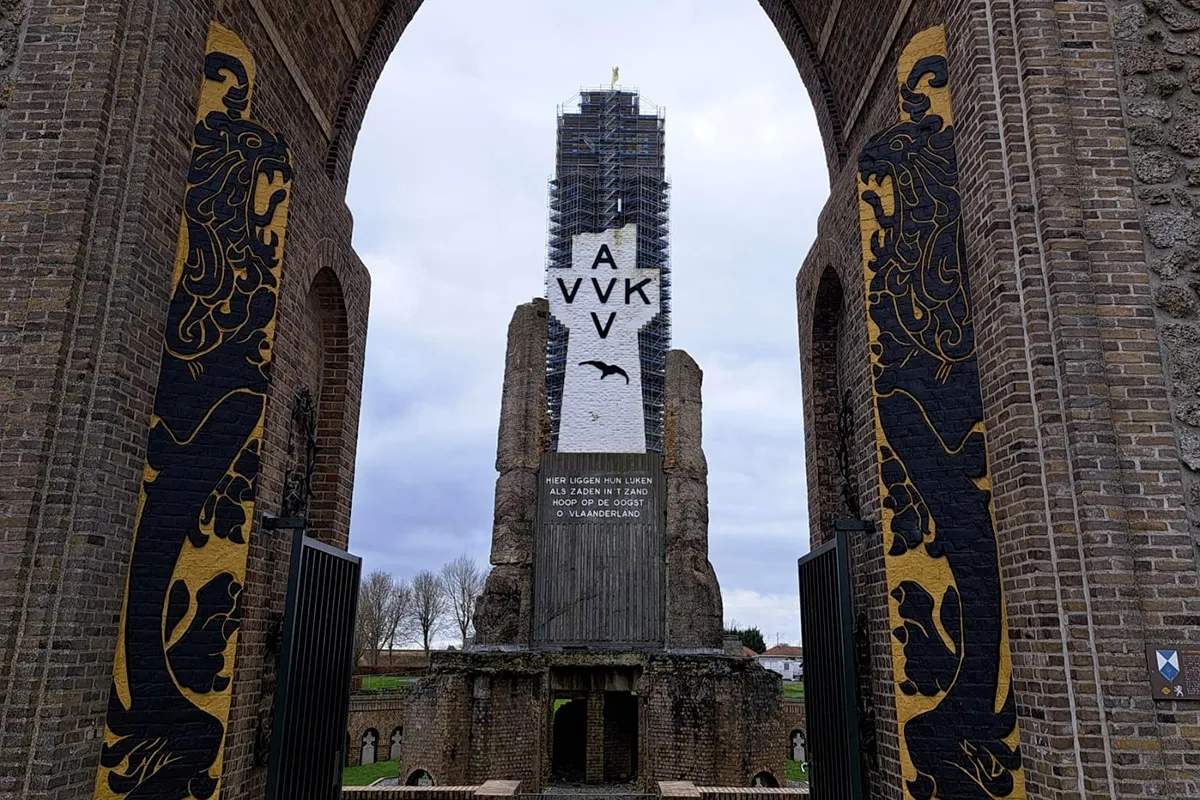
The Ijzertoren is one of Flanders’ most important peace monuments commemorating the First World War. Standing 84 metres tall, it was built between 1951 and 1965 and remains a well-known pilgrimage site in memory of the Flemish fallen. It is therefore no surprise that this monumental heritage is receiving the care it deserves. This article describes how the highest cathodic protection system for reinforced concrete ever installed in Flanders came about.
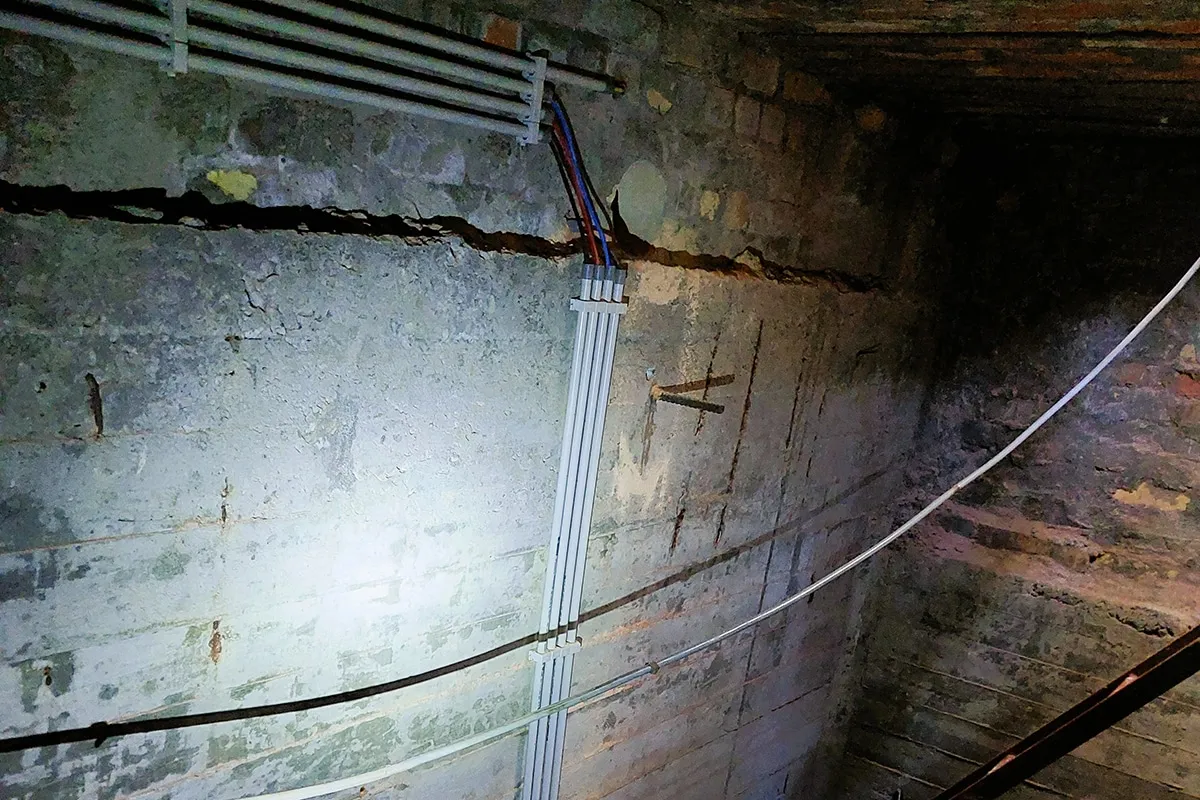
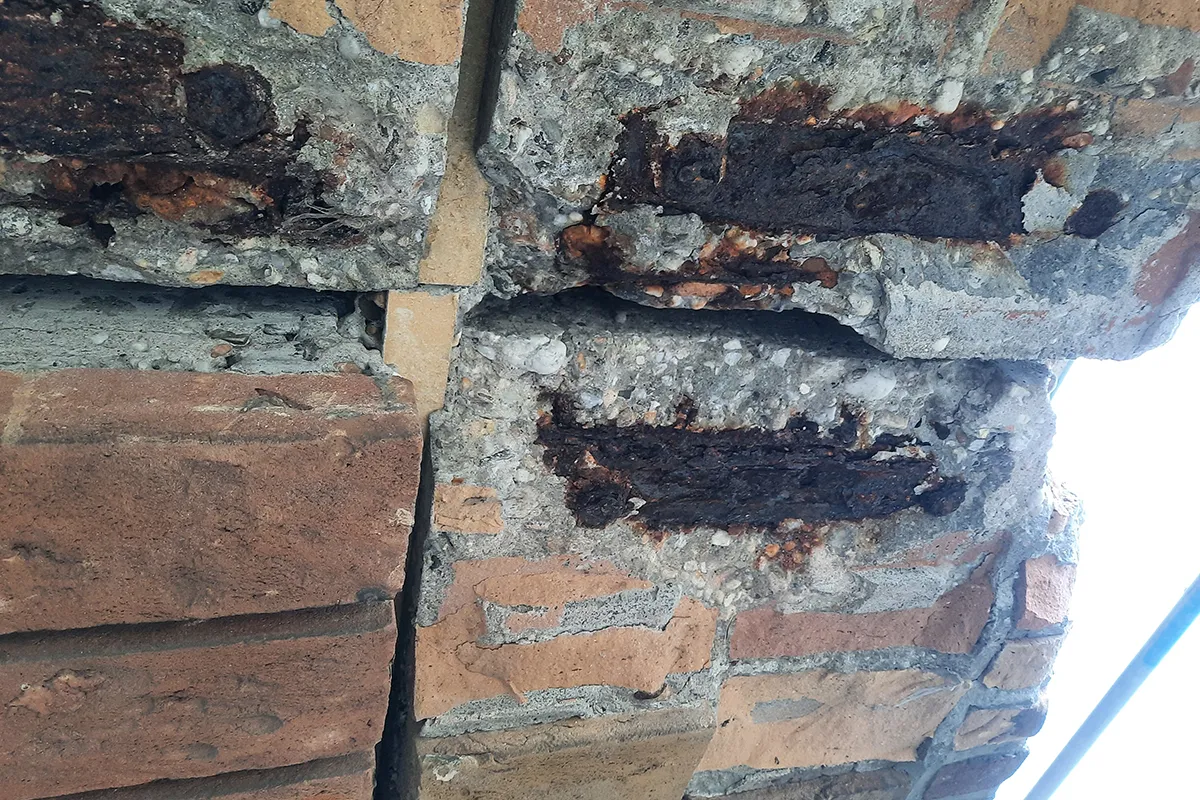
The investigation carried out by SANACON in early 2024 was prompted by reports from contractor Monument Renovation Technics (MRT) of several pieces of masonry falling from the underside of the concrete elements of the cross-shaped crown. MRT was at the time still erecting the scaffolding as part of the general renovation works. Following the incident, vzw Bedevaart naar de Graven aan de IJzer, with architect Rudy Vereecke overseeing the process, called on SANACON’s expertise in investigating and advising on concrete damage.
An initial survey found that the steel support structure and the reinforcement in the floor slabs beneath the cross-shaped crown, at a height of approximately 70 metres, were corroding as a result of concrete carbonation and the presence of chlorides, which were probably mixed in during construction.
An ideal opportunity
Any solution had to meet the client’s requirements: preserving the original appearance and providing a durable solution were the key constraints. Simply putting up a net to catch falling debris was therefore out of the question.
Since the cause of the damage was widespread but had not yet led to visible damage everywhere, this was an ideal opportunity to install a cathodic protection system. This was particularly important because potential future damage could not be detected visually straight away, given the masonry on the underside.
A new milestone
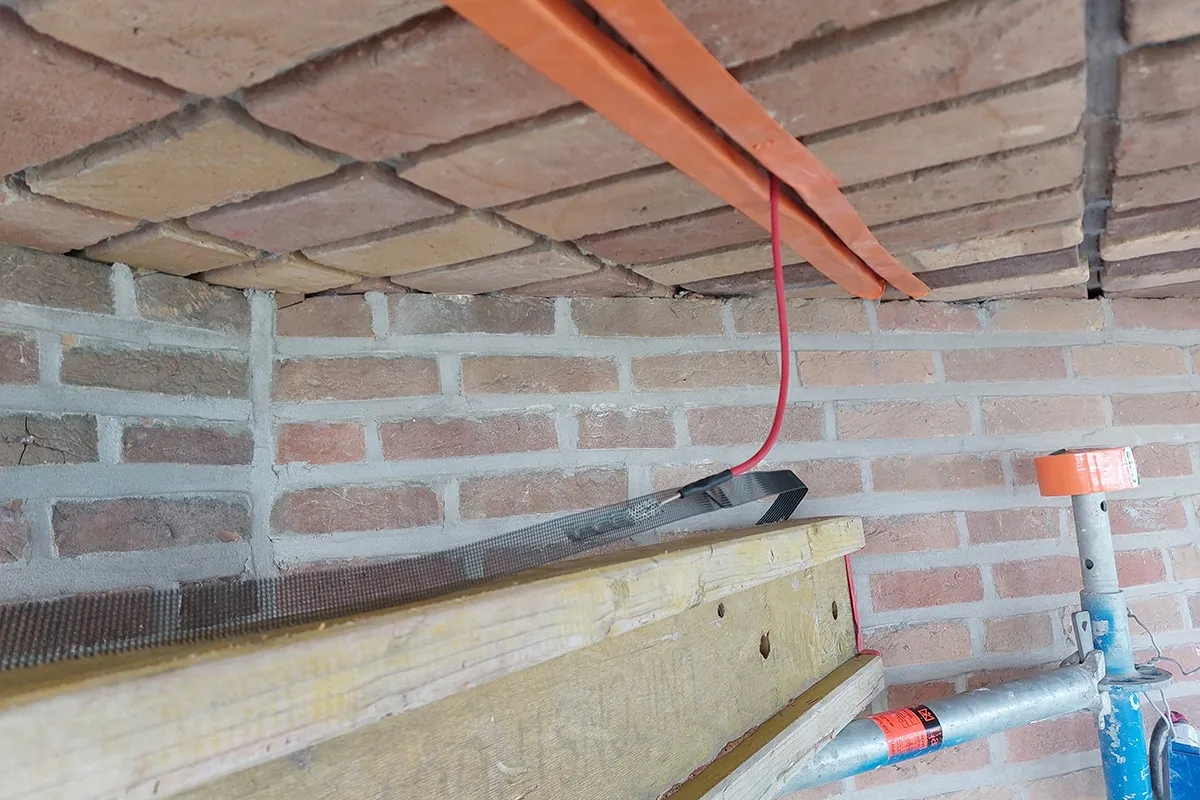
The result was a highly successful collaboration between SANACON, whose technical expertise in cathodic protection enabled it to provide effective support, and the skilled team at MRT. MRT’s project manager came up with the idea of installing titanium strips underneath, in the joints between the concrete elements, and routing the cabling straight through the slab to the inside. SANACON then developed the proposal from a technical standpoint, before MRT successfully installed the system. From the outside, there is absolutely no sign of any cabling, power supply, distribution cabinets or other system components. These have all been completely concealed inside, beneath the raised floor.
The cathodic protection system has been energised since September 2024, and the initial test results clearly show that the reinforcement in the concrete elements is protected against corrosion. This is rightly a success story on Flemish soil, with a specialist contractor and engineering consultancy joining forces to achieve a new milestone in cathodic protection for reinforced concrete.
Question about this story? Ask your question
Keep following this
Get an email when a new story is published. No account needed.
- SubjectMonuments