Gas absorption heat pump makes technical school’s boiler room more sustainable
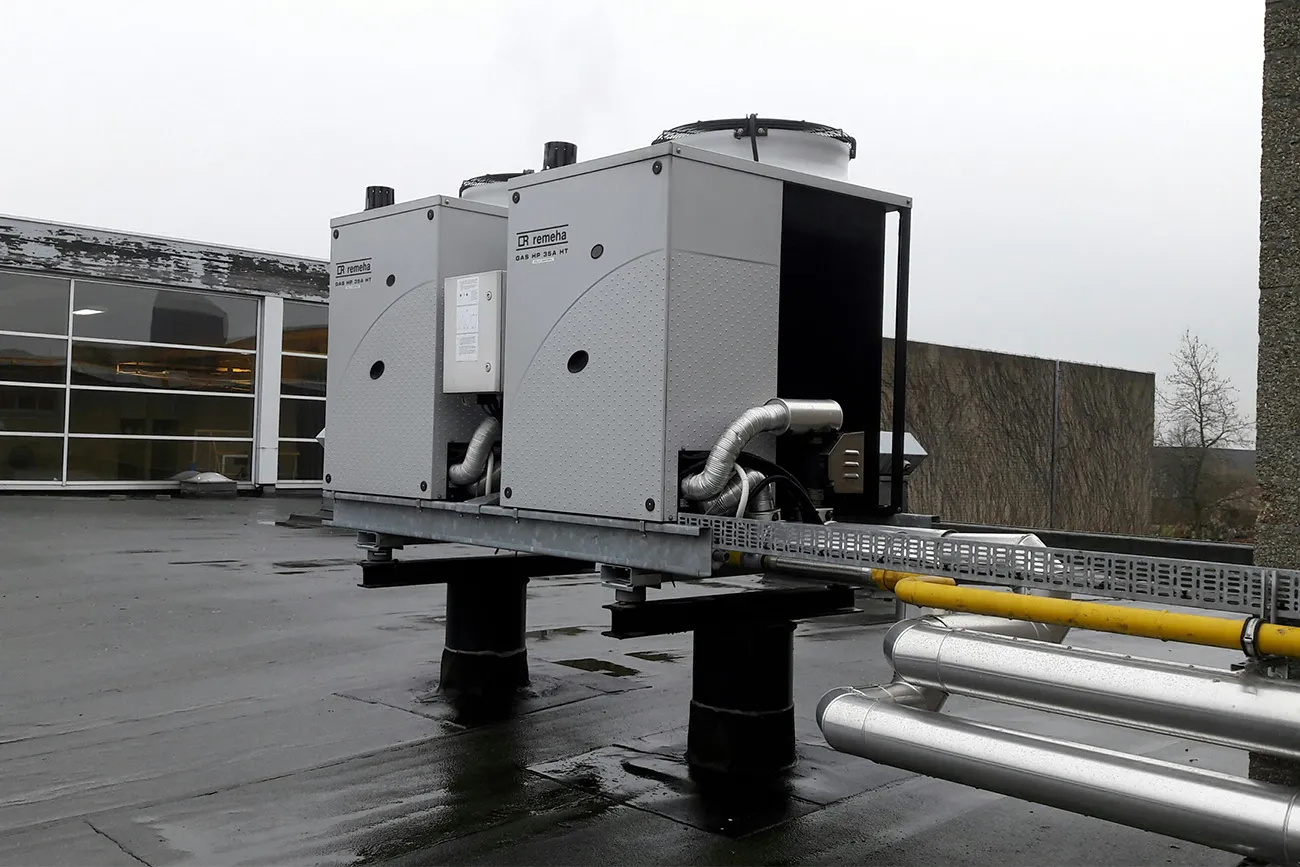
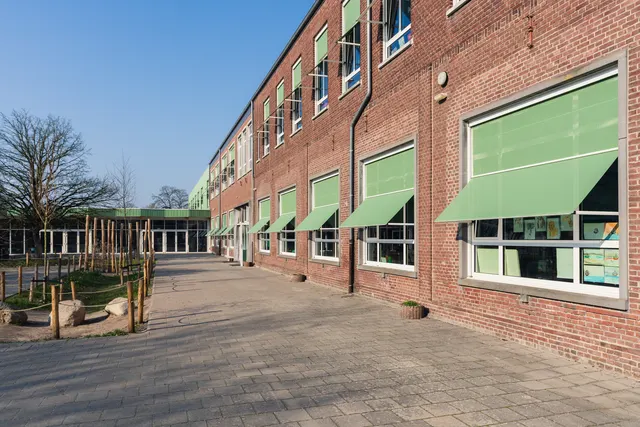
Boiler room renovations require specialist skills. Installation company Verwarmingstechnieken Verelst (VTV) has become highly adept at them. The company from Loenhout was also commissioned to work at the Provinciaal Instituut voor Technisch Onderwijs (PITO) in Stabroek. Using Remeha gas-fired absorption heat pumps, it made the school more sustainable.
Building renovations are often aimed at improving energy efficiency and sustainability. In some cases, an electric heat pump or solar panels are the obvious choice. In others, installing these technologies is not so straightforward. A gas absorption heat pump (gas HP) is increasingly proving to be the ideal alternative for drastically reducing fossil fuel consumption. That was also the case at the PITO school building.
The champion of hybrid renovations
There are good reasons why gas absorption heat pumps are mainly used in renovation projects or when replacing boilers. “You create a hybrid system, so there is no need to replace the heat emitters or upgrade the building fabric at the same time. Doing so does add value, however, as it lowers the flow temperature and means the central heating boiler has less work to do,” explains manufacturer Remeha. “Existing or, if necessary, new central heating boilers bring the flow temperature up to the required level. The gas HP provides a base temperature of up to 65 °C, which the central heating boiler then raises further to meet the needs of the heating system.”
The impact of a gas absorption heat pump is clear: this primary heating system is 165% efficient. The central heating boiler, which serves as a backup, therefore has to work much less hard, immediately bringing gas consumption down significantly. In other words, this smart combination drastically increases overall system efficiency.
Specialist in boiler room renovations
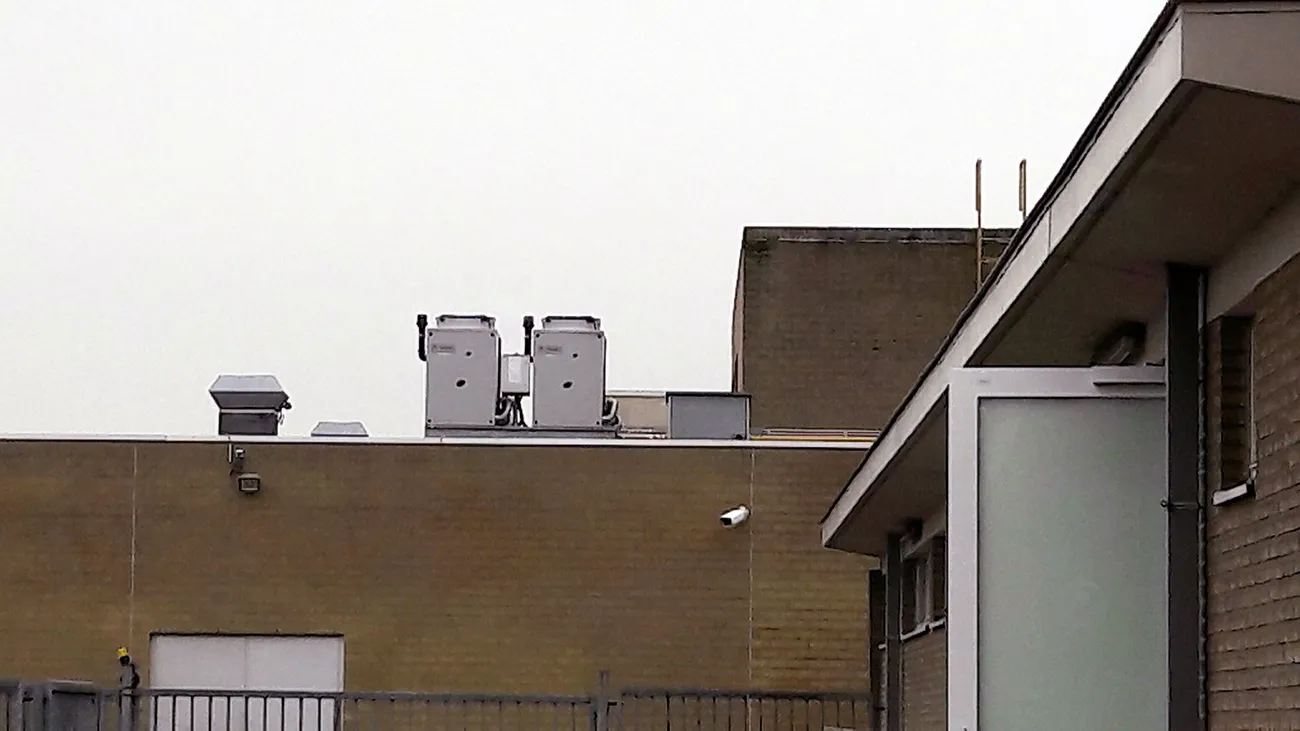
The province put the renovation of the boiler room at the school in Stabroek out to public tender. Verwarmingstechnieken Verelst won the contract thanks to its expertise in boiler room renovations for large buildings such as schools, sports halls and town halls. Managing director Luc Verelst explains: “We installed two gas-fired water-to-air absorption heat pumps in a cascade arrangement. They use liquid ammonia, which is vaporised and later absorbed by the water again. It is the ammonia, dissolved in the water, that extracts heat from the outside air.”
On the roof, the heat pumps have access to plenty of outside air from which to extract energy. They consume just 76 kW combined and, since being installed around two years ago, have easily supplied approximately 300 kW to the heating elements. “In practice, this system saves around a third on gas consumption, which is a significant step forward,” says Luc Verelst. “The noise level is also very low, since the system does not use a compressor. At a distance of 10 metres, it is just 46 to 49 dB.”
Two ideal scenarios
Why choose a gas HP rather than a conventional heat pump for a renovation project? Manufacturer Remeha identifies two main reasons. “Switching to an electric heat pump sometimes requires a substantial increase in the capacity of the electrical connection. The cost of moving from a single-phase to a three-phase supply can be considerable. A gas absorption heat pump offers a solution. Another reason is the generous subsidies. They significantly reduce the purchase cost, making a gas absorption heat pump a smart choice.”
Een zakelijke vraag aan Remeha België? Get in touch
Who worked on it
Stookplaats PITO Stabroek in Stabroek
- gasgestookte absorptiewarmtepompen
 Remeha
- building services contractorVerwarmingstechnieken Verelst (VTV)
Keep following this
Get an email when a new story is published. No account needed.
- ProjectStookplaats PITO Stabroek
- SubjectEducation
- CompanyRemeha België
- CompanyVerwarmingstechnieken Verelst (VTV)