Thesis debunks myth about geothermal energy
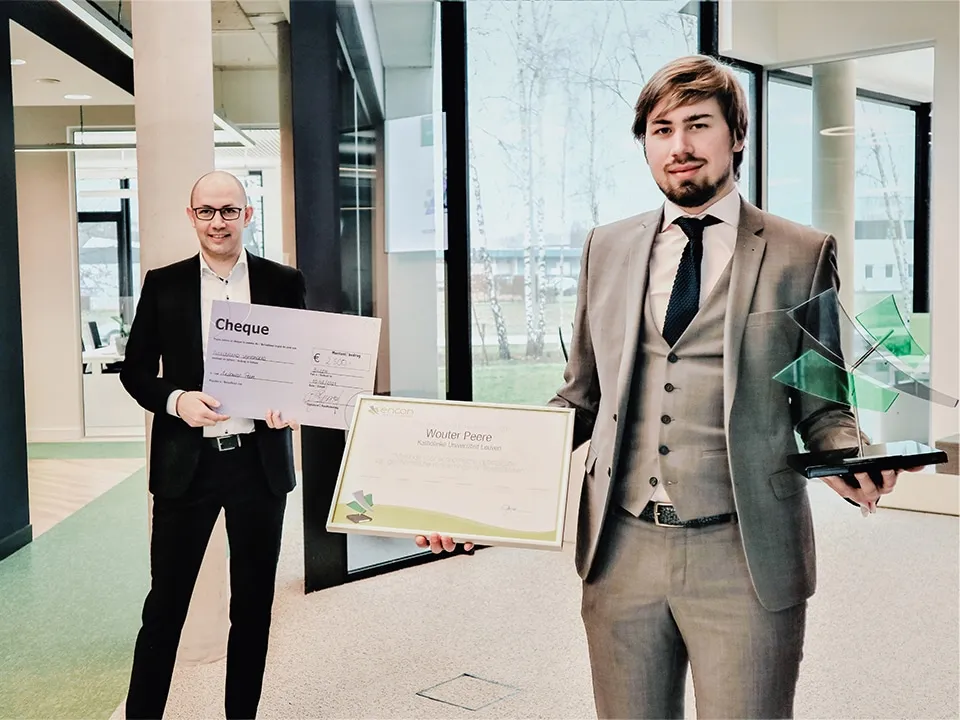
For his thesis, KU Leuven student Wouter Peere developed a method for the economic optimisation of hybrid geothermal heating and cooling systems, making this form of sustainable energy much more accessible. Peere won several awards for his work, including the Encon Energieprijs. He was happy to tell us more about his research.
When Wouter Peere, a civil engineering student specialising in mechanical engineering, was looking for a thesis topic, he had one priority: he wanted to create something that would have an impact in practice, rather than produce yet another piece of work that would go unnoticed on a shelf. In consultation with his supervisors, Lieve Helsen and Wim Boydens, he settled on geothermal energy. Geothermal energy, or ground-source energy, is a technology that harnesses natural heat and cold from underground to heat and cool homes and offices.
An intuitive graphical method
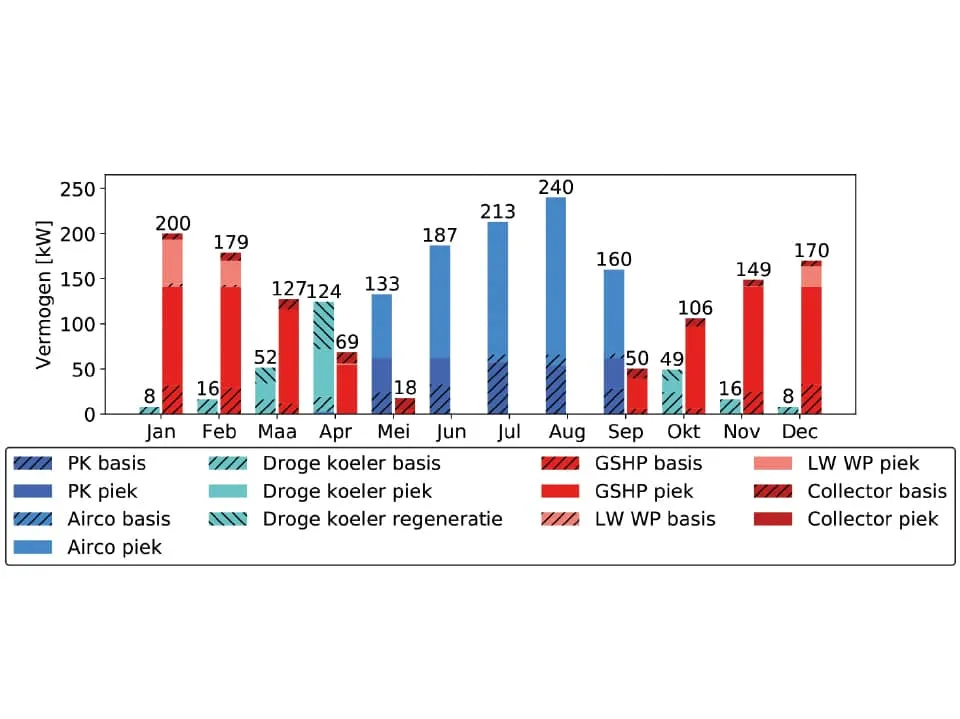
“The technology has been around for fifty years, but sizing it is complex. As a result, borehole fields are often made too large, leading to excessive costs,” says Wouter Peere. “That soon raises the question: ‘Is the investment worthwhile, or would it be better to simply opt for a gas boiler or another heat pump?’” In his thesis, he set out to answer that question in two steps. “First, I looked for a more accurate method for sizing borehole fields. I also developed an intuitive graphical method showing how to do this in an economically sound way. At each step, the method/optimisation shows why a particular decision is beneficial. The result is an optimisation of both the investment and operating costs of the complete heating or cooling system.”
The method was tested on several specific buildings. Peere explains: “We found that we make maximum use of the borehole field for heating and cooling. In addition, an air-source heat pump and an air-conditioning unit have been installed to meet peak demand. A solar thermal collector and a dry cooler cover the remaining demand.” For Peere, a good system therefore combines several different systems. “There is no single ultimate technology. The art lies in bringing together a range of technologies,” he says.
Myth debunked
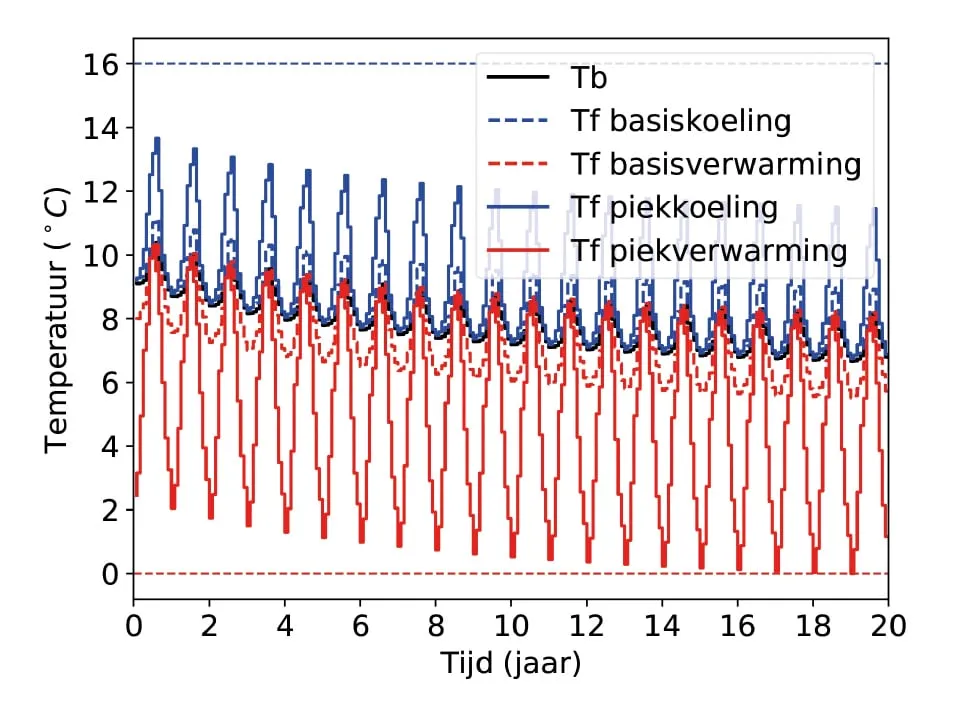
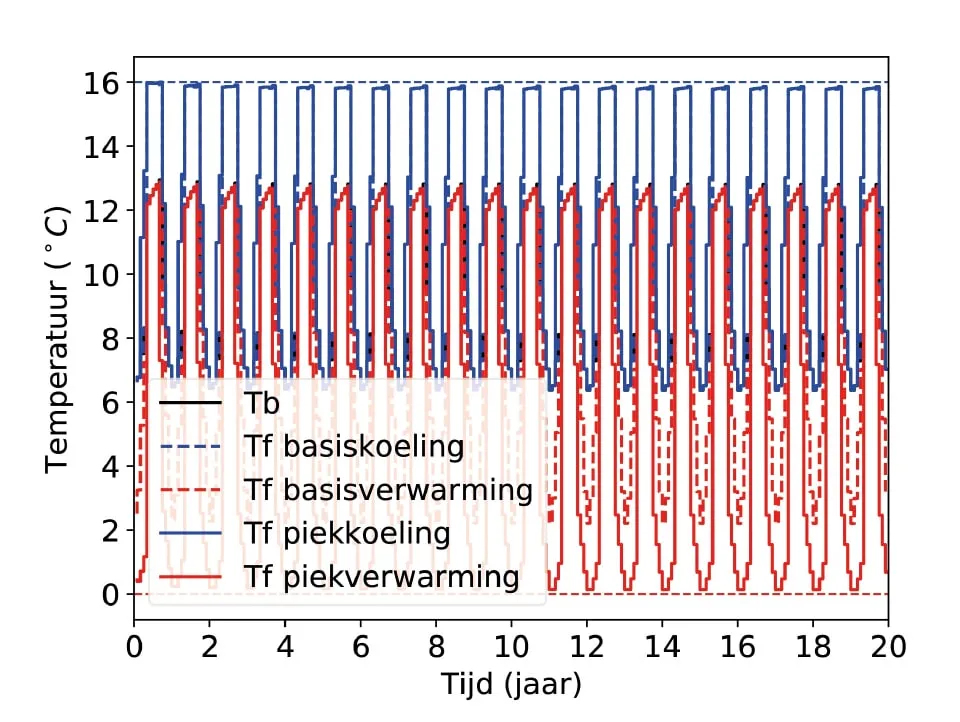
The findings are encouraging for advocates of geothermal energy. “Installing a borehole field is always cheaper in the long
term, provided the boundary conditions, such as ground temperature, remain constant,” says Peere. “The research debunks the myth that geothermal energy, as a mature technology, is too expensive. The key is sizing. With the entire system correctly sized, anything is possible, and that is without even taking intelligent control during operation into account.”
Peere therefore advocates giving geothermal energy development a boost. “I hope this sends a signal to construction professionals, including engineering consultancies, architects and contractors, and to the government: we have the technology and expertise we need, and we can develop an effective, efficient geothermal system. Further control and regulation can even make it possible to achieve a near-perfect system.”
Ingenuity and intuition
Peere’s research was warmly received. Among other accolades, he won the Encon Energieprijs and the ATIC Prijs Marcel Herman, and was a national laureate at the Febeliec Energy Awards. For Peere, his work is not a finished story, but the start of a new chapter. “The research is still very methodical and abstract. I’m curious to see how future thesis students can build on my work. There is still room for improvement, after all. It is not algorithms that change the world, but people with ingenuity and intuition,” he says.
As a PhD student, Peere is now investigating, in collaboration with boydens engineering and both supervisors, how entire clusters of buildings can be made fossil-free and which combination of technologies this requires. “This time, we’re looking beyond the economic perspective and also taking account of factors such as CO2 emissions, ease of maintenance and thermal pollution.”
Read more about Wouter Peere’s thesis at www.scriptiebank.be.
Question about this story? Ask your question
Keep following this
Get an email when a new story is published. No account needed.
- SubjectEducation