Reinforced for the future
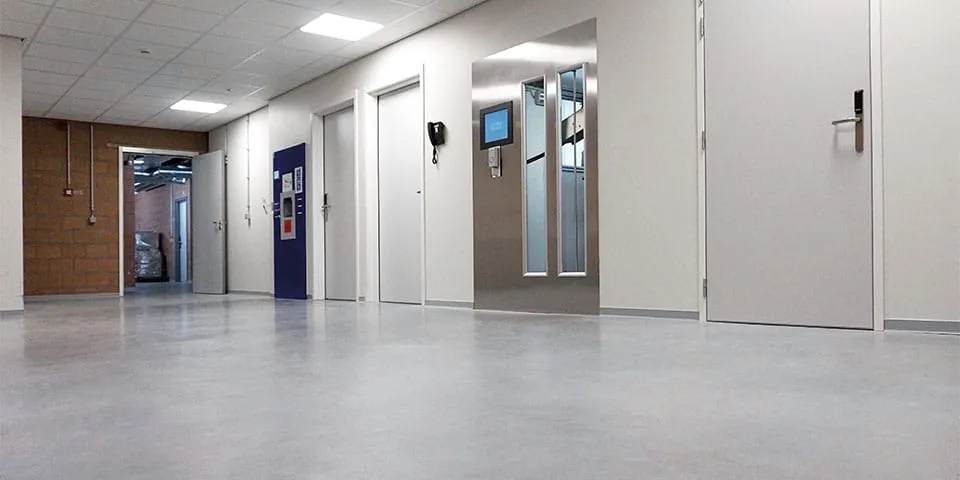
More and more concrete producers, engineering firms and contractors are opting for synthetic fibres over conventional steel reinforcement. This was the case at AZ Sint-Lucas, where a total of 3,000 m² of concrete floors on the fourth, fifth and basement levels were reinforced with a versatile macrosynthetic fibre. The results speak for themselves.
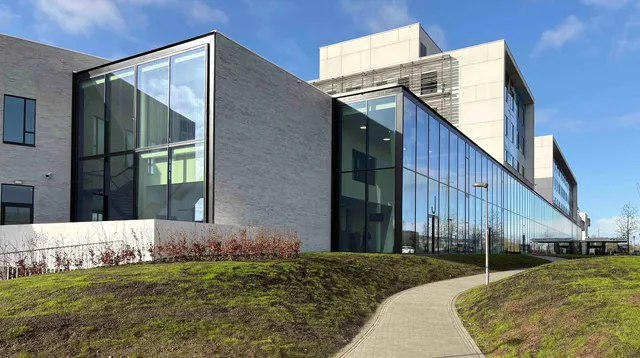
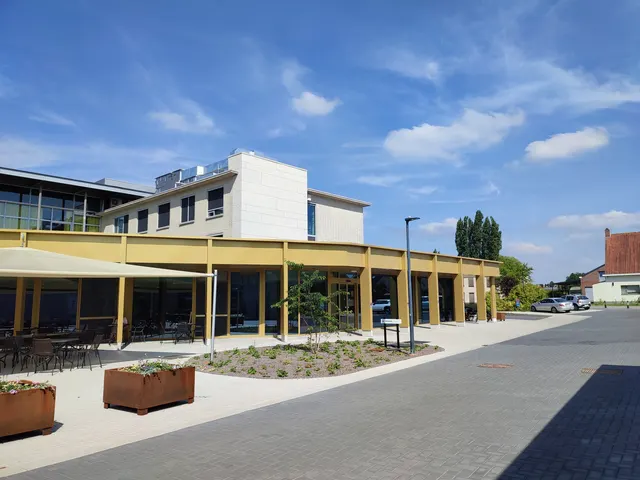
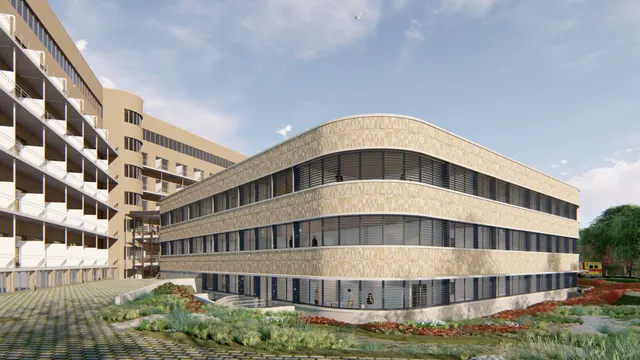
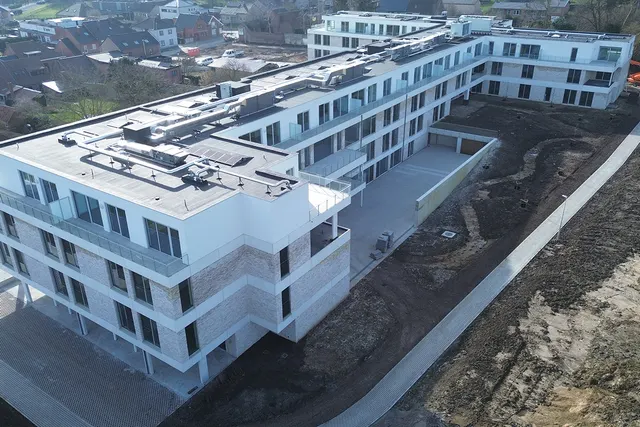
AZ Sint-Lucas was formed through the merger of three hospitals. A phased masterplan is under way until 2028 to integrate the sites. Main contractor Artes Depret is currently building two new wings, with particular attention being paid to the concrete floors. These were originally to be reinforced with steel mesh and/or fibres, but this proved practically impossible.
Hazardous steel fibres
Artes Depret first poured 40 cm of foam concrete onto the basement raft foundation and planned to finish the floor with 10 cm of polished concrete to prevent it cracking under load. Project manager Koen Christiaens: “As usual, the structural engineering firm had initially specified steel reinforcement, with conventional steel mesh to accommodate shrinkage and loading. But in a building like this, where the superstructure is already in place, you simply cannot get the mesh inside.”
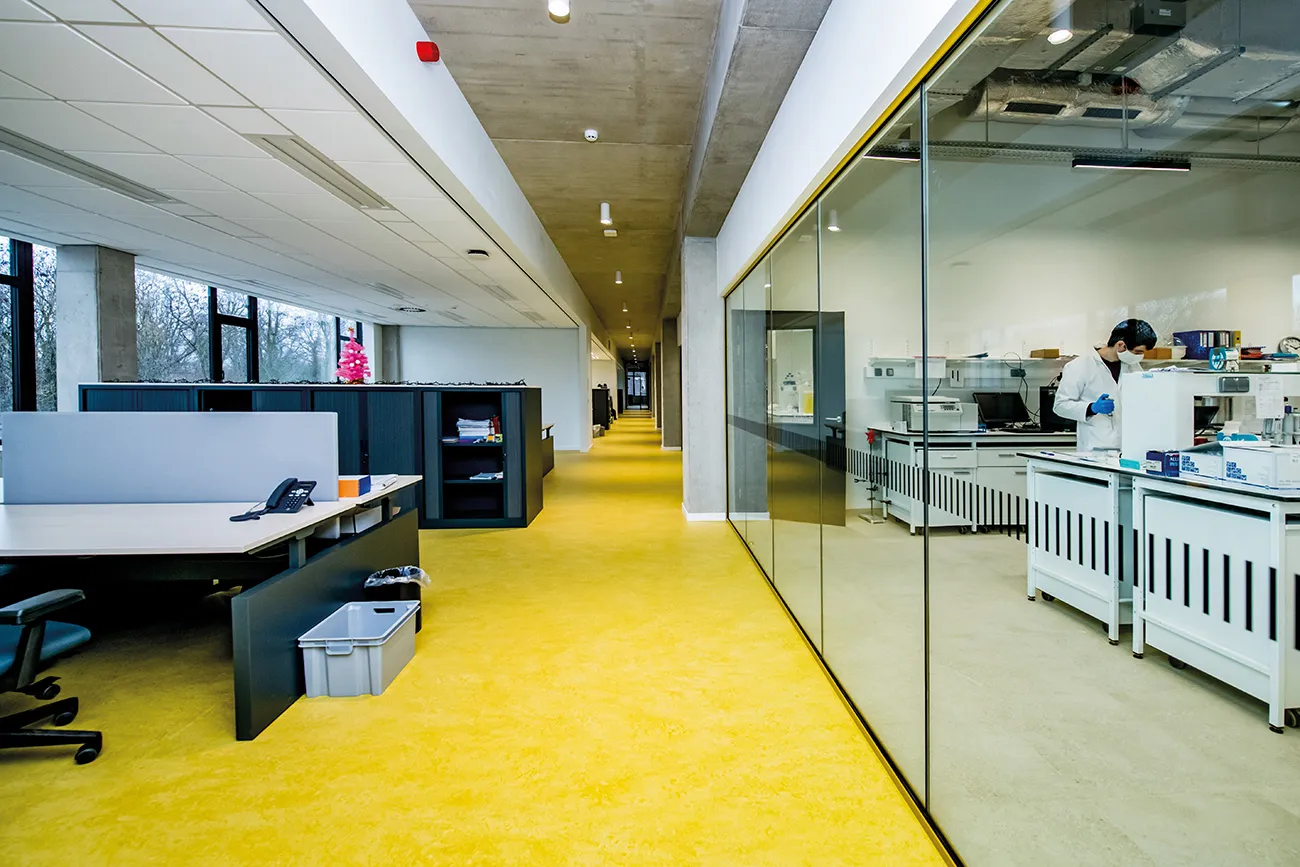
The basement is used mainly as a changing area for nursing staff, so the client did not want to risk steel fibres emerging at the surface. Fortunately, Durus EasyFinish fibres offered a solution.
The main contractor faced a challenging logistical task and joined forces with subcontractor Seghers Setisol to explore possible solutions. Koen Christiaens: “The first obvious option was steel-fibre-reinforced concrete, but one drawback is that steel fibres can sometimes come to the surface when the concrete is poured and polished. They can cause serious cuts, especially to bare feet. The basement is used mainly as a changing area for nursing staff, so the client did not want to take that risk. Adfil’s synthetic fibres proved to be the ideal solution.”
Fast and efficient installation
The idea of proposing Durus EasyFinish fibre came from subcontractor Seghers-Setisol, which had previously used this solution at AZ Groeninge in Kortrijk. Managing director Emiel Van Rumst: “Since Sint-Lucas in Ghent, we have also used it again at AZ Delta in Roeselare.” For main contractor Artes, the time savings and ease of use were the main reasons for choosing Adfil synthetic fibres. Koen Christiaens: “Financially, it was no more attractive than the conventional solution, but it did save us a lot of time. It would have been impossible to reinforce this basement with steel mesh in three or four days, because we could not lay it out and distribute it with a crane.”
The macrofibres, by contrast, are already dosed at the concrete batching plant. The concrete therefore arrives on site reinforced and can be placed more quickly by the contractor. “Our fibres blend very well into concrete, but it is crucial that the concrete is suitable. For example, the mix needs to contain enough fine material. This is not a problem at Inter-Beton, which uses a mix adapted for fibre-reinforced concrete, with extra cement. But some batching plants use very little fine material, in which case the fibres are more likely to rise to the surface,” explains Wim Ronsse of Adfil.
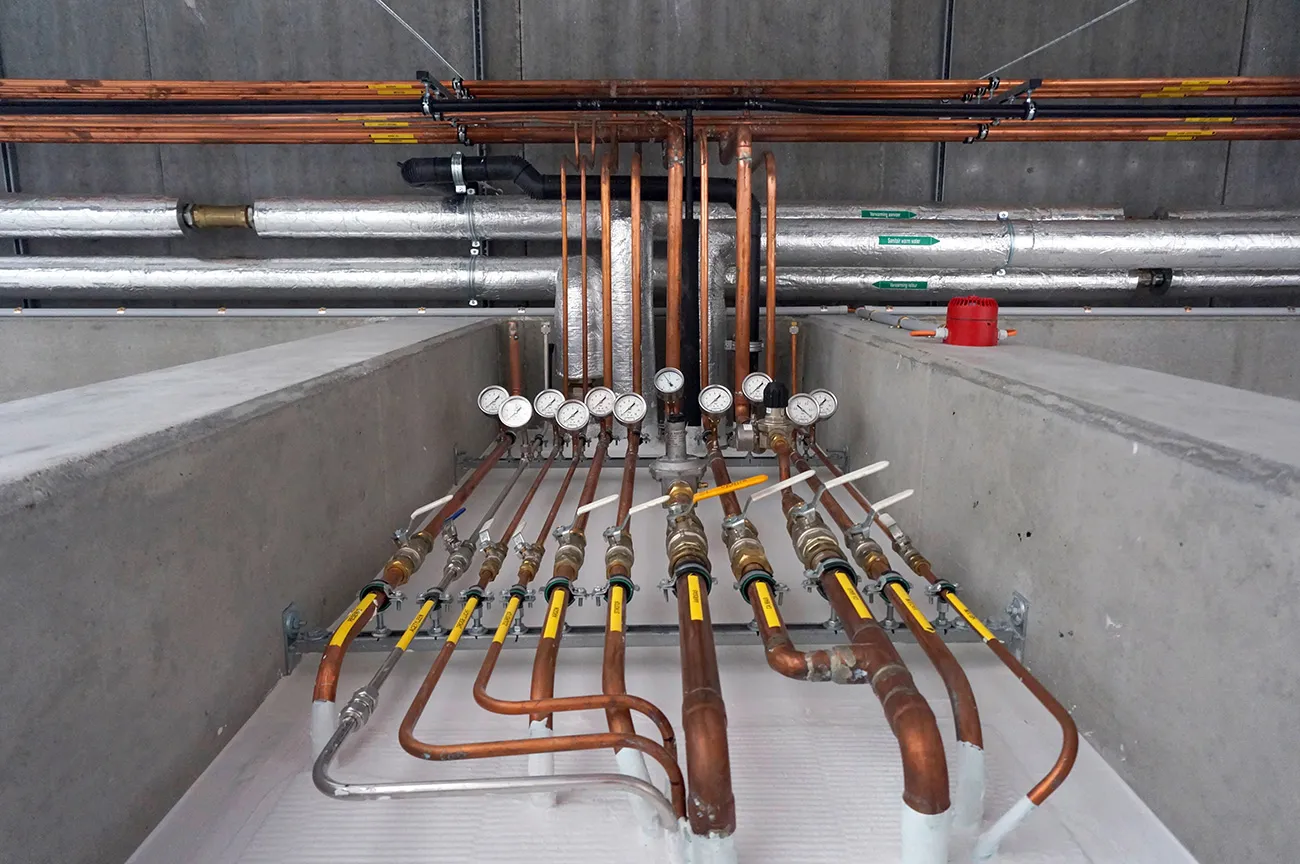
“We dose 3 to 4 kg of Durus EasyFinish per m³, compared with 25 to 35 kg for steel fibres,” says Steven Daniels of Inter-Beton.
Durable synthetic fibres
Ease of use and time savings are not the only factors behind the choice of synthetic fibres. Sustainability also plays a part. Wim Ronsse: “Producing our fibres generates 50 per cent less CO2 emissions than steel. They are therefore more environmentally friendly than steel mesh or fibres. They are, of course, made of plastic, but their production is more sustainable. The fibres are not released into the environment because they are embedded in the concrete, and the concrete lasts longer because there is no rust formation.”
“We dose 3 to 4 kg of Durus EasyFinish per m³, compared with 25 to 35 kg for steel fibres. You therefore need to compare the final dosages, and synthetic fibres are certainly more sustainable on that basis. Macrofibres do not corrode or rust in concrete, unlike steel, and they are acid-resistant,” adds Steven Daniels of Inter-Beton. “We believe in this innovative alternative, which usually leads to a win-win situation for everyone involved. This was once again the case at AZ Sint-Lucas.”
Question about this story? Ask your question
Keep following this
Get an email when a new story is published. No account needed.
- SubjectHealthcare projects