Round-table discussion: confidence in the renovation market is growing
Text Els GoethalsImage Louwers Mediagroep
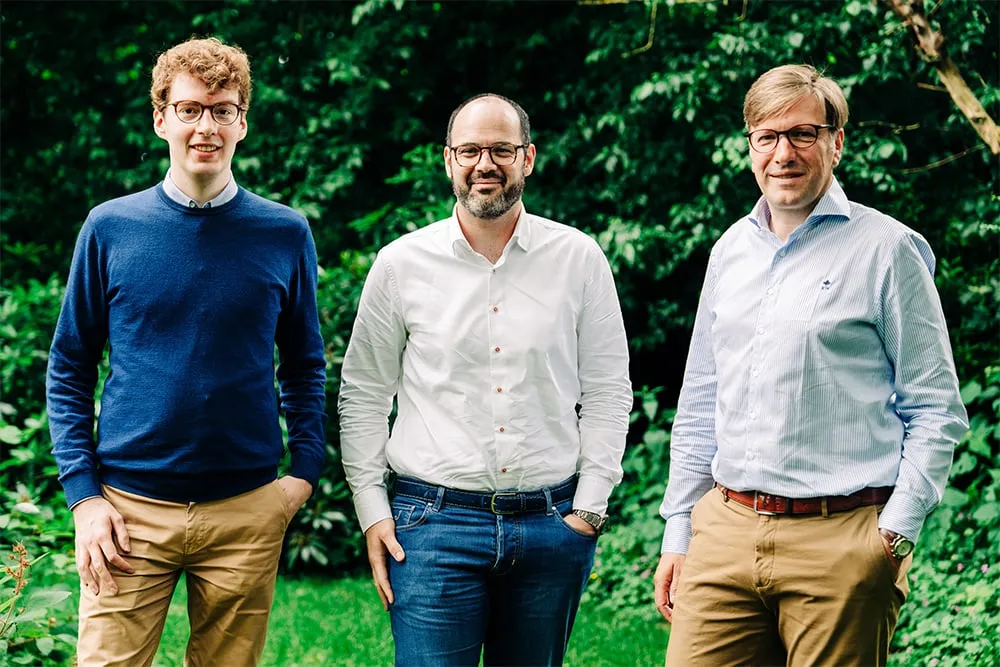
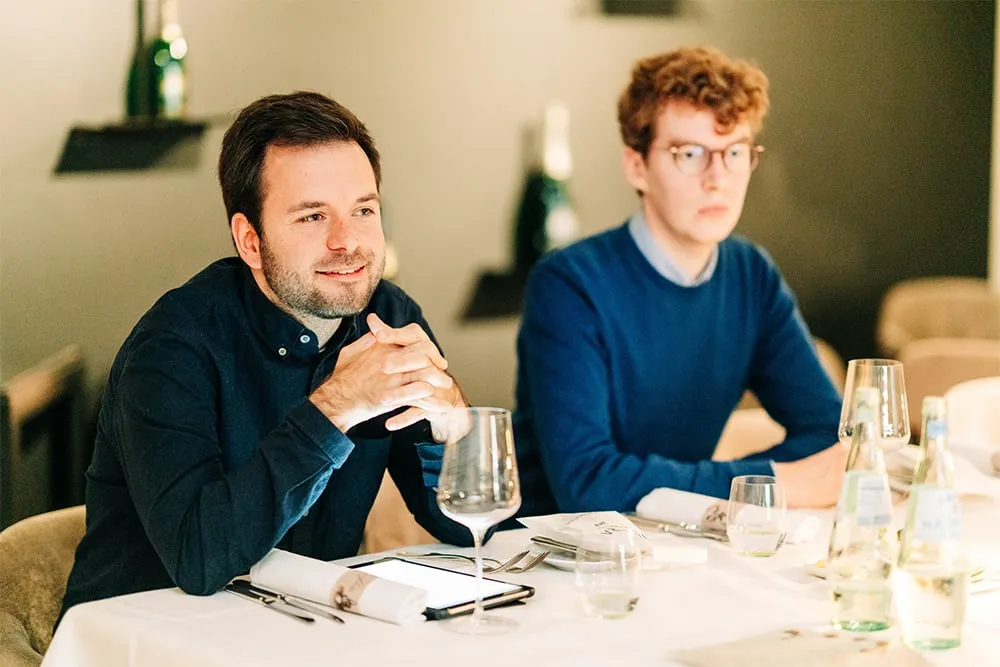
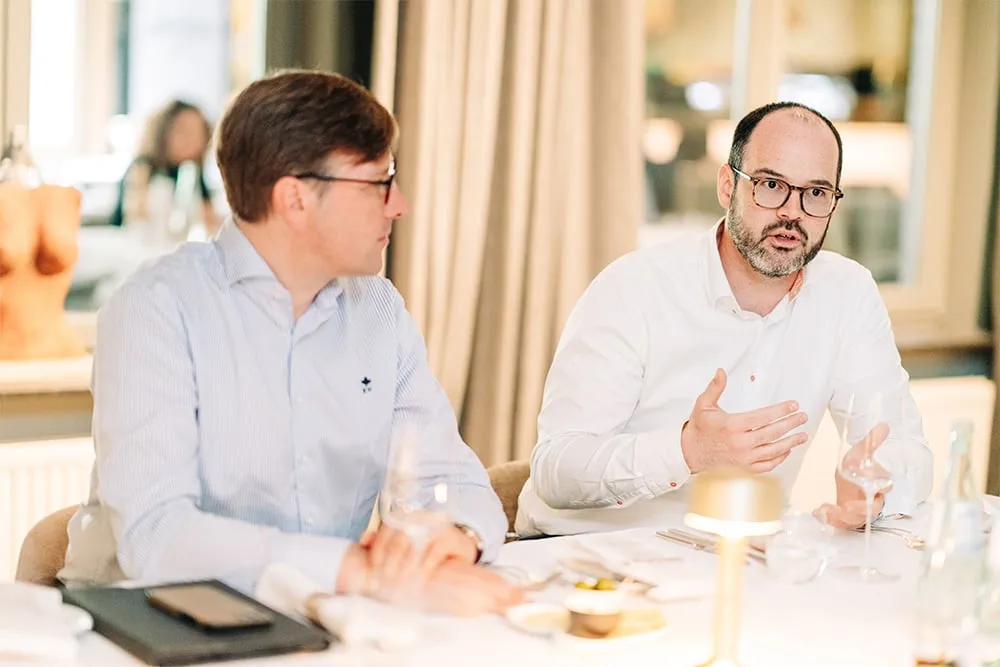
The Flemish have a brick in their stomach. But increasingly, that brick is an existing home or commercial building being renovated. What does this mean for the construction sector? What role do energy standards play? And how do architects, contractors and engineering consultancies view the situation? These and other questions sparked lively discussion at a round-table meeting with Simon Alleman (managing director at main contractor All-Bouw), architect Thomas Goossens (assar architects) and Bart Feys (director at structural engineering consultancy Feys by Studibo), moderated by Bavo Boutsen of The Content Company.

How important is the renovation market today?
Simon Alleman: “As a main contractor, our roots are in new-build homes. But sensing that the boom in new-build could not last, ten years ago we set out to diversify. The aim was to expand into other market segments alongside housing, including renovation. 2021 was a turning point for All-Bouw. For the first time, we actively started looking for properties ourselves. This coincided with accelerated growth in the renovation market. Recently, the split between new-build and renovation has been around 60-40.”
Thomas Goossens: “Antwerp is my base, but assar architects also has offices in Brussels, Liège, Luxembourg and Paris. We have a hundred people working in Brussels alone. We operate in healthcare, public-sector projects, institutional buildings and commercial buildings. We, too, are seeing a growing trend in the renovation market.”
Bart Feys: “Studibo is a group of seven engineering and consultancy firms. By pooling our strengths, we offer a wide range of expertise under one roof, from structural engineering and building services to safety coordination and acoustics. We, too, are seeing a shift in the market. New-build and renovation used to account for roughly 50-50, whereas at Feys the split is now 80-20. Over the past three years, I would even say we have seen a break with the past.”

Renovation seems to be growing in popularity. What is driving this shift?
Bart Feys: “I see several reasons: lower property transfer tax on major energy renovations, EPB regulations, and the fact that building plots are becoming scarcer and more expensive. Rising energy prices are also encouraging people to opt for a full renovation.”
Simon Alleman: “Building is becoming unaffordable for some people, so renovation is gaining ground. We are seeing two trends. Some clients make only the necessary investments to improve a home’s EPC rating from E or F to D. Others renovate to a higher energy-efficiency standard than required by law, achieving an A or B rating. This is by far the biggest focus for All-Bouw.”

Do renovation projects require a different approach? And how does that translate within your organisations?
Thomas Goossens: “New-build and renovation are not separate worlds. As architects, we carefully weigh up which option offers the greatest benefits. Sometimes that is new-build, sometimes renovation. The feasibility study will show which is the best choice. The nature of the project and the client’s preferences also play an important role, of course. We are seeing growing awareness of the environmental impact. For example, sustainability criteria are increasingly being specified for public-sector contracts and subsidised projects.”
Bart Feys: “Renovation is less clearly defined. Older homes have physical constraints that affect the overall cost. This calls for a skilled, bespoke approach and, as a result, closer collaboration between the architect and other experts. So you need to make sure you have the right expertise in-house.”
Simon Alleman: “That sounds very familiar! At All-Bouw, too, we always start with an in-depth preliminary investigation, which is quite unusual for a construction company. Thorough surveys, floor inspections, structural assessments and destructive testing are all crucial to producing an integrated design and a realistic
quotation.
This means assembling a project team as early as possible, of course including the client, contractor and architect, and often engineers or subcontractors too. This is the only way to avoid unforeseen costs later on.”
What knowledge and expertise are needed to shift towards more renovation?
Simon Alleman: “To be future-proof, employees, especially project managers, need a broader skill set than before. It is no longer enough to follow the specifications to the letter. The work is becoming more complex, so we need to take a broader view of challenges and consult other experts where necessary. That is what makes it so interesting, too.”
Thomas Goossens: “Architects are trained to take on a coordinating role. But we need to remain open to new ways of working and different perspectives. And yes, that sometimes means changing our attitude.”
Bart Feys: “When recruiting new talent, you naturally have the desired skills in mind. On top of that, companies need to invest in guidance, support and training. It is an ongoing learning process.”
Is building with a project team more expensive than a traditional renovation?
Simon Alleman: “Smoother coordination, greater efficiency, a single point of contact, less finger-pointing … the benefits are compelling. Renovators may feel that a project team pushes up costs. But those who choose this approach will not face any financial surprises. It is an investment that pays for itself.”
Bart Feys: “That said, not everyone can afford to make such a large investment all at once. We also see private clients who spread their renovation over time.”
Thomas Goossens: “Our professional clients tend to see renovation as more complex than building new, not necessarily more expensive. In general, people expect it to cost less. But you cannot compare every cost item like for like. The requirements for public-sector contracts are set in advance. So I would urge public authorities to give greater weight to coordination and quality when drawing up award criteria.”
Are energy standards opening the door to renovation?
Bart Feys: “EPB regulations for new homes are based on the nearly-zero-energy principle. Anyone buying an existing home with an E or F rating must renovate it to EPC label D within five years. Upgrading to a C, B or A rating is not yet a legal requirement. It is hardly surprising, then, that more and more households are choosing to renovate. Ultimately, this means ageing buildings are being upgraded. I can only welcome that.”
Simon Alleman: “Meeting stricter energy standards often does require a major renovation. In that sense, legislation acts as a trigger, but it is certainly not the only factor.”
Thomas Goossens: “The energy standards are part of Flanders’ goal of making all buildings energy-efficient by 2050. The plan is therefore based on a long-term vision, which I think is a positive thing.”
What are the biggest opportunities and challenges for the renovation market?
Unanimously: “These are uncertain times, of course. What will happen to energy standards in the future? There is no denying that we are already seeing a double effect. Overly rigid legislation benefits no one. Above all, it needs to remain affordable and
workable.”
Simon Alleman: “Bringing different areas of expertise together is the way forward. This shift is already under way.”
Bart Feys: “Energy renovations in apartment buildings still seem like a major challenge to me. It is not easy to get all the co-owners pulling in the same direction, even though that is necessary to meet the renovation requirement. Do not get me wrong, this could create opportunities for the construction sector, but has the legislator given enough thought to how it will work in practice?”
Unanimously: “All in all, the energy transition is a positive story. Let’s work together to make it happen!”
Question about this story? Ask your question
Companies in this story

Keep following this
Get an email when a new story is published. No account needed.
- SubjectRenovation
- CompanyStudibo