“Aluminium joinery calls for ever greater technical ingenuity”
Text Tim JanssensImage Groven+, Sara Blee, Alucotec
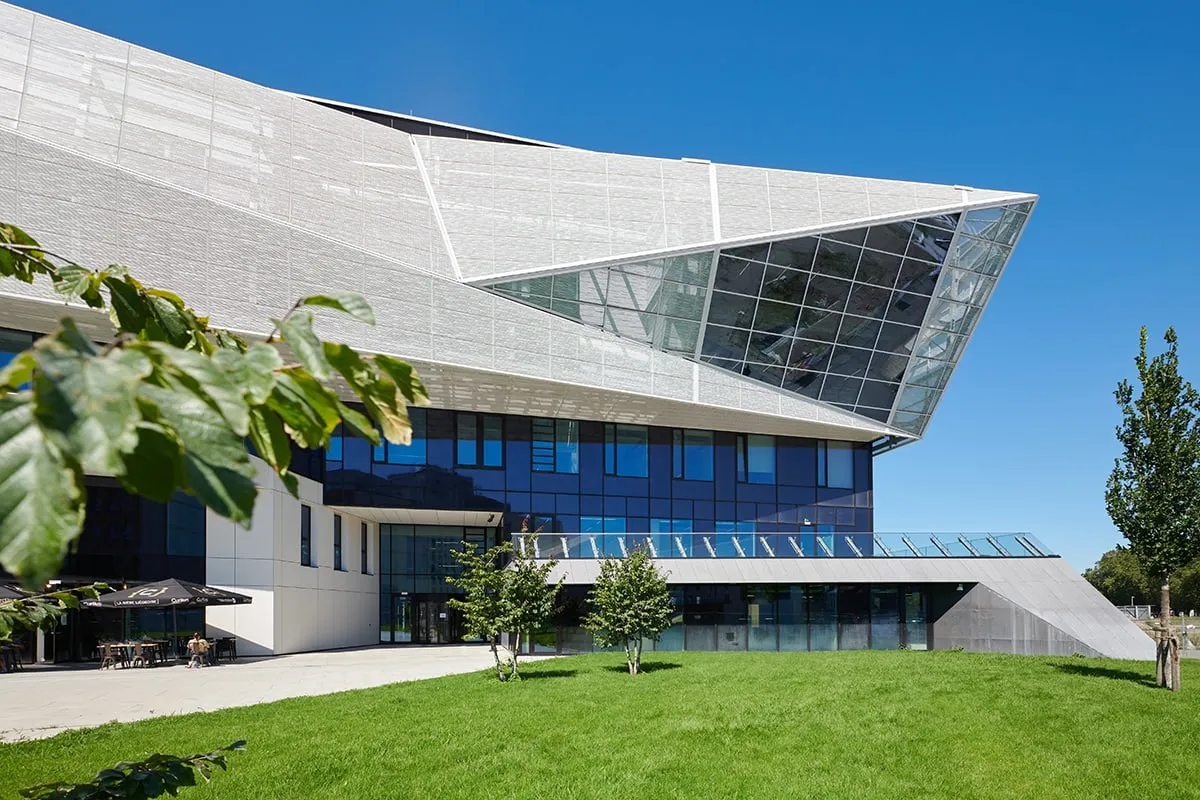
When it comes to innovative façade technologies, aluminium is a constant. What advantages does this popular material offer? What are the sector’s main challenges? And why does aluminium joinery deserve its place in the construction landscape of the future? We put these questions to Etienne Clinquart, Consultant and Lecturer in Façade Design at the Federatie Aluminium Constructeurs (FAC), and Frederic David and Hendrik Versmissen, managing directors of aluminium contractors and FAC members De Jaeghere and Alucotec. “Aluminium joinery is a crucial piece of the increasingly complex puzzle that construction projects have become.”
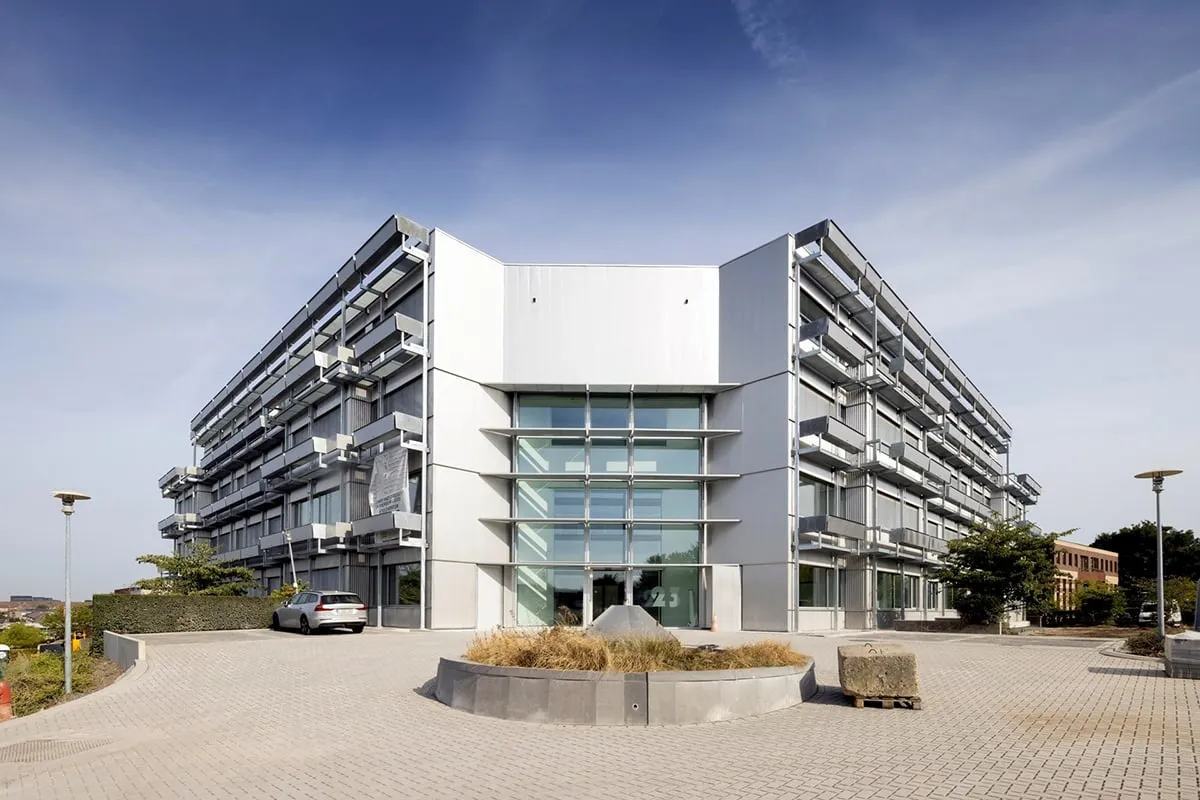
Aluminium is ubiquitous in contemporary architecture, and rightly so. It is a material with many advantages, enabling designers to respond effectively to new trends and developments in the construction sector. Yet aluminium structures often look simpler than they are. This is a glaring misconception, as sleek aluminium exterior joinery often conceals considerable complexity, explains Etienne Clinquart (FAC). “There is a great deal going on behind the scenes, both literally and figuratively. The simple aluminium window of old is a thing of the past. Our trade has become complex specialist work that calls for ever greater technical ingenuity. There are all sorts of additional factors to consider today. First and foremost, I’m thinking of the exponentially greater attention paid to the sustainability and environmental impact of aluminium products.”
A broader focus on sustainability
“In the past, the focus when it came to the sustainability of aluminium joinery was mainly on thermal insulation, which has improved considerably since the 1990s thanks to the introduction of thermal breaks,” says Etienne Clinquart. “This remains important, especially as the building envelope is serving as an essential climate regulator in an increasing number of projects. But in recent years, there has also been growing emphasis on the origin of materials, the environmental impact of production processes, reusability and so on. In this respect, aluminium offers several valuable advantages, including significant recycling potential. Recycled aluminium currently accounts for an average of around 60%, but we will undoubtedly move towards 100% in time. The next challenge will be reusing aluminium profiles. Aluminium has a very long service life and can, in theory, be readily recovered for new applications. However, this development needs to be embraced by the entire sector. Alongside aluminium contractors, clients, architects and builders urgently need to rethink their approach in terms of modularity, disassembly and reuse.”
Innovation as a key strength
The aluminium sector is highly innovative not only in sustainable and circular construction, but also in many other respects, where it is emerging as a pioneer. “BIM is a good example,” says Frederic David (De Jaeghere). “Everyone in the aluminium sector realised that this was a train we couldn’t afford to miss. And rightly so, as BIM is increasingly appearing as an additional requirement for projects. Manufacturers and suppliers have therefore made considerable efforts to make their products available as BIM objects that can be incorporated directly into 3D models. Linking these to 3D production software, which automatically converts all the technical data into production-ready components, is another trend for the future.” Hendrik Versmissen (Alucotec) sees optimising production processes as one of the most important technological innovations on the horizon. “Machine-based and automated working will become the new standard. There will be fewer and fewer people at the assembly table,” he predicts.
Functionality versus aesthetics
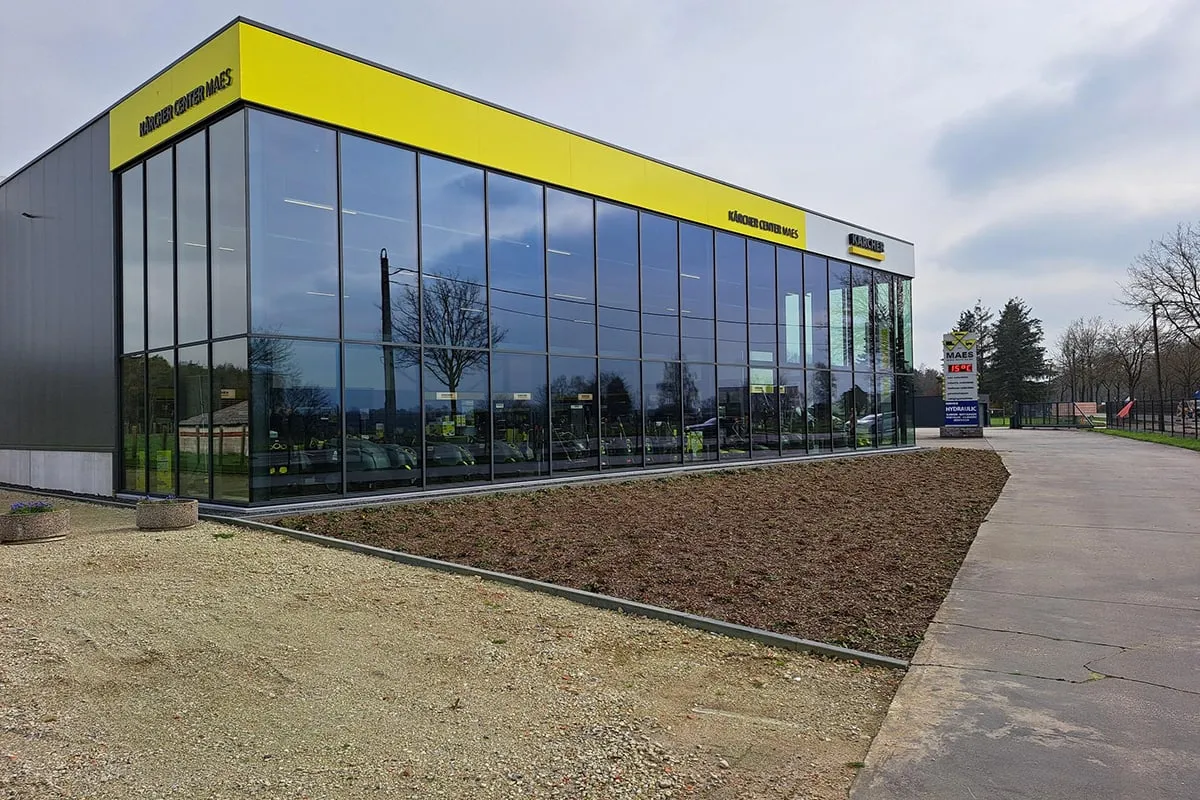
How can strict functional requirements be reconciled with aesthetic and architectural qualities? It is a question aluminium contractors grapple with every day. “Opting for as much glass as possible and slim profiles is a popular trend in contemporary architecture. This naturally brings additional challenges, such as preventing overheating and intrusive reverberation. It takes a lot of work to ensure that these glass boxes also meet the required standards for climate control and acoustics,” notes Hendrik Versmissen. “Fire safety is also receiving increasing attention. A stricter fire safety standard has just come into force, making the puzzle a little more complex. All that technical complexity must not result in bulkier profiles and a less streamlined façade, of course. The sharp increase in technical requirements also makes affordability an issue, particularly in the current economic climate. All this often calls for additional investment, both from manufacturers and from building owners and users.”
A fully fledged collaborative model
Belgian aluminium contractors and their products generally enjoy an excellent reputation. They have little to fear from the competition in terms of quality, service and warranty conditions. Yet they are not always given the recognition they deserve, says Etienne Clinquart. “I get the impression that some parties still see us as small-time aluminium fabricators, even though we are responsible for water and wind tightness, thermal insulation, acoustics and more. Given the considerable responsibility we bear, we should receive more recognition than we generally do today.” Hendrik Versmissen and Frederic David agree: “Ask ten people who built the Havenhuis or another iconic building, and some will be able to name the architect at most. Yet the façade, which we design and engineer, is what gives these projects much of their iconic appearance.” The unanimous view is that aluminium contractors should be brought into a project as early as possible. “Instead of traditional tendering, we need to move towards a fully fledged collaborative model, as is already much more common in the Netherlands, for example. The sooner designers work with us, the better. Sustainability, disassembly, reuse, fire safety, acoustics and other factors will only become more important. Given the many possibilities aluminium offers, we are a crucial partner in that discussion.”
Question about this story? Ask your question
Companies in this story
Keep following this
Get an email when a new story is published. No account needed.
- SubjectRoofing & façades
- CompanyFederatie Aluminium Constructeurs (FAC)