How sustainable are recycled aluminium façades?
In today’s quest for circular construction, recycled aluminium façades are increasingly the choice. This is an excellent thing, but how can you, as a designer, know whether the recycled aluminium you specify has actually been used in products before, rather than being reused production waste? And does that even matter? The terminology involved is essential, as it turns out. It contains subtle but significant differences.
Aluminium has the unique property of retaining all its characteristics after recycling. It can be remelted and reused indefinitely for the purpose for which it was originally intended. This makes aluminium a sustainable and environmentally friendly material, although not all types of aluminium are identical. The same applies to the recycled aluminium content of a product. Misusing the terminology involved, whether knowingly or not, can cause confusion, including by overstating the environmental benefits. And that is, of course, best avoided …

Pre-consumer scrap
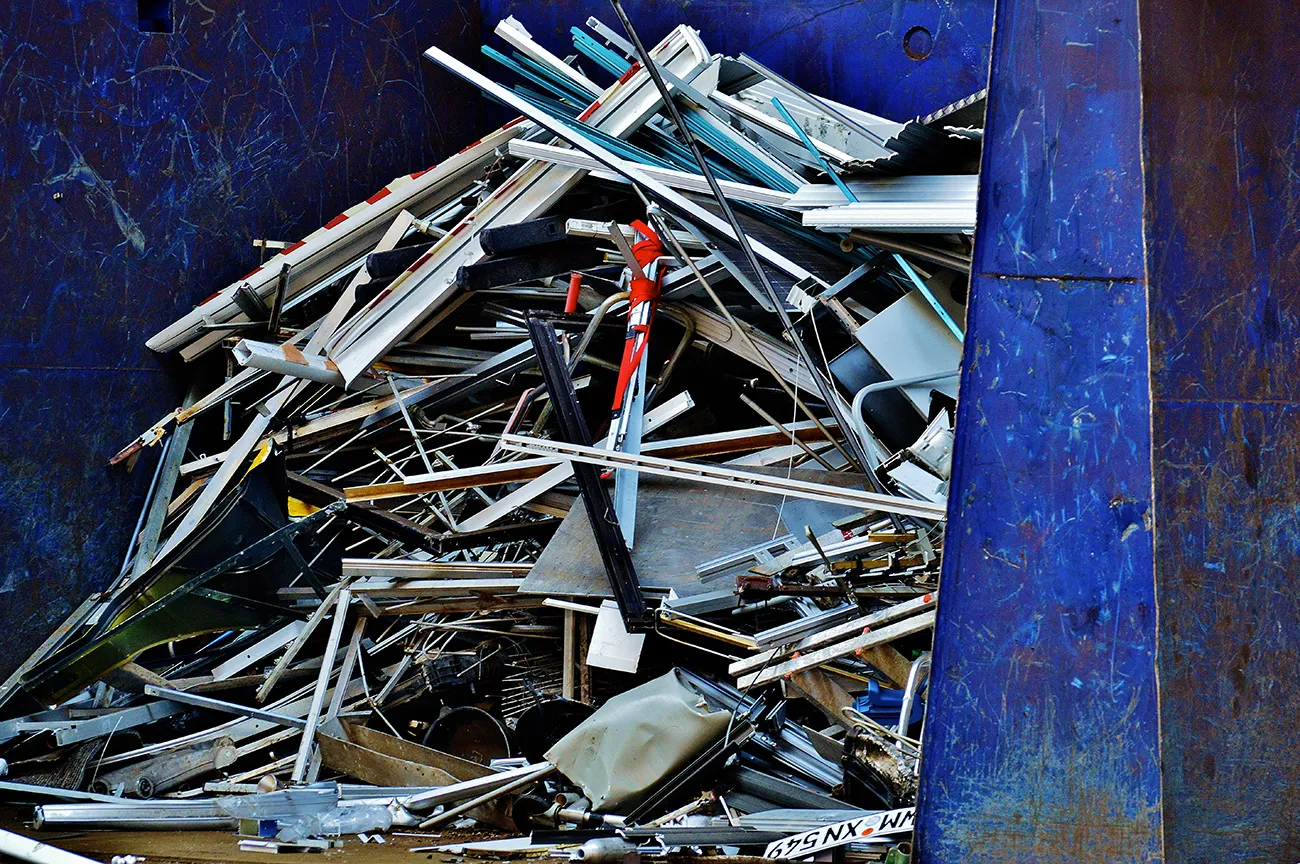
One important distinction in terminology is between ‘pre-consumer scrap’ and ‘post-consumer scrap’. The total recycled content includes both types, but there is a fundamental difference between them. Pre-consumer scrap is also known as production scrap. It is aluminium waste generated during the manufacturing process, for example extrusion. In other words, the metal has never become a finished product. It may have been anodised or painted, but it has never been used for its intended purpose. It is collected during production as clean material and taken to a recycling plant to be remelted. This is a positive thing, as reusing this aluminium saves a great deal of material. What is more, remelting aluminium requires 95 % less energy than producing primary aluminium.
Post-consumer scrap
Post-consumer scrap is end-of-life or reclaimed aluminium. This is metal that has been used in a product that has reached the end of its life cycle and is ready for recycling or reuse. An aluminium window can be considered post-consumer scrap when a building is demolished or renovated and the material is processed and ultimately remelted for use in manufacturing new windows. The distinction from pre-consumer scrap is very important, because the higher the post-consumer scrap content, the lower the CO2 footprint and overall environmental impact. The other side of the coin is that producing top-quality metal with a high post-consumer scrap content is much more complex, since the material is not clean: it has been anodised or painted, there may be a thermal break between the inner and outer sections, and it may be fitted with hardware such as hinges and handles, and so on. In short, it is a complete product made up of different materials.
A complex recycling process
Recycling aluminium is a complex process involving several steps. First, the scrap must be sorted, after which its components need to be separated and finally ground into metal chips. These chips then have to pass through an X-ray machine to separate the different metals and alloys. Finally, the clean aluminium scrap must be stripped of its coating, after which it can at last be remelted. The better each of these processes is carried out, the ‘cleaner’ the new raw material will be. The conclusion: involving an aluminium systems supplier at an early stage in the design process is crucial to achieving a sustainable building solution. What is more, the way aluminium systems suppliers label their products can be incredibly important, as it determines how sustainable that recycled aluminium façade really is. A claim such as ‘90 % recycled aluminium’ sounds very different depending on whether it contains a larger or smaller proportion of post-consumer and pre-consumer scrap …
Question about this story? Ask your question
Keep following this
Get an email when a new story is published. No account needed.
- SubjectRoofing & façades