Paris Olympic Village: a challenge for low-carbon concrete
Text FEBEImage Anne-Sophie Desclèves
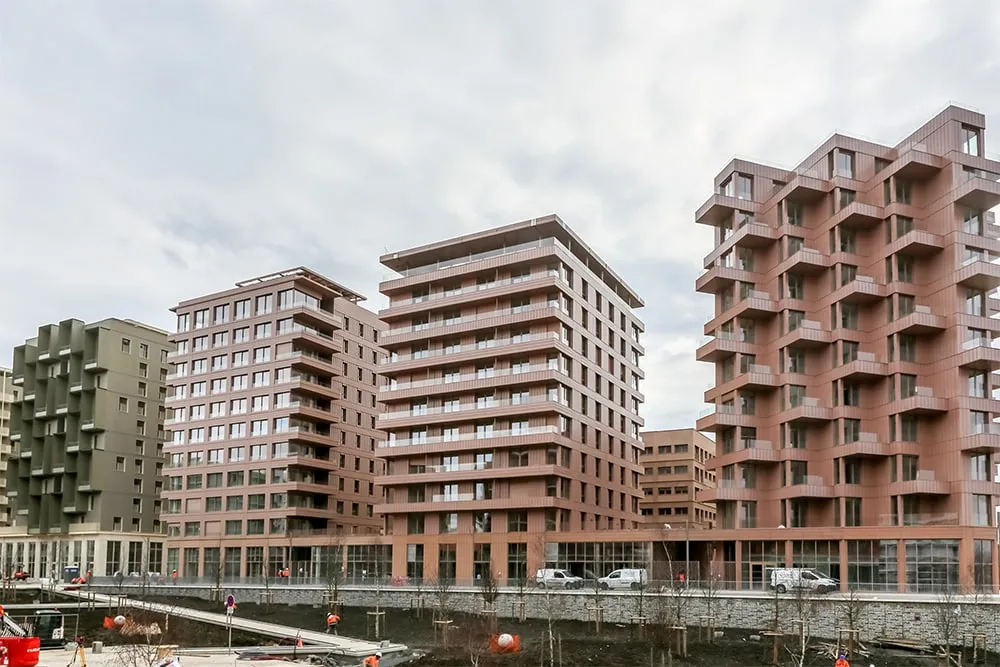
The Olympic Games took place in Paris from 26 July to 11 August. Decomo supplied several hundred architectural beams and columns for the lower plinths of six buildings in the athletes’ village. A particularly prestigious project for the architectural concrete manufacturer from Mouscron.
Sector E in Saint-Ouen was one of the four sectors that together made up the athletes’ village. This sub-project was led by the Nexity and Eiffage Immobilier consortium, together with CDC Habitat, EDF and Groupama. It is a vast site covering 58,000 m², of which 40,000 m² is earmarked for housing, 13,000 m² for offices and around 5,000 m² for shops and ground-floor activities. During the Olympic Games, the area accommodated almost 2,500 Olympic and Paralympic athletes. The six buildings, located on the banks of the Seine, were designed by the architecture practices SOA Architects and Lambert Lénack.
270 m³ of acid-etched concrete
The prestigious project had to meet strict specifications for the buildings’ energy efficiency and the comfort of future users. The whole of Sector E was therefore built with the aim of limiting CO2 emissions to 700 kg per m² of floor area. Numerous measures were taken to meet these expectations from the design stage onwards, by choosing construction methods with the lowest possible environmental impact. Prefabricated concrete and timber were therefore chosen as the main construction materials.
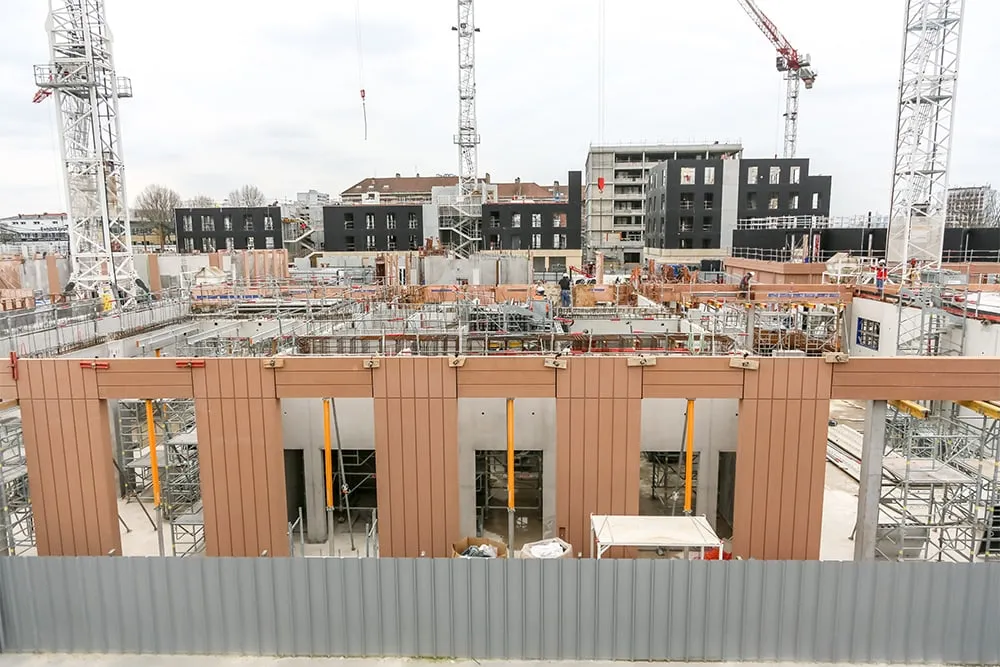
For this project, Decomo produced and supplied 270 m³ of acid-etched concrete in the form of 267 load-bearing columns and beams. Together, they form the solid, robust and attractive finish to the plinths of the six buildings. “The buildings were designed by two different architects, resulting in two similar buildings at the end facing the Seine and four identical buildings just behind them. The plinth we created ties the whole development together,” says Patrick Smessaert, project manager at Decomo. “It is quite remarkable that prefabricated concrete was considered so extensively from the design stage. It is gradually becoming standard practice in Belgium and the Netherlands, but certainly not in France.”
Complexity
The fact that Decomo only had to supply the lower elements presented a challenge. Patrick Smessaert explains: “Load-bearing structural elements at ground-floor level are generally not straightforward. They have to connect to the foundations and then be connected to another material above, timber in this case. It is therefore crucial for us to have a very clear picture of the entire construction method beforehand, so that we can be sure to make the right choices for the connections at the bottom and at the top. We need a detailed understanding of the building’s complexity.”
Low-carbon construction
With more attention than ever being paid to CO2 emissions in the construction sector, demand for low-carbon building materials is growing. Decomo also received such a request for this project. The choice of low-carbon cement was a decisive factor in the tender. “We made all the elements using low-carbon concrete, a first for Decomo,” says Patrick Smessaert. “We expect this trend to continue. A smooth production process requires the concrete elements to be struck from the mould first thing in the morning on the day after casting. Low-carbon concrete based on grey cement takes longer to harden, however. This is a major consideration in the schedule.”
A responsible and inclusive project
Now that the Olympic Games are over, the buildings are being converted into permanent housing. The structure and façade finishes will therefore remain sustainable. The project is characterised not only by its strong environmental focus, but also by its emphasis on social commitment. The site is being transformed into a dynamic residential and leisure district that is accessible to everyone, in keeping with the universal values of the Olympic and Paralympic Games. “Even before the Olympic Games, the buildings were made available after completion, primarily to students. The entire village was not built purely as a prestige project for the Olympic Games, as the whole site also has a useful purpose afterwards,” concludes Patrick Smessaert.
Een zakelijke vraag aan DECOMO? Get in touch
Who worked on it
Sector E in Saint-Ouen
- architectonische balken en kolommen
 Decomo
- consortiumNexity
- consortiumEiffage Immobilier
- consortiumCDC Habitat
- consortiumEDF
- consortiumGroupama
- architectSOA Architects
- architectLambert Lénack
Keep following this
Get an email when a new story is published. No account needed.
- ProjectSector E
- SubjectAcross borders
- CompanyDECOMO
- CompanyNexity
- CompanyEiffage Immobilier
- CompanyCDC Habitat
- CompanyEDF