Lille, Gierle Primary School | Compact, transparent new building replaces outdated school
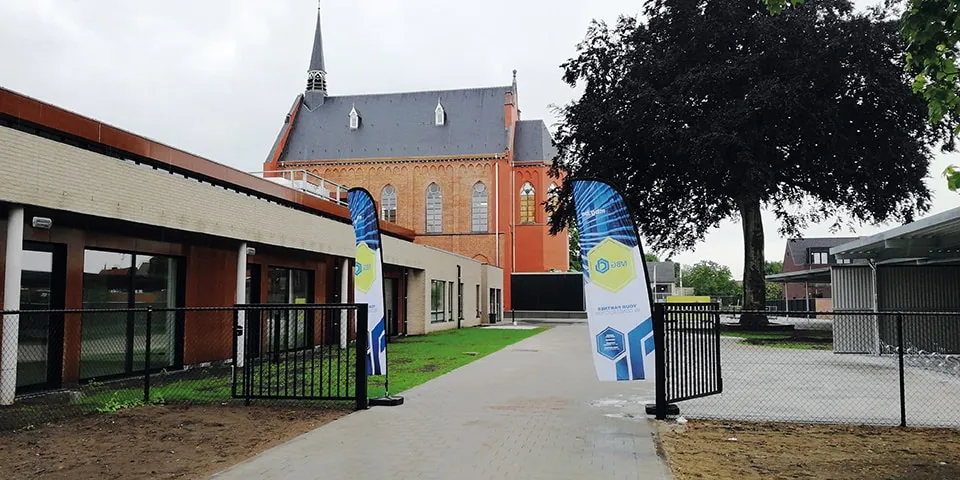
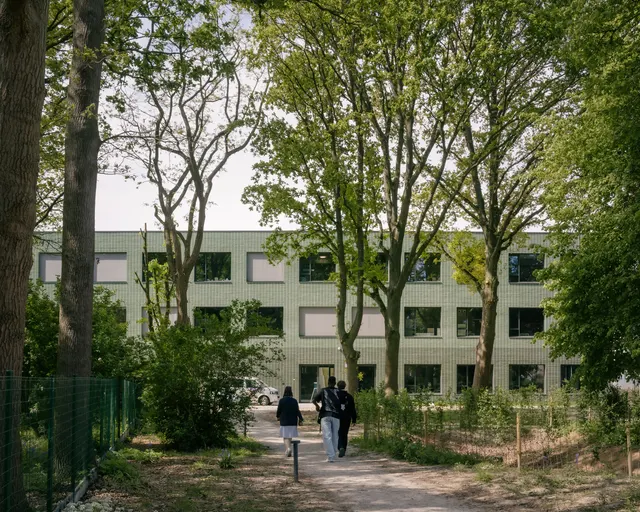
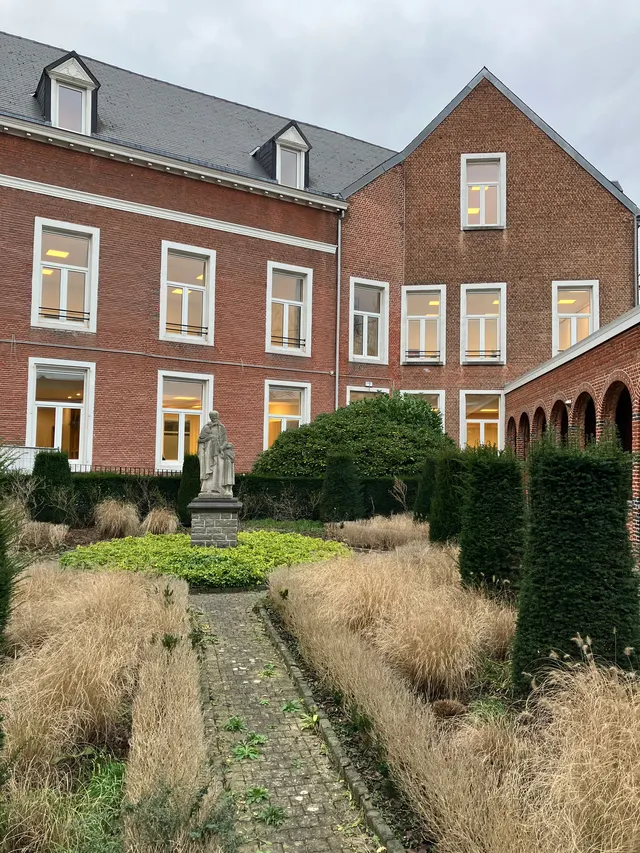
The first day of the new school year will have been just a little less painful for pupils at the municipal primary school in Gierle (Lille). They were able to swap their temporary classrooms for a brand-new building. The new building replaces the dilapidated school buildings along Kloosterstraat and is characterised by its transparency and compact design. The adjacent monastery chapel, by contrast, was retained and restored.
The school buildings along Kloosterstraat were in such a poor state that the pupils moved into temporary classrooms during the Christmas holidays in 2016, more than two years before demolition began. Renovation was therefore not an option. Only the old beech tree in the school playground and the chapel were retained.
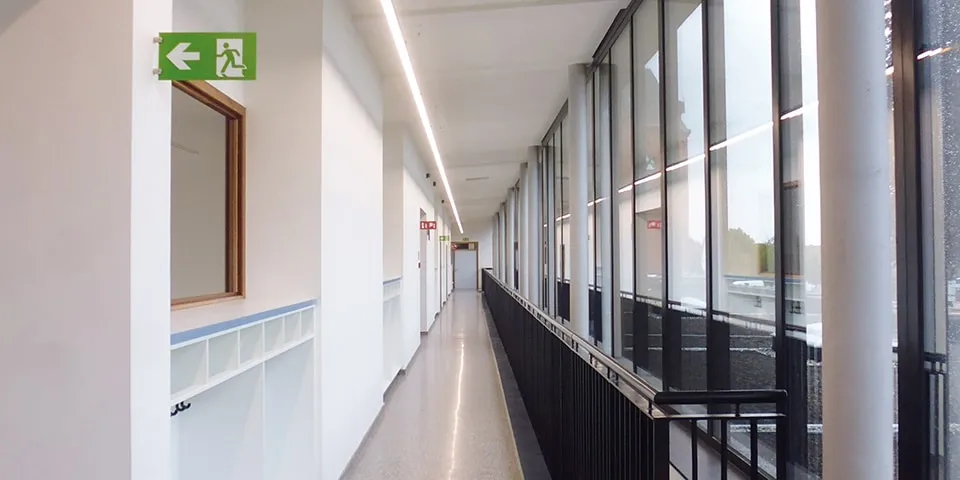
Large windows bring plenty of light into the corridors.
Adaptable design
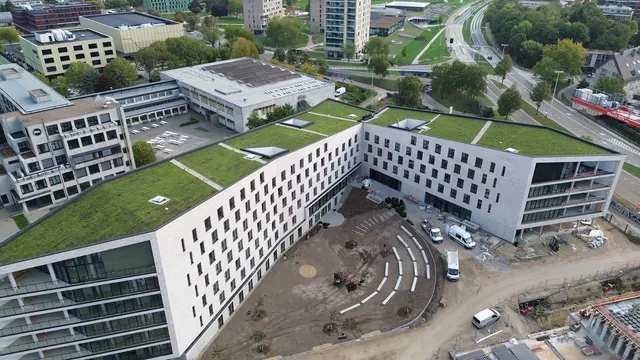
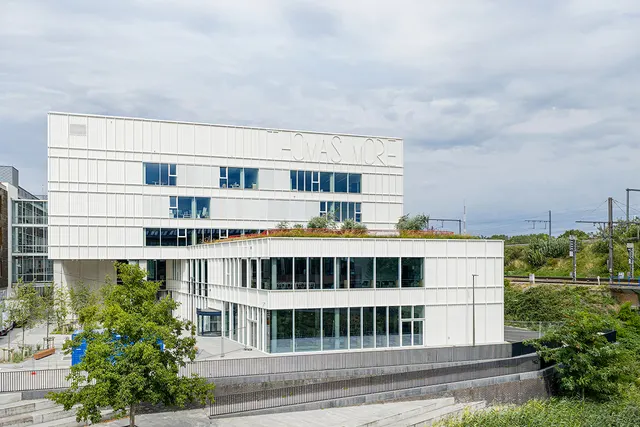
The two wings of the old school have been brought together in a single large, energy-efficient building for 460 pupils, with twelve classrooms, several specialist rooms, a care room, offices for support services and a toilet block. With a total floor area of just under 2,600 m², the new school is not only more compact, but also much more transparent than before, thanks to its large windows. The dilapidated chapel has been restored and now houses a dining area and a multipurpose hall.
“We placed a strong emphasis on transparency, with large windows and an open connection between the floors through an atrium in the central corridor of the new building, a transparent stairwell between the new building and the chapel, and a glazed cabinet zone between the corridor and the classrooms,” explains architect Hilde De Ruysscher. “We also designed the building to be flexible, so it can easily be adapted in the future to changing social and educational views. Buildings simply have a longer lifespan than educational philosophies.”
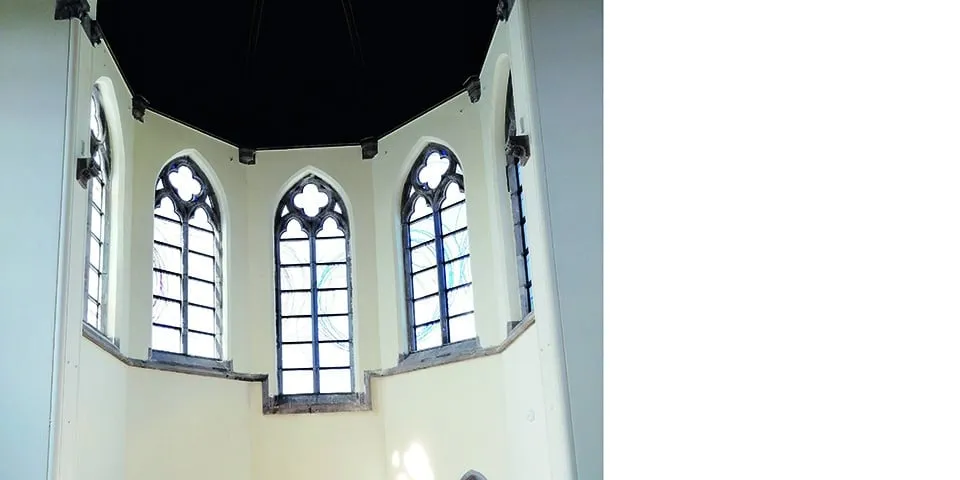
The new stained-glass windows in the chapel’s choir, designed by glass artist Christine Vanoppen.
Socially sustainable too
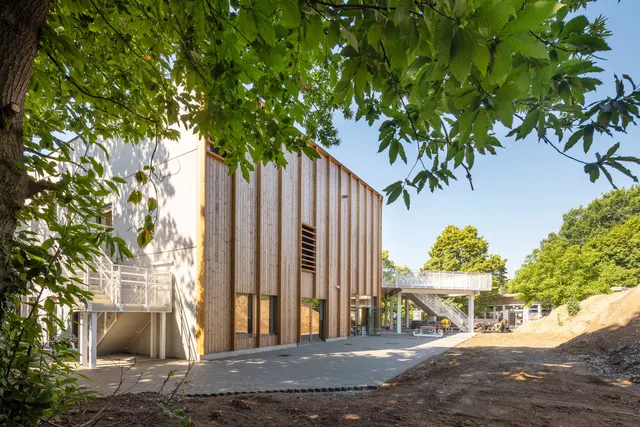
“In our design, we sought a symbiotic relationship with the village setting, hoping to achieve not only energy sustainability but also social sustainability. The new building, with its simple typology, sits harmoniously alongside the chapel. The use of light-coloured brick and timber also keeps the contrast with the chapel to a minimum. The new building is oriented east-west, allowing sunlight to enter every room.”
The new stained-glass windows in the chapel’s choir are certainly a striking feature of the project. “They were designed by glass artist Christine Vanoppen. The new lighting, both inside and out, reinforces the chapel’s role as a landmark in the village,” says Karen Beeck of Architecten Beek en Hermans bvba, which designed the chapel’s renovation.
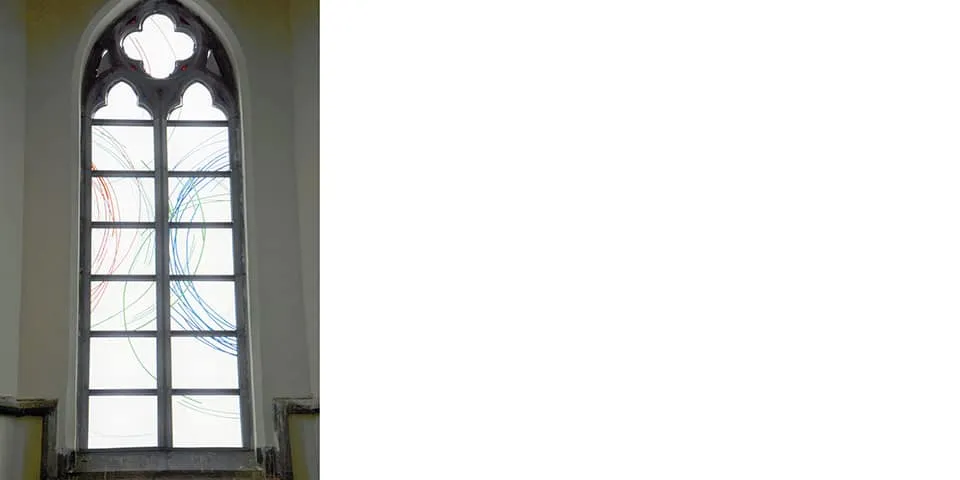
The new stained-glass windows in the chapel are not exactly traditional, but rather abstract.
Sustainable systems and aesthetics
“Given the large amount of glazing in the design, we opted for mechanical night ventilation to keep the indoor climate under control,” says Mathias Segers, project leader on behalf of MBG. “In summer, the corridor is ventilated at night in this way, when it is cooler. Since the upper floor of the new building does not extend across the entire floorplate, we had space for a green roof. To prevent the playground from overheating, we also planted plenty of greenery there and added extra trees to the lawn. The roof of the bicycle shelter is fitted with solar panels.”
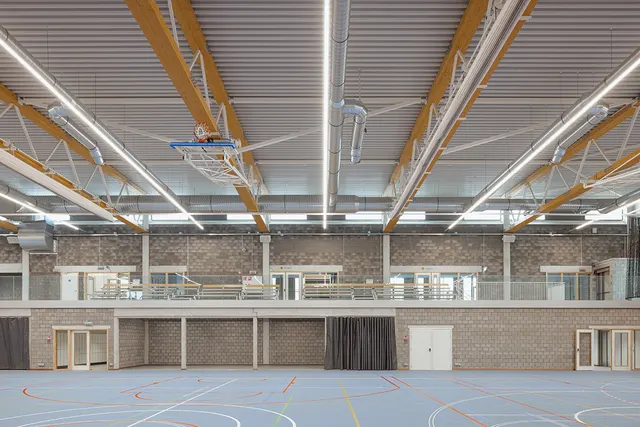
“The use of acoustic plaster on ceilings and in classrooms was also an important consideration. It reduces reverberation to a minimum. From a purely aesthetic point of view, the marble mosaic floors are particularly eye-catching.”
Tight schedule
“Since we are not really a specialist restoration contractor, adapting the chapel for a new use was the main challenge for us in this project. But the short construction period was also a significant factor,” says Mathias Segers, who looks back on the project with satisfaction and some pride. “And not only on the work itself, but also on the atmosphere in which we worked with all the parties involved. It was particularly pleasant,” he concludes.
Question about this story? Ask your question
Keep following this
Get an email when a new story is published. No account needed.
- SubjectEducation