











1 in 2 Belgian homes are ready for a heat pump, but homeowners are unaware
From the Daikin National Heating Survey, analysed by Eneco, Techlink and UGent
The energy crisis has caused considerable disruption in recent years, and many Belgians have changed the way they heat their homes. But where do things stand today? Are people still considering sustainable solutions? Is Belgium’s housing stock ready for the energy transition? And what role do heat pumps play in this? For the second year running, Daikin commissioned iVox to conduct a National Heating Survey among Belgian homeowners. Luc De Smet of Daikin, Tom Defruyt of Eneco, Vincent Vancaeyzeele of Techlink and Sam Hamels of UGent explored the findings in a panel discussion. This resulted in several striking conclusions:
- 1 in 2 Belgians could heat their home with a heat pump without major renovation work, but are unaware of it
- Almost 1 in 2 (44.4%) say they do not know what the requirements are for sustainable construction and renovation
- Among those surveyed who are considering changing their heating system, 28% say it would be too expensive, 28% know little about heat pumps, while others have not yet considered it.
- 6 in 10 Belgians believe the shift to renewable energy will accelerate further.
- Raising awareness and providing guidance from government, industry and the media are essential for a sustainable energy transition
- Flemish Minister for Energy Zuhal Demir: “This research shows how important it is to make renovations easier and provide guidance”
Is Belgium’s housing stock ready for heat pumps?
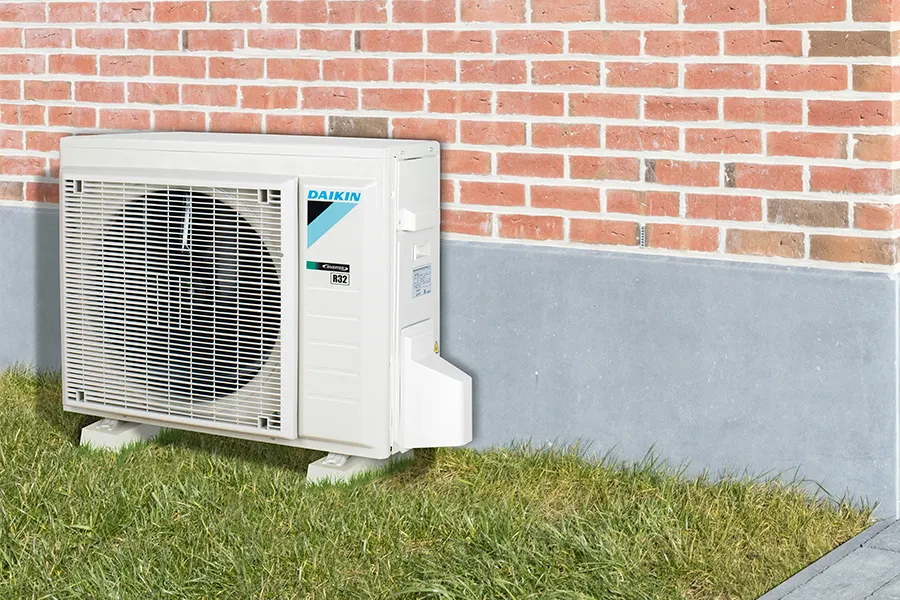
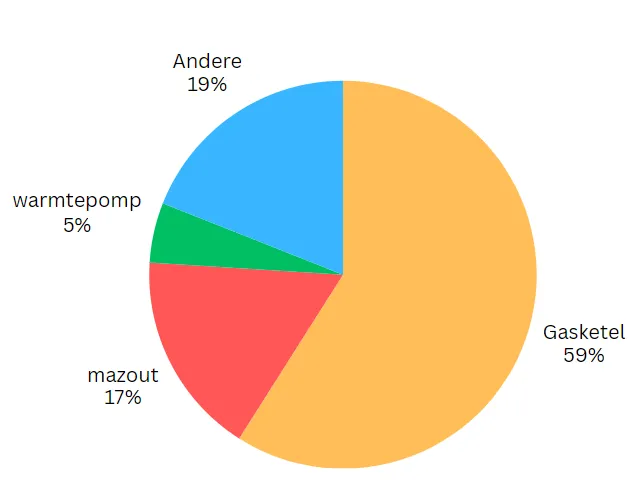
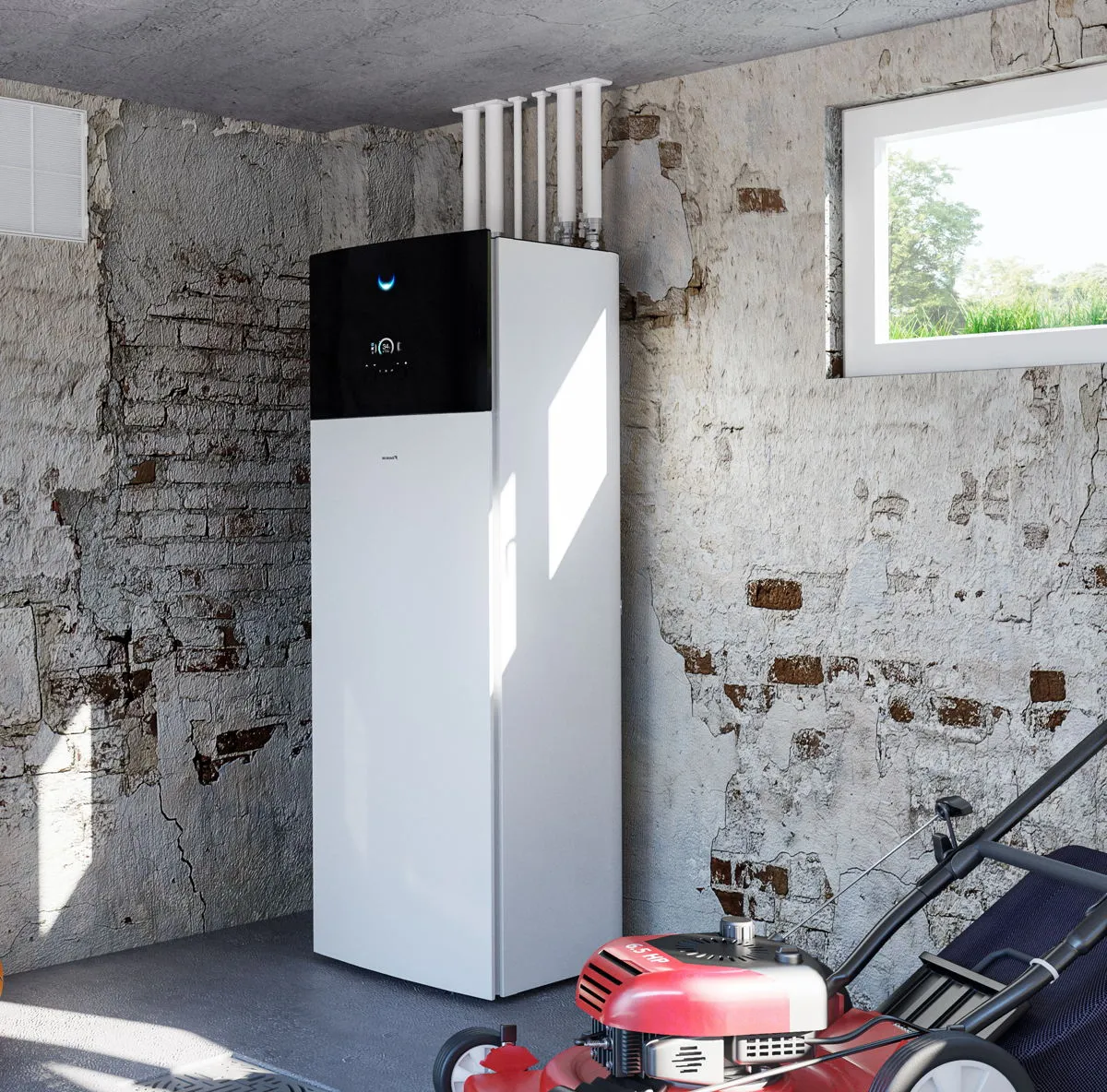
The research found that around one in two homes is suitable for a heat pump, particularly those with electric heating (95%), and to a lesser extent those heated by oil (1 in 3). This also applies to the majority of respondents who currently heat their homes with a gas boiler.
Luc De Smet, Director Strategy & Innovation at Daikin, explains: “Although 1 in 4 heating appliances installed for central heating is already a heat pump, the average Belgian is still unsure whether their own home is suitable for one1. When we look at floor area, estimated energy consumption and the stated level of insulation, our results show that around 1 in 2 homes is already ready.”
However, most of those who mainly heat with gas say they do not know how much energy they use for heating. Of those who do know, 52% use less than 10,000kWh a year. “We always need to be cautious with self-reported data. I think actual consumption will be a little higher,” says Sam Hamels, Energy Economics Researcher at UGent.
Tom Defruyt, Innovation & VAS (Value Added Services) Manager at Eneco, explains further: “When we look at Eneco customers’ consumption data, we see that it broadly aligns with the survey results. Roughly half of our customers use less than 15,000 kWh of gas for heating. We distinguish between gas used for heating and for hot water, which is an important distinction. Accurately assessing heat demand is an important first step in switching to a heat pump.”
A heat pump reduces the amount of primary energy used. To make an investment in a heat pump economically viable, the stated energy consumption, the floor area of the home and its insulation quality must all be taken into account. A VITO study also shows that, at current energy prices, a heat pump is cost-effective in homes with a heat demand of up to 70W/m², rising to 100W/m² for smaller homes2.
Energy awareness and guidance are crucial to the transition
Although the results show that many Belgians do not always know how much energy they use for heating, 59% say they want to invest in making their home energy efficient and keeping it that way. “Energy-efficient renovation ranks third, after kitchens and bathrooms, despite the fact that installing a heat pump costs less than renovating a kitchen or bathroom and also future-proofs the home,” says Luc De Smet.
Eneco is also encouraging its customers to take steps towards a greener future. “At Eneco, we want to become climate-neutral together with our customers by 2035, as set out in our One Planet Plan. Our biggest challenge as an energy supplier is gas consumption. Through the One Planet Plan, we are encouraging our customers to move away from fossil gas by 2035, and heat pumps are crucial to this. This is essential and achievable if we want to meet the Paris targets and tackle global warming. We need to start switching to heat pumps now,” adds Tom Defruyt.
Almost 1 in 2 (44.4%) say they do not know what the requirements are for sustainable construction and renovation. Installers and/or experts clearly have a role to play in addressing this. Of the Belgian homeowners who heat their homes with a heat pump, almost 1 in 3 (28%) say they installed one on their installer’s recommendation.

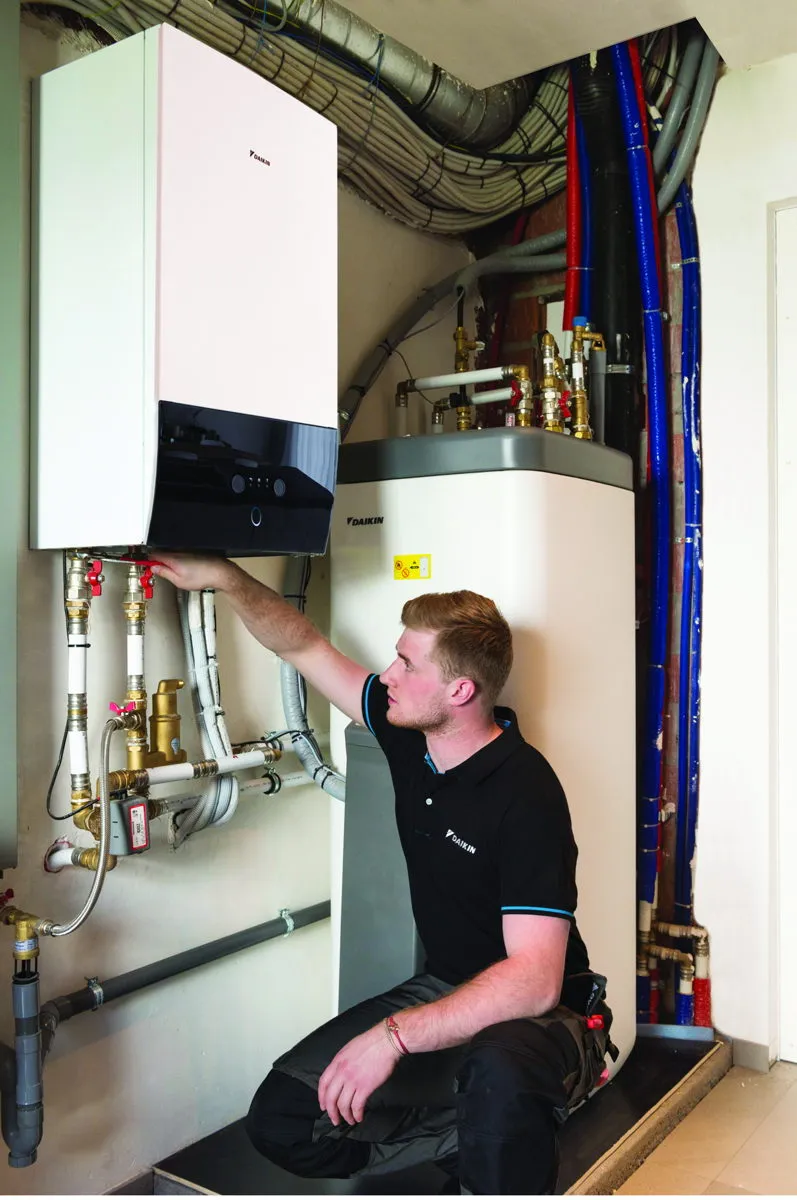
Vincent Vancaeyzeele, Technology & Innovation Manager at Techlink, outlines the situation from the installer’s perspective: “82% of our member installers say they have experience installing heat pumps. A little over 1 in 3 of these only started recently, within the past 3 years. Almost half of the installers who say they do not yet install heat pumps say they would like to take training to get started. Many installers also say they feel some uncertainty themselves. This is in line with the doubts expressed by end customers. Techlink is therefore focused on continuing to inform, train and support our installers. Almost 1,000 installers took part in our information sessions over the past year.”
The survey clearly points to a need for guidance and information. “In Flanders, more is being invested in energy advice centres and energy coaches. The challenge will be to train these advisers properly and evaluate them regularly to identify where improvements are needed. Many people still do not know that their home is actually ready for a heat pump, or that they can ask an installer to fit one when their boiler is nearing the end of its life,” stresses Luc De Smet.
Flemish Minister for Energy Zuhal Demir: “This research shows how important it is to make renovations easier and provide guidance. It proves that our long-term renovation strategy is focusing on the right priorities. We have significantly increased the capacity of energy advice centres in Flanders with a major budget injection. Funding has risen from 4.9 million euros in 2021 to 23.7 million in 2023 and 29 million euros in 2024. At the same time, we have launched MijnVerbouwBegeleiding, which will enable us to provide people with even better advice from 2024. A European study centre previously ranked the Flemish renovation strategy as the second best in Europe. We will continue to evaluate and improve it wherever possible.”
Heat pump myths need to be dispelled
Despite the many benefits of heat pumps, half of Belgians still think they are only suitable for new-build homes. It is essential to dispel these misconceptions and raise awareness of the potential of heat pumps in existing homes.
“Every transition brings uncertainty. We often feel unsure about switching to something we have no experience of. Those doubts are often magnified and reinforced on social media. Alongside the media, government and manufacturers such as Daikin, scientists like me also have a responsibility to clarify misconceptions and debunk myths in public debate, so that people can feel confident about taking sensible steps towards sustainability. One result that stands out to me is that, despite all the efforts in this area, 1 in 2 Belgians still thinks heat pumps are only worthwhile in new-build homes. That is an absolute myth. Many households have already replaced their outdated heating systems, ahead of the inevitable tax shift that will eventually have to come,” begins Sam Hamels, Energy Economics Researcher at UGent.
“The transition towards 2050 is an abstract concept. We need to take action now, with all stakeholders, and work towards 2030. Heating systems installed in the coming years will still be in place in 2050. For end users, this directly adds value to their home. Homes with a poor energy rating are worth considerably less. We can already see that many households have realised that a heat pump is the sustainable long-term choice, which was also clear from the rise in sales over the past year. Heat pumps have become standard in new-build homes, and their use in renovation projects is also beginning to take off,” adds Luc De Smet.
Vincent Vancaeyzeele is keen to add: “As Luc has just pointed out, the heat pump is the most energy-efficient solution. 1 kWh of electricity produces 3 to 5 kWh of heat in the home, whereas combustion produces a maximum of 0.9 kWh of heat for every kWh of energy supplied to the home. This means that a heat pump costs no more to run than a fossil-fuel system in half of homes, despite the high levies on electricity in Belgium.”
“Those high levies on electricity are really where the problem lies in Belgium,” responds Tom Defruyt. “For a heat pump to pay for itself within a reasonable timeframe, electricity and gas prices need to be in proportion. That is not currently the case, and it does not encourage people to switch to sustainable heating. We can see that the transition is moving faster in our neighbouring countries. There is an urgent need for a tax shift. The figures show that homes are ready. Belgians are willing to make cost-effective investments, but the government is still holding them back. Let’s reduce or shift the levies on electricity to speed up the energy transition.”


Looking ahead: smart technologies and flexibility in energy use
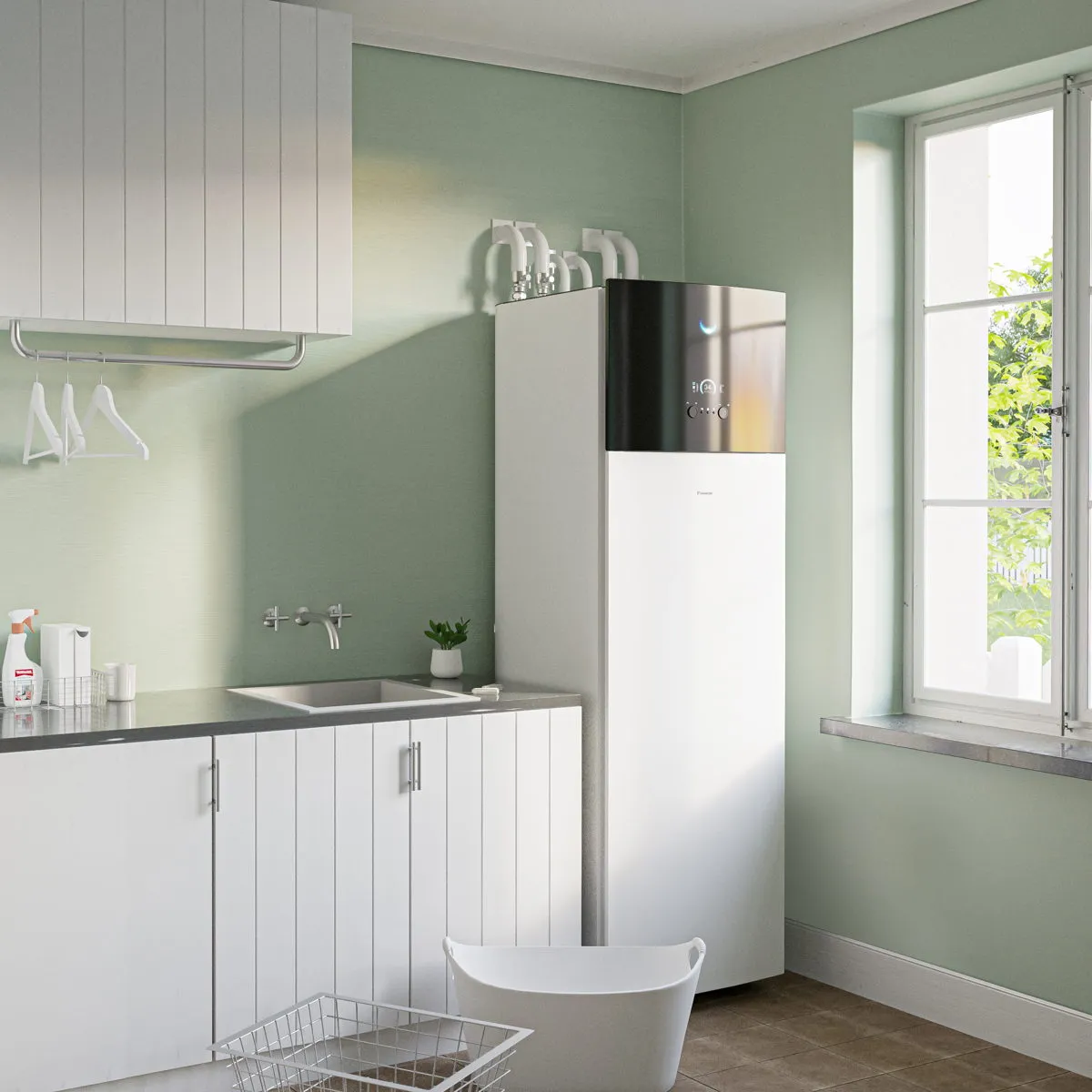
Both homeowners and the industry are optimistic about the future of renewable energy. Six in 10 Belgians believe the shift to renewable energy will accelerate. 52% of Belgians think we will store energy at home in the future, and 57% believe new technologies such as heat pumps will help better align supply and demand. The participants in the discussion also see benefits in smart technologies.
According to Sam Hamels, end users are best off taking advantage of hourly electricity prices, which the heat pump automatically responds to so they can benefit from the lowest rates: “Without having to do a thing, the home and domestic hot water are heated in a way that makes maximum use of the cheapest hours, when there is the most wind and sunshine. The heat pump’s electricity consumption is not only much more cost-effective, but also much greener. It’s an extra saving that requires no additional investment.”
Eneco also sees potential. “The dynamic tariff has recently become available in Belgium, and could well become the tariff model of the future. Especially for those who can manage their consumption intelligently, including households with a heat pump. This means end users can benefit from the cheapest and greenest energy, even without solar panels of their own,” adds Tom Defruyt.
The heating and energy sectors are fully committed to the energy transition and a greener future. It all comes down to providing information, guidance and working together so that end users can embrace the transition without doubt or uncertainty. The Belgian Government certainly has a role to play in raising awareness and providing the necessary tools. Belgian homes are ready, and so is the sector. What are we waiting for?




Watch the full panel discussion here.
1 Source: communications from frixis, attb: 1 in 4 heat generators installed are heat pumps, InfoWarmtePomp
1 Source: VITO study: VEKA_hybride_WP_eindrapport_age3zr.pdf (vlaanderen.be)
Een zakelijke vraag aan Vlaams Energiebedrijf? Get in touch
Companies in this story
Keep following this
Get an email when a new story is published. No account needed.
- SubjectGeneral
- CompanyVlaams Energiebedrijf







