











100-year-old De Ideale Woning ready for the future as a broad-based housing company with a renewed organisation
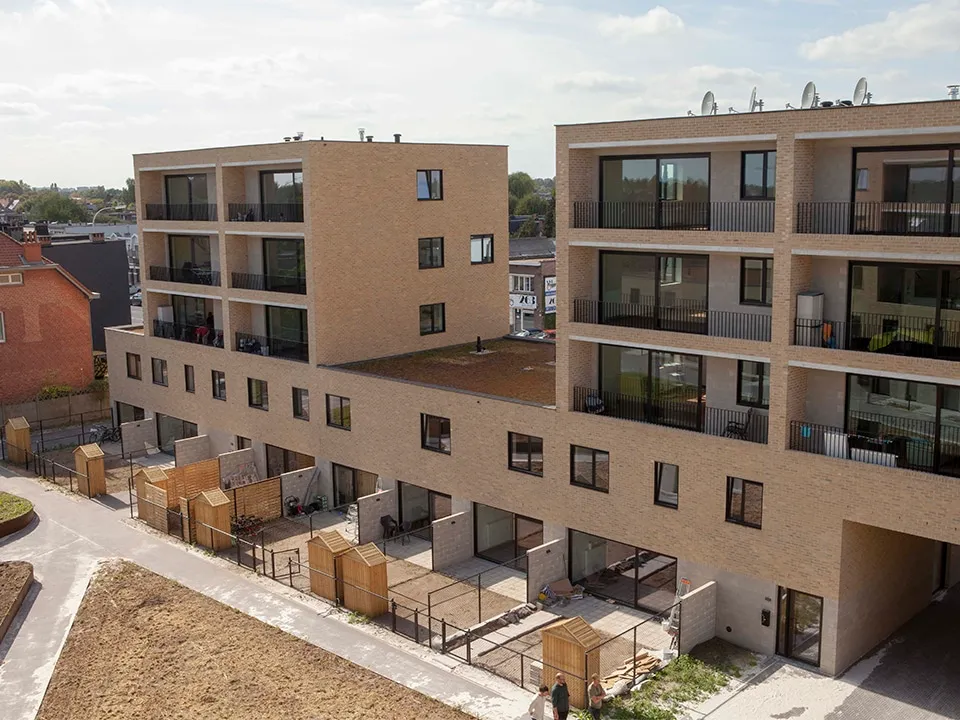
De Ideale Woning is 100 years old. The social housing company was founded in 1920 under the name “De goedkope woning van het arrondissement Antwerpen”.
Even after a century, housing needs remain high. Demand for social housing continues to rise. Existing housing types do not always meet the needs of a changing society. Residents also have high expectations, local authorities want active support for their local housing policies, and sustainability in all its aspects is attracting growing attention. To tailor its services more closely to these needs, De Ideale Woning, headquartered in Berchem, is undertaking a major organisational renewal. This includes the launch of a brand-new logo and visual identity.
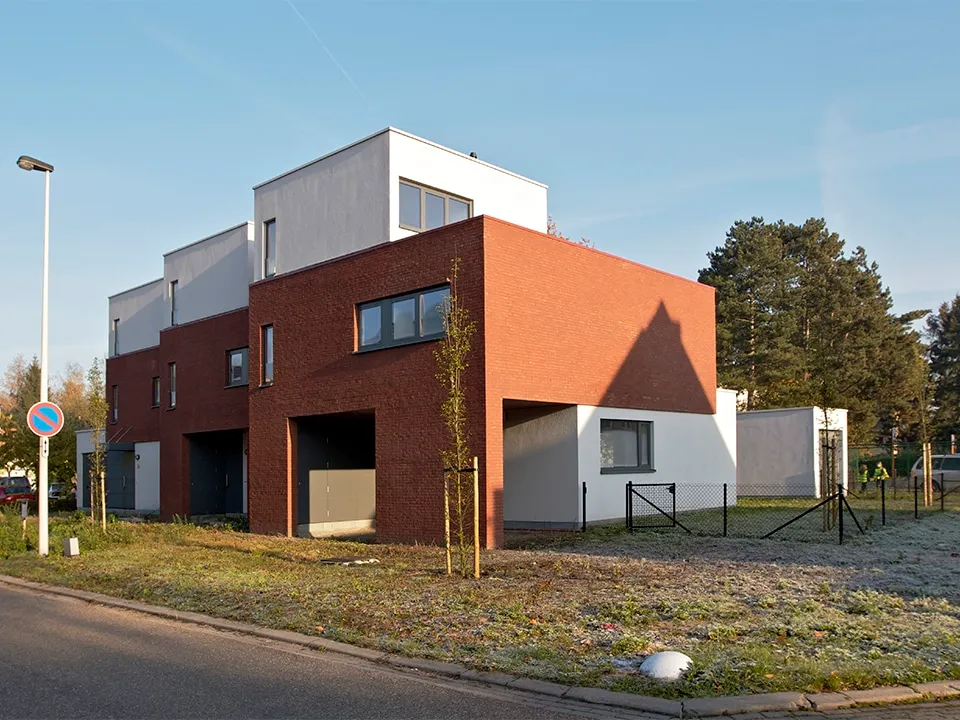
In the first years after it was founded in 1920, construction moved ahead rapidly, with no fewer than 1,333 single-family homes built. The crisis of the 1930s brought construction activity to an almost complete standstill, and the Second World War made matters worse. In the first years after the war, the priority was to rebuild the housing stock. From 1950, the pace of new construction picked up sharply again. The 3,000th home was occupied in 1956.
The housing stock then grew by around 1,000 homes every 10 years: 4,000 in 1970 and 5,000 in 1979. A notable milestone was the celebration of the 6,000th home in 1982. By 2002, De Ideale Woning had built 7,000 homes. Today, the company manages 6,302 rental homes, including 1,658 single-family homes, 4,200 flats, 430 homes requiring renovation (not available for rent) and 14 commercial units. In total, they are home to almost 13,000 residents. In addition to central Antwerp and its districts, De Ideale Woning operates in 20 municipalities in the surrounding area. The housing company accounts for 28.2% of all social housing production in the province of Antwerp.
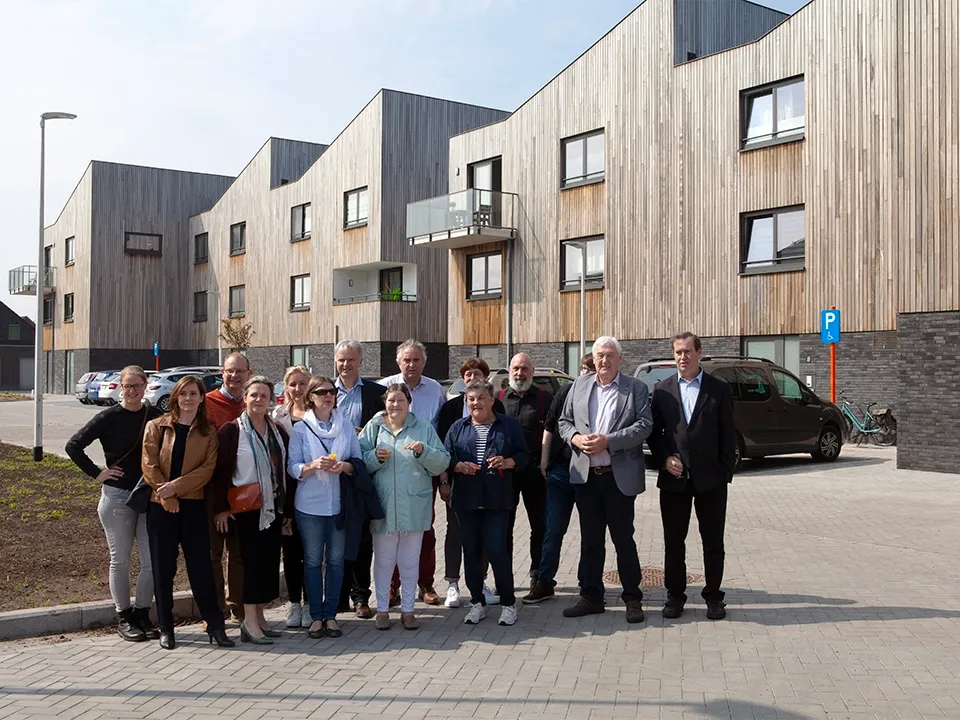
(Photo taken before the coronavirus pandemic)
Other target groups
At first, De Ideale Woning focused mainly on families in need with many children. As a result, the homes built in the early decades were mostly single-family houses. Apartment blocks came later, first for single people and small families, and then partly in response to high land prices, for larger families too. In 1956, reflecting its belief that social housing is about far more than simply providing a roof over people’s heads, the company changed its name to De Ideale Woning.
The name change did not alter its focus on families as its target group. However, as it responded to social changes, De Ideale Woning also built homes for older people and adapted homes for wheelchair users in the years that followed. The housing company also launched a supported-living project for people with a learning disability. Today, most residents are aged 50 to 59, followed by those aged 60 to 69 and, in third place, those aged 40 to 49. Most residents live alone.
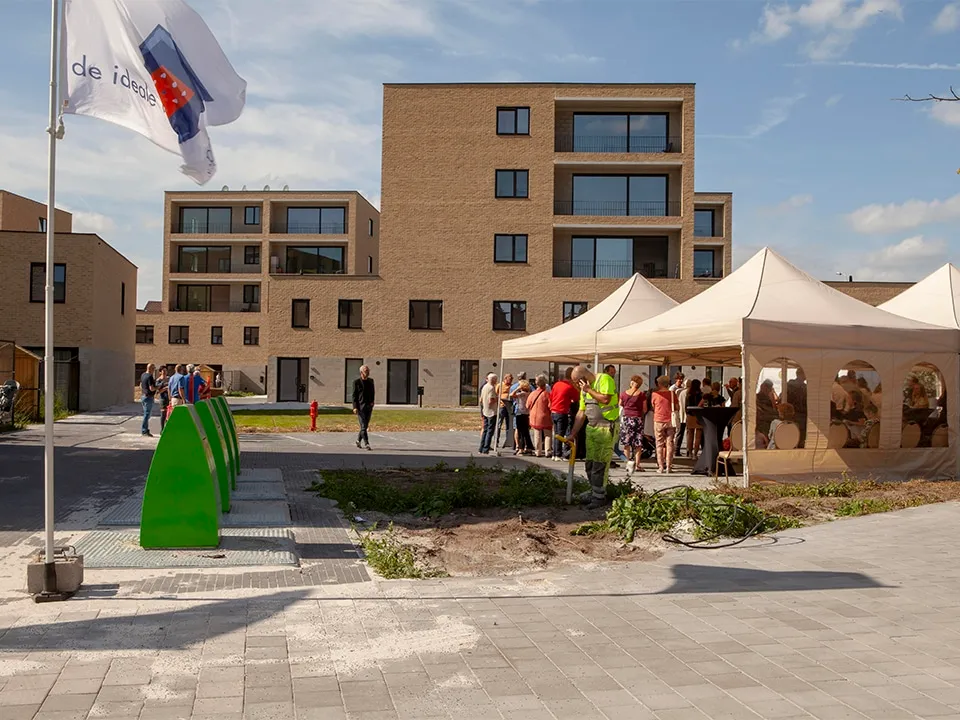
(Photo taken before the coronavirus pandemic)
Major housing shortage
“Society is changing, and expectations of social housing companies are changing with it. Even after 100 years, we still see a major housing shortage, and demand for social rented homes continues to rise,” says Gert Eyckmans, director of De Ideale Woning. “In 2014, 10,465 households were registered. By 2019, that figure had risen to 16,399. That is why we are stepping up our new-build efforts even further. Together with the municipalities, our partners, we are well on track to meet the binding social housing targets everywhere.”
At the same time, De Ideale Woning is improving the quality of its existing housing stock. Within the limits of its financial resources, it is combining renovation and replacement construction with major efforts to build new homes. There is also a strong focus on innovation, including new forms of housing (such as Senioren Thuis and a sustainable neighbourhood with an organic farmer), sustainability and new partnerships.
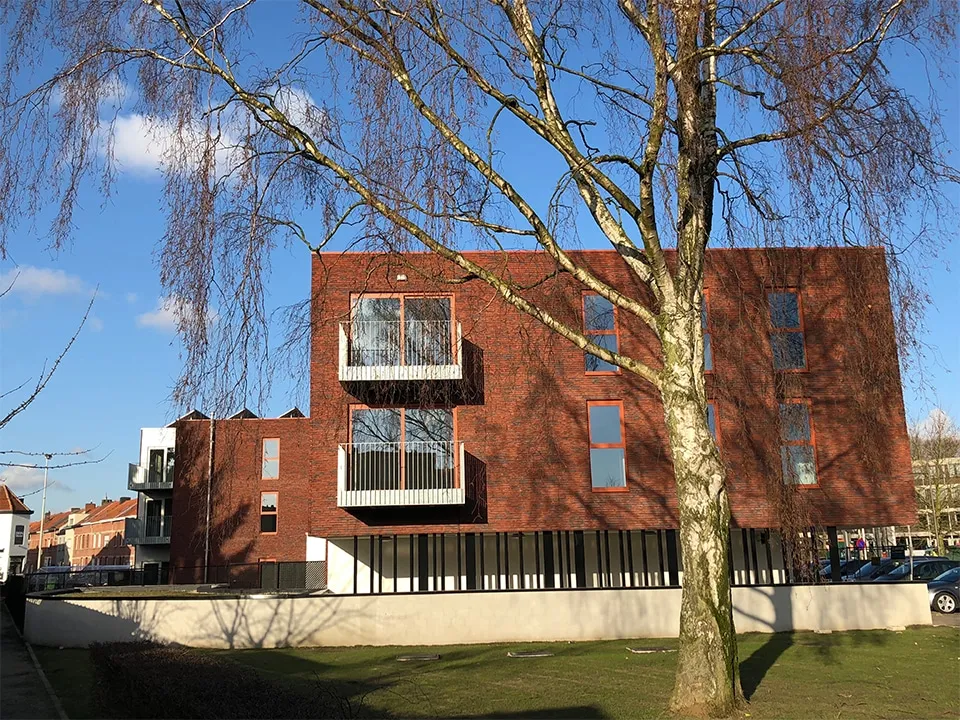
More than 400 tenancy agreements are signed and over 10,000 technical interventions carried out each year. De Ideale Woning has 75 employees and can call on more than 110 volunteers. More than 100 neighbourhood activities are organised annually. The housing company has also established 7 community spaces, 78 community gardens and 1 organic farm.
Regional teams play a key role
“In this changing society, De Ideale Woning is committed to taking its responsibilities fully to heart. We are therefore renewing our organisation to further improve our services for residents, applicants, local authorities and partners. We have divided our area of operation into 4 regions: Centre, North, East and South. The regional teams play a key role in our new approach to service delivery,” says Gert Eyckmans.
“As part of our day-to-day commitment to providing a welcoming home for as many people as possible, we are also continuing to develop resident participation and consultation. Our residents have high expectations of the quality of their home, their living environment and our services. They want to be involved in decisions that affect their housing situation. Drawing on their own expertise and working together, our resident support workers help them by being present in neighbourhoods, engaging in dialogue and involving residents as much as possible.”
Flemish coalition agreement
Under the Flemish coalition agreement, the new housing company must be in place by 1 January 2023. From then on, social housing companies and social rental agencies will work together as a single organisation to expand the supply of social housing. “Together with the SVKs and local authorities, De Ideale Woning wants to make this a positive project in which we strengthen one another so that we can respond even better to housing needs,” concludes Gert Eyckmans.
Question about this story? Ask your question
Keep following this
Get an email when a new story is published. No account needed.
- SubjectGeneral







