











“2024 and ’25 will be challenging, but the construction sector has a bright future ahead”
Text Björn CrulImage Dieter Meyns
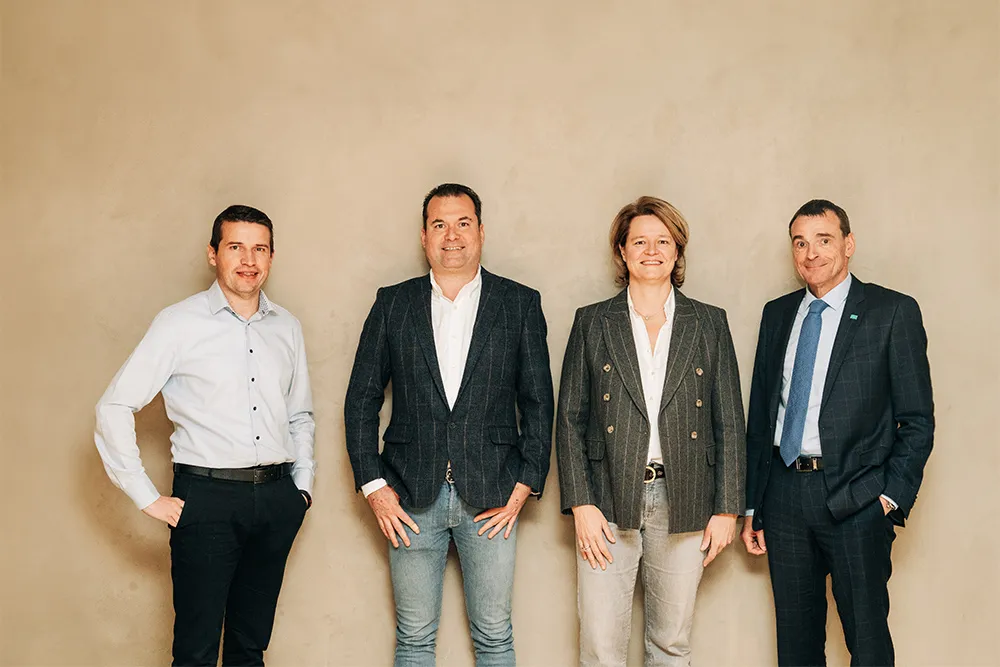
The construction sector is one of the most important sectors in our country and also an indicator of how our economy is performing. In that respect, 2023 was a remarkable year: more than two thousand construction companies went bankrupt, the highest figure in ten years. A combination of inflation and rising interest rates was felt particularly in the residential segment. So the big question is: will 2024 bring an improvement? We brought four construction entrepreneurs together to discuss the challenges and opportunities facing the sector: Kristof Defruyt (Vandenbussche Bouw), Jeroen Beeuwsaert (Beeuwsaert Construct), Kathleen Verhelst (Groep Verhelst / Verhelst Bouwmaterialen & Logistics) and Christophe Maes (Messiaen and future president of Embuild).
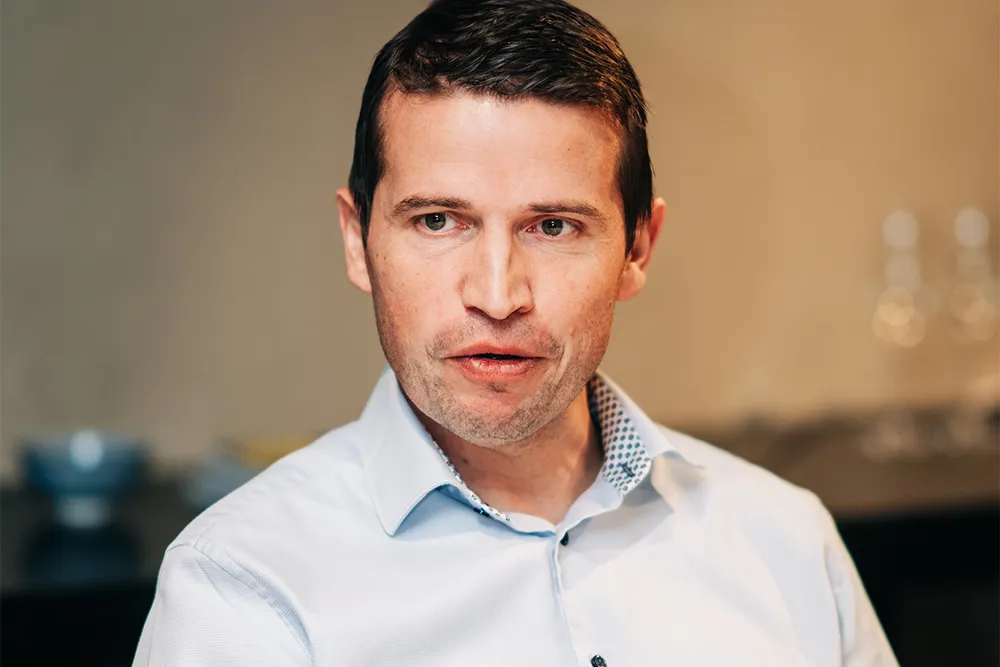
The latest business survey by sector federation Embuild illustrates the dark clouds hanging over the construction sector: as many as six in ten construction and installation companies have seen a fall in enquiries from potential customers. Contractors in housebuilding and renovation in particular expect 2024 to be a worse year than 2023. “We too are seeing residential projects, especially apartment construction, grind to a halt,” says Kristof Defruyt, CEO of Vandenbussche Bouw in Aalter. “Fortunately, we can offset this with more public-sector projects for schools and local authorities. Even so, I expect our turnover to fall by 5 % this year. There is no sign of interest rates coming down, and many property developers have put projects on hold.”
Beeuwsaert Construct, which specialises in industrial and warehouse construction, is seeing a clear shift in its business. Director Jeroen Beeuwsaert says: “Industrial construction is the branch of the construction sector that has been least affected. Our turnover has tripled over the past ten years. We used to generate 35 % of our turnover from projects for the agricultural industry. That share has fallen to 20 %, as we have taken on more industrial projects. But the nitrogen issue has brought livestock building to a complete standstill. Although a decree has now been passed, farmers remain highly uncertain, and we fear this segment will not recover. So we are focusing on logistics, SME warehouses, offices and retail. Although competition and price pressure have increased, we still expect further, modest growth. We simply need to step up a gear.”
Beware of a self-fulfilling prophecy
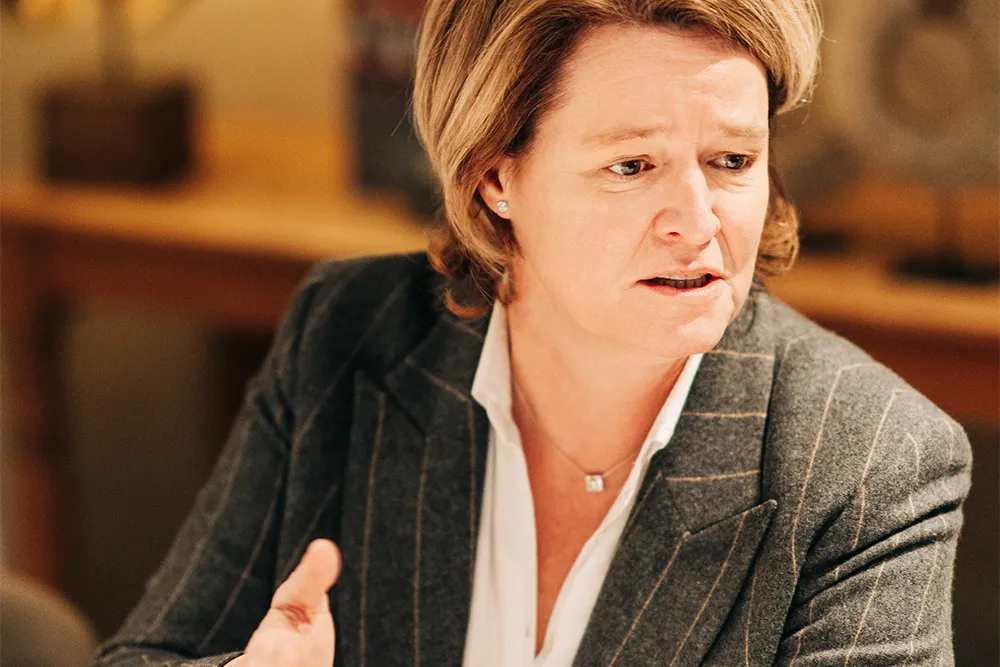
Christophe Maes is part of the fifth generation of the East Flanders-based Maes contracting family. In addition to being an investor in Algemene Bouw Maes NV and property company Alides, he is currently managing director of a construction SME specialising in renovation and refurbishment. And from March, he will become national president of Embuild. “We are seeing a construction sector moving at two speeds. The residential segment has slowed considerably. Rising costs and interest rates have made an individual home virtually unaffordable for first-time buyers. Project sales have taken a serious hit. But I have the impression that the worst is over and that households realise the era of low interest rates is definitively behind us. On the other hand, the order books of family-owned businesses active in the industrial and office markets are still fairly full.”
At Groep Verhelst, which supplies building materials as well as precast concrete, flooring and even acoustic solutions, managing director Kathleen Verhelst also sees this dual dynamic: “Some customers are under no pressure and are carrying on with business as usual. Others clearly cannot plan as far ahead as they used to. I am particularly concerned about a self-fulfilling prophecy: we need to focus on the positive so that investment in construction continues.
The situation seems stable enough to me: building material prices are not about to fall, our supply chain is back on track and we know that the property sector has sufficient stock available. Hesitation and uncertainty are good for no one.”
Sustainability is the key word
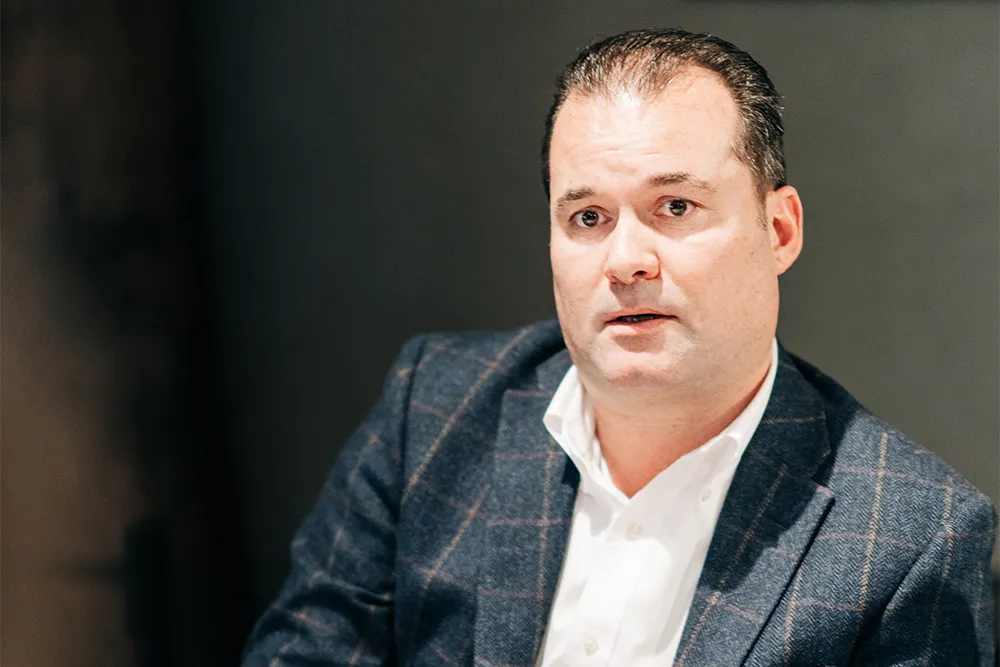
“We need to return to a sense of realism,” agrees Kristof Defruyt. “Consumers and businesses are still experiencing a degree of uncertainty. Banks also play a major role here, even though they could be helping to stimulate the economy. Personally, I expect 2025 to be challenging too. Experience tells us that public works tend to slow down in the first year after elections. We will have to bridge that gap.”
Christophe Maes agrees: “2024 and 2025 will still be challenging. We will have to get through those years. But the construction sector has a bright future ahead. The European climate ambitions, with 2030 and 2050 as target dates, will require massive investment in our building stock. As a sector, we are the ideal partner for meeting sustainability targets. This will give us a boost. New technologies and materials will also allow us to achieve significant efficiency gains. I am very optimistic about that.”
Sustainability will be the key word in the years ahead. Jeroen Beeuwsaert is already seeing this in his industrial projects. “Under European regulations, larger companies are already required to report on their ESG (environmental, social and governance) efforts. We are noticing that these companies are already preparing such sustainability reports. Shopping centres, for example, are paying more attention to energy efficiency and generating renewable energy. And major industrial park developers are increasingly asking us to include a sustainability report with our tenders, and to opt for materials such as timber and green façade cladding. We are focusing on solutions that meet these needs.”
For Groep Verhelst, this means its product range is also evolving rapidly. “Many contractors still take a very traditional approach, but we are seeing, for example, a rise in timber-frame construction. We are also receiving more questions about the sustainability of certain products in our range. We therefore need to stay alert and see which supplier has the best new solution to meet expectations. We continually monitor the market so that we can advise construction professionals as a neutral partner.”
Staff shortages are holding back growth
Another challenge is the tight labour market. “I know I am stating the obvious, but finding workers for our sector is a nightmare. The pool we are fishing in is too small because there are too few students in vocational education,” says Jeroen Beeuwsaert. “Everyone wants the best for their children, but that means fewer and fewer skilled tradespeople are graduating. Yet our sector pays well, and self-employed tradespeople have plenty of work and earn a good living. This will remain a challenge in the years ahead.”
The shortage of talent is forcing construction companies to look at alternatives. “Finding the right people is actually the biggest brake on our growth,” says Kristof Defruyt of Vandenbussche Bouw. “To address the shortage of construction workers and further improve our quality, we are investing in automation and modular construction. The prefab construction already established in industrial building will spread to other segments. We are experimenting with an in-house factory that produces modular timber structures, which are then assembled on site. There is great potential, but architects will also need to be willing to adapt.”
It is not just construction workers who are hard to find, competition for engineers is also fierce. Christophe Maes says: “Digitalisation is advancing rapidly in our sector. IT and technology are therefore becoming increasingly important: drones, 3D visualisation, BIM designs … This requires new expertise within our companies. You will already often see project managers and site managers using tablets on site. And as projects become more complex and require more systems, demand for engineers is increasing. I hear from the professional association of engineering consultancies that they can no longer find enough engineers, precisely because demand is so high.”
However, increased digitalisation also has a downside. The risk of cybercrime is rising too. Groep Verhelst experienced this first-hand in autumn 2023. “We were hit by a hack in October, with a ransom demand. It brings your business to a standstill in an instant. Fortunately, our team was able to respond quickly, working with the police’s cyber experts. The incident happened on Wednesday. By Sunday evening, our trading systems at our branches were operational again, and our branches could reopen the following Monday,” says Kathleen Verhelst. “Because we did not pay the ransom, we did lose a huge amount of data and plans. It is the worst thing that can happen to your business. Our security has since been brought up to the highest level, but this has slowed down some operations. I can only urge my fellow business owners to think this through carefully, because sooner or later it will happen to everyone.”
Have a business enquiry for Beeuwsaert Construct? Get in touch
Companies in this story
Keep following this
Get an email when a new story is published. No account needed.
- SubjectGeneral
- CompanyBeeuwsaert Construct







