











6 reasons why renovation is the trend of the future
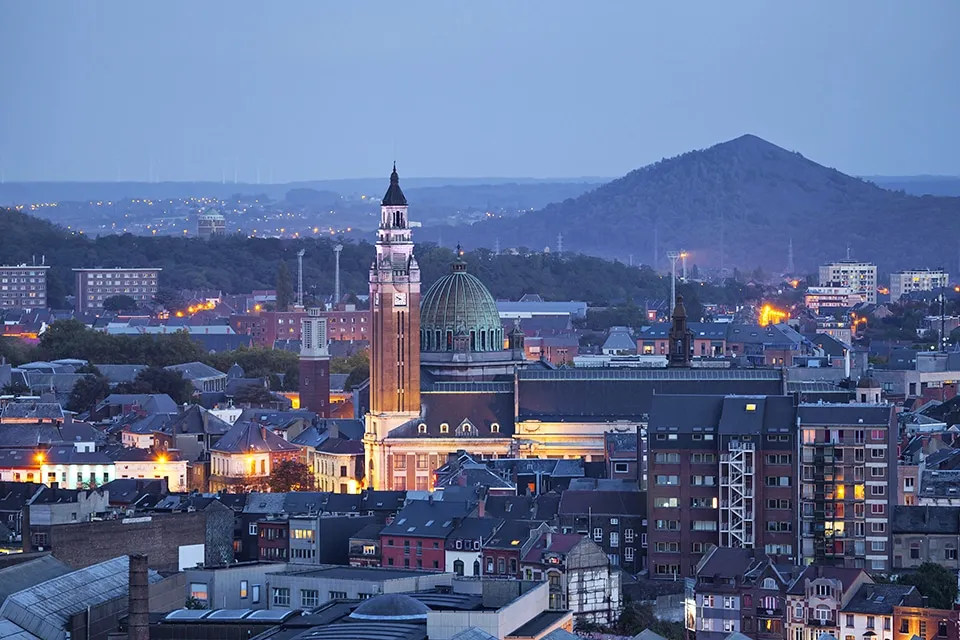
Three-quarters of buildings in the European Union are not energy-efficient. 85-95% will still be in use in 2050. According to the European Commission, barely 1% of buildings currently undergo thermal renovation each year. Europe cannot afford to keep ignoring the opportunities offered by renovating buildings. Find out why renovation is becoming the trend of the future!
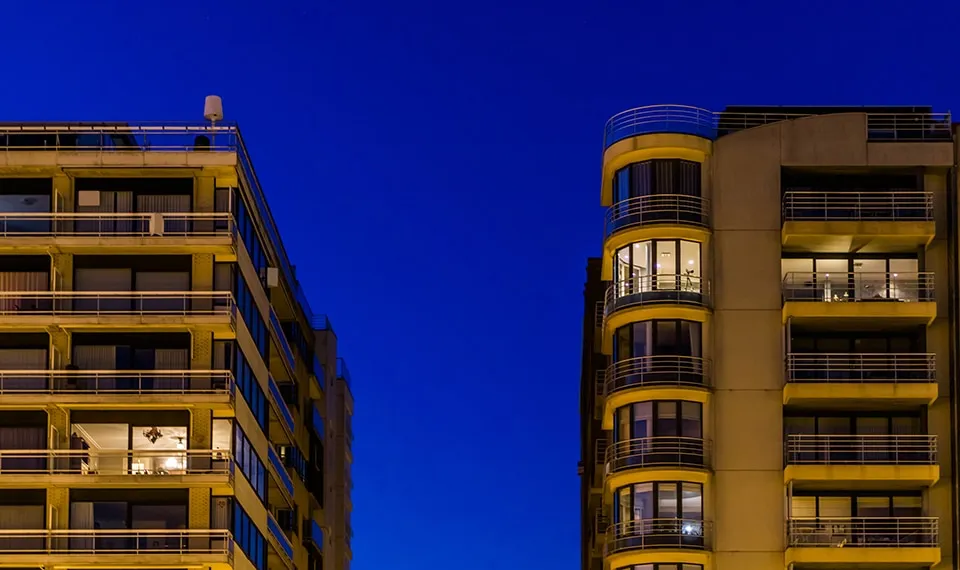
Renovation Wave: 35 million buildings modernised in 10 years
In October 2020, the European Commission announced a new plan, better known as the ‘EU Renovation Wave’. Its aim is to increase the number of buildings being renovated, including both public buildings and homes. The main objective is to decarbonise heating and air-conditioning processes.
“The high greenhouse gas emissions resulting from the high energy consumption of buildings are a huge problem in Europe,” explains Emmanuel Gregoire, Managing Director at Aluprof Belgium nv. “As much as half of our greenhouse gas emissions are attributable to the energy costs of buildings,” he adds. The Renovation Wave shows just how important planned building renovation is for the whole of Europe.
The need to reduce energy poverty
Almost 34 million people in Europe are unable to heat their homes adequately. They cannot afford the ever-rising cost of heating. The answer, however, is not to lower the price of energy, whose production often pollutes our environment, but to make sure that people’s homes are warm and well insulated.
The Forum Bruxellois De Lutte Contre La Pauvreté estimates that as many as 20% of households in our country are affected by energy poverty. In 8% of homes, people cannot afford to heat their homes to a level that provides thermal comfort all year round. The situation is worst in Wallonia.
“There are several causes of energy poverty: insufficient income, rising energy costs and rising rents. But much of the problem is linked to the poor condition of buildings and their very poor and inadequate insulation,” explains Emmanuel Gregoire. “In Belgium, 1/3 of buildings are uninsulated! Thermal renovation will help many people, as improving the thermal efficiency of their homes will bring down heating costs,” he adds.
Fortunately, the Belgian authorities are aware of the issue. Announced in April this year, the RENOLUTIONS initiative provides for 350 million euros (until 2024) to be allocated to implementing the strategy for renovating old, uninsulated buildings. The project aims to improve Belgium’s ranking on this issue.
Adapting existing spaces to the needs of local communities
Building To COP26 estimates that by 2060, nearly 70% of the world’s population will live in urban areas. Vacant buildings and derelict sites represent a huge loss for local communities, because in a densely built-up city, every square metre counts.
When renovating a building, history and modernity go hand in hand. Existing buildings, often historic or distinctive, can be given a second life.
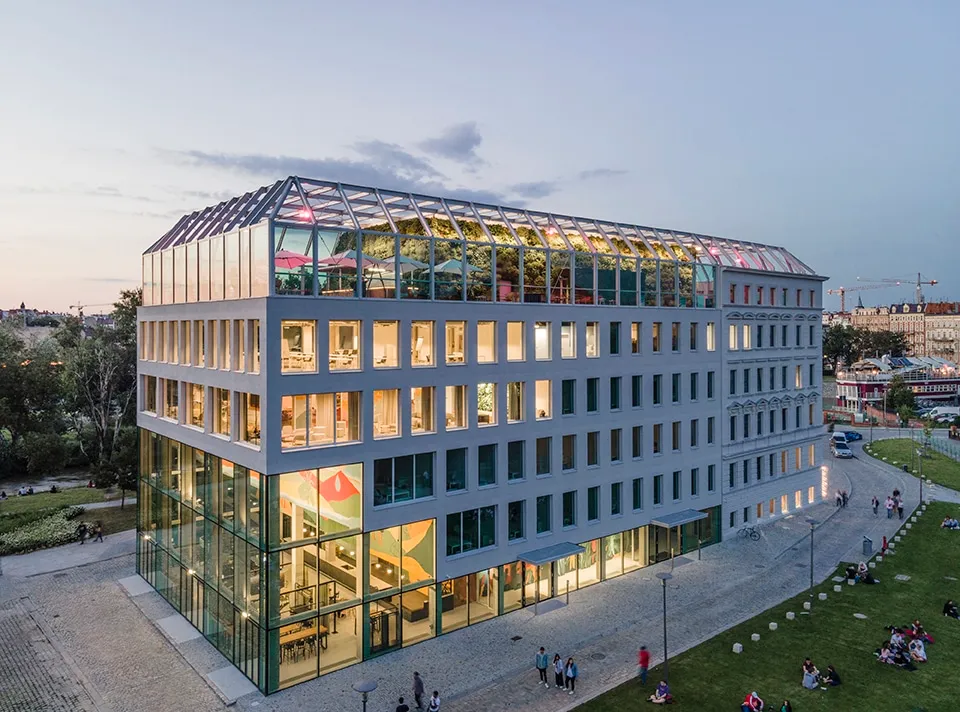
“A large part of our efforts to design new solutions is specifically focused on the needs of buildings that require renovation. One example is the MB-SR50N semi-structural façade system, which can be used to attach a building’s glazed wall, creating a uniform grid appearance. The system also allows double glazing to be installed, while the version with enhanced thermal insulation, using two-component insulation material, gives the building excellent energy performance. Such a system was recently used by Dutch studio MVRDV Winy’ego Maasa to renovate Concordia Design in Wrocław, Poland. The end result was very well received by the local community,” says Emmanuel Gregoire.
Simplifying legislation for the modernisation of residential buildings
The growing importance of building renovation is also reflected in the many simplifications introduced for thermal renovation works. The aforementioned RENOLUTIONS project provides for the removal of the building permit requirement for roof insulation works. And from 2022, renovation grants will also be available to flat owners, who until now have only been able to apply for energy grants.
Reducing construction waste
Any old building can be demolished and replaced with a new detached building, using modern construction technologies to make it as energy-efficient as possible. Unfortunately, such works incur additional costs for the demolition itself and for disposing of the resulting waste, but these are outweighed by the benefits of such a project.
From an environmental point of view, renovation is a more efficient process. “It is a logical intervention, because new construction technologies make it possible to renovate a building that does not meet current energy standards while preserving its historic value. And if there is no need to preserve the original façade or the building’s existing internal layout, renovation can transform it into a modern, fashionable building in keeping with contemporary architectural trends,” explains Emmanuel Gregoire, Managing Director at Aluprof Belgium nv.
“When we at Aluprof think about renovation, it is also important to us that our solutions not only improve the energy efficiency of existing buildings, but, because aluminium can be almost 100% recycled, also generate no potential waste for future generations,” explains Gregoire.
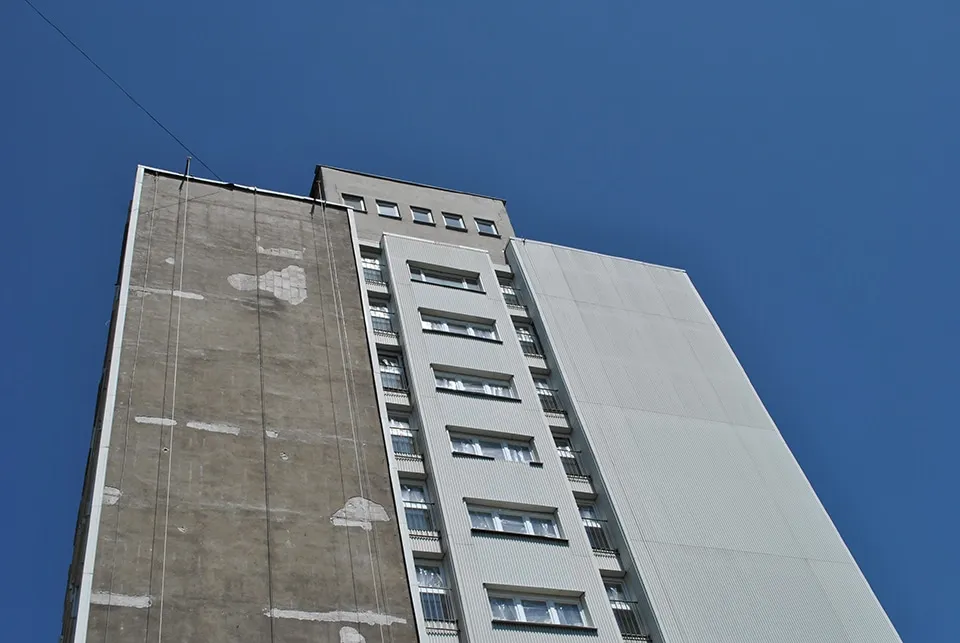
Building Renovation Passports: a new tool for monitoring renovation performance
For a building renovation to achieve its intended results, particularly decarbonisation and an improved quality of life for residents, it must be carried out correctly. Renovation passports can help with this.
This initiative, led by BPIE (Buildings Performance Institute Europe), originated in France, Germany and Belgium, and builds on the energy passports that have been used in the European Union for several years. Drawing on three examples, the Woningpas in Flanders, the French Passeport Efficacité Énergétique and the German Individueller Sanierungsfahrplan, the aim is to create a document that combines quality criteria agreed with building owners with data from energy audits. It is intended to help building users plan renovation works.
The emergence of this initiative also shows how important and forward-looking the trend of renovating existing buildings is in the AEC industry (architects, engineers and contractors), whether they are historic buildings or buildings constructed in the 1970s and 1980s.
Let’s build a better future
Numerous initiatives, both at national level (such as RENOLUTIONS) and European level (such as Renovation Wave), are the clearest proof that the entire AEC industry is now focused above all on renovation and revitalisation works.
This article is sponsored by Aluprof
A business enquiry for Aluprof? Get in touch
Companies in this story
Keep following this
Get an email when a new story is published. No account needed.
- SubjectGeneral
- CompanyAluprof







