











An ecological, permeable car park serving the public and biodiversity
Text Luc OphalsImage O2D Environnement
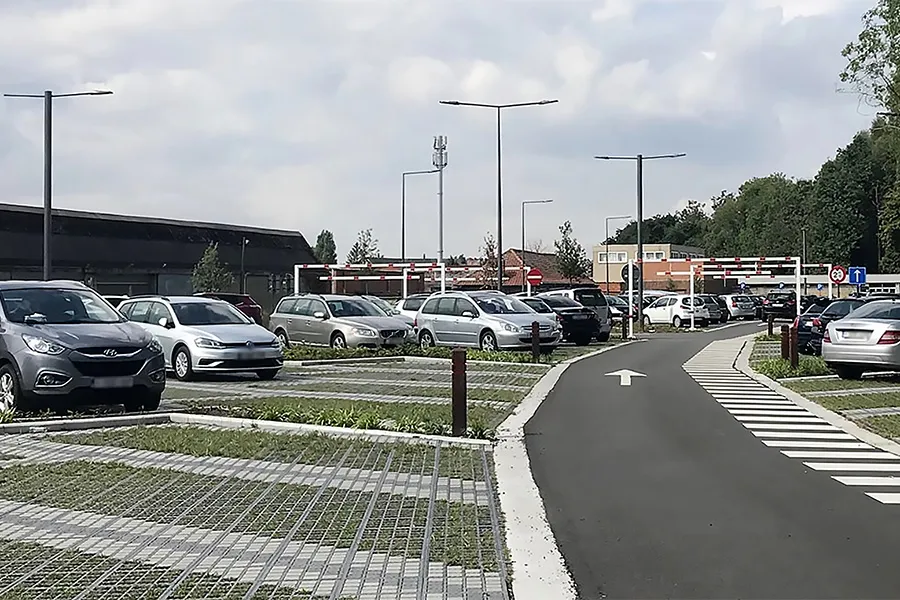
A model project for depaving and greening in Flanders
Faced with today’s urban planning challenges, and complementing the various initiatives to promote a resilient urban model that gives nature its rightful place, the urban policies of many cities and municipalities are increasingly making room for permeable, vegetated trafficable surfaces. Ninove is no exception: following its redevelopment, the Mallaard car park is now permeable, helping to promote both biodiversity and liveability.
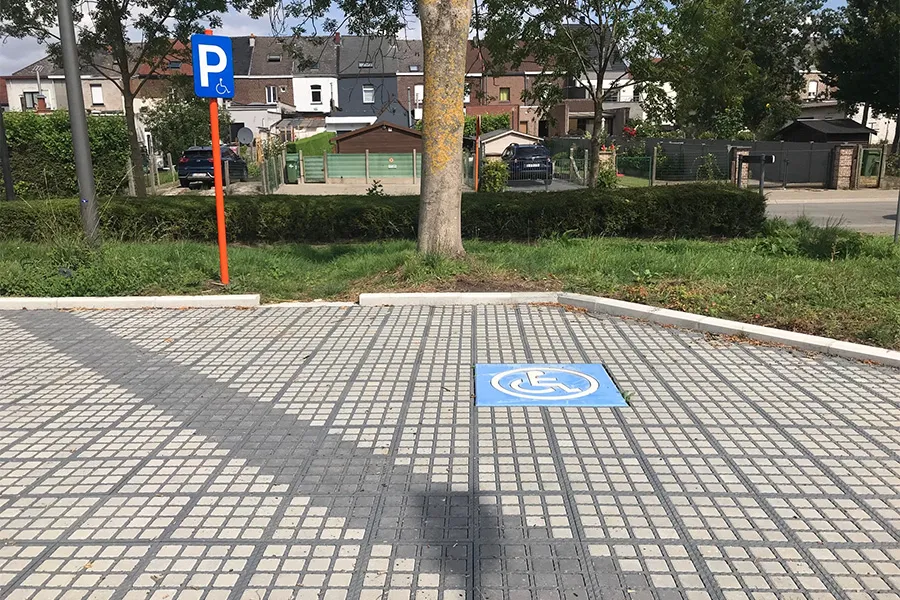
The Mallaard car park, on the street of the same name, lies between a small and medium-sized enterprise zone and a residential neighbourhood. Mallaardstraat is a key access road from the town centre to the ring road around Ninove. The existing car park had a conventional concrete block paving surface. However, heavy parking demand in the nearby residential area had clogged the surface to such an extent that rainwater infiltration was minimal. The municipal council therefore decided in 2019 to redevelop and upgrade the car park using a solution based on permeable materials.
Partnering with a specialist
In 2019, the city began talks with O2D Environnement, a specialist in permeable ground systems. The choice of such a system was partly driven by a legal requirement, namely the stipulation imposed by De Vlaamse Waterweg that any connection to a nearby sewer or watercourse must be avoided.
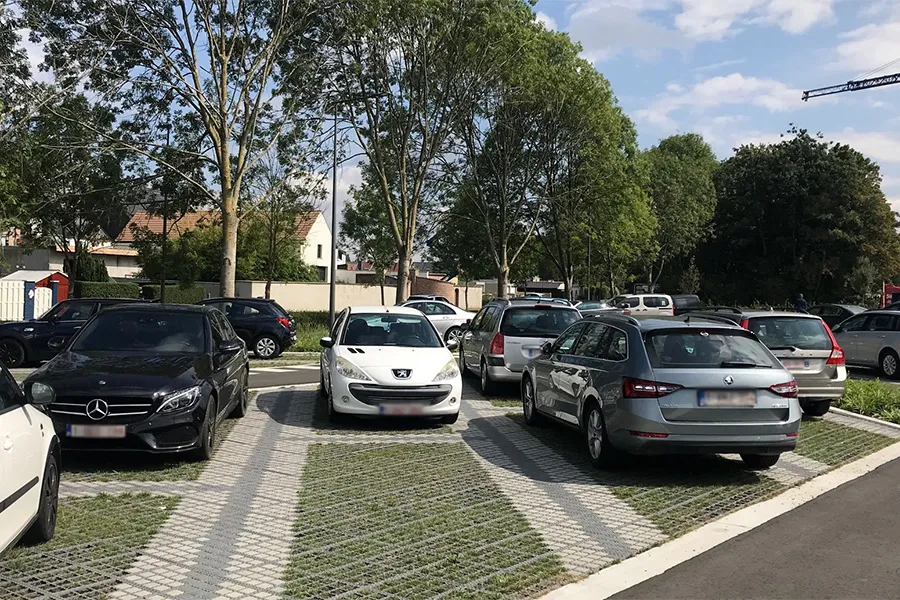
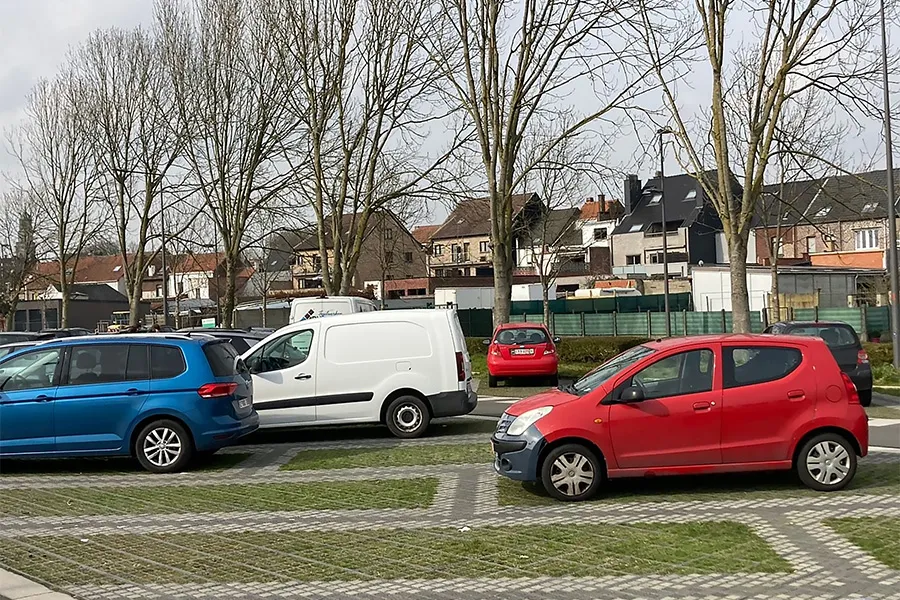
The chosen solution involved laying an O2D ground system comprising a fertile, load-bearing foundation system, a so-called TTE grid and a specific infill. In this case, the O2D Green ground system was selected. It was seeded on site, alongside the O2D Klinkers draining surface system, which is particularly suitable for pedestrians, people with reduced mobility, bicycles, and light and heavy vehicles. The seeded grids are reserved for parking spaces, while the Klinkers version is used to mark out the parking bays and as overrun strips.
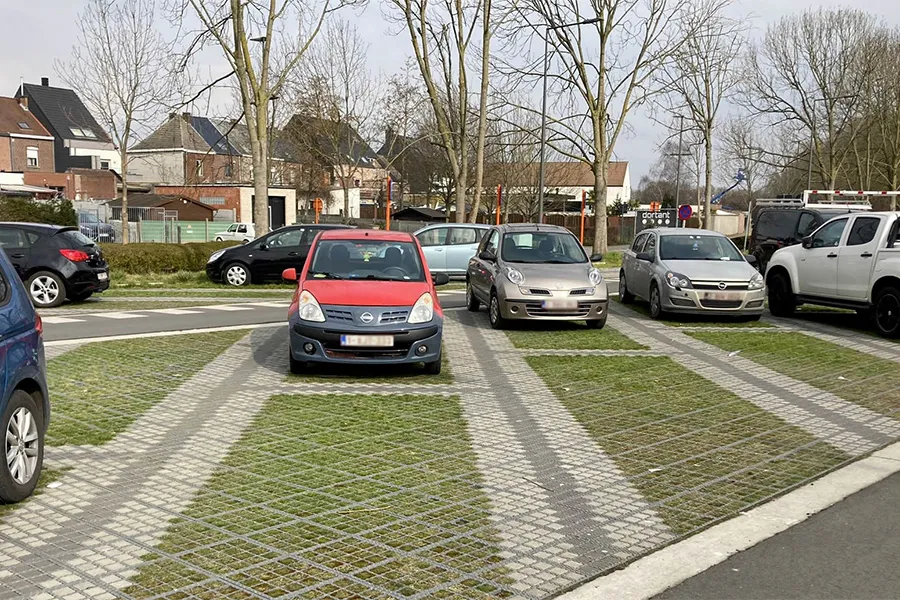
The Mallaard car park covers 2,130 square metres and offers 127 spaces for cars. The O2D solution was delivered in September 2019 and then installed by the city of Ninove’s partner contractor, DM Road Building from Geraardsbergen. With the considerable benefit of 100% infiltration of each raindrop where it lands, with no run-off, and the additional greenery created, the solution helps reduce the urban heat island effect and preserve soil biodiversity. Another advantage of the system is that it is partly made from recycled materials.
Positive feedback
The Mallaard car park project has since been evaluated several times. The evaluations show that rainwater infiltration at the car park is now excellent, and that motorists can find it easily again, unlike before the redevelopment. It is therefore no surprise that the city has built on this successful experience to develop other similar projects, particularly around residential areas.
Question about this story? Ask your question
Who worked on it
Mallaardparking in Ninove
- O2D-bodemsysteemO2D Environnement
Keep following this
Get an email when a new story is published. No account needed.
- ProjectMallaardparking
- SubjectGeneral
- CompanyO2D Environnement







