











An ever-greater shift from new-build to renovation
Text and images Embuild Vlaanderen
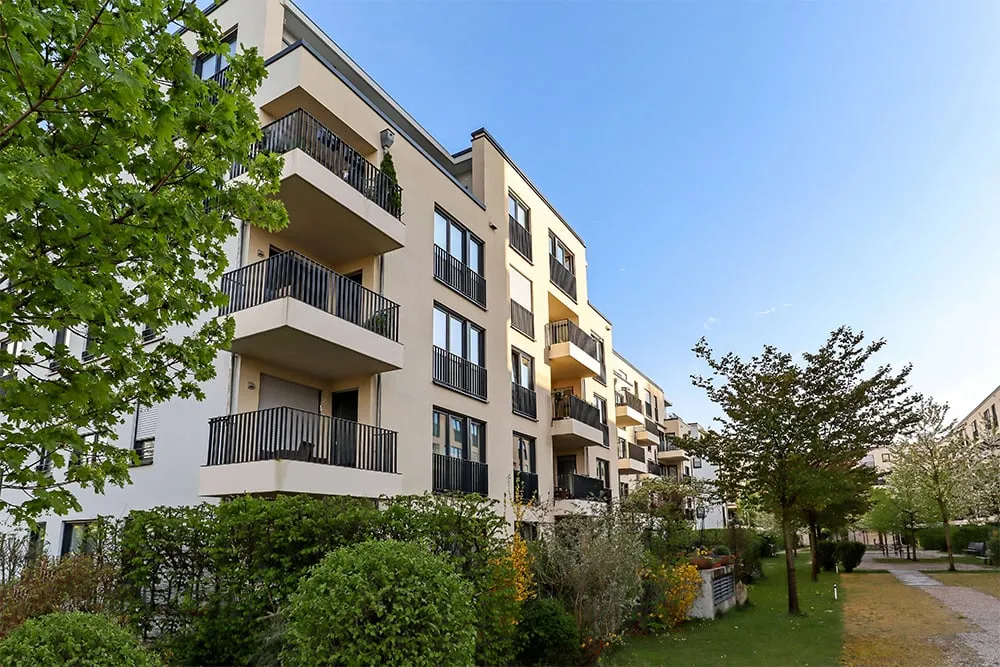
An analysis of permit applications up to and including July 2024 shows that the downward trend in new-build construction is continuing. But so far, 2024 has been a very good year for the renovation market. With the exception of the record year 2021, it has outperformed every previous year. Although the growing renovation market is important for improving the sustainability of Flanders’ older housing stock, the decline in new-build construction is a major cause for concern.
“Reversing the trend in new-build construction will make affordable housing possible,” says Caroline Deiteren, Director-General of Embuild Vlaanderen. “That is something we want to tackle together with the new Flemish Government. Over the next ten years, Flanders will need almost half a million new homes for additional households and to replace substandard homes. Building new homes does not mean encroaching on additional open space. Rather, it means increasing density by developing the urban fabric.”
Worrying trend for new-build construction
The downward trend in new homes over the past few years is undeniable. 2019 stands out as a peak year, but the following years have seen a steady decline. 2024 got off to a promising start, with higher figures than in the first months of 2022 and 2023, but the number of permits subsequently fell below the level of previous years. July 2024 was even the worst July since 2018. These figures also include demolition and reconstruction. Yet the desired densification and development of the urban fabric require more replacement new-builds, as they go hand in hand with higher densities.
The new-build market is facing increasing challenges due to rising interest rates, affordability problems for prospective homebuilders, limited availability of land, difficulties with densification, more expensive building materials and so on.
Renovation market on the rise
While new-build permits are declining, renovation permits are steadily increasing. Following the peak years of 2021 and 2023, the upward trend is continuing in 2024. This is good news for the desired renovation wave and for improving the energy performance of the ageing building stock. But this trend needs to accelerate further if all homes are to be energy-efficient by 2050.
In 2023, almost 8% of the housing stock consisted of homes with an A label and just over 21% of homes had a B label. Over the next thirty years, more than 3% of the housing stock will need to undergo a major energy renovation every year. This will require a substantial catch-up effort.
Question about this story? Ask your question
Keep following this
Get an email when a new story is published. No account needed.
- SubjectGeneral







