











“As a full-fledged partner in the construction process, we are taking on an increasingly active role”
Text Tim JanssensImage Tim Janssens, Reynaers Aluminium
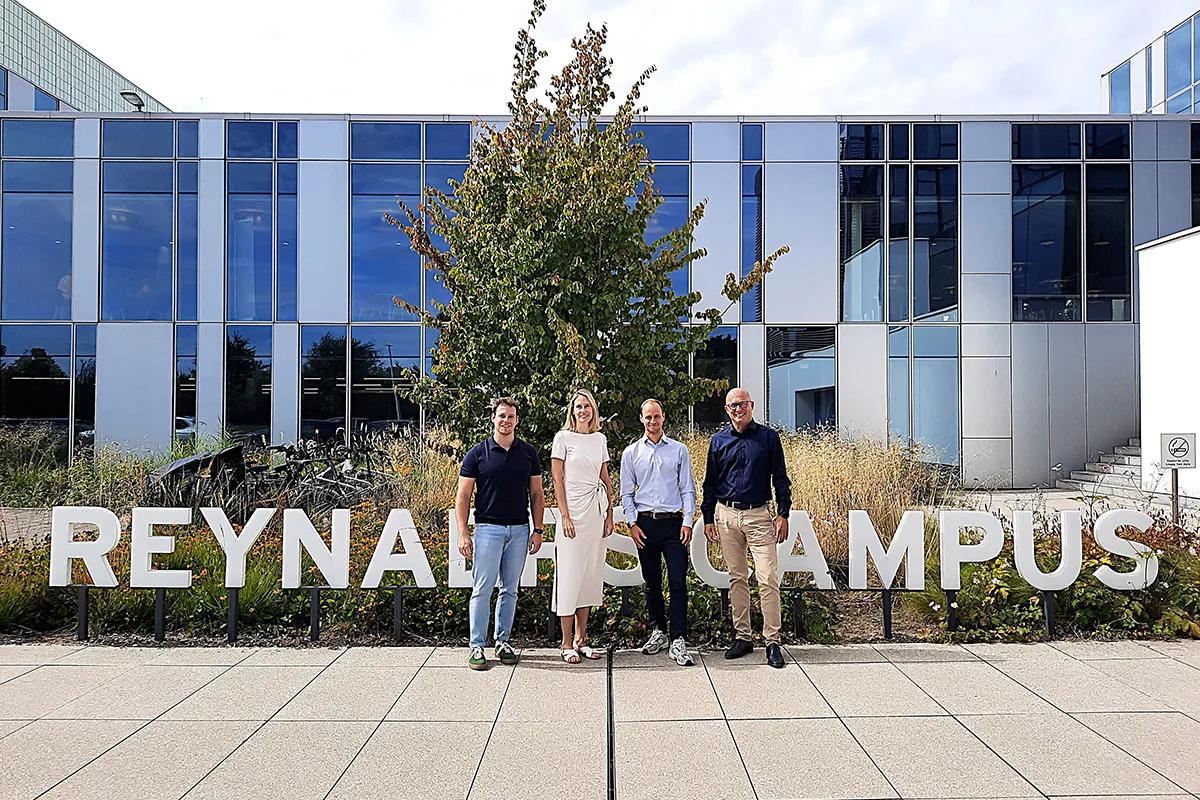
Christoph Vandenbussche, Nina Timmermans, Niels Vervoort and Michel Verheyen (Reynaers Aluminium)
2025 is an anniversary year for Reynaers Aluminium. The family-owned company from Duffel, which has grown over the past decades into the European market leader in aluminium windows, doors and façade solutions, is celebrating its 60th anniversary. A milestone worth pausing to mark, but preferably not for too long. The future holds plenty more in store, from further digital innovation to sustainability from every angle. We spoke to four Belux employees about the ingredients that make Reynaers Aluminium’s tried-and-tested recipe for success such a hit around the world. “What was unprecedented just a few years ago is now the new normal, both in terms of results and the way we work.”
Employees have their say
Christoph Vandenbussche (General Manager at Reynaers Aluminium Belux and Forster Belux; nineteen years’ service)
Nina Timmermans (Sales Manager Projects at Reynaers Aluminium Belux and Forster Belux; eleven years’ service)
Michel Verheyen (Project Support Engineer at Reynaers Aluminium Belux; five years’ service)
Niels Vervoort (Account Manager Projects at Reynaers Aluminium Belux; six years’ service)
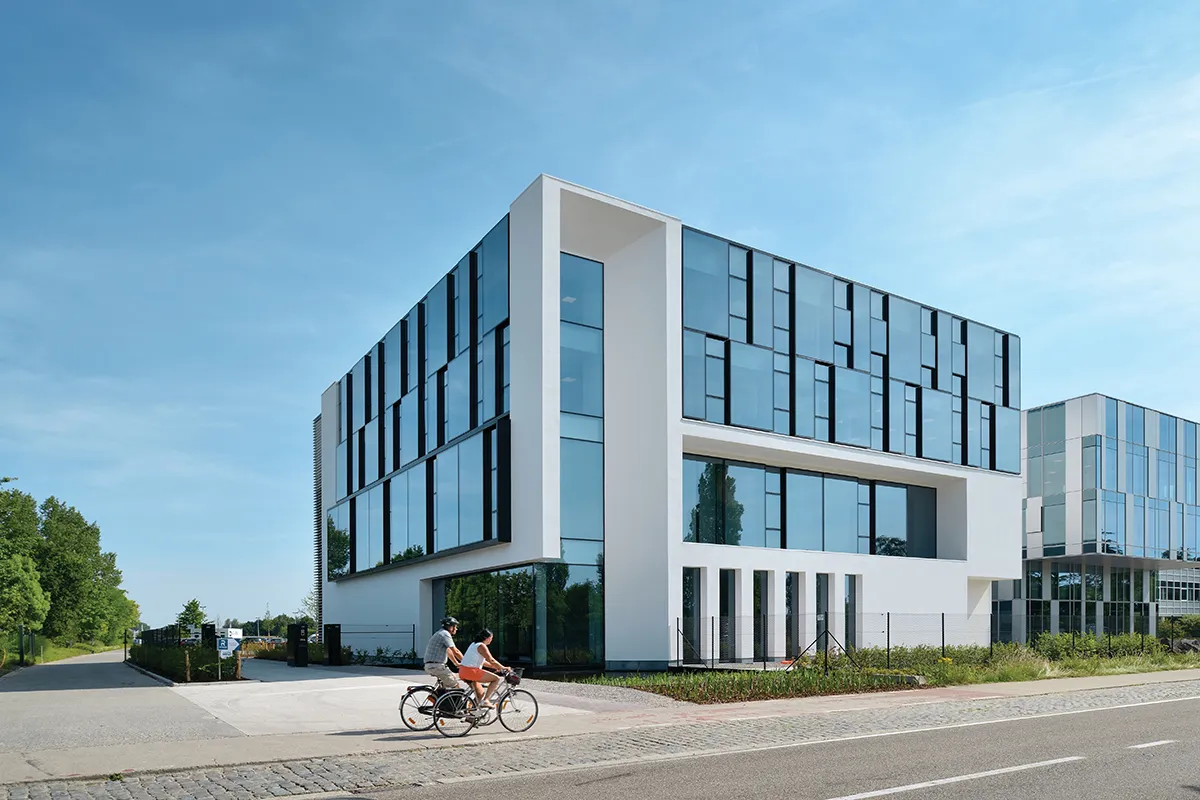
Anyone who has recently spent time at the Reynaers Campus in Duffel will wholeheartedly agree: core values such as growth and innovation are almost tangible here. The expansive company site behind the glazed façade along Oude Liersebaan, the imposing entrance hall, the impressive company restaurant for Reynaers Group employees and the 50-strong Belux division … it all makes quite an impression. That makes the anecdote Nina Timmermans tells us half an hour later all the more striking.
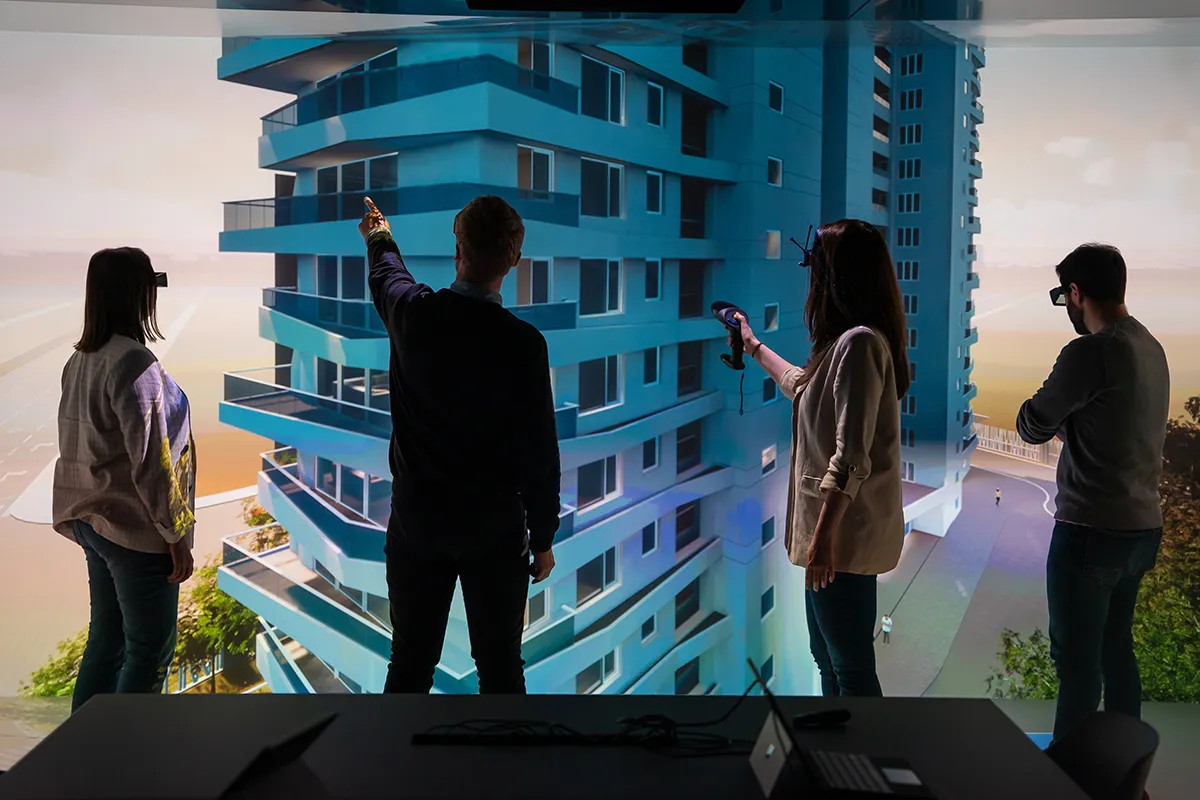
Nina Timmermans: “When I was contacted in 2014 and asked to come in for an interview, the headhunting agency initially described it as ‘a manufacturing company in the metal industry’. (laughs) That didn’t sound very sexy or forward-looking, but fortunately the name Reynaers gave me a few clues, so I decided to go along and hear more. Eleven years on, I’m now in my fourth role. I started as a Business Analyst at Reynaers Group and today I’m responsible for the project team within the Belux division, where we provide architects, contractors and clients with technical support on the application of our systems, both Reynaers Aluminium’s aluminium solutions and Forster’s steel profile systems. In between, as Product Manager Digital Services, I was also responsible for developing several innovative digital tools, such as our Avalon VR space, and as Market Intelligence Manager I designed the new CRM strategy for our group. All things you probably wouldn’t immediately associate with ‘a manufacturing company in the metal industry’ (laughs).”
All four of you have been with Reynaers Aluminium for some time. Have you seen the company change significantly over the years?
Christoph Vandenbussche: “With almost twenty years’ service, I’m the old hand in the group, so yes, I’ve seen quite a few changes here (laughs). We are constantly investing in new people, buildings, machinery and developments. The Reynaers Experience Centre, the Reynaers Institute, high-end warehouses … our campus has undergone a complete transformation over the years. In organisational terms, the acquisition of Forster Profilsysteme at the end of 2017 was a major milestone. Although its permanent base is still in Switzerland, it also required a lot of extra resources here in Belgium. Around 600 people now work on this campus in Duffel, and there are approximately 2,650 worldwide.”
Nina Timmermans: “Compared with when I started, this is a very different company. Alongside the growth of our organisation, the main changes have been our strong focus on technological innovation, digitalisation and sustainability. Our aluminium profiles are the result of pioneering work across a wide range of fields. Our company profile has also changed. In the past, the emphasis was mainly on our products and their potential applications, with a strong focus on the technical side. Today, we talk much more about services and take on an increasingly active role as a full-fledged partner in the construction process. Co-creation and collaboration have become much more important. There has also been a marked rejuvenation of the workforce here. Every team now has a few people in their twenties, whereas they were much rarer eleven years ago.”
Niels Vervoort: “I’m one of those people in their twenties, and I’ve literally seen things change here too, because my childhood home overlooks the Reynaers site (laughs). I also worked here as a student in my teens and have played for years at a football club sponsored by Reynaers Aluminium. So it was only natural to enquire about a job here after graduating, when I wanted to do ‘something in construction’. I started in the technical back office and have been working in our consultancy team for the past two years. I’m regularly out on the road, providing clients, architects and contractors with as much support as possible.”
Michel Verheyen: “Like Niels, I started in the technical back office and have since progressed to become a project engineer. Before joining the company, I worked at a drafting office. Eventually, it became rather monotonous, so I started looking for something else. At Reynaers Aluminium, I get plenty of variety and challenge in my day-to-day work.”
Michel and Niels are just two of the many ‘young potentials’ working here, while many other construction-related companies are struggling to attract motivated young employees. How do you stand out in this respect?
Christoph Vandenbussche: “First and foremost, we’ve made huge strides in raising brand awareness over the past few years. Initially, Reynaers Aluminium focused mainly on architects and manufacturers of aluminium windows and doors, whereas our target audience is now much broader. Our radio campaigns are the ultimate expression of that. But the fact that our name now rings a bell with most people is obviously not enough to fill hard-to-fill roles. You need additional incentives, such as a fully up-to-date HR policy, including a forward-thinking approach to working from home, flexible working hours and so on. That’s the only way we can persuade highly sought-after candidates to come on board. So far, we’re doing an excellent job of it, but we’re aware that we need to keep evolving in this area too.”
Niels Vervoort: “Reynaers Aluminium has a fairly high proportion of long-serving employees, which is an important confirmation for young people like me that it really is a good place to work and that the company has found the right balance: attracting young people and evolving on the one hand, while maintaining a stable structure and valuing experience on the other. What’s more, I’ve never felt that I had to prove myself extra hard just because I was young. The spirit here is that the different generations on the work floor have a lot to learn from one another.
We also often go for a drink together on Friday evenings, which obviously helps bring us closer (laughs).”
Nina Timmermans: “You quickly get the feeling that we’re all one big family here. There are plenty of crossovers between different roles and departments. So when I moved from Reynaers Group to the Belux team in 2021, it certainly didn’t feel like I was going to work for a new company.”
Christoph Vandenbussche: “One of the key success factors for our team and Reynaers Aluminium as a whole is that, despite our very different backgrounds and activities, we share one goal: keeping our customers satisfied. That customer-centric mindset is deeply ingrained even among our non-commercial staff. We actively encourage it, for example by taking them along on customer visits so they know who we do all this for. All new employees also take a basic training course as standard, where they experience what our customers experience at our test institute, for example by making a window, door or façade themselves. This strengthens both their familiarity with our products and their general empathy and commitment to our ‘mission’.”
Personal growth is also an important part of Reynaers’ DNA. How does that translate into practice?
Christoph Vandenbussche: “At Reynaers Aluminium, you don’t choose a job, you choose a career. We don’t believe in fixed career paths, but in creating opportunities tailored to our people’s talents and ambitions. Open communication, thinking outside the box and encouraging internal mobility are key. Internal job rotation is deeply embedded in our culture. Employees are encouraged to take on new challenges within the company, across teams, departments and even countries. This not only fosters personal growth and greater job satisfaction, but also encourages a cross-pollination of ideas and makes the organisation stronger as a whole. That, in turn, benefits our customers. By sharing knowledge widely across the company and working flexibly between departments, we can respond more quickly to requests and better tailor our thinking to their specific needs. Employees who have held different roles understand the bigger picture better and are therefore able to deliver more considered, customer-focused solutions. In this way, we make Reynaers Aluminium not only a strong employer, but also an even stronger partner for our customers.”
Michel Verheyen: “That’s right. Opportunities come up regularly, and I think we get good support in pursuing them. Our managers and the HR department both help you think about your career path and make suggestions from time to time, for example about taking a course that might be useful.”
Niels Vervoort: “Every year, we’re offered around twenty training courses that anyone can sign up for. That gives us the chance to try new things and perhaps discover new interests or challenges. It can be a first step towards working out where you want to go in the coming years.”
Nina Timmermans: “I’ve also noticed that the range of profiles we recruit is becoming increasingly diverse. Architects, industrial engineers, product developers, commercial engineers … you’ll find them all here, alongside people who have built up extensive hands-on experience. It’s a very interesting mix, allowing us to approach our activities from a range of different perspectives. Another thing that often pleasantly surprises newcomers when they get to know Reynaers Aluminium better is that we operate worldwide. We are, and will remain, a Belgian family business, but one with offices in more than forty countries and business in more than seventy. The wider world is not always aware of that.”
Does the same apply to the shift from private housing to large-scale residential and commercial projects, which you made several years ago?
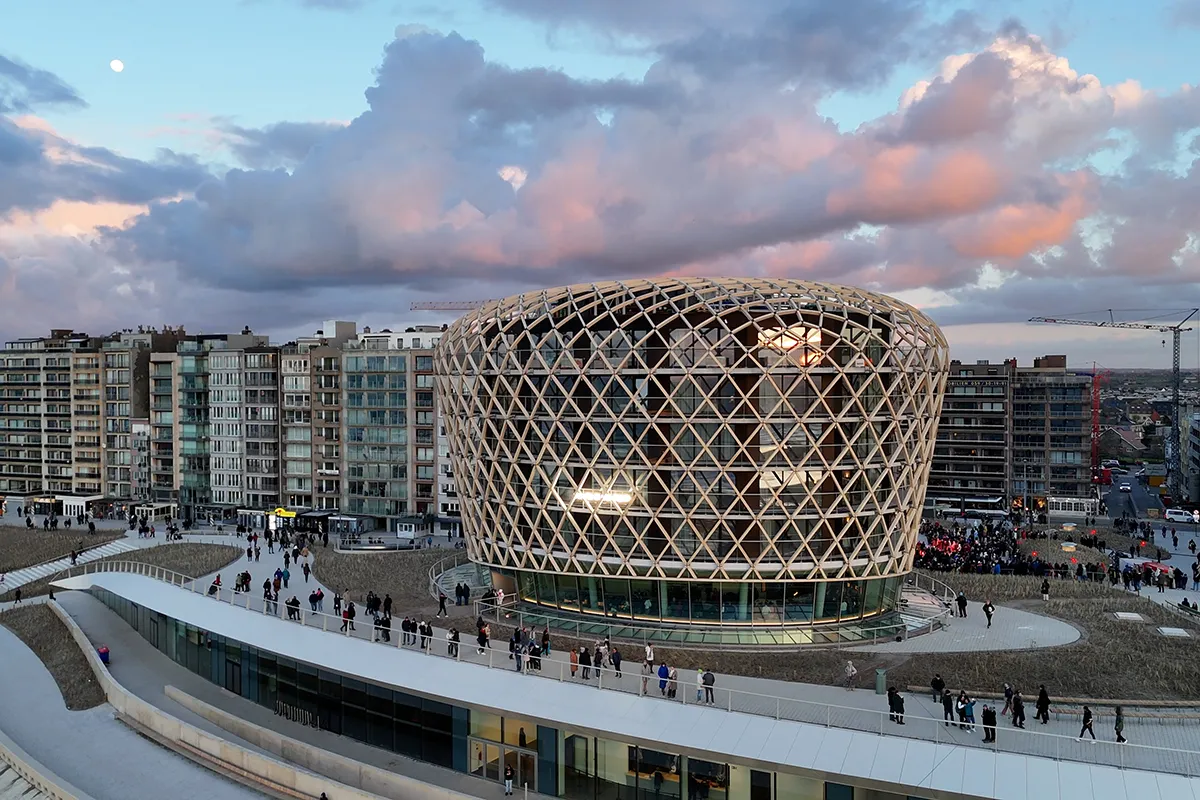
Christoph Vandenbussche: “To a lesser extent, but there’s some truth in that. We’re still partly associated with the private housing market, which made our name in the twentieth century, even though our scope is now much broader. Our systems have been used for years in larger residential buildings such as apartment blocks, as well as in schools, hospitals, public buildings and so on. The commercial segment, too, has increasingly become a key focus.”
Michel Verheyen: “Absolutely, and that’s also reflected in the studies we carry out today, which are much more extensive and in-depth than they were five years ago. So we don’t limit ourselves to standard applications, quite the opposite. Bespoke solutions are by no means unusual. We often do some serious engineering to work with the architect and get the very best out of a project. That’s how we make a difference, visually and in terms of the product and its manufacture.”
Nina Timmermans: “Our internal professionalisation is also evident in how we approach projects, align all our processes and bring different teams together to achieve the best possible outcome. Our customers really benefit from that.”
Niels Vervoort: “It’s a necessary evolution, because requirements and expectations are much higher these days. Architects used to be satisfied with a simple drawing, but now detailed 3D visualisations are increasingly required, and the questions we receive are becoming ever more complex. We’re certainly not deterred by that, because it means we keep raising the bar. What was unheard of a few years ago is now the new normal, both in terms of the results and the way
we work.”
Christoph Vandenbussche: “Avalon, the VR space where we visualise projects, has been a real gamechanger in that respect. It’s not just a gadget, but a genuine decision-making tool that helps clients and architects make the best possible choices for their projects. And let’s not forget our test centre, which is unique in Europe. We carry out tests there not only for applications in Belgium and Luxembourg, but also for other markets where the requirements for air, wind and watertightness are completely different.”
Nina Timmermans: “Building junctions, architectural appearance, fire standards … we cover it all. These days, we’re involved in projects from design through to delivery, considering a wide range of technical, functional and aesthetic aspects from different perspectives to find the best solutions.”
Finally, how do you see the future, both for yourselves personally and for the company as a whole?
Christoph Vandenbussche: “I’m very happy in my role as head of the Belux division, so I’ll leave the personal side to others and talk about the company. With Reynaers Aluminium and Forster, we have two strong brands. Reynaers Aluminium is already the market leader, so our main aim is to maintain our current market position and grow where possible in the current shrinking market, with customer centricity and operational excellence as our areas of focus. For Forster, the ambition is to become market leader in time, and we’re working hard towards that. Beyond that, I think it’s important to keep our employees motivated and make sure there’s a positive atmosphere on the work floor. If we succeed in that, we’ll automatically achieve our goals. I’m absolutely convinced of it, because we have a very capable team.”
Nina Timmermans: “For me, the focus over the coming years will also be on further developing and professionalising our project team. I think we’re doing a good job of that. And if at some point I feel I’ve had enough of it, I’m sure another train will come along for me to jump aboard with enthusiasm. That’s always been the case in the past, and I’m sure it will be in the future too.”
Michel Verheyen: “Like the company, I’m aiming for sustainable growth: continuing to work on challenging projects, building up my knowledge and discovering new things from time to time … The rest will take care of itself. I’ve always told myself that I’d do something else as soon as I stopped enjoying this, but I still feel very much at home here.”
Niels Vervoort: “It’s the same for me. Nina and I sometimes joke during brainstorming sessions that we should think like a CEO, which helps us keep the bigger picture in view. There’s a grain of truth behind the humour, though, in the sense that you can and should be ambitious here, and you’re given plenty of opportunities to grow and progress. What’s more, even after moving out of my parents’ home, I still live close to the Reynaers Campus, so that’s another reason to stay here for a long time (laughs).”
Have a business enquiry for Reynaers Aluminium? Get in touch
Companies in this story
Keep following this
Get an email when a new story is published. No account needed.
- SubjectGeneral
- CompanyReynaers Aluminium
- CompanyForster







