











Atmosafe study in Antwerp classrooms: CO2 levels too high 15% of the time, even with windows open
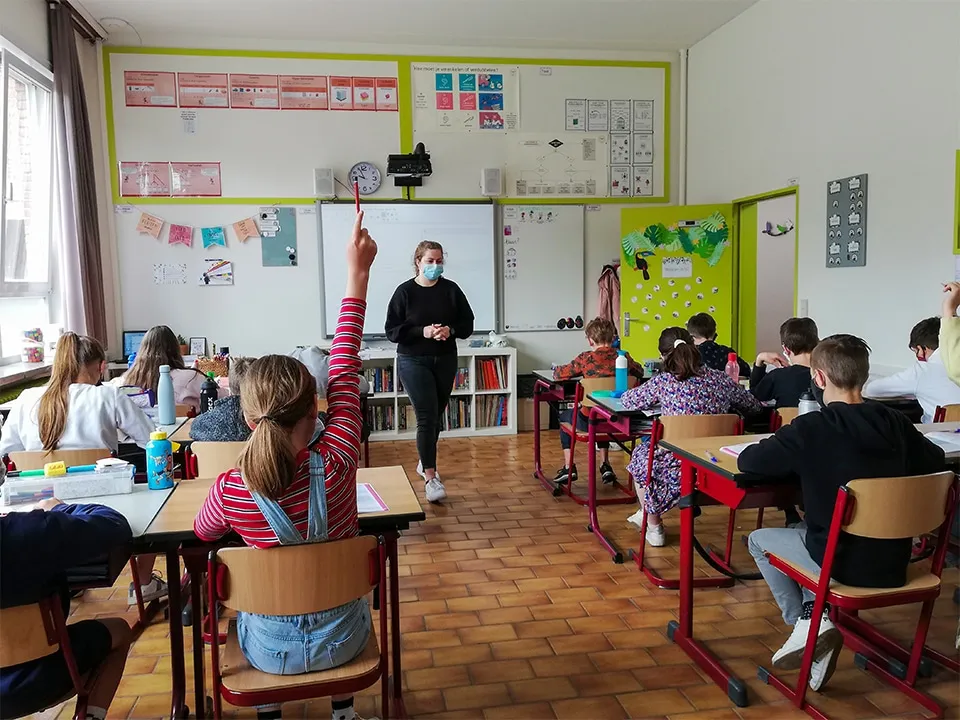
In recent weeks, Antwerp-based company Atmosafe has studied indoor air quality in several classrooms at 6 primary schools in the region. The concentration of CO2 in a room is one of the factors that can influence the transmission of Coronavirus.
But a whole range of other parameters also play a role. Atmosafe’s study produced some striking results. CO2 levels were above the ideal value of 900 ppm for 15% of the time, even with the windows open.
The study began when schools reopened after the spring half-term holiday. A total of 6 primary schools in the Antwerp region took part: Sint-Petrus in Kruibeke, De Linde in Deurne, Sint-Martinus in Burcht, Mater Dei in Gooreind, Vrije Basisoefenschool in Wijnegem and Het Hinkelpad in Berchem. At each school, one nursery class and one primary class were selected for air quality measurements.
“The classes varied, including some in older buildings and others in more recent premises. The study was intended to map the overall situation and identify which parameters need to be monitored. The schools were naturally very interested in the results, so they could find out in practical terms how to improve their air quality,” explains Laurent Van Raemdonck of Atmosafe.
Range of parameters
Atmosafe installed a monitoring device in the selected classrooms at each school on a Friday. It remained there until the following Friday. All the rooms had some form of ventilation. The study measured the following parameters: temperature, humidity, carbon dioxide (CO2), carbon monoxide, nitrogen dioxide, ozone, particulate matter and volatile organic compounds. Depending on their concentrations, these can affect the body’s defences against infection, immune system function and the transmission of Coronavirus to varying degrees.
CO2 concentrations in the classrooms studied exceeded the ideal value on several occasions. Concentrations above 900 ppm can already lead to a loss of concentration. A level below 1,200 ppm is recommended. These levels were nevertheless exceeded regularly at some schools, though not all the time. When children were in the classroom, CO2 levels exceeded 900 ppm for 15% of the time, and even exceeded 1,200 ppm for 5% of the time.
Particulate matter concentrations
The regularly recorded high concentrations of particulate matter were also notable, and were associated with high nitrogen dioxide levels. There is a clear link to emissions from traffic near the schools. Traffic passing by can therefore have an adverse effect on air quality through the open windows intended to improve classroom ventilation.
Atmosafe’s researchers found that all the classrooms were too cold, at below the recommended guideline of 20°C. Humidity levels were within the recommended range everywhere thanks to the open windows. Chemical pollution levels were low in all the classrooms and remained below the intervention threshold. Solvents in gels and disinfectants, as well as monoterpenes in cleaning products, can adversely affect air quality. However, the impact of these substances was acceptable in all the classrooms.
Impact of traffic
“Opening classroom windows certainly helps reduce CO2 levels. However, emissions from passing traffic, including particulate matter, are unhealthy and sometimes reached extreme levels. Even with the windows open, CO2 levels exceeded 900 ppm for 15% of the time. Just imagine the effect when, after the coronavirus crisis, we keep the windows closed more often again. This is an aspect that certainly needs to be monitored closely,” says Peter Boodts of Atmosafe, summing up the findings.
“One solution could be to open windows on the side away from the traffic. Alternatively, windows could be kept closed and a good ventilation system installed. We can draw a parallel with office buildings, which are generally equipped with ventilation systems. But this would require a certain level of investment from schools. In fact, 5 of the 12 classrooms already had mechanical ventilation. Despite these systems, windows were open at all the schools in line with the coronavirus guidelines.”
Secondary schools next
Atmosafe plans to carry out a similar study of indoor air quality in secondary schools from the autumn onwards. The primary schools that took part in the current study can use the results to identify improvements that could already be made through small changes.
Atmosafe specialises in measuring and improving air quality in offices, production halls, warehouses, schools, care facilities and homes. The company currently employs 19 people.
More information: www.atmosafe.be
Question about this story? Ask your question
Keep following this
Get an email when a new story is published. No account needed.
- SubjectGeneral







