











“Automating intralogistics processes starts at the design stage”
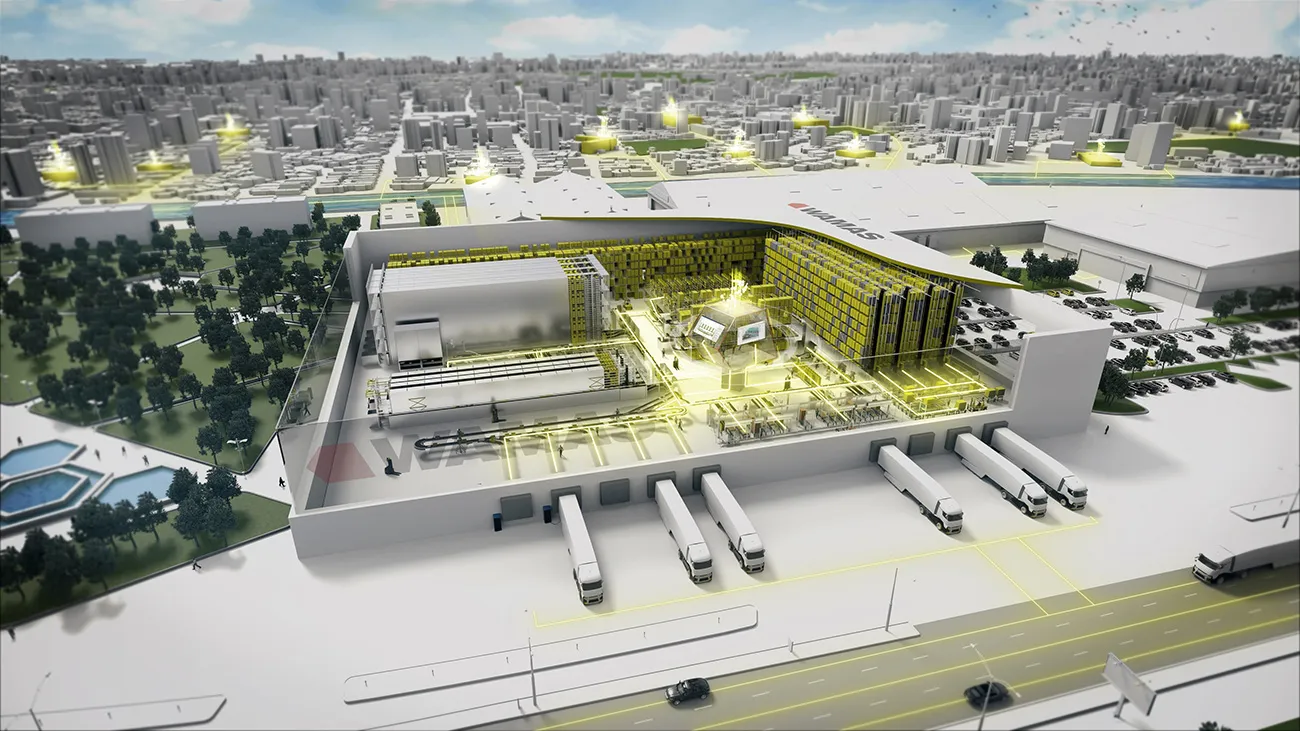
Most logistics service providers make the transition from a static to an automated (high-bay) warehouse just once in their careers. It is therefore only natural that their knowledge in this area is limited. “But many consultants, structural engineers and contractors are also still used to static warehouses, where floor loads can be calculated easily,” says Steve Vercammen, Sales Manager Automated Solutions at SSI SCHÄFER. “As demand for (semi-)automated solutions grows, the market faces major challenges. When automating intralogistics processes, the technology has a fundamental influence on how buildings need to be designed. SSI SCHÄFER is well versed in this field and is happy to act as a project partner, from the first discussions right through to installation, management and maintenance.”
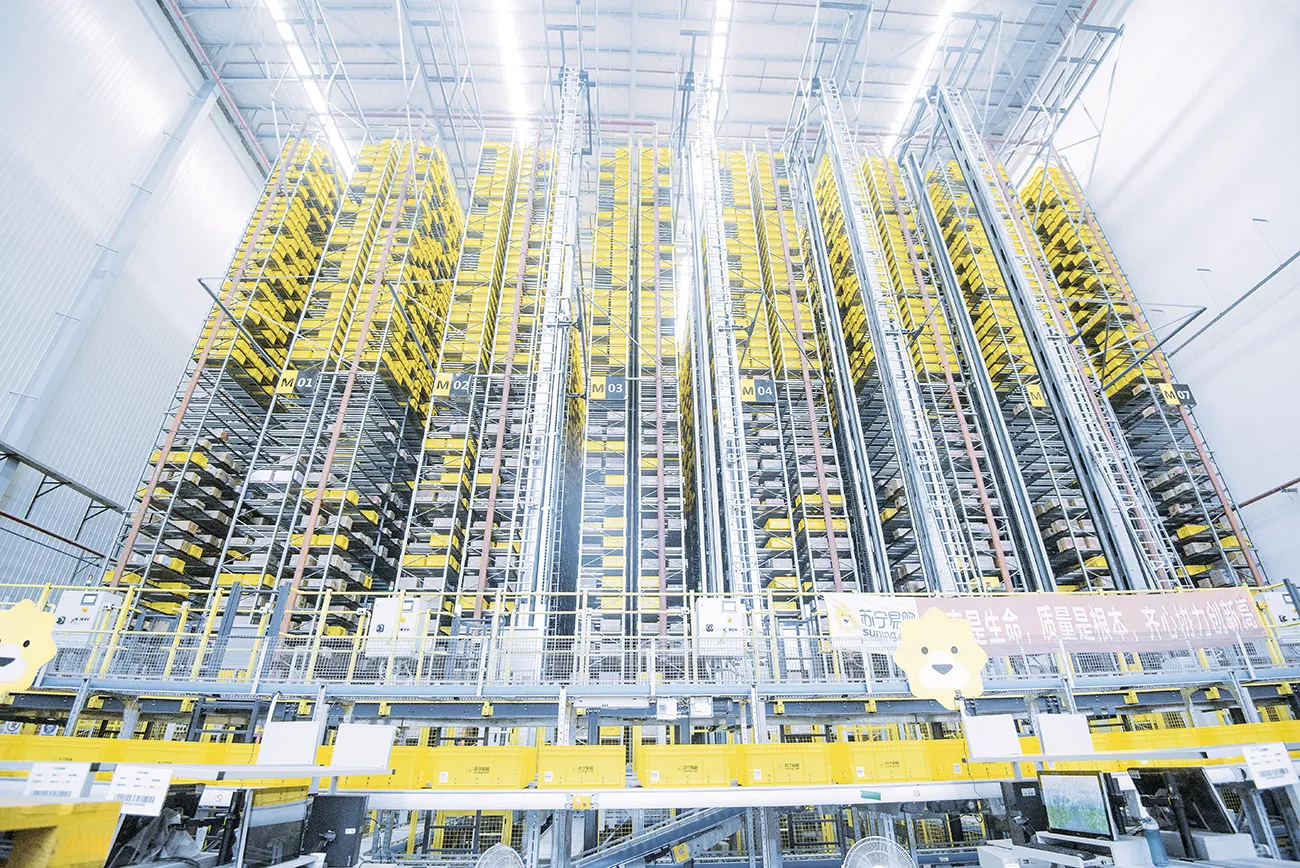
Whether companies want to store small items, bulky goods or pallets, SSI SCHÄFER offers a wide range of complete intralogistics solutions for storing, conveying, picking, handling and robotising pallets, bins and crates. Its offering ranges from manual and semi-automated storage systems to fully automated warehouses. “What sets SSI SCHÄFER apart is that we manufacture all our warehouse solutions ourselves,” says Steve Vercammen. “This means customers have a single project partner for the entire system, as well as rigorous quality control from advice and design through to installation, management and maintenance. And because we operate nationally and internationally, we can also deliver expansion projects seamlessly.”
Flexible dimensions and layout
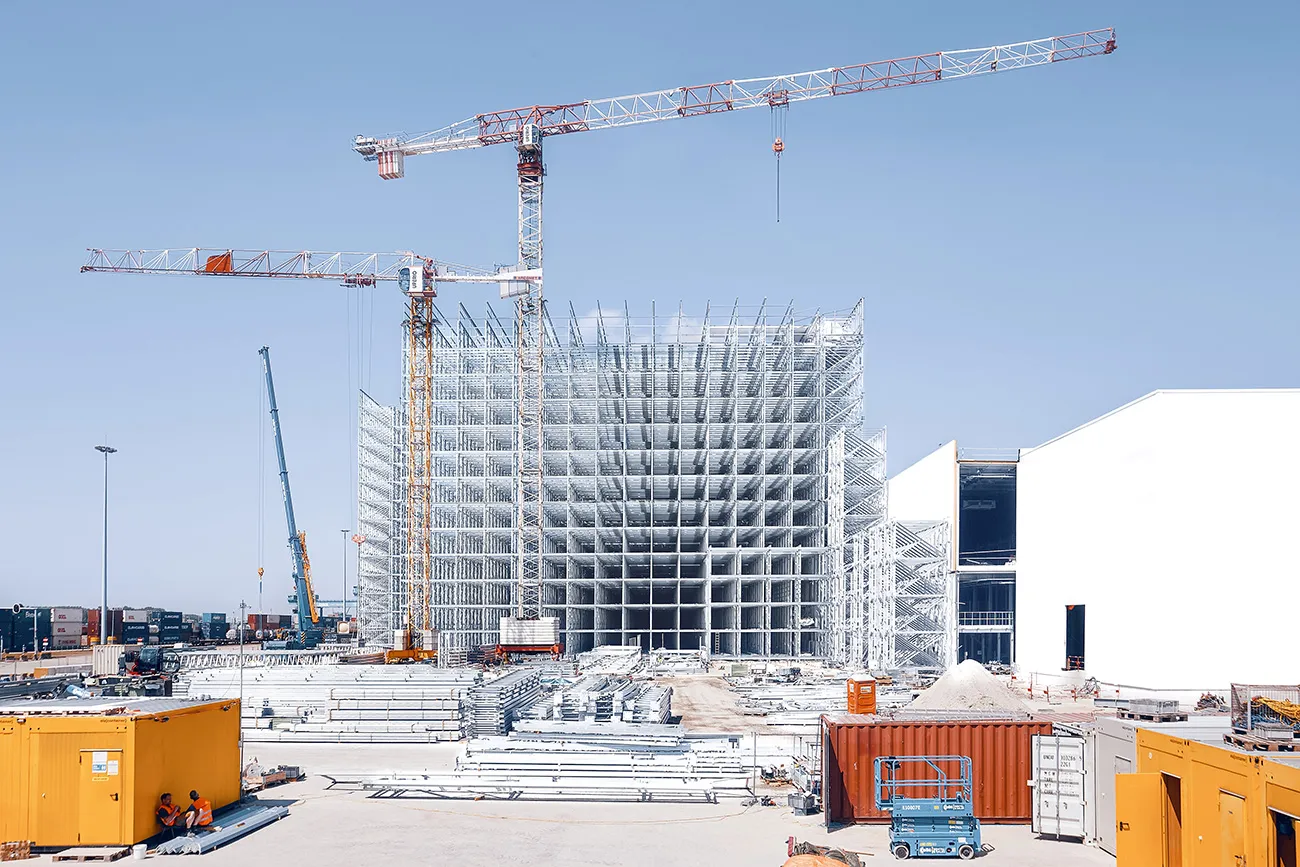
“Warehouse design is always bespoke,” says Vercammen. “Fortunately, most customers contact us at a very early stage, allowing us to align their requirements perfectly with the building constraints. Working as a project team with the customer, architect, contractor and engineering consultancy, we always look for the best layout. We also identify the best handling solution: manual, semi-automated or fully automated. An automated warehouse has different requirements from a static warehouse.” The design of an automated warehouse determines the design of the building, not the other way round, he stresses. “This means taking account of floor thicknesses, the locations of building columns, available heights, utilities, fire safety and the integration of a technical work area, control room and/or spare parts warehouse. An intralogistics integrator is indispensable in this case. Because we are flexible in terms of length, width, height and layout, we can recommend and deliver a suitable technical solution for every warehouse.”
Faster, better and more efficient
In 2022, SSI SCHÄFER is seeing growing demand for automated warehouses that no longer require people. “With our Logistic Solutions (LS), we are responding to the huge shortage of warehouse workers. We make order-picking processes faster, better and more efficient, enabling companies to continue growing even in this challenging market,” says Juul Janssen, Marketing Specialist Belgium and the Netherlands at SSI SCHÄFER. According to Janssen and Vercammen, a conventional automation project can easily take two to three years, from the first discussions through to commissioning. “Companies looking to automate within three years need to get moving now.”
Self-supporting warehouse
A shortage of available space is also driving demand for high-bay warehouses. “That is hardly surprising, as they offer the highest storage density,” says Vercammen. “However, high-bay warehouses also present specific challenges. Wind, snow and rain loads, among other things, increase and call for large columns, which restrict the building’s open layout. SSI SCHÄFER has a solution for this too. Our steel racking can be engineered to double as a steel supporting structure. This creates a self-supporting warehouse, also known as a silo-type structure, to which the façade cladding and roof structure can be attached directly. This technique is already widely used in large chilled and frozen warehouses.”
A little history…
The SSI SCHÄFER success story began in 1937, when Fritz Schäfer founded a company to manufacture and sell sheet-steel products. “The big breakthrough came in 1953 with the launch of the Lager-Fix storage bin,” says Janssen. “Thanks to its unique design, with an angled front opening, small items became even easier and quicker to access. The bins could also be stacked easily. In the years that followed, the design of both the bins and the steel racking was continually refined. The company also entered new markets and acquired several businesses, becoming a full-service intralogistics provider. SSI SCHÄFER now serves a wide range of sectors, from health & care to fashion, food & beverage, retail and industry, each with its own specific requirements.”
Working together on modern customer solutions
In June, SSI SCHÄFER employees moved into a new, state-of-the-art office building in Oosterhout in the Netherlands, offering even more opportunities for collaboration in project teams. “That is absolutely essential in today’s market if we are to develop modern solutions for customers,” says Janssen. The new building includes a Training & Experience Center, where (prospective) customers can see and experience SSI SCHÄFER’s manual and semi-automated storage systems at no charge. For fully automated warehouses, the sales advisers are happy to take them to one of the many reference projects.
Question about this story? Ask your question
Keep following this
Get an email when a new story is published. No account needed.
- SubjectGeneral







