











Building with fungi
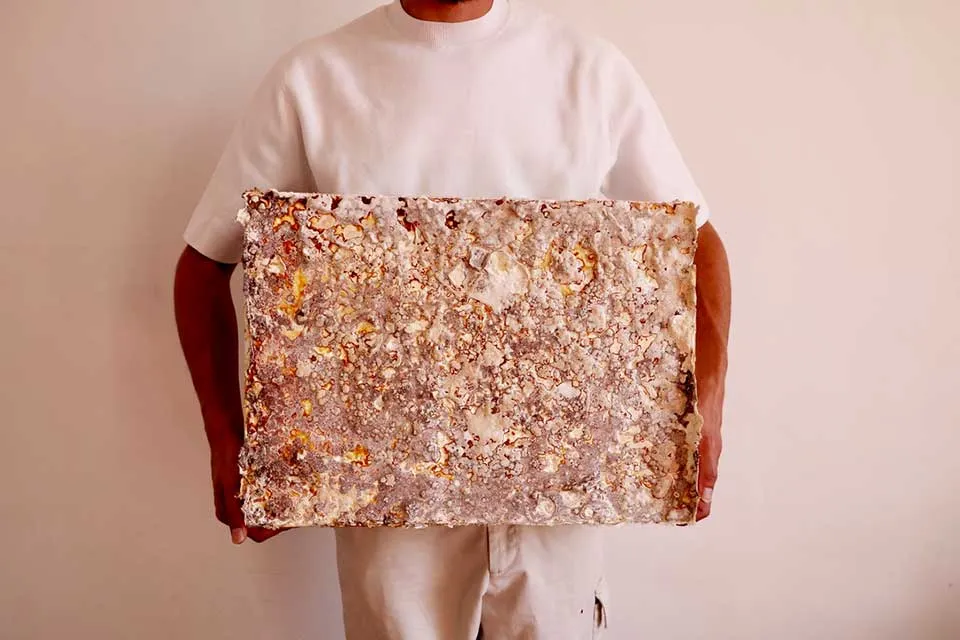
Innovative VUB research into sustainable materials.
For decades, we have extracted materials from natural resources such as fossil fuels without considering the environmental consequences. Plastics, concrete and synthetic composites are examples of such materials. But what if we could replace them with truly circular, sustainable materials that are biodegradable? Elise Elsacker, a researcher with the Architectural Engineering and Microbiology research groups at the Vrije Universiteit Brussel, investigated this question and discovered that fungi offer considerable potential. ‘My research aims to explore the potential of new production techniques for architectural applications using fungi. Think biodegradable temporary structures, insulation, interior walls and furniture,’ says Elsacker.
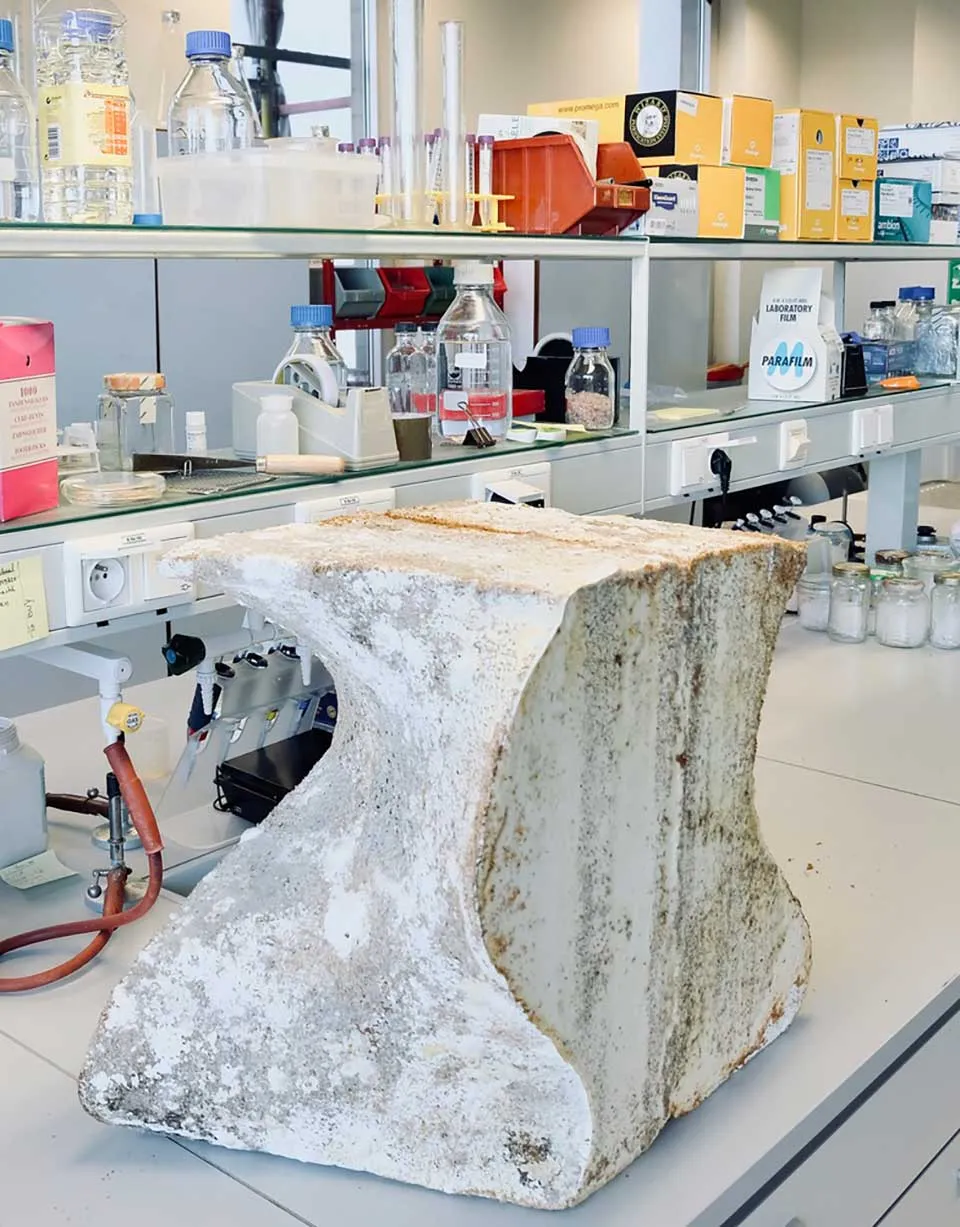
The traditional manufacturing industry, which is largely based on fossil fuels and raw materials, is increasingly being called into question. On the one hand, we have an abundance of synthetic materials that take too long to degrade, such as plastic. On the other, the agricultural industry generates a great deal of biomass waste that is currently burned. Pollution and the scarcity of natural resources have fuelled growing interest in developing more sustainable materials.
For her PhD, Elsacker researched fungi under the supervision of Prof. Lars De Laet and Prof. Eveline Peeters. These organisms can form circular, biodegradable materials. More specifically, she studied mycelium, the white root-like network of fungi that acts as a kind of glue between fibres. Fungi are ubiquitous in natural ecosystems and spend most of their lives underground. In forests, they play an essential role in breaking down hard, woody plant matter. Elise Elsacker investigated which factors influence the biological and material properties of mycelium-based materials, as well as the various aspects involved in producing composites grown with mycelium.
Finding the right fungus
There are several million different fungal species. Elsacker therefore developed a method for selecting fungi based on biological, chemical and mechanical performance criteria. She also investigated the interaction between fungi and fibres, as well as the material properties of these composites made with different types of natural fibre. She explored how the structural properties of mycelium-based materials can be improved by adding various additives and by compressing the material into panels. In addition, Elsacker developed a new manufacturing process for making architectural formwork using robots, and experimented with 3D printing mycelium-based materials, such as chairs made from mycelium.
Will we all be sitting on fungal chairs in the future? “Probably not,” says Elsacker. “Mycelium-based materials are promising, but the aim is not to replace all synthetic materials with home-grown biomaterials. These biomaterials are intended to process waste streams, not to create new waste streams to meet production demand. My research therefore forms part of a strategic transition towards a circular society based on biological resources. Mycelium-based materials offer a sustainable solution to the waste of resources.”
Elsacker’s work provides a foundation for further research and new applications: “Fungi can also help us tackle other environmental problems,” says Elsacker, “such as growing leather substitutes, sealing cracks in concrete and even remediating pollution from heavy metals and radioactive waste. The fascination with mycelium’s sophisticated behaviour has already inspired new interdisciplinary research projects at the Vrije Universiteit Brussel.”
More information: www.vub.be/arch/people/elise-elsacker
Vraag over dit verhaal? Stel je vraag
Blijf dit volgen
Bij een nieuw verhaal krijg je een e-mail. Geen account nodig.
- OnderwerpGeneral







