











Checklist: five maintenance tips for your sliding doors
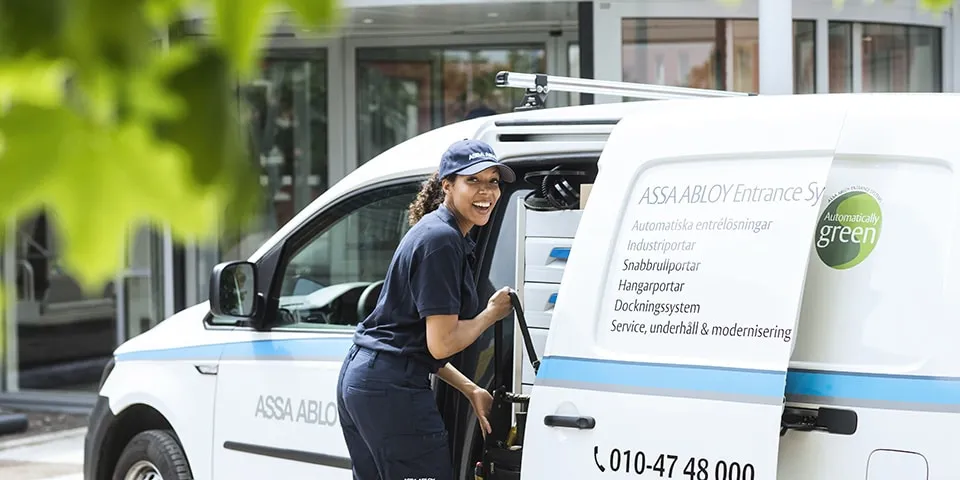
We all know that automatic access solutions need to work properly and, above all, keep running. Maintenance plays an important role. Preventive maintenance ensures that components are replaced before they fail. This not only extends the service life of your access solution, but also helps keep the door safe and energy-efficient. Regular maintenance is important for sliding doors too. It is best to have your sliding doors serviced by a specialist maintenance company. ASSA ABLOY Entrance Systems would be pleased to discuss the best maintenance plan for your sliding doors with you. In the checklist below, we have also put together five maintenance tips for your sliding doors.
1. Replace only what needs replacing. If the drive unit of your sliding door is outdated or faulty, it needs to be replaced. However, it is by no means always necessary to replace the entire sliding door operator. The header beam and cover, for example, are often still in good condition, meaning that only the base unit, comprising the motor and control system, needs replacing. This means you do not have to install a new operator, which may have different dimensions, and can avoid structural alterations or additional painting work. Avoiding unnecessary replacement of components also helps protect the environment.
2. Make sure you comply with current laws and regulations. Around 30 years ago, car passengers were not yet required to wear a seat belt. It is hard to imagine that today. The same applies to sliding doors: the requirements for sliding door operators change over time. The aim is to ensure that users can operate a sliding door safely. During regular maintenance, technicians check whether your existing solution complies with the latest safety requirements.
3. Consider accessibility. Regular maintenance also gives you the opportunity to ensure that your building remains accessible. During maintenance, the status of your safety sensors is checked, including whether they allow the sliding door to open and close at the right speed so that people can enter your building easily. This is particularly important if your building is regularly used by so-called vulnerable users, such as older people, children or people with disabilities.
4. Discuss how your building is used. How a building is used has a major influence on the choice of access solution. Is your building used frequently by vulnerable users? If so, additional safety sensors or adjustments to your sliding door settings may be needed. During a maintenance visit, a technician can check whether your access solution is correctly adjusted and all the sensors are working. However, this is only a snapshot of its condition at the time of the visit. We therefore recommend talking to a technician and explaining how your building is used and by whom. This will enable the technician to advise you on the best settings for your access solution.
5. Adapt to the seasons. Most modern sliding doors use smart sensors to prevent them from staying open unnecessarily. This saves energy and money. But did you know it can be a good idea to schedule maintenance for your sliding doors in autumn? The technician can then adjust the settings so that the door opens less widely, helping to keep the cold out in winter. You can also choose a sliding door with a mode selector, allowing you to choose a narrower or wider opening depending on the weather.
Question about this story? Ask your question
Keep following this
Get an email when a new story is published. No account needed.
- SubjectGeneral







