











Circular construction with aluminium: SAPA and Hydro on Close the Loop
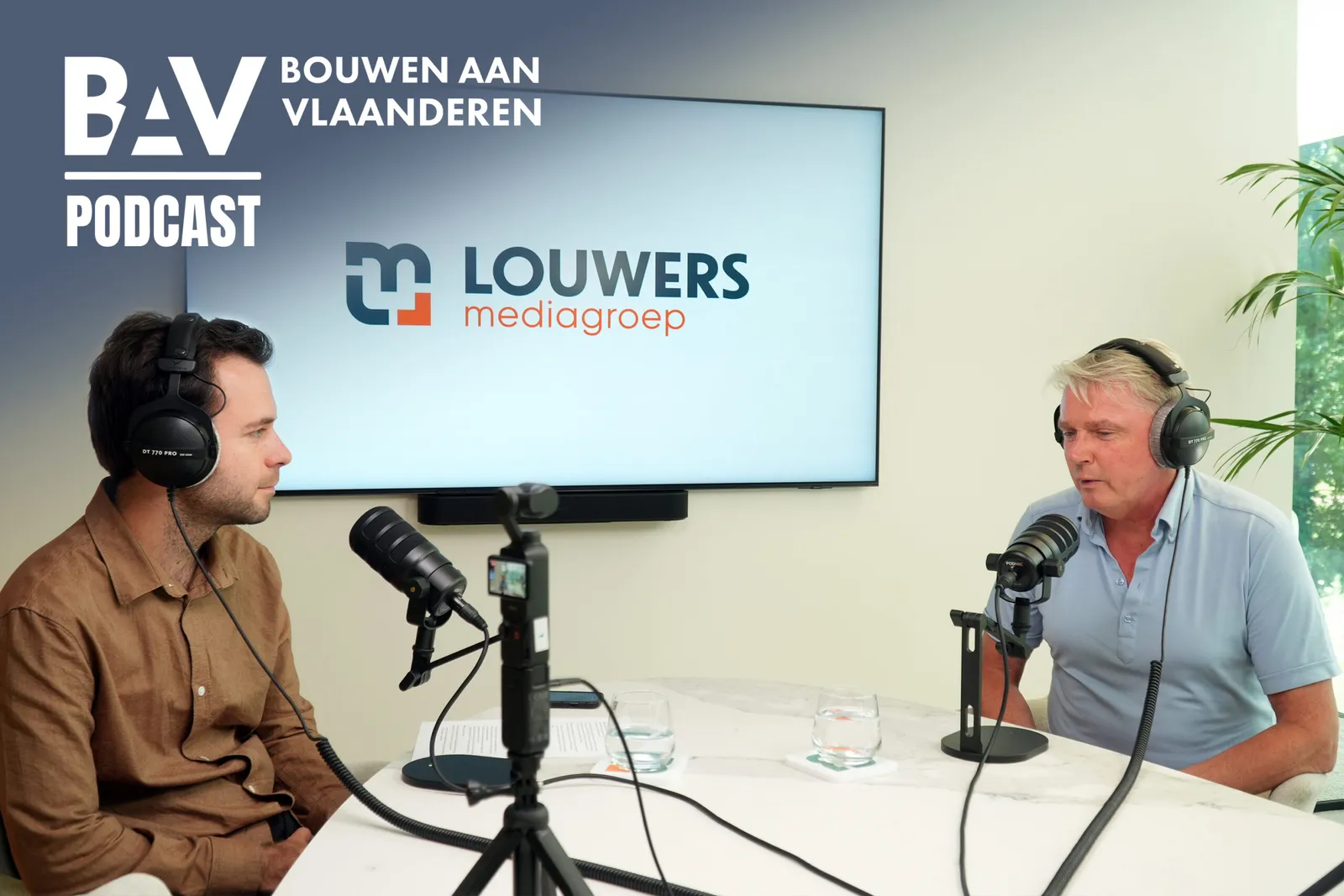
How do you make aluminium truly circular? Danny Decaluwaert of Hydro Building Systems explains how SAPA uses Close the Loop to collect and sort aluminium offcuts and old window profiles, then recycle them into high-quality profiles made with Hydro CIRCAL.
A business enquiry for SAPA? Get in touch
Full transcript
All chapters (30)
- Circularity and Close the Loop by Hydro
- From construction to circularity
- Sustainability as a conviction
- Hydro and its Norwegian roots
- Hydro and the entire aluminium value chain
- Aluminium production using renewable energy
- Aluminium as a circular material
- Recycling without downcycling
- Sustainability as a business strategy
- From CIRCAL to Close the Loop
- Hydro CIRCAL 75R and 100R
- Scrap as a valuable energy source
- The idea behind Close the Loop
- Bringing the supply chain on board
- An intensive process behind the scenes
- Pre-consumer and post-consumer scrap
- CIRCAL's CO2 footprint
- Bringing scrap streams back into the loop
- Removing paint and purifying aluminium
- Material stream purity
- An integrated recycling chain
- From scepticism to enthusiasm
- Taking the hassle out of it for customers
- What the construction industry can learn from Close the Loop
- Building differently and demountable connections
- Why circular success stories matter
- Sustainability is not a marketing story
- Claims must be substantiated
- Rolling out Close the Loop further
- Closing remarks
Circularity and Close the Loop by Hydro
Bavo Boutsen Welcome to a new podcast, this time focusing on circularity in the construction sector. There is a world of difference between calling a material recyclable and actually processing it into high-quality products again. That is why SAPA, the trade name of Hydro Building Systems Belgium, developed Close the Loop by Hydro. Through this system, aluminium offcuts and old window profiles are collected from customers, sorted and reprocessed into aluminium for new profiles. So this project is about the entire chain, not just the material. The question is: how do you organise a closed loop? And, above all, how do you get customers and suppliers on board? I’ll be discussing that with Danny Decaluwaert, circularity expert at SAPA. Welcome, Danny.
Danny Decaluwaert Thank you.
From construction to circularity
Bavo Boutsen Circularity in the construction sector is a very hot topic. How did you get into this field?
Danny Decaluwaert Well, I’ve worked in construction all my life. So I’ve known it from the ground up, you could say. I started out in concrete.
Bavo Boutsen Literally?
Danny Decaluwaert Yes, literally. Working with concrete. I then worked for various companies involved in different parts of the construction process. That was always a conscious choice. When I commit to something, I make my choices carefully. I choose a company, and once I’ve stood up for it, I find it a bit strange to then go and work for a competitor. That may be naïve of me, but I personally think it’s very important to act with integrity and stay that way. I’ve now been with Hydro Building Systems for almost eight years, working with the SAPA brand. How did I get involved in circularity? Well, it’s absolutely vital in construction. Just look at how much waste there is on every building site. Container after container leaves the site filled with waste that is very difficult to recycle. There are certainly still valuable materials in it. Recovering them is labour-intensive and very expensive. As a result, construction is still responsible for a large share of what is known as landfill: construction waste that cannot be recycled.
Read the full transcriptCollapse transcript28 more chapters
Sustainability as a conviction
Bavo Boutsen So it really comes from a personal conviction and commitment?
Danny Decaluwaert Yes, but it’s also part of the company’s own values. As I said, I’ve worked for various companies. Sustainability and reducing the environmental impact of business activities are extremely important.
Bavo Boutsen Before we explain the Close the Loop story in full, perhaps you could tell us a little about your company. You have SAPA, the trading name, and Hydro, the group. Who exactly are you?
Hydro and its Norwegian roots
Danny Decaluwaert Norwegians may be a little reserved, but they’re very straightforward. And when they set themselves goals, they go after them. They’re also very conscious of their impact on the environment. You only have to visit Norway to see how far they’ve come. You won’t see much litter or anything like that. They’re all very committed to their surroundings and show great respect for them. Norway also has very low CO2 emissions. I think its emissions are even negative because it has so much energy. In that respect, of course, it’s very fortunate. It has a great deal of energy that can be generated in a carbon-neutral way. The weather isn’t always great, either. I’ve experienced that myself. It can rain quite a bit there. But it’s a unique country with a unique mindset, and that’s very much in evidence.
Bavo Boutsen So you’re involved in... It’s a construction company, of course, but in some respects it’s also an energy company.
Hydro and the entire aluminium value chain
Danny Decaluwaert Yes, Hydro is an aluminium group. It does everything you can think of with aluminium, and not just for construction. We have Building Systems, which focuses on construction, but many of our colleagues work in automotive or supply products such as chillers for air-conditioning systems. Our activities are very broad. Hydro is a very large group, one of the world’s biggest aluminium producers, and active across the entire aluminium value chain, right from mining bauxite in its own mines. That also shapes the company’s mindset, because mining comes with a responsibility towards the local environment. You extract bauxite ore from the ground. That means destroying a habitat. There’s no point pretending otherwise. That’s the truth.
Bavo Boutsen And that doesn’t happen in Norway, does it?
Danny Decaluwaert No, not in Norway. It happens in Brazil. There’s a whole cluster in Paragominas. Alumina is the refined product derived from bauxite, a kind of red earth found relatively close to the surface, with the thickest deposits around the equator. Bauxite is one of the most abundant raw materials in the area, so there’s a lot of it. It is converted into alumina, which you could compare to very fine white sand. Alumina is the basic raw material that is fed into smelters, as they’re actually called, together with a few other ingredients and a great deal of electrical energy, to produce aluminium. Last year, I had the chance to visit one of Hydro’s plants in Norway, Karmøy. I can tell you, it’s incredibly impressive to see all those smelters lined up. It really is heavy industry.
Aluminium production using renewable energy
Bavo Boutsen So the enormous amount of energy required for that process is entirely green in Norway?
Danny Decaluwaert Hydro’s production in Norway is powered by renewable energy. On the one hand, there’s Hydro Aluminium, and on the other, Hydro Energy. Hydro Energy has enormous hydropower capacity. Hydro actually takes its name from hydropower, which was the foundation of the company. And of course, you need a lot of energy to make aluminium.
Aluminium as a circular material
Bavo Boutsen That’s the starting point. But the story is really about reusing aluminium that’s already in circulation.
Danny Decaluwaert Aluminium is a metal. And all metals have the property that, if you recycle them to a high standard, you can reuse them for the same purpose for which they were originally made.
Bavo Boutsen In other words, it’s very well suited to circular use?
Danny Decaluwaert Aluminium certainly is. It lasts a long time and can be purified very effectively. That purification is extremely important because, for example, exterior joinery has a finish on it. Usually that’s a coating, but it can also be anodised. Anodising is less of a problem. Coatings, in particular, can be an issue. They have to be removed. The aluminium must be thoroughly purified to get it back to its original purity, because you don’t want substances in it that could reduce its quality.
Recycling without downcycling
Bavo Boutsen So the key to all this is to manage the entire process properly in order to reuse the material without compromising its quality. It mustn’t be downcycled into an inferior product. That’s not the aim.
Danny Decaluwaert No. Metals are perfectly suited to recycling without downcycling. That doesn’t mean all metals are recycled, though. A lot of them are downcycled too.
Bavo Boutsen But you don’t do that?
Danny Decaluwaert We turn extrusion profiles back into extrusion profiles. That’s really the whole story behind Close the Loop. This was already happening. Close the Loop is about involving our customers in the process. Who are our customers? Hydro Building Systems’ customers are SAPA fabricators: companies that work with SAPA profiles. I was interested in sustainability from the moment I joined Hydro. I looked into it in depth. And believe me, Hydro gives you every opportunity to do that.
Bavo Boutsen Precisely because it’s in the company’s DNA.
Sustainability as a business strategy
Danny Decaluwaert It really is. Our former CEO came up with a phrase that I’ve often used: “Sustainability is not part of our strategy, it is our strategy.” Sustainability has become a catch-all term. Everything is sustainable, apparently, but that’s just talk. In reality, it can be disappointing. That’s not the case at Hydro. Whenever we communicate something, it has been thoroughly researched and certified by third parties. Everything, including the figures, has to be independently verified.
Bavo Boutsen And that still happens far too rarely.
Danny Decaluwaert I think it hardly ever happens. That’s a major problem. I’ve developed a habit of looking behind every figure to find out what it really represents. And believe me, the result is often disappointing.
From CIRCAL to Close the Loop
Bavo Boutsen Let’s look more closely at Close the Loop. It starts with your company’s strong commitment to involving customers in the process.
Danny Decaluwaert How did it come about? Just over seven years ago, Hydro Building Systems Benelux decided that we would work exclusively with Hydro CIRCAL 75R. What is CIRCAL 75R? We have a range of recycled aluminium products, made mainly from post-consumer aluminium. That’s very important. We’re talking about old aluminium from windows, doors and façade systems that have been in use for 40, 50, 60 years or even longer, and are then recycled and used again for the same purpose. CIRCAL was already in place. The story began at Hydro Clervaux. They were the first to start developing and producing the whole CIRCAL range.
Hydro CIRCAL 75R and 100R
Danny Decaluwaert What is CIRCAL 75R? It is aluminium from old windows, doors and façade systems that has been recycled to a high quality and used to make new windows, doors and façade systems. CIRCAL 75R contains at least 75% high-quality recycled post-consumer scrap, with the same quality as primary aluminium. In fact, the figure is a little higher. If you look it up in the EPD, it is 81%. The remainder is pre-consumer scrap and a very small fraction of primary aluminium. We can also use CIRCAL 100R for projects on request. That is 100% post-consumer scrap. Why is post-consumer scrap important? Firstly, to keep it here. Post-consumer and pre-consumer scrap: aluminium, like any metal, retains its value even at the end of its life. It is bought up and shipped away. But a lot of aluminium is shipped east.
Bavo Boutsen And from a circularity and sustainability perspective, that is actually what you want to avoid?
Scrap as a valuable energy source
Danny Decaluwaert When you buy old aluminium or aluminium scrap, you are effectively buying a significant amount of energy. You don't need to use much more energy to turn it back into aluminium. You only need 5% of the original energy to turn old aluminium or pre-consumer scrap back into aluminium that you can use. Aluminium is highly sought after as scrap because it is so valuable.
Bavo Boutsen In a sense, it is much easier, cheaper and more attractive to make new products from aluminium that has already been used than to mine it yourself.
Danny Decaluwaert You don't have to go through that whole supply chain, and you can get aluminium back very quickly.
Bavo Boutsen But in practice, that wasn't happening enough yet?
Danny Decaluwaert The EU wants to change that and ensure that we can keep that aluminium here. But it was also leaving our own loop. So we buy scrap on the scrap market to make our CIRCAL. But our customers also have scrap, of course. And I thought it was a bit absurd to send that scrap to the scrap market first, only for us to buy it back. Our lorries always return to HQ in Landen, so they can easily take things back with them.
The idea behind Close the Loop
Bavo Boutsen Yes, so it started with the idea that, as a company, we have this philosophy, but we weren't actually putting it into practice 100% yet.
Danny Decaluwaert No, that was basically it.
Bavo Boutsen Or across our entire supply chain.
Danny Decaluwaert It actually came about through a course I was able to take and a final project I had to complete for it. My project was called Close the Loop by Hydro. I worked out exactly how we could roll it out across the world. I got a good mark from the jury, by the way. But then our boss, Johan De Clerck, said: 'Damn it, why don't you put it into practice?'
Bavo Boutsen So the idea took shape on paper. But that's one thing. Then the real work begins, turning it into practice.
Bringing the supply chain on board
Danny Decaluwaert Then I had to bring out my sales skills again, because you have to get other people on board to make it happen. So I approached the supply chain team with some trepidation to see if they were interested. I have to say, they really got behind it. They helped organise everything and worked out in detail how it could all happen smoothly, without us having to throw piles of money at it, and so it could fit into the system we already have. And they made sure it could be done safely. Of course, when you're dealing with scrap, there can be other things mixed in. If it's post-consumer scrap, there might even be a piece of glass in it. All the processing has to be done safely. We take workplace accidents very seriously and monitor them closely. So every process we carry out has to be extremely safe.
An intensive process behind the scenes
Danny Decaluwaert The people from the supply chain team were involved too. They met every two weeks with the person who had since been appointed to lead on all things circularity in the North. We held fortnightly meetings to review progress. It was quite an intensive process at first. Then, of course, we also had to involve our customers. I've always given a lot of presentations, including at SAPA events and the like, on sustainability. It was the perfect opportunity to bring our customers into the sustainability story. And I have to say that, over time, our customers really embraced it and responded very enthusiastically. It became a bit like a snowball rolling down a hill. It kept getting bigger and moving faster. To the point where we had to tell customers to slow down a little, so we could make sure everything was done properly.
Pre-consumer and post-consumer scrap
Bavo Boutsen So a whole system has been set up. Let's take a closer look: what does that system look like today?
Danny Decaluwaert The system is built around the different scrap streams, which we keep separate. That's very important. For us, pre-consumer scrap is not the same as post-consumer scrap.
Bavo Boutsen Is that because of the philosophy that we don't downcycle?
Danny Decaluwaert Yes, we don't downcycle, and we don't want to mislead people either. If it's pre-consumer scrap, I think it is a bit cheap to say that it's all decarbonised and therefore has no environmental impact. At Hydro, we don't share that view. I think that's the right approach too. It may not be the easiest approach, because you always have to explain it. Ultimately, you make aluminium or a product to be used. You don't make a product for it to end up as production scrap. That just seems logical to me. So you want to minimise production scrap. What we mainly focus on is post-consumer scrap. That's what we communicate when we talk about the CO2 footprint of our aluminium.
CIRCAL's CO2 footprint
Danny Decaluwaert For CIRCAL 75R, it's 1.86 kilos. The European average is over 10 kilos, would you believe it? So we do much better, but that figure is based solely on the post-consumer scrap content. We don't describe the pre-consumer scrap in CIRCAL as decarbonised, even though it is in there too, of course. But in many industries, it all gets lumped together.
Bavo Boutsen So you make that distinction?
Danny Decaluwaert Yes.
Bavo Boutsen For the separated material that is used in the circular process, it is collected again. You have a whole logistics system for that.
Bringing scrap streams back into the loop
Danny Decaluwaert So we have two streams: post-consumer scrap and pre-consumer scrap. Pre-consumer scrap is basically waste from our customers. It could be leftover profile sections or a window that was manufactured incorrectly, all sorts of things. That pre-consumer scrap also goes back into the loop with us, but it is not considered decarbonised. It would be a bit absurd to produce aluminium and say, 'Yes, we don't want that.' Aluminium is aluminium. Post-consumer scrap requires much more intensive processing. In any case, the paint has to be removed from those profiles.
Bavo Boutsen How do you remove the paint?
Danny Decaluwaert Paint can contain substances that you don't want in your remelt, for example, because they can cause corrosion problems later on.
Bavo Boutsen And how does the separation process work? Not just for the paint, but for everything that's in there?
Removing paint and purifying aluminium
Danny Decaluwaert It's a thermal process, not a chemical one. It takes place at the remelting plant, where the paint is removed in a kind of centrifuge, if you like, which spins round while hot air is blown in at 800 degrees. The paint burns off. The cement industry is happy to take that dust. They always like having very fine dust to use in cement. And we are left with pure aluminium, with no traces of paint left on it.
Danny Decaluwaert But if I can go back to post-consumer scrap, it requires much more intensive processing. With pre-consumer scrap, you know what you're dealing with. In many cases, it's simply pieces of profile that don't even have a thermal break. If there is a thermal break, of course that has to be removed too. Post-consumer scrap is a different story because it is a mixed stream. It has come from windows. It's been a window, so it contains all sorts of parts needed to make a window, not all of which are necessarily made from the alloy we need. It takes a very intensive process to get to pure aluminium. The aluminium is turned into a kind of chips, with each chip scanned individually to identify the correct alloy.
Bavo Boutsen So you check whether they can be used?
Danny Decaluwaert Is this the right alloy? Other alloys are separated out and sent down a different recycling stream. We need pure aluminium for extrusion.
Material stream purity
Bavo Boutsen So it's not just a matter of…
Danny Decaluwaert No. And glass is another issue, for example. There's still a lot of work to be done on glass. Glass manufacturers are working on it too. But it all has to be very pure. To give you a simple example: the aluminium scrap we process must not contain a drinks can. If there is one, all the red warning lights come on, because it's really dangerous. The furnace will simply explode.
An integrated recycling chain
Bavo Boutsen From collecting it from fabricators and customers, to separating everything in detail and then remelting it, this has been a project years in the making.
Danny Decaluwaert Hydro was already working on this because the whole CIRCAL story is built around it. We've simply added another element. That's the advantage of being a fully integrated group that produces everything itself. You can simply go to your colleagues and say: 'Look, I can collect this scrap from my customers. Can you process it?'
Bavo Boutsen And now… It's up and running, so we can call it a success. Looking back, what was the biggest obstacle to setting up the whole chain?
From scepticism to enthusiasm
Danny Decaluwaert Perhaps the lukewarm response from customers at the start. Yes, I'm a bit of a nag. I keep going on about it, I don't give up. Their initial scepticism turned into a really positive response. We even hold SAV meetings several times a year, SAPA Aluminium Vakman meetings. And I have to say, the last time I spoke about Close the Loop there, the response was overwhelming. People from the supply chain team said: 'Yes, it's really taken off now.' Some people are quicker to get on board than others.
Bavo Boutsen But they are essential, of course.
Danny Decaluwaert They are essential, because they will show everyone else that it works. I can name names. Ramen Dexters was the first. I have worked very closely with them on projects. They were among the first to get on board. You can see that it actually makes things a little easier in their production. Instead of cutting them up into a large container, we simply take the bins away.
Taking the hassle out of it for customers
Bavo Boutsen It also makes things easier for the customer.
Danny Decaluwaert For the customer, it is a way of taking the hassle out of it. They no longer have to put out containers and arrange for them to be collected.
Bavo Boutsen Because you come and collect them?
Danny Decaluwaert We simply come and collect them whenever the small bin is full, and replace it with a new one. So I have to say, it started with Ramen Dexters, then ALU2+, ALU-VAN DE PUTTE, and now they are all starting to join in. Just look at the list of SAPA Aluminium Vakman members taking part in the whole initiative. And I have to say, I’m very grateful for that… My colleagues have also played a big part. They came along with me to explain it to customers. And yes, I have to say that the whole company has got behind it. And credit where it’s due: the supply chain team made it happen, so that we can use it and do so safely.
What the construction industry can learn from Close the Loop
Bavo Boutsen And if we take a step back, this is an enormous success story, and it depends on a logistics chain. But what do you think is the deeper message behind it?
Danny Decaluwaert The construction industry can certainly do much more to make circularity a reality. True circularity would mean, for example, reusing old windows and doors. I can’t say it’s impossible, but I don’t know whether architects are keen to use colours from 20 or 30 years ago. What’s more, you have a system in which the aluminium is actually the part that will last the longest. Windows also have seals, rubber components and moving parts such as hinges. They don’t last for ever. There are acoustic requirements and stability requirements. So it won’t be that simple to reuse everything. Unless it’s for your chicken coop or something like that. But fitting out large projects with old windows and doors? I don’t know. I don’t think so. But the metal can be reused very economically. And I think that may also be a learning process for other materials.
Building differently and demountable connections
Danny Decaluwaert There is still a lot of work to be done on demountable connections. We simply need to make sure we use the right products for the buildings of tomorrow. The products we have used for years and years are not necessarily the right ones… I have my own views on that. I won’t go into them, or people might get angry with me. But I think we need to build differently, and think about which products we use for which applications.
Bavo Boutsen That’s possible?
Danny Decaluwaert Yes, absolutely.
Bavo Boutsen It is definitely achievable. It’s very complex, but it can be done.
Danny Decaluwaert We’ll need a lot more prefabrication. A lot more work will have to be done in the factory. Yes, that is also inextricably linked to the shortage of people willing to work in construction, because it is, and remains, a physically demanding trade.
Why circular success stories matter
Bavo Boutsen And why is it important to tell success stories like this and communicate about them?
Danny Decaluwaert It is becoming something that clients are paying more attention to. I can see that there is a seed of interest, but it still has a long way to grow. There is an enormous amount of scrap in old buildings. Let’s keep that scrap here. Let’s recycle it here into high-quality products. I think everyone has a responsibility to do their part. It is not easy to recover scrap from a project because it is valuable and everyone will try to make money from it. That’s how the economy works, and you can’t avoid it. But I think we should also consider the impact we can have on reducing the construction industry’s footprint.
Sustainability is not a marketing story
Bavo Boutsen Yes, and sustainability is something we can’t ignore. It is often used as a marketing tool by many players today.
Danny Decaluwaert Our sustainability work is not handled by the marketing department. Sustainability is genuinely at the heart of Hydro as a company. As I said, that has to do with the fact that mining activities have a significant impact on the environment. But it means you approach the world differently as a company. Hydro has also been restoring former mine sites for many years. The results are monitored. That has now become a substantial report. You could call that marketing, but it contains figures. Marketing is important, but it needs to be backed up by evidence. So when we make a claim, for example about our CIRCAL 75R, which contains at least 75% post-consumer scrap, everything we bring to market under SAPA, the rest is REDUXA 4.0, primary aluminium with a low CO2 footprint. But we are focusing on CIRCAL 75R. It is certified by a third party, it has an EPD, and anyone can check it.
Claims must be substantiated
Bavo Boutsen But with others, that substantiation is often still… far too often missing.
Danny Decaluwaert Yes, I can’t speak for others, but since joining Hydro I’ve developed a bit of a blind spot for it, because sometimes you’re disappointed by what you find, or you find nothing at all.
Bavo Boutsen Yes, the claims people make, basically.
Danny Decaluwaert So when we say something, and this may be a disadvantage, the story is never short. If I have to explain the whole story to an architect or a client, I need at least an hour. Otherwise, you don’t get the full picture. Close the Loop is one example. Decarbonisation is absolutely paramount to us. It is deeply embedded in the company. We report back to Oslo, the head office, on our progress towards 2030, when Hydro has set itself the target of reducing its CO2 emissions by another 30%. So it is genuinely monitored. It is truly part of the company.
Rolling out Close the Loop further
Bavo Boutsen And Close the Loop specifically?
Danny Decaluwaert Yes, Close the Loop. We want all our customers to be part of it. They’re not all on board yet, but I’m hopeful that it won’t be long. Belgium is a pilot. Within our organisation in Europe, we are one of the pilot countries, alongside our German and Italian colleagues. Our colleagues abroad are learning from what we’re doing here, and our circularity manager has told us that it is going really well, and that the process was put in place without too many problems. I have to say, that surprised me. And credit where it’s due: the supply chain team worked on it, as did the safety team. When the whole company gets behind something, you can make it happen.
Closing remarks
Bavo Boutsen That’s a very fitting message and a great goal to end on. You’ve already shown that it can be done and that the next steps will work too. But I’d like to thank you very much for this conversation.
Danny Decaluwaert My pleasure.
Bavo Boutsen And from me, thank you for listening.
Companies in this story
Keep following this
Get an email when a new story is published. No account needed.
- SubjectGeneral
- CompanySAPA







