











CIRCULAR LAND USE
Flanders faces major challenges in adapting to rapid ecological change and getting its spatial planning in better order. We rarely stop to think about it, but unfortunately our region stands out and is notorious well beyond our borders for its poor spatial planning. And the situation is getting worse, as total land take, dispersed development and soil sealing continue to increase every day.
The higher population density or the lack of natural barriers in our flat country are often cited to excuse its chaotic development and fragmented land use. However, neighbouring regions in the countries around us have similar populations, comparable levels of prosperity and few landscape barriers, yet they manage to keep their spatial development under better control (with the exception of Luxembourg). This situation has not simply ‘happened to us’: it is the result of the low value placed on our natural capital and, more specifically, our soil, both socially and politically. ‘Land development’ may seem to be the best and most lucrative use of the soil, but it comes at the expense of many of the functions it performs for us, including storing water and carbon, producing food and providing cooling.
Taking more care of our flat country, and even feeling a little more pride in it, would make a difference. The Flemish Government’s building shift aims to turn the tide by putting an end to additional land take by 2040 and reducing soil sealing in rural areas by a fifth by 2050. Of course, any change also brings concern and resistance, and the building shift is no exception. Yet there is no need to worry, because it is not a building ban. Flanders still needs a great deal of new development, and above all redevelopment. The building shift is, however, a ‘land take stop’. We need to move towards 100% circular land use as soon as possible, with construction, rebuilding and renovation taking place only on land that has already been developed. Ironically, because so much land in our region has already been wasted through land take (33% compared with an average of 6% in the European Union), there will still be more than enough opportunities for development, even under circular land use. And it will undoubtedly deliver better-sited projects than continued development on agricultural land in remote locations.
Although much development is already moving towards strengthening urban centres and reusing existing developed land, further construction, soil sealing and other forms of land take remain commonplace in Flanders. This is at the expense of our agricultural land and food production. The building shift will therefore not ‘happen by itself’ under current market conditions. Increasing urban densification, from cities to villages, will have to go hand in hand with halting further damage to farmland and nature. Achieving the building shift will require not only a spatial shift in construction activity, but also a change in focus for many construction and development companies. Businesses specialising in strengthening urban centres, mixed-use development and conversion projects will play a particularly crucial role.
But much greater investment by the authorities will also be needed on the other side of the building shift, protecting and restoring open space. Take, for example, restoring the water system in our region. This will require, in particular, earthworks contractors, soil remediation companies, demolition contractors and landscape contractors. The building shift is therefore not a threat to the construction sector, but an opportunity to help create a better spatial future for Flanders.
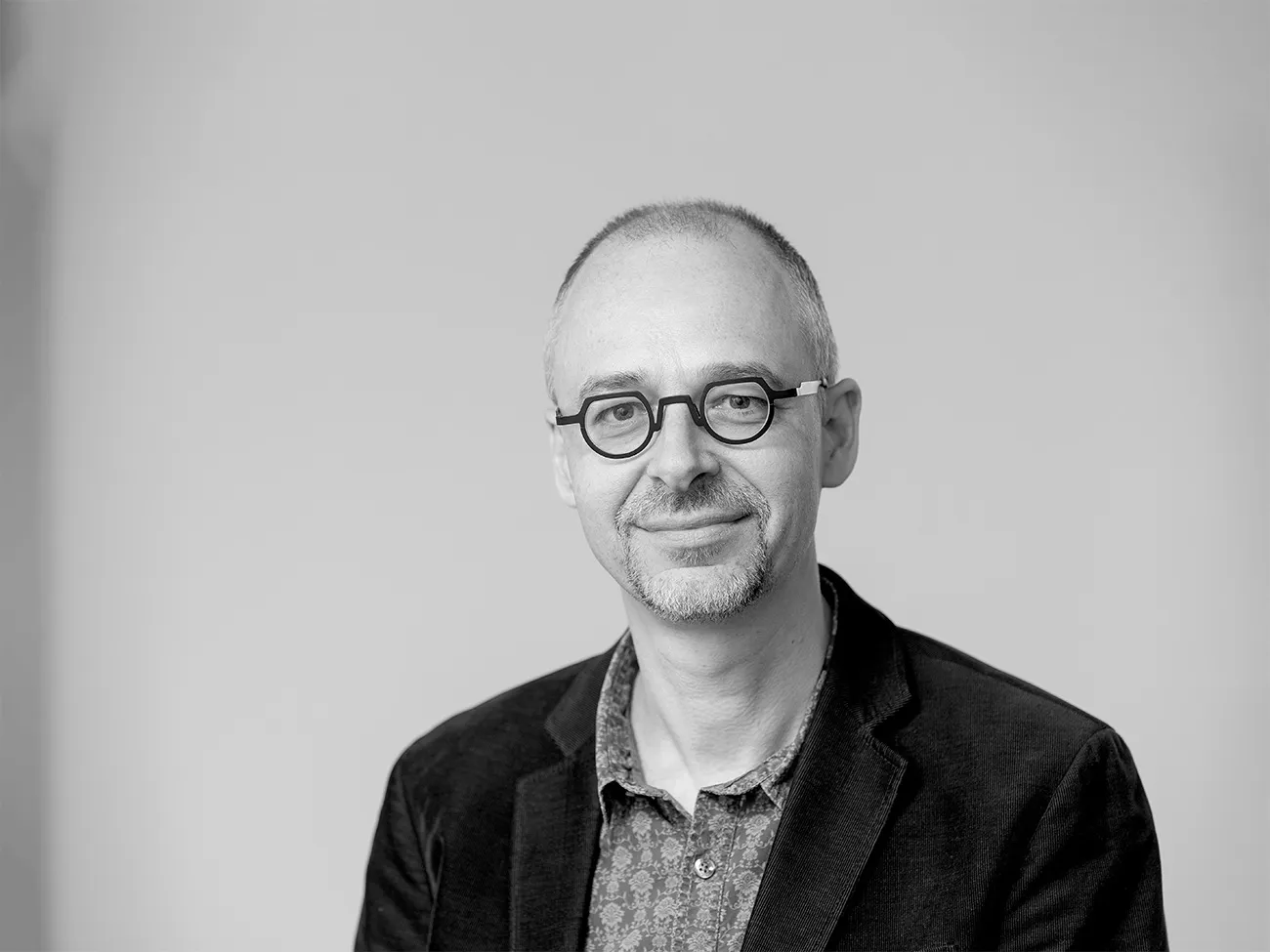
Peter Lacoere,
Lecturer in Spatial Development at HOGENT, engineer-architect and spatial planner
The Pen is passed to Bart Cobbaert of DENC-STUDIO, an architect and innovator in sustainable construction.
Question about this story? Ask your question
Keep following this
Get an email when a new story is published. No account needed.
- SubjectGeneral







