











Do underground infrastructures meet all quality requirements?
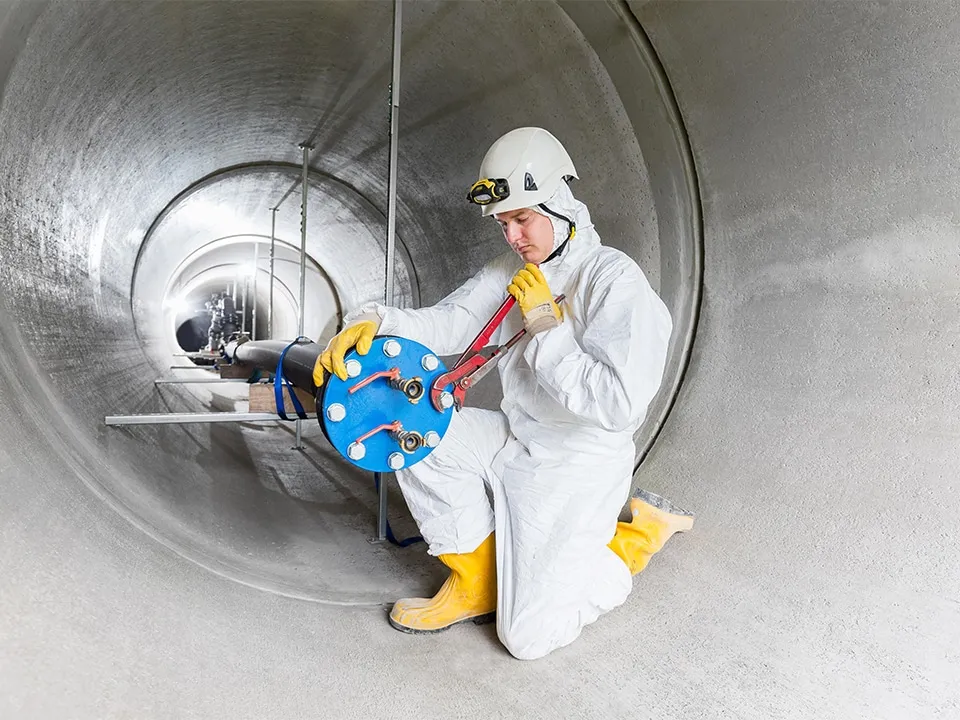
The quality of underground pipe networks and sewer manholes deserves at least as much attention as that of above-ground infrastructure, says inspection body and research institute IKT.
Unlike defects in roads or railway lines, defects underground can easily go unnoticed. The bill ultimately lands with the public.
Unlike in Belgium or the Netherlands, every landowner in Germany must be able to demonstrate that the installations on their property are watertight. Some people, however, lack the knowledge needed to meet this requirement. Municipal officials therefore often have to step in to answer their questions. To support them, IKT was founded in 1994 in Gelsenkirchen, Germany. This independent research institute for underground structures was initially set up to help municipalities fulfil their advisory duties. Almost twenty years later, the institute expanded into the Netherlands, opening a branch there too.
Focus on sewer rehabilitation
“Our Dutch branch was established at the request of various parties in the region. The sewer rehabilitation market had been growing rapidly for several years, while research into the quality of this work had until then been conducted mainly in Germany. We saw a need for our own accredited laboratory in the Netherlands to support local network operators, engineering firms and companies more effectively, including in
Belgium,” says Sebastiaan Luimes, branch manager at IKT in the Netherlands.
CIPP liners
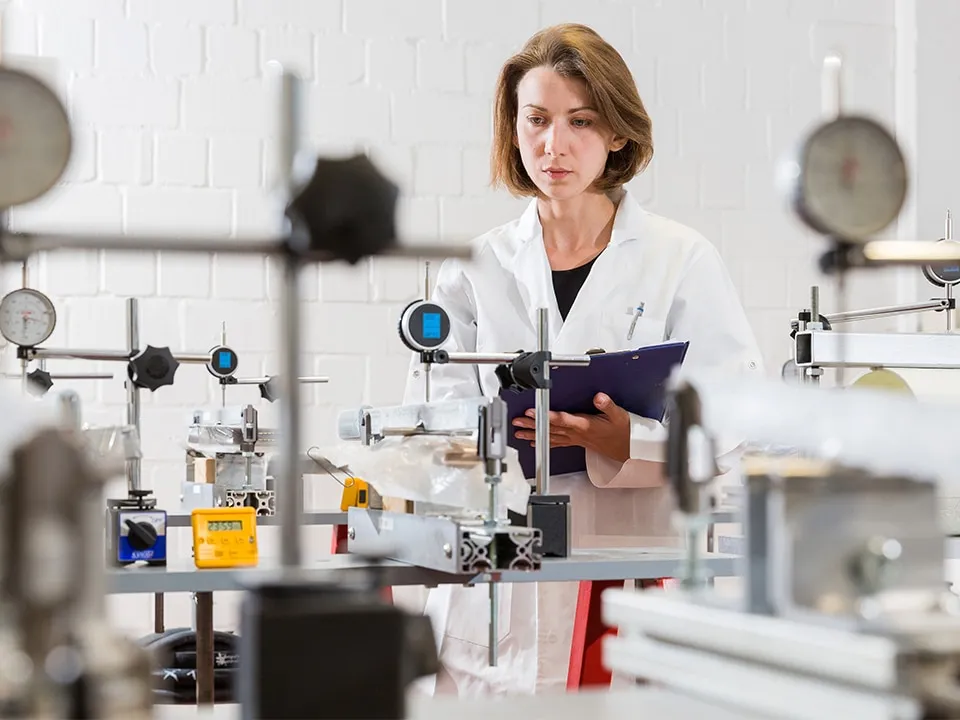
95% of all sewer rehabilitation work is carried out using CIPP liners. Unlike pipes manufactured in a factory, CIPP liners acquire their final geometric and mechanical properties only when they are cured on site. Luimes: “This means that the quality of the installation determines the finished product. One of our most important tasks is therefore to independently inspect test samples sent to us by clients and determine whether they meet the quality criteria.”
Training
In addition to inspecting products and researching their function and performance, IKT also frequently carries out site visits and provides training: “We want to answer frequently asked questions and build knowledge across the sector. Initially, this was mainly about CIPP liners, but today we also run courses on manhole rehabilitation and root intrusion into pipes. The latter is new to our programme, following a study we are currently conducting at our own test site. Tree root growth in pipes is a major problem, and there are various methods of preventing it, such as fabrics or panels. But no one has ever specifically investigated whether these solutions are effective. In 2022, we will present the results of our study at Floriade in Almere, the Netherlands’ seventh world horticultural exhibition.”
New test hall
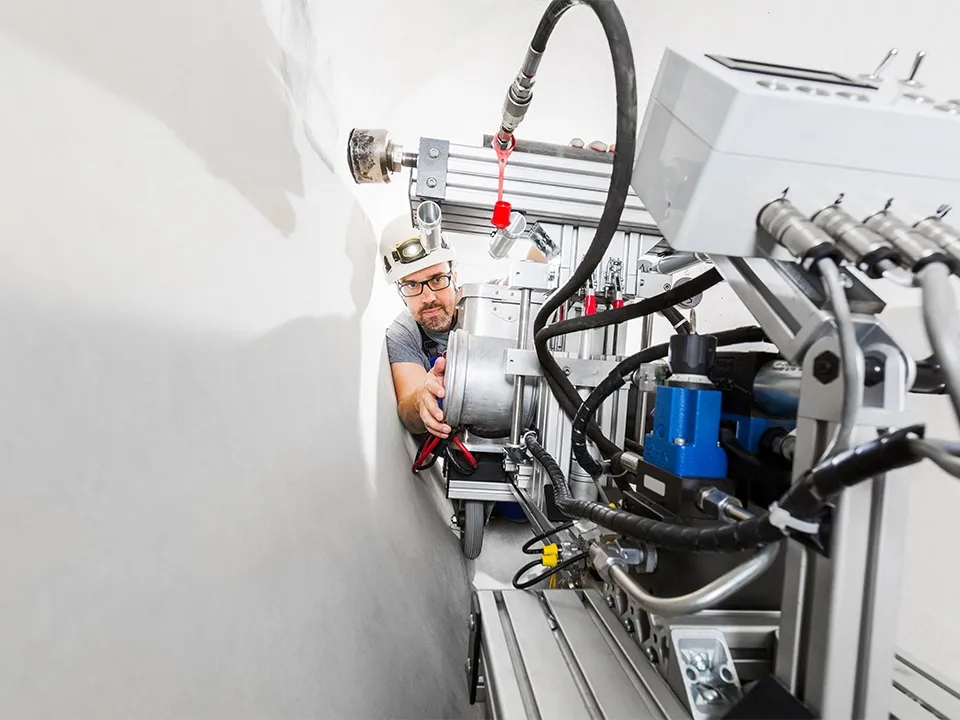
IKT has recently received a European grant to build a new test hall in Germany, which will focus primarily on research into the effects of extreme rainfall. Luimes: “Rainwater must be able to drain away, of course, and must not be left standing in the streets. This hall will enable us to research
products that offer solutions to this problem. It will also make us a European institute, allowing us to carry out even more studies into the impact of climate change in the future.”
Everything for the public
Although IKT’s direct target groups are municipalities, companies and network operators, all the work of this non-profit organisation is ultimately for the public: “We have no shareholders to whom we have to account for our turnover. Our sole aim is to ensure consistent quality across all underground infrastructure in Belgium and the Netherlands. When that quality is lacking, taxpayers foot the bill. So, really, we work solely for the public, and that is a powerful motivation,” Luimes concludes.
Question about this story? Ask your question
Keep following this
Get an email when a new story is published. No account needed.
- SubjectGeneral







