











Edegem residential district pioneers heat distribution
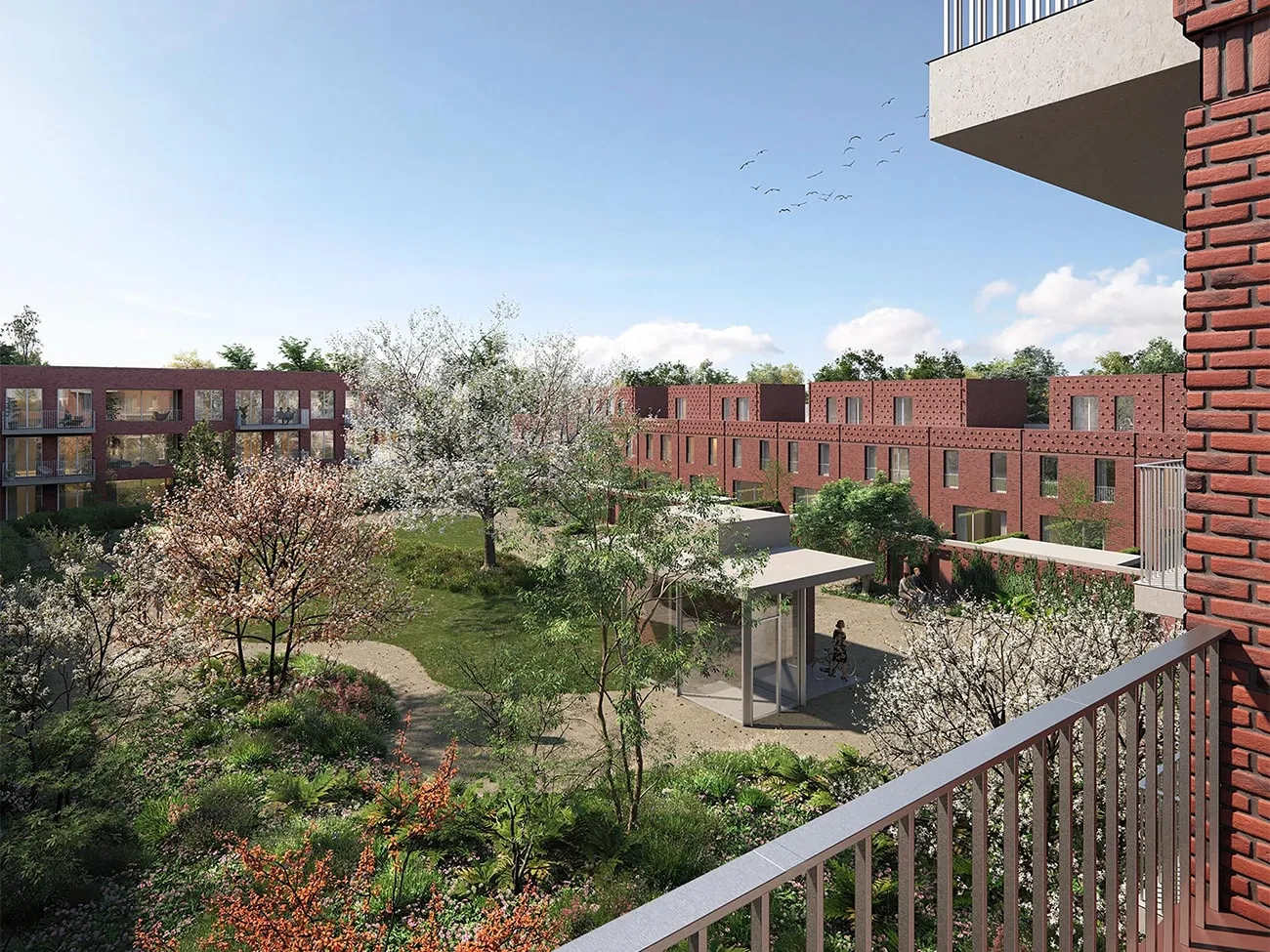
The Minerva car factory was located around half a kilometre from the Agfa-Gevaert factories in Mortsel during the interwar period. The Minerve residential district has recently been built there, in Edegem. The homes are heated using waste heat from Agfa-Gevaert. An ultramodern district heating network has been installed for this purpose.
The construction of district heating networks in Flanders has only recently got under way. Elsewhere in Europe, however, they have long been a familiar sight. This has much to do with the ready availability of cheap Dutch natural gas for the past 60 years.
The Netherlands is now sharply reducing its natural gas production, and will increasingly have to import gas from the Middle East, Russia or America. Moreover, gas is a fossil fuel. For political, economic and environmental reasons, it therefore makes sense to use waste heat from local industry, which would otherwise go to waste, to heat residential and other buildings. Minerve is one of the pioneering projects helping to achieve this.
Making use of waste heat
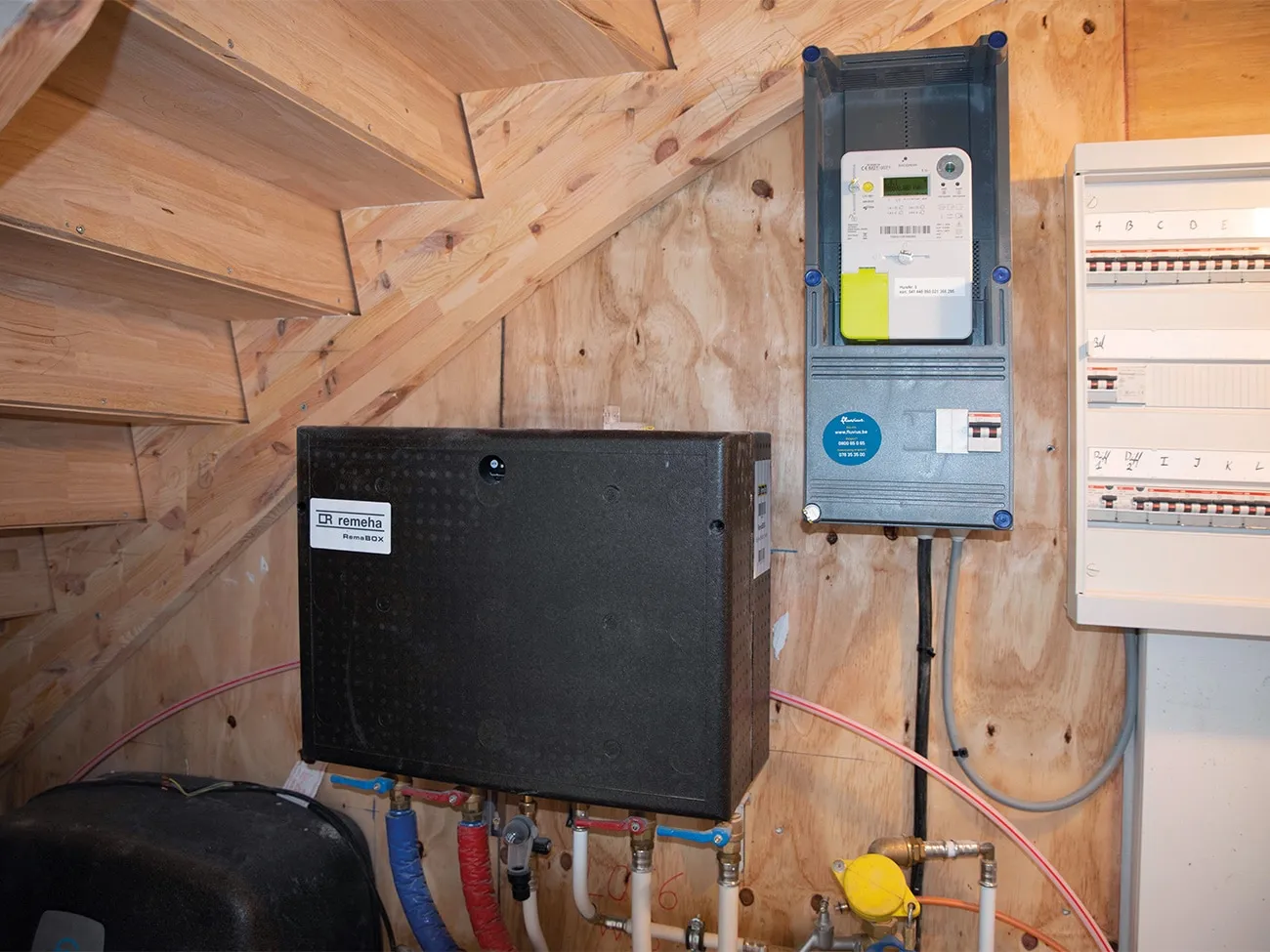
Agfa-Gevaert produces a great deal of waste heat. This is now transported via a pipeline carrying hot water to the residential district, 500 metres away. “This smart form of heating is no more expensive than traditional systems, but it is greener,” says Carlos Meire of Remeha, the company that supplied the heat interface units.
Depending on the building to be heated, the heat interface units in the more than 300 homes are various types of RemaBOX, which distribute both hot water for space heating and domestic hot water. “The required volume of district heating water flows through the primary side of the heat exchanger, heating cold tap water on the secondary side to around 60 °C. When there is no demand for domestic hot water, the integrated keep-warm function maintains the heat exchanger at around 50 °C. This reduces the unit’s waiting time to a minimum. Each heat interface unit has an energy meter. This makes it possible to monitor faults remotely and read the energy meter remotely.”
The control system is located at the Agfa-Gevaert site. The main pipeline runs from there. It was installed using underground drilling, allowing several busy roads to be crossed without disrupting traffic. “Within ten years, network operator Warmte Verzilverd is aiming to save 16,000 tonnes of CO2,” says Meire. “Preparations for an extension towards Berchem are well under way. In time, this will create a cluster of interconnected district heating networks in and around Antwerp.”
Een zakelijke vraag aan Remeha België? Get in touch
Who worked on it
Minerve in Edegem
- afgifte-units
 Remeha
- netuitbaterWarmte Verzilverd
- restwarmteAgfa-Gevaert
Keep following this
Get an email when a new story is published. No account needed.
- ProjectMinerve
- SubjectGeneral
- CompanyRemeha België
- CompanyWarmte Verzilverd
- CompanyAgfa-Gevaert







