











Eiffage Construction subsidiary OVMB, C-biotech and C-ground accelerate PFAS removal from soil using hemp
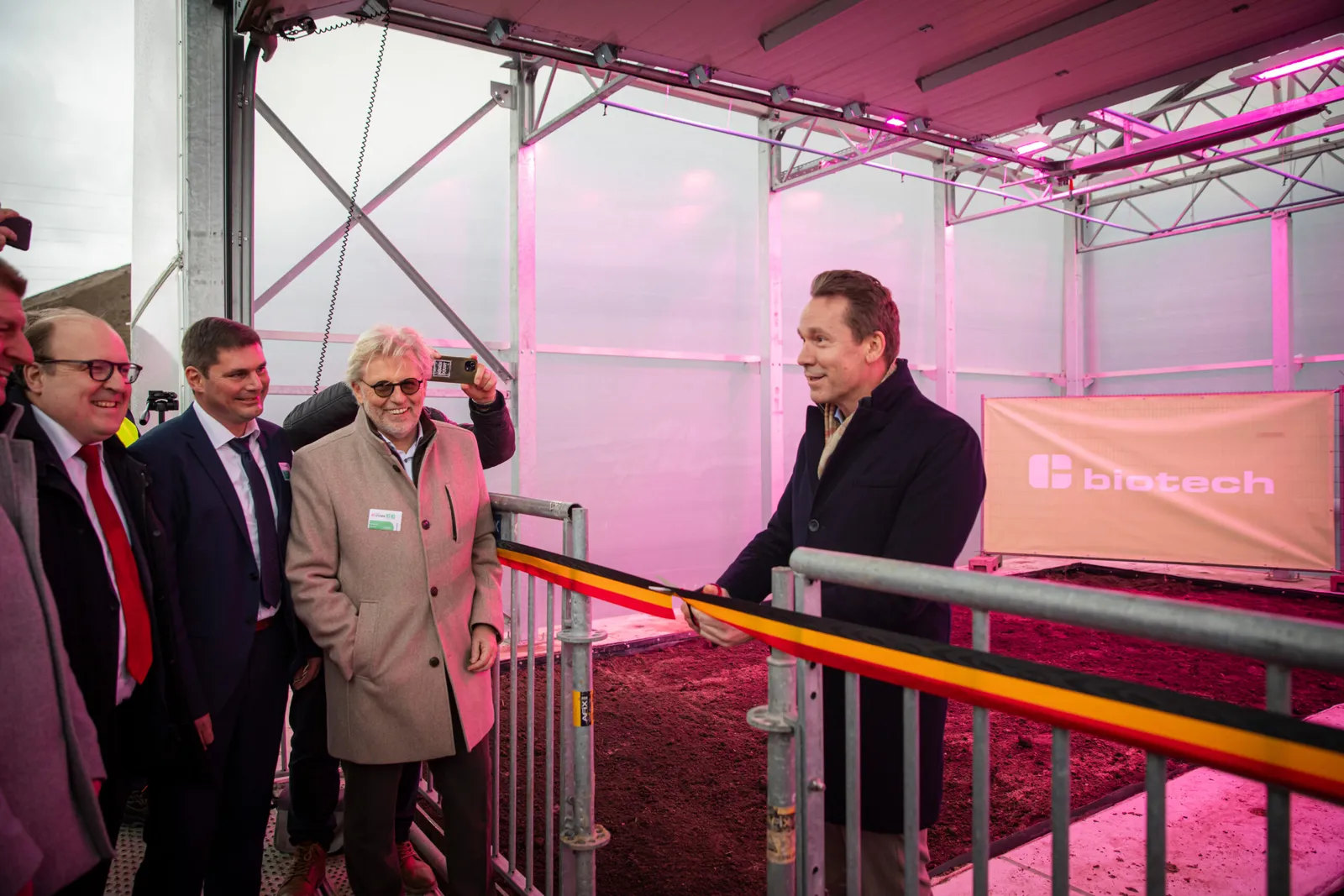
Pilot project is a European first and could provide an answer to widespread contamination
OVMB, a subsidiary of Eiffage Construction BeLux, C-biotech and C-ground, the Cordeel Group’s phytoremediation and soil divisions, are joining forces on an innovative soil remediation project. In a fully enclosed, controlled greenhouse at the Port of Ghent, the partners are investigating how industrial hemp, combined with soil additives, can accelerate PFAS removal from soil without destroying it. The project is a European first that could offer a sustainable, low-cost solution to widespread soil contamination by these forever chemicals. If the approach proves successful, the partners plan to scale up the technique to remediate larger volumes of soil ex situ.
PFAS (per- and polyfluoroalkyl substances) are persistent, hard-to-break-down chemicals, known as ‘forever chemicals’, that contaminate soil and water worldwide and have been linked to the development of diseases such as cancer, obesity and endometriosis. Belgium is also a major PFAS hotspot, according to a recent report commissioned by the European Commission: 100% of the Belgian population lives in a risk area, with 20% living in a high-risk area. This puts Belgium at the top of the European rankings. The cost of remediation, together with the resulting burden on healthcare, could amount to at least €330 billion, even in the best-case scenario.
Phytoremediation with full reuse in mind
Conventional remediation methods involve excavation and soil washing, but these remove only part of the contamination. Large quantities of unusable soil are still left over and end up in landfill, a typical end-of-pipe solution. Through this phytoremediation pilot project, which uses plants and microorganisms to remove pollutants from the environment naturally, C-biotech, C-ground and OVMB aim to show that there is another way. Using an ex situ approach, the contaminated soil is treated, restored and improved on site, with full reuse as the goal, and in less time than natural processes would take.
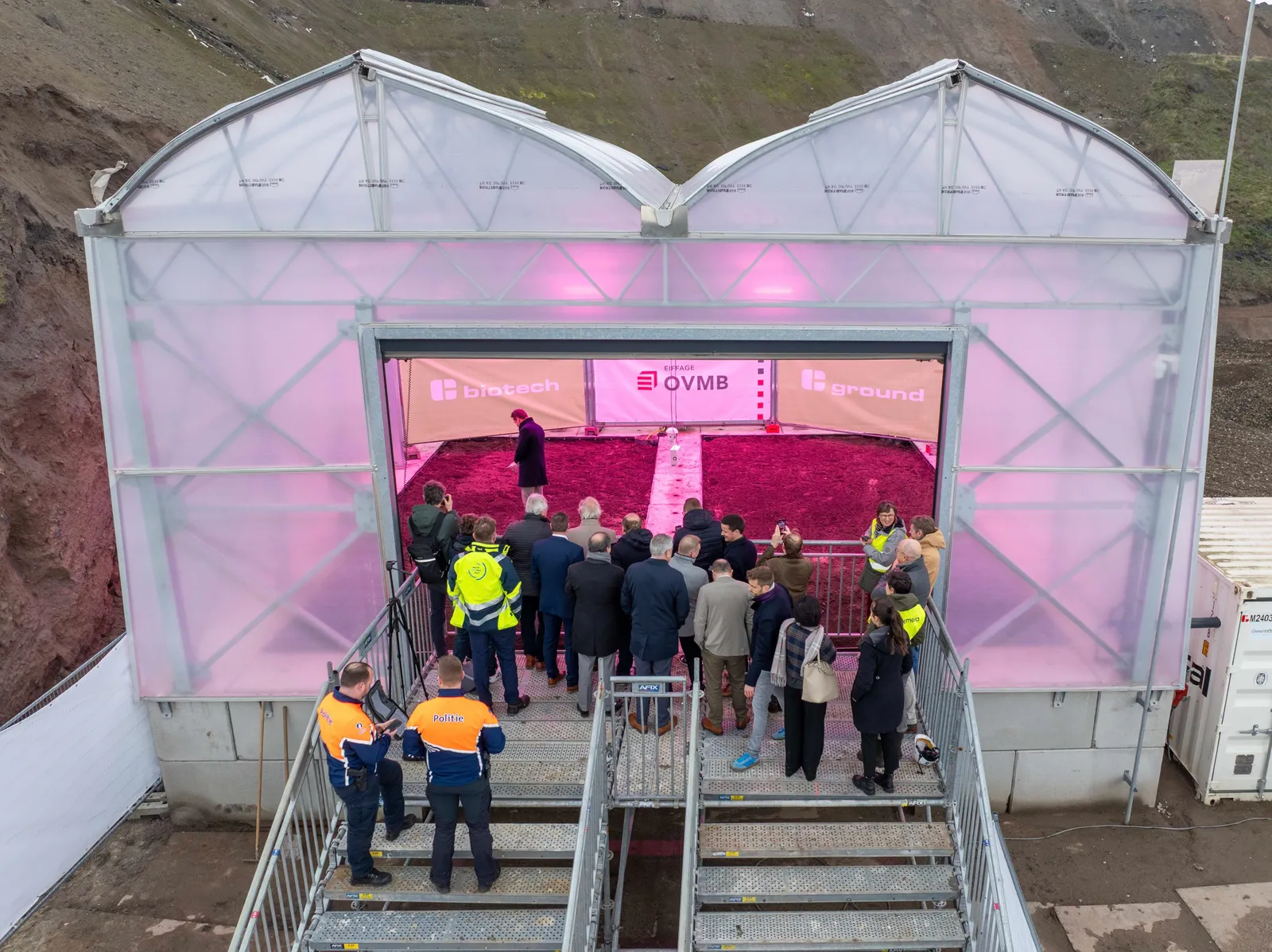
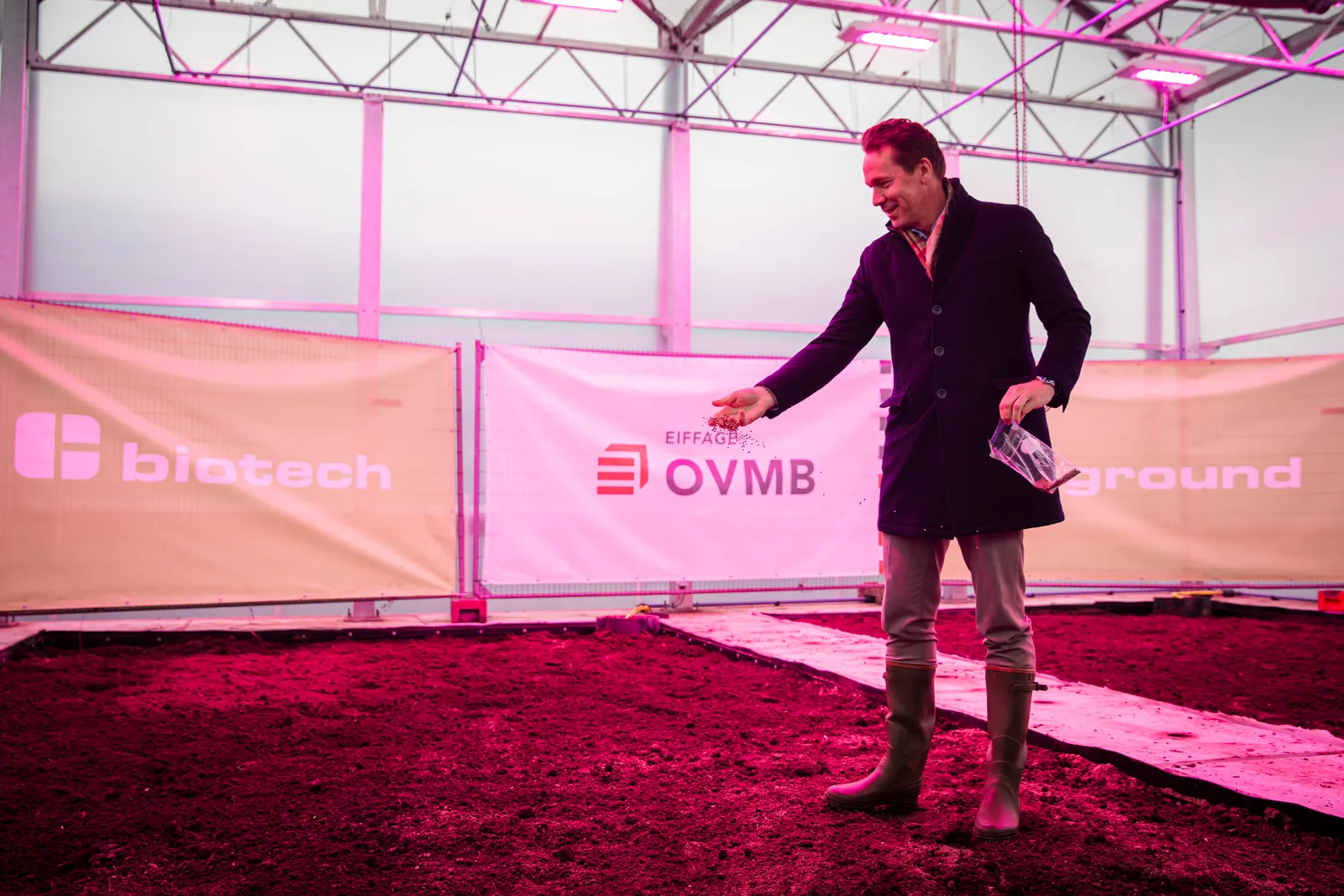
For the pilot project, the partners developed a 100 m² greenhouse designed for sustainable use, with controlled irrigation, temperature and lighting. An app simultaneously measures the moisture and CO₂ levels in the soil. The greenhouse is treating 100 m³ of PFAS-contaminated soil by growing industrial hemp in it and adding soil additives. The additives bind or mobilise PFAS, support soil life and improve soil structure, while industrial hemp, a fast-growing, deep-rooted, non-psychoactive crop, produces biomass and takes up PFAS. To monitor the behaviour of PFAS and identify the ideal treatment strategy, the greenhouse was divided into two identical, independent compartments in which different conditions are being tested. This makes it possible to compare results directly and establish the best possible conditions.
Process intensification in a fully enclosed system
The greenhouse is safe and can be used all year round, whatever the weather, allowing careful, traceable testing. By controlling the optimal heat, moisture and light conditions to promote plant growth and microbial activity, it also intensifies the process, accelerating natural processes and PFAS removal. The system is fully enclosed, and the irrigation water, collected from rainwater, is captured and reused. Only the harvested biomass, which contains PFAS, is carefully removed from the system and safely disposed of. This prevents any spread of contamination. Another major advantage is the greater scope to adjust conditions compared with in situ phytoremediation, where contaminated soil is treated in place.
A sustainable, scalable alternative
“PFAS is now one of the biggest challenges in soil remediation, both in Belgium and abroad. By joining forces with C-ground and C-biotech, we are exploring a sustainable, scalable alternative that offers prospects for future projects”, says Maarten Taelemans, Managing Director at OVMB.
“This project shows how innovation and collaboration can lead to sustainable, practical solutions to complex environmental problems. The enclosed greenhouse allows us to test PFAS remediation in a controlled, safe and accelerated way, with full reuse of the soil as the ultimate goal”, says Herman Backaert, Innovation Manager at C-ground.
“There is no silver-bullet solution for PFAS remediation. Alongside in situ techniques, whether physico-chemical methods for specific hotspots or phytoremediation for diffuse contamination, an ex situ technique is needed for sites where excavation is the only option. Rather than shifting the problem down an end-of-pipe route to landfill, we want to create healthy soil that can be reused”, adds Ingmar Nopens, Managing Director at C-biotech .
Innovation through collaboration
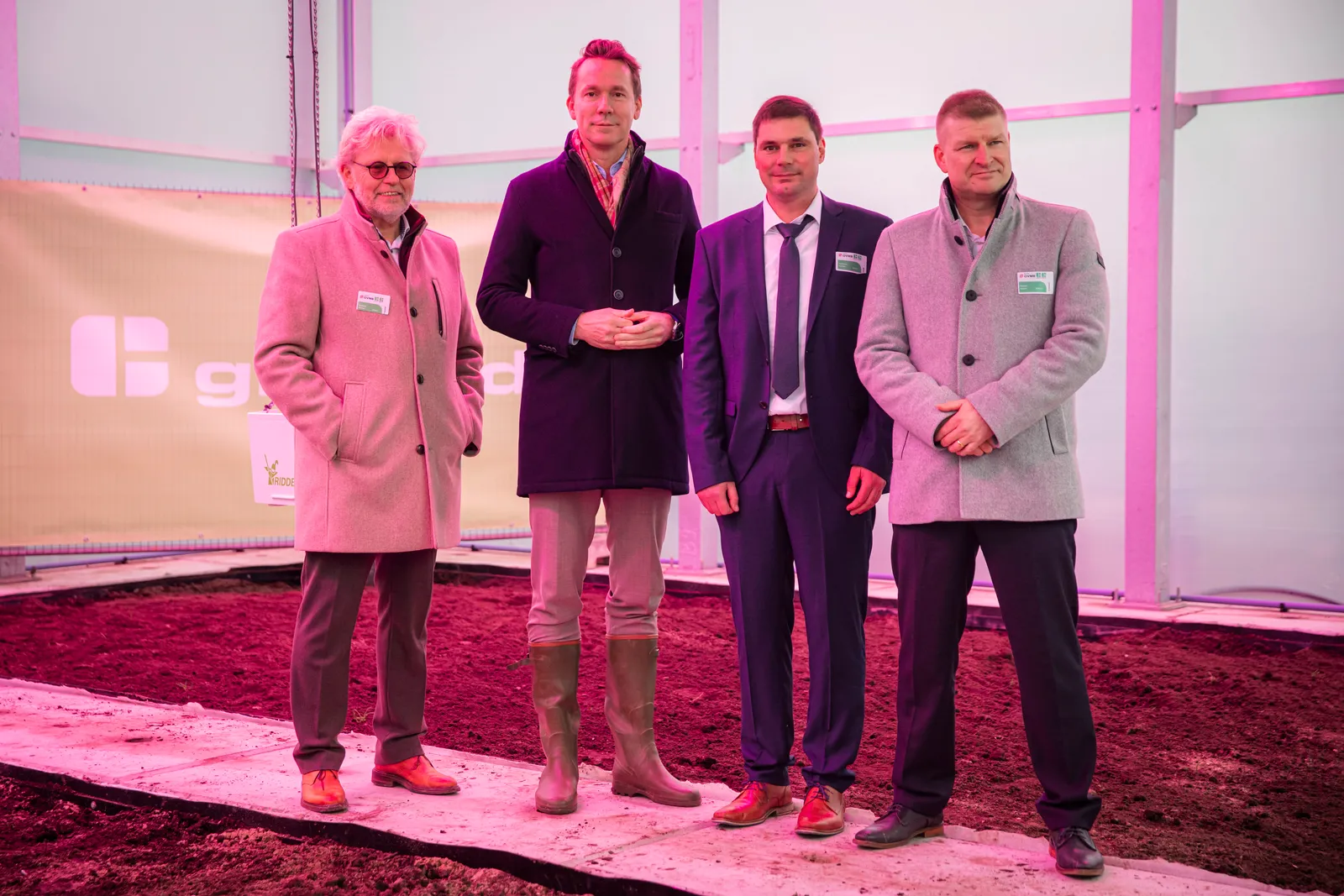
The pilot project is the result of close collaboration between innovative partners. The greenhouse was built in August 2025, and filled with PFAS-contaminated soil in January 2026. OVMB is providing the site and, together with C-ground, is responsible for developing and producing the greenhouse. C-biotech is contributing its phytoremediation expertise using industrial hemp.
Question about this story? Ask your question
Keep following this
Get an email when a new story is published. No account needed.
- SubjectGeneral







