











Fire-rated internal doors: more than just a few words of explanation
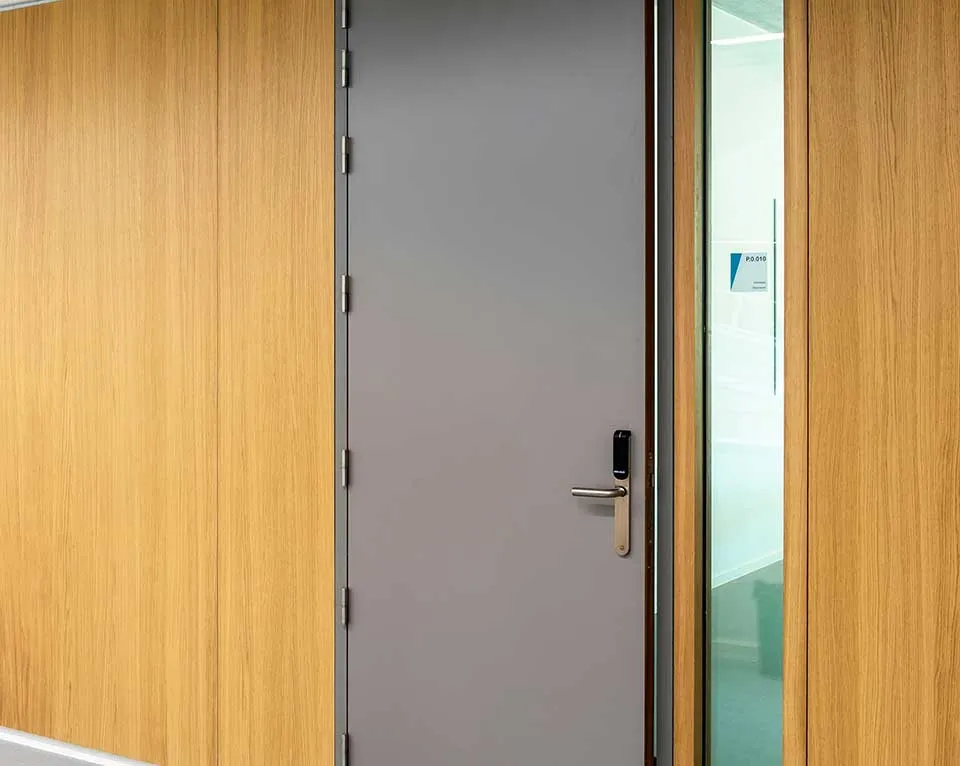
A fire is an immense, uncontrolled combustion that can spread at incredible speed and usually causes considerable damage.
There is no need to explain why fire-rated internal doors, and the obligations associated with them, are of the utmost importance. However, legislation and regulations are becoming increasingly complex as the technology advances. The various standards and classifications call for skilled craftsmanship and technical expertise to deliver the best solutions. Holvoet, a West Flanders joinery company specialising in technical internal doors, helps us navigate this complex subject.
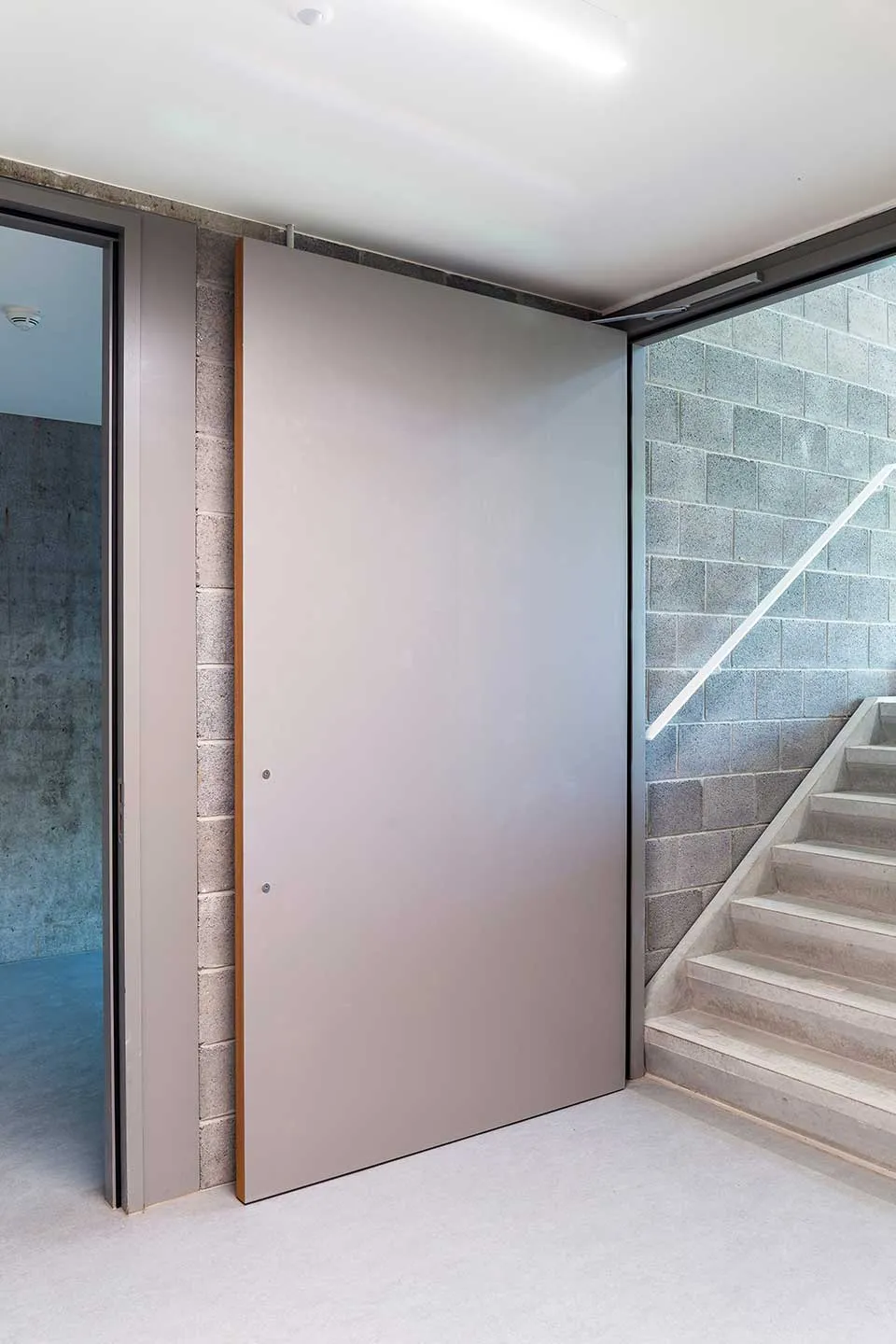
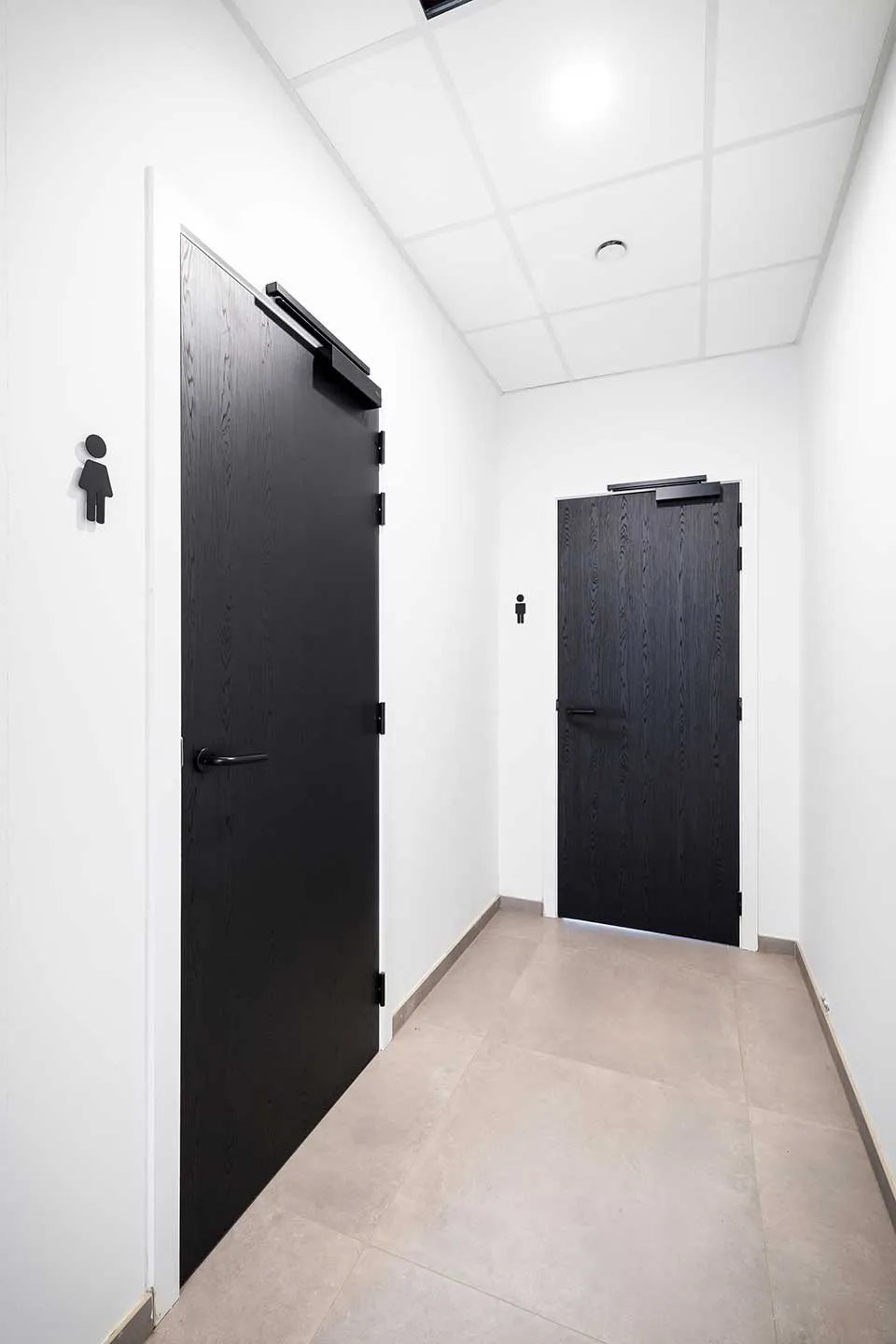
In the medium term, Belgian fire regulations (RF) will give way to European fire regulations (EI). The European regulations distinguish between a stricter interpretation (EI1) and a less strict one (EI2). Belgium is reinforcing its pioneering role in fire safety by fully embracing EI1. The difference between the two interpretations lies in the test method used for the fire-resistant assembly.
- (E) stands for integrity, the first requirement for a fire classification.
- (I) stands for thermal insulation. Thermal insulation (I), previously referred to in French standards as ‘coupe-feu’, is a criterion that measures the rise in temperature on the protected side of the door. To measure this temperature rise, thermocouples are fitted at various standardised points on the door.
- (W) stands for radiation. The radiation measured on the protected side, 1 metre from the element being tested, must not exceed 15 kW/m². This criterion (W) is always assessed in conjunction with the integrity criterion (E).
As part of this new standard, door manufacturers carry out extensive tests on door leaves and assemblies. For EI1, the maximum temperature on the door leaf may be 180 °C. The measuring points are positioned 25 mm from the edge. The maximum temperature on the frame is 180 °C. At the end of the test, the average temperature at the fixed measuring points and the mobile measuring point must not exceed 140 °C. For EI2, the maximum temperature on the door leaf is 180 °C. The measuring points are positioned 100 mm from the edge. The maximum temperature on the frame is 360 °C. If a specification states a particular fire resistance without clarifying whether it is I1 or I2, for example EI30, this refers to EI2-30, which is used in most EU countries. Belgian legislation requires EI1 to replace the national BENOR-ATG standard. Consequently, EI2 is not permitted in Belgium.
Question about this story? Ask your question
Keep following this
Get an email when a new story is published. No account needed.
- SubjectGeneral







