











First Belgian green hydrogen plant expected to receive permit by mid-2022
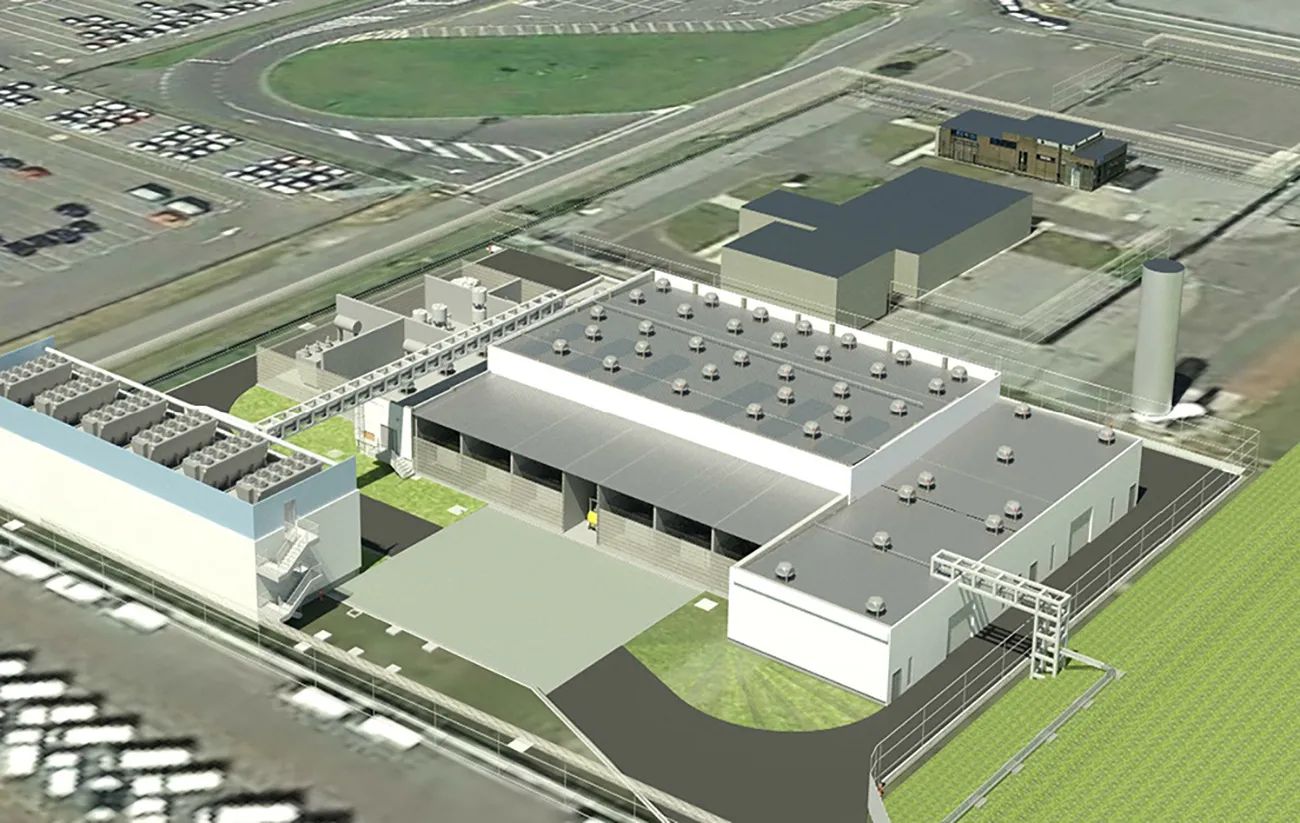
Engineering consultancy Sweco is overseeing the permitting process for the 25-megawatt green hydrogen production unit in Zeebrugge. This is a first for Belgium and will give the country’s hydrogen ambitions an extra boost. The client is the Hyoffwind consortium (Virya Energy and Fluxys), which has selected John Cockerill and BESIX as its technology partner and as partner for the design and construction.
Sweco is responsible for applying for the required environmental permit (for construction and operation) and subsidies for this green hydrogen electrolysis plant. Our energy specialists are also involved in other green hydrogen developments in Belgium and the Netherlands, providing engineering services for compression, cooling and storage systems in accordance with the strict safety requirements for hydrogen at high pressure.
The permit application was submitted at the end of 2021, and the consortium expects to receive a permit by mid-2022. The final investment decision, which is also subject to the award of subsidies by the Flemish Government under its recovery plan, will be taken during 2022. Hilde Crevits, Flemish Minister for Economy and Innovation, has supported the project since 2020, as it fits perfectly with the Flemish hydrogen strategy.
Tom Van Den Noortgaete, Division Director Energy & Environment at Sweco Belgium: “Sweco has strong technical expertise in the engineering of industrial process plants and plays a distinctive international pioneering role in hydrogen projects. We are also responsible for the complete design and permit and subsidy applications for Vision H2’s two green hydrogen plants in the port area of North Sea Port. The completion of all these plants will make our economy and society more sustainable.”
Sara Vander Beken, Operational Manager Energy Transition at Sweco Belgium: “Hydrogen will play a vital role in Europe’s future energy mix. Belgium has set out its ambition to become a leader in this field. Our central location, existing industry and infrastructure put us in a strong position to achieve this. Green hydrogen is intended for activities that cannot readily switch to electricity, such as heavy industry, freight transport and shipping.”
On the way to a hydrogen economy in Belgium and Europe
In the first phase, the planned project will consist of a plant capable of converting 25 MW of electricity into green hydrogen. In the second phase, however, the partners aim to scale this up to 100 MW. This pioneering project, combined with the development of hydrogen infrastructure, will make an important contribution to the Flemish, Belgian and European hydrogen strategies by taking the first step towards establishing Flanders and Belgium as a European hub for green hydrogen.
Partners working together across the entire energy chain
The Hyoffwind project is being developed by a consortium whose members operate across the entire energy value chain. The consortium comprises Virya Energy (renewable energy production and commercialisation) and Fluxys (transport of green molecules), and aims to develop a power-to-gas plant that can convert renewable electricity into green hydrogen.
Green hydrogen is a crucial building block for an economy based on renewable energy, as it can be used as a feedstock for industrial processes and a wide range of mobility applications. Hyoffwind will also contribute to the flexibility and balance of the energy system by providing an effective solution to the increased variability caused by renewable electricity generation.
Question about this story? Ask your question
Companies in this story

Keep following this
Get an email when a new story is published. No account needed.
- SubjectGeneral
- CompanySweco Belgium







