











Flats to become the most common type of home in Flanders from 2022
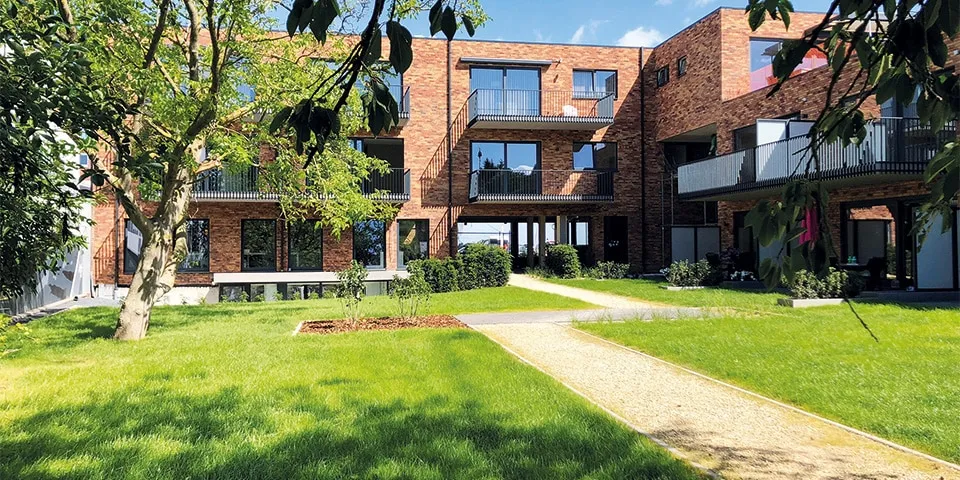
Since 2002, more flats than houses have been approved in Flanders every year, and from 2016 the proportion shifted to more than 60% for flats and less than 40% for houses. Flats also came out on top in 2018, accounting for 63% of approvals in the first ten months of the year. Based on this trend, the VCB predicts that flats will become the most common type of home in Flanders from 2022. This trend also reflects demographic reality, as the number of single-person households and couples without children is increasing.
Despite a sharp rise in the total number of new homes in 2018, the increase in the number of approved new houses remained relatively limited. The number of approved flats rose from around 16,000 in 2011 to more than 31,000 in 2018. Over this period, the number of approved houses remained stable at around 15,000 a year, rising to almost 18,000 in 2018. The surge in permits granted in 2018 was largely due to a peak in planning applications at the end of 2017, as applicants sought to avoid the stricter energy requirements (S-level and E-level) introduced at the start of 2018.
Shifting housing types
European figures for 2015 show that Belgium is by no means a European leader in detached housing, but rather sits somewhere in the middle. Only five European countries have a smaller share of apartment buildings, while around 30 European countries have more flats than Belgium. In 2015, however, Belgium had a relatively large proportion of semi-detached and terraced homes: around 35%, compared with 52% in Ireland and 60% in the United Kingdom and the Netherlands, a country often hailed as a leader in densification. At the time, the European average for semi-detached and terraced homes was just 24%.
But in the meantime, semi-detached and terraced homes in Flanders appear to be on the decline. The share of terraced homes has fallen particularly sharply, by around 4% since 2001. The already small share of semi-detached homes has edged down only slightly. If the trend of recent years continues, flats will become the most common type of home in Flanders from 2022. The VCB predicts that apartments will account for 30% in 2024, compared with 29% for detached homes, 21% for terraced homes and 19% for semi-detached homes.
By contrast, it is striking that the share of apartment buildings in new-build permits in the Netherlands has been falling again since 2015. It seems that apartment building there may have reached its limits.
An analysis of planning permits granted over the past six years, from 2013 to 2018, shows that the Flemish municipalities approving the largest share of new semi-detached and terraced homes (27% or more) are neither the 13 central cities nor the coastal municipalities. In those cities, the share of approved semi-detached homes is always below 27%, while apartment building is strongly represented. Semi-detached and terraced homes are more often found in municipalities in rural areas, although less so in the Campine and northern Limburg, where detached housing is more prevalent.
Demand for flats, terraced and end-of-terrace homes
The growth in the number and share of apartment buildings meets a demographic need. This is reflected in the rising number of single-person households and couples without children. According to the Federal Planning Bureau’s latest population forecast, the number of single-person households will increase by almost 150,000 (or 16%) by 2030, while the number of couples without children will rise by just over 75,000 (or 10%). At the same time, the number of families with children will fall by around 45,000 (or 6%).
Single people in particular find it harder financially to buy a home with a larger plot of land. As a result, they are more likely to opt for a flat, a terraced home or an end-of-terrace home than for a villa with a (larger) garden. In their housing developments, housebuilders offer a substantial number of new terraced and semi-detached homes. Detached homes are now rare in housing developments.
Housing developments with terraced and semi-detached homes contribute to spatial densification, as the Netherlands has shown. Apartment building plays a crucial role in accommodating further population growth. But terraced and semi-detached homes are an important addition when it comes to creating liveable neighbourhoods. Both types of housing need to be given opportunities, although the government cannot impose them uniformly on every project. The location and market demand will determine which type of home is the best fit in each case.
Question about this story? Ask your question
Keep following this
Get an email when a new story is published. No account needed.
- SubjectGeneral







