











Flemish Government and construction and property sector sign Future Pact
Building a strong, affordable and sustainable Flanders together
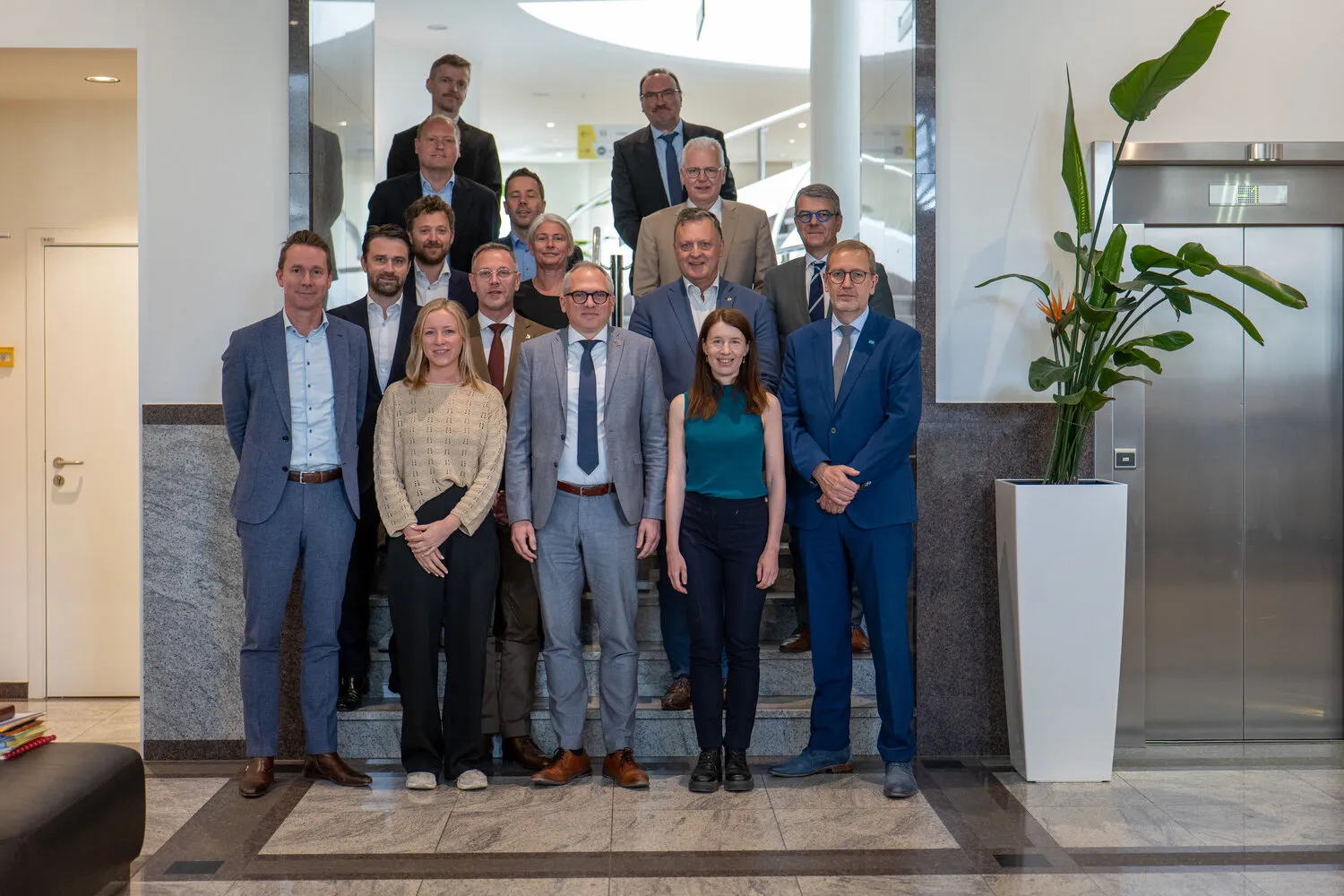
At the annual meeting of the Flemish Construction Consultative Committee (VBOC), the Flemish Government and representatives of the construction and property sector signed a Future Pact. Both parties are thereby committing to tackling the major societal challenges relating to housing, infrastructure, climate and energy together.
The pact is based on five key areas: planning permission, investment, affordable housing, renovation and innovation. A sixth pillar, covering education and the labour market, is still being prepared. Together, these areas provide a structural framework for sustainable cooperation between the Flemish Government and the main sector organisations across the construction and property value chain: Embuild Vlaanderen, Bouwunie, BVS (Beroepsvereniging van de vastgoedsector), NAV (Netwerk Architecten Vlaanderen), the Orde van Architecten, the Beroepsvereniging voor Architecten and ORI, the sector organisation for consultancy and engineering firms.
The Government and the sector are opting for a partnership that looks beyond the day-to-day, with one goal: to develop Flanders sustainably, affordably and with the future in mind.
Matthias Diependaele, Minister-President of the Flemish Government: “The construction and property sector is one of the most important economic lifelines of Flanders. Construction generates prosperity in Flanders and is part of its social fabric. I see a great deal of entrepreneurial spirit and potential for innovation among construction companies. This is what the Flemish Government wants to support. This pact is an important step towards strengthening cooperation between the Flemish Government and the sector.”
Caroline Deiteren, Director-General of Embuild Vlaanderen: “In the years ahead, the construction and property sector will play a crucial role in achieving a range of societal objectives, including affordable housing, a major renovation drive, climate adaptation and smooth mobility. With this pact, we are making a commitment and drawing up a plan with the Flemish Government to deliver on these goals. By making planning procedures more robust and efficient, providing certainty around public investment, attracting private partners and supporting innovation, the Flemish Government is giving the sector a strong boost.”
- Planning permission: More robust and efficient procedures
Planning procedures that are legally certain, robust and efficient are a priority for both the Flemish Government and the sector.
Jo Brouns, Flemish Minister for the Environment: “We must do everything we can to simplify planning rules. Larger projects in particular currently have to go through years of procedures. This makes everything more expensive, both doing business and housing. A mixed committee will issue recommendations on this by September. The Flemish Government will act on these recommendations to give businesses and the construction and property sector the planning certainty they need when starting a project.”
Olivier Carrette, Managing Director of BVS, Beroepsvereniging van de Vastgoedsector: “Planning permission is the bottleneck. We are pleased that the Flemish Government is taking this seriously. To make real progress, it is crucial to look not only at appeal procedures, but also at the underlying regulations and the substance of planning applications.”
- Investment: Essential to securing the future
Even in difficult budgetary times, the Flemish Government will continue to invest. This is essential to securing the future.
Annick De Ridder, Flemish Minister for Mobility, Public Works, Ports and Sport: “Our infrastructure is the foundation of Flanders’ prosperity. We are investing in the maintenance and renewal of roads, bridges and tunnels to ensure the safety and mobility of our citizens. By working with the construction sector, we can ensure these investments are delivered efficiently and sustainably.”
Jean-Pierre Waeytens, Managing Director of Bouwunie: “Smaller and specialist construction firms need a fair chance and fewer administrative hurdles. This pact recognises their importance and ensures more transparent and equitable selection procedures.”
- Affordable housing: A right for every Fleming
Housing affordability remains a key concern, particularly in and around cities and for lower-income households. The pact focuses on increasing supply, strengthening the social and private rental markets, and improving cooperation between local authorities and construction stakeholders.
Melissa Depraetere, Flemish Minister for Housing, Energy and Climate: “We are doing everything we can to deliver more affordable homes, with clear, binding commitments, innovative approaches and cooperation with private investors.”
Steven Lannoo, Director of NAV, Netwerk Architecten Vlaanderen: “Building more, within the framework of the construction shift, makes housing more affordable. This requires space, quality and vision. With this pact, we are giving architects, construction and property stakeholders, and local authorities a framework for making the right choices on urban development and strengthening town centres.”
- Renovation: A major renovation drive is needed
With just 9% of the housing stock achieving a good EPC rating, accelerating the renovation drive is essential. Renovation is also needed to reduce household energy bills and protect people from future price rises and energy crises. The pact provides for better guidance, adapted regulations and a collective approach.
Melissa Depraetere, Flemish Minister for Housing, Energy and Climate: “Renovation is essential to protect households from high bills and meet our climate targets. We are making it more straightforward, accessible and efficient.”
Stefan Knaepen, the Orde van Architecten: “We need to encourage buyers to set aside enough money for renovation when purchasing a home. This can be done by providing realistic estimates of the necessary renovation costs and as much tailored guidance as possible, not just for individual homes, but also for apartment buildings and neighbourhoods.”
- Innovation: Driving success in construction
The construction sector has a great deal of work to do. Innovation, digitalisation, prefabrication, industrialisation, ecosystem thinking and circular techniques will make it possible to build faster and more sustainably without compromising on quality or affordability. The pact recognises the need to promote innovation in both construction and processes across the entire construction and property value chain.
Matthias Diependaele, Flemish Minister for the Economy, Science, Innovation and Industry: “If we want to build tomorrow, we must invest in innovation today. The Flemish construction sector has considerable potential for innovation. Flanders will continue to support this. That will enable the sector to undergo the necessary transformation and fulfil its key role in the Flemish economy and society.”
Jan Parys, Chair of ORI, the sector organisation for consultancy and engineering firms:
“If we want to build faster, renovate more thoroughly and meet our climate targets, we must embrace new techniques, digitalisation and circular construction. That is not only good for our living environment, but also for our economy. Flanders can take a pioneering role in this.”
Question about this story? Ask your question
Keep following this
Get an email when a new story is published. No account needed.
- SubjectGeneral







