











Gas sector federation calls on government to adopt a technology-neutral approach
With the publication of the policy statement for the formation of a new Flemish government, a long-standing debate is once again rearing its head. What is the future of heating with fossil fuels such as gas and heating oil? The policy statement already refers to phasing out polluting heating appliances. Didier Hendrickx, Public Affairs Manager at the gas sector federation gas.be, believes it is high time to set the record straight on the opportunities offered by natural gas in meeting climate targets.

A recent study by Ghent University found that replacing older gas and oil-fired boilers with gas condensing boilers could reduce greenhouse gas emissions by 32%.
The government negotiations include, among other things, a ban on oil-fired boilers in new-build homes from 2021. Natural gas installations would also be ‘subject to tighter restrictions’. Didier Hendrickx puts the potential impact of this measure into perspective. “The planned developments in building regulations are undoubtedly a step in the right direction. But since around 1% of homes are renovated each year, including major renovations, it would take a century to upgrade the entire existing housing stock. This means a transition period is needed.” Hendrickx expects the government to opt for a technology-neutral approach. “There are many different solutions for the heating sector, and there is no single magic bullet.”
32% emissions reduction
Investing in insulation is part of the solution, but more is needed to meet the 2030 climate targets. Replacing older gas and oil-fired boilers with gas condensing boilers offers opportunities, says Hendrickx. “A recent study by Ghent University found that this measure could reduce greenhouse gas emissions by 32%. It is a lever that can be implemented easily. Its impact would also be significant, since almost 40% of households still heat their homes with heating oil today. The replacement would also improve air quality by reducing particulate emissions. Gas accounts for just 1% of particulate emissions from home heating.”
Gas is not the enemy of ‘green’ technologies such as heat pumps or solar panels, says Hendrickx. They can be combined. “For example, gas heat pumps are available with a seasonal efficiency of 135% (equivalent to an electrical COP of 3.5) in terms of primary energy. Meanwhile, promising technologies with a primary energy efficiency of around 150% are also on the market (thermodynamic boilers). Hundreds of natural gas fuel cells are already operating in Belgium. All these new gas applications are A++.”

The density of Belgium’s natural gas network makes it possible to harness almost 70% of the biomethane potential.
Biomethane
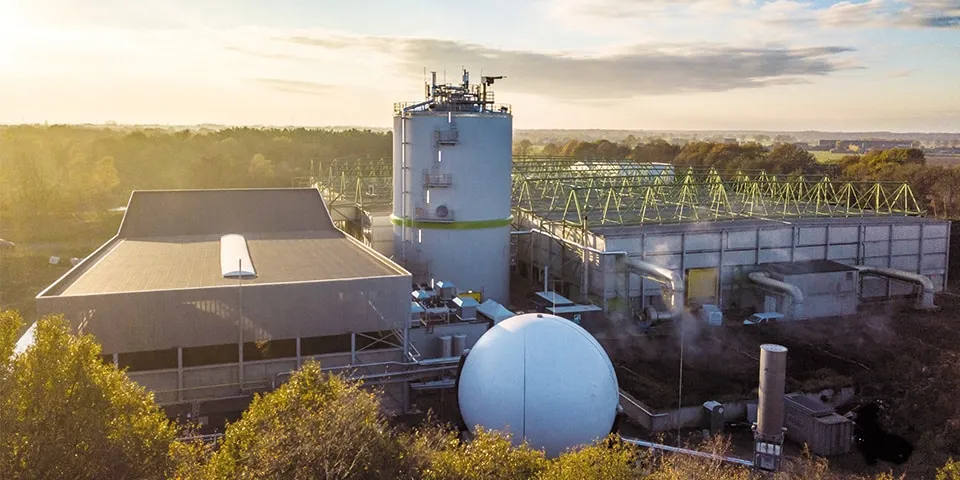
According to the Public Affairs Manager, innovations in ‘green gas’ also play an important role. A clear example is the first injection of biomethane into Fluvius’s natural gas network by the intermunicipal organisation IOK in Merksem, in November 2018. And that is not the end of the story, says Hendrickx. “The potential for injecting biomethane into the Belgian gas network is estimated at 10% of current natural gas consumption. This figure is expected to rise. The density of Belgium’s natural gas network makes it possible to harness almost 70% of the biomethane potential. Injection is therefore relevant geographically, but also in energy terms. More than 90% of the energy produced is harnessed when it is injected. Using green gas means using energy that is sometimes 100% CO2-neutral.”
Hendrickx continues: “The March 2019 Gas for Climate study estimates the European potential for renewable and low-carbon gas at 270 billion m³/year in 2050. It also shows that this renewable gas scenario could save €217 billion per year compared with a ‘full electric’ scenario.”
Question about this story? Ask your question
Keep following this
Get an email when a new story is published. No account needed.
- SubjectGeneral







