











Global Shading Day highlights the crucial role of solar shading in the fight against overheating
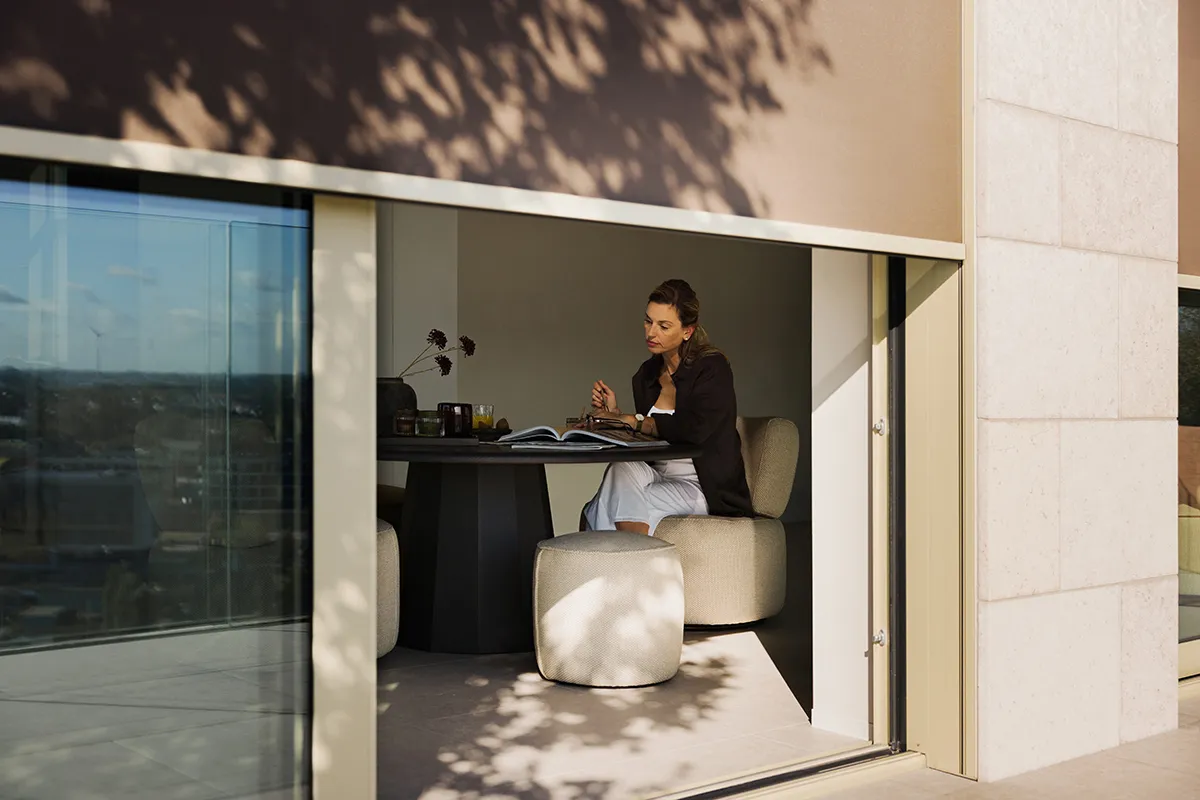
The start of spring on 21 March coincides with Global Shading Day for a reason. While everyone is naturally looking forward to the first spring sunshine, ES-SO (the European solar shading industry association) and Verozo (the Belgian professional association for solar shading and roller shutters) are using the initiative to highlight the risk of homes overheating. The issue is more topical than ever, following a recent KU Leuven study warning that many Belgian homes are at risk of severe overheating as a result of climate change. It is high time to take action.
At present, homes in our country are rarely exposed to outdoor temperatures above 25°C for more than 40 days a year. In a world that is 2°C warmer, this could apply to around one in five homes as early as 2039. With 3°C of warming, the figure could rise to as many as nine in ten homes from 2063 onwards, potentially exposing almost all Belgian households to the serious consequences of climate change. This is according to KU Leuven’s analysis.
Professor Nicole van Lipzig: “Every additional tenth of a degree on the thermometer causes a disproportionate increase in the number of homes exposed to this. Specifically, with global warming of 3°C, the cooling season will last at least two months a year. What is more, this will apply to almost all houses and flats in our country. If the climate models are correct, the impact of climate change will therefore be felt by many Belgian households in homes that are not sufficiently climate-resilient.” Hot nights will also take an even greater toll on our bodies. High night-time temperatures disrupt sleep and recovery, making things especially difficult for vulnerable people.
External solar shading as an effective barrier
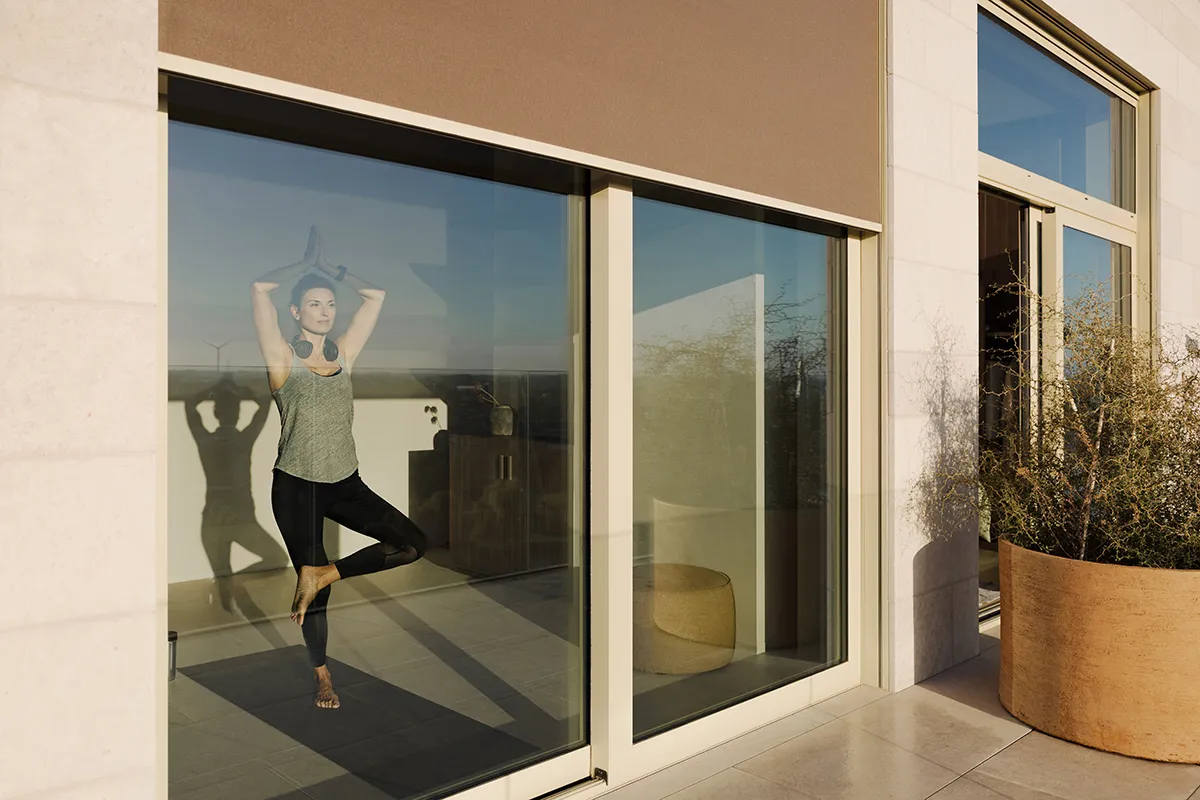
These forecasts make Global Shading Day more relevant than ever. To prevent homes overheating in the first place, rather than only taking action once the heat is already inside, the key is to block the sun’s rays before they reach the window glass. How? With a strategically planted tree, an awning or an overhang … or with external screens. The latter have the added advantage that in winter, with the screens raised, you can continue to make the most of free solar gains, keeping down not only your cooling costs but also your heating bills.
It is best to keep air conditioning as a last resort. The waste heat released by these systems contributes to further climate change. Air conditioning also sends your energy bill soaring in no time. “Once the heat is inside, it is better to use passive techniques such as night-time ventilation or heat pump cooling,” adds architectural engineer Joost Declercq, director at Archipelago architects and affiliated with UHasselt. “Of course, that will never be enough if you fail to anticipate the problem and keep the heat out. Solar shading is therefore a crucial part of making homes future-proof.”
Taking effective steps to prevent overheating
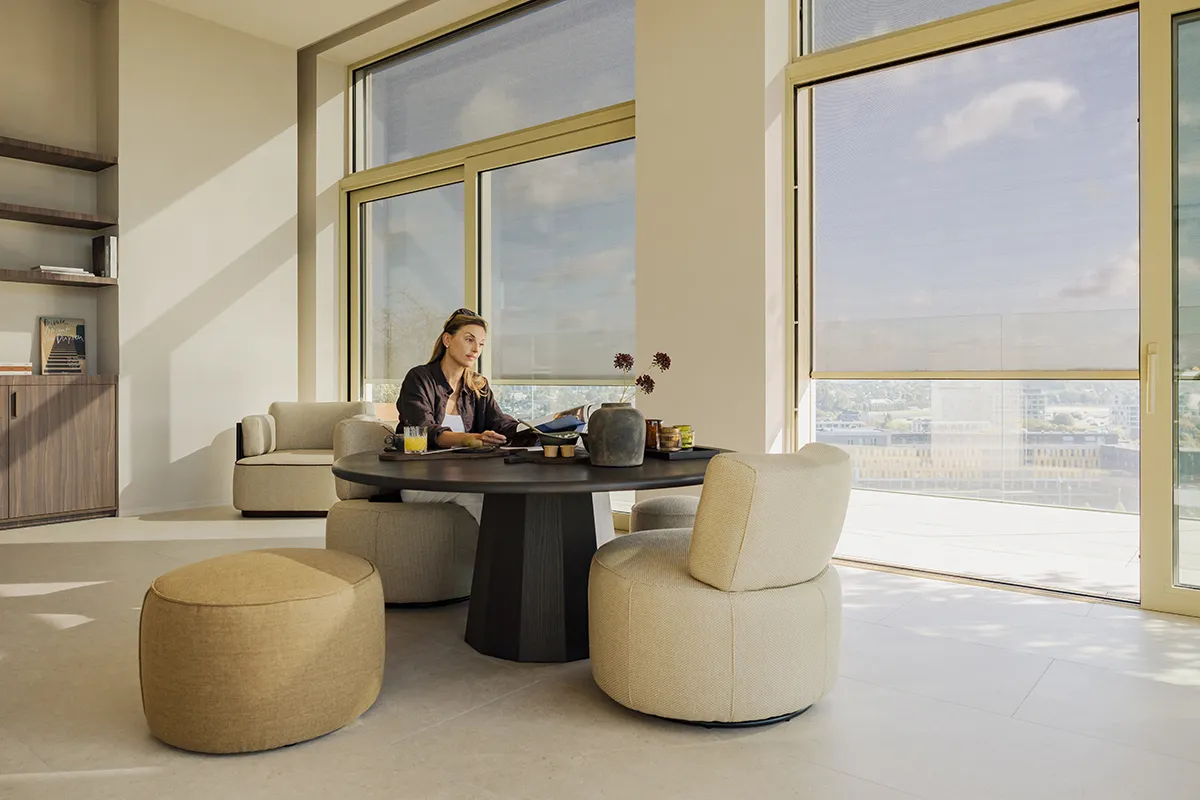
Renson pioneered the first wind-resistant screen 20 years ago. The Fixscreen remains an industry benchmark to this day. Since then, Renson’s screen range has steadily expanded to include ultra-slim screens, solutions for horizontal glazing, corner windows and extra-large glazed areas, as well as solar-powered models that are ideal for retrofitting. Its range now offers suitable dynamic external solar shading for every building.
A business enquiry for Renson? Get in touch
Companies in this story
Keep following this
Get an email when a new story is published. No account needed.
- SubjectGeneral
- CompanyRenson







