











Green roofs above Neerland
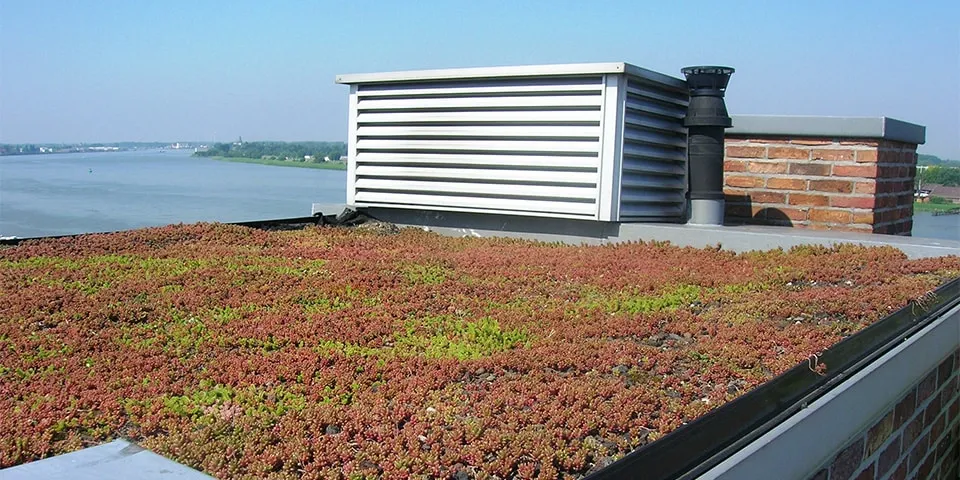
The traditional response to overheating is reactive, but preventive measures are gaining ground. These include the use of green roofs and roof gardens. They often also enhance a building’s appearance, as they do in the Neerland district.
The green roofs that adorn Neerland are no coincidence. Like Brussels and Ghent, among other cities, Antwerp requires them on new buildings and major renovations. In Neerland, the work was entrusted to specialist Ibic (Aartselaar). The area covered was around 2,000 m².
In Flanders, the main practical function of green roofs is to retain rainwater. Their installation increased sharply following a series of floods around the turn of the century. Alongside legal requirements, grants are also an important incentive. The creation of green habitats in urban areas has likewise influenced policy and voluntary decisions. Some of the retained water evaporates slowly, while the rest is discharged at a controlled rate into a swale, pond or flowing surface water. This prevents sewers from becoming overloaded. Their thermal insulation properties are an added benefit.
Maintenance
“A legal requirement is one thing,” says Dave Martens, general manager at Ibic. “It is also important to enforce it. That is certainly the case in the major cities, although we are also seeing growing demand for green roofs in more rural areas. But that is not the end of the matter. A good green roof also needs proper maintenance.” Ibic therefore signed a maintenance contract with Woonhaven.
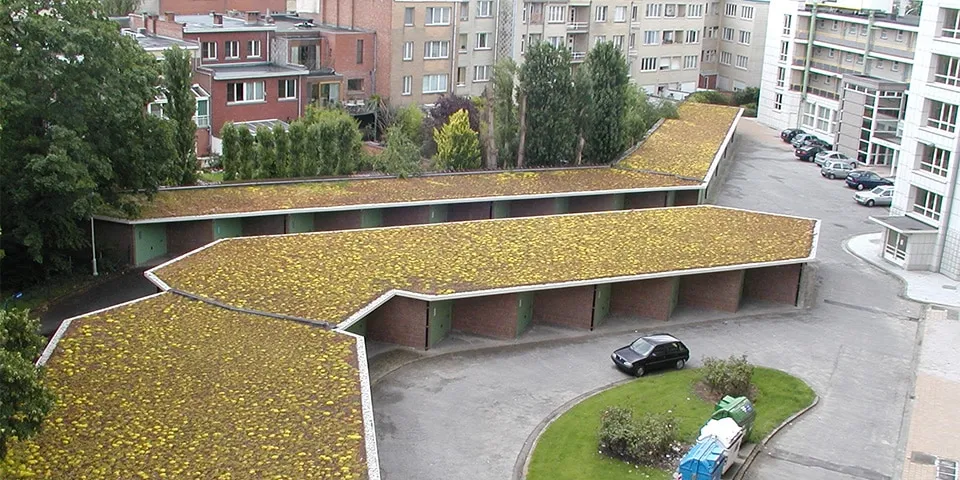
Like Brussels and Ghent, among other cities, Antwerp requires green roofs on new buildings and major renovations.
“A green roof is a living organism. Unwanted plant growth also needs to be removed from time to time, and the growing medium needs organic fertiliser. Trees could grow alongside weeds if seeds land on the roof, carried by the wind, birds and so on. A root-resistant waterproofing layer is therefore essential. In addition, each type of green roof has its own saturated weight. The type of green roof required must be decided during the building’s design. The supporting structure is dimensioned on the basis of this information.”
Survival of the fittest
Extensive green roofs are generally planted with sedums. “That is what most clients choose. We can also supply other suitable plants on request, using a mix of different varieties. After that, it is survival of the fittest. The varieties best suited to the local microclimate will thrive, while others will wither. It is impossible to predict which ones. It depends greatly on specific factors, such as shade or additional light reflected from nearby taller structures, the prevailing wind direction and so on. Given climate change, heavier rainfall and more intensive development, green roofs are even recommended for small, low roofs.”
Een zakelijke vraag aan IBIC? Get in touch
Companies in this story

Keep following this
Get an email when a new story is published. No account needed.
- SubjectGeneral
- CompanyIBIC







