











Housing requires less and less additional land in Flanders
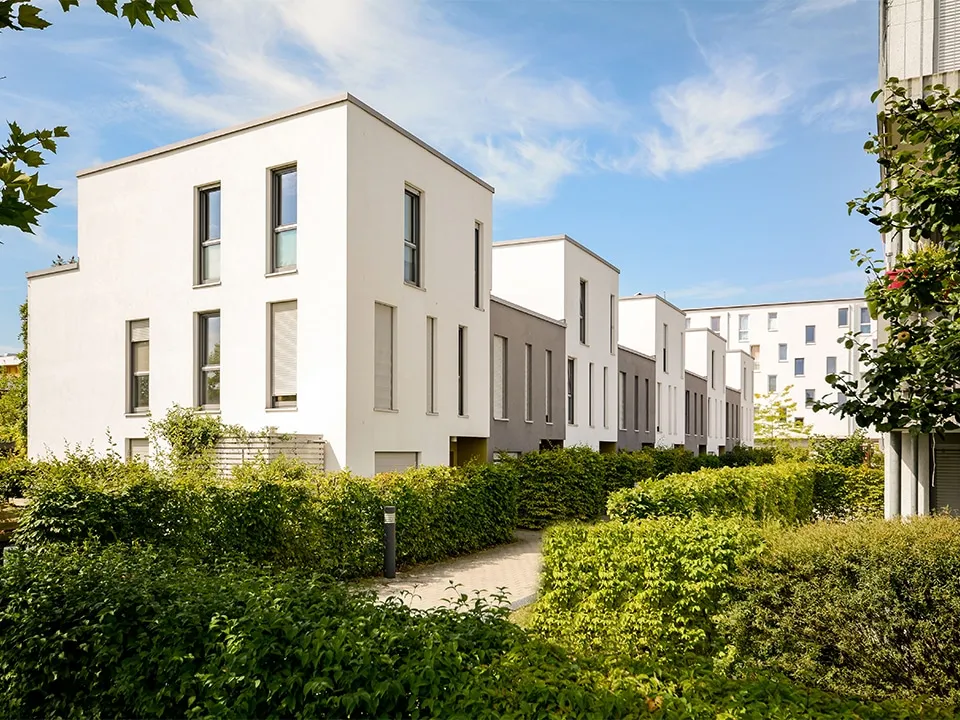
New housing projects are using less and less additional land. This is shown by the latest data on land use for housing.
Although public debate has long been dominated by the perception that scarce space is being used wastefully, the opposite is true when it comes to housing. Over the past year, additional land use for housing has fallen again, from an average of 3.69ha/day in 2018 to 3.5ha/day in 2019. The past ten years have also seen a clear downward trend in land use for housing. Between 2010 and 2019, land use for housing fell by 21 %. The increase in spatial efficiency in housing projects over the past decade therefore does not match the image of the 1990s housing developments that still often features in public debate on land use.
This downward trend is particularly striking given that the number of new-build homes rose by eight thousand over this period. The number of new-build homes per hectare of land brought into use has therefore increased by 56 %, from 22 homes per hectare to 34.
This development comes as no surprise. With building land prices continuing to rise and household sizes shrinking, demand is high for smaller, affordable homes that use space efficiently. The increase in the number of new-build projects is therefore being driven mainly by a rise in the number of flats, rather than by new houses or villas. These trends are set to continue and even intensify. We therefore expect the downward trend in land use to continue, as two thirds of new housing projects are now built on existing sites and consequently involve the reuse of land already designated for development. No additional plots of land are therefore used for these projects. Demolition and rebuilding have also been common practice for some time. On average, every demolished home is replaced by 2.2 dwellings.
So where does the perception come from that additional land use is increasing at an ever faster rate?
In 2017, land use for housing suddenly increased sharply. This raised concerns that the trend would continue. This sudden increase was therefore seized upon, and is still being seized upon today, to justify taking drastic measures quickly to curb rising land use. Two years later, we can see that this trend has not persisted and is once again moving downwards, as it did in the years before this abrupt and temporary increase.
A second factor contributing to the mistaken perception of land use is the incorrect use of data sources. When people talk about land take, they often mean total land take rather than land take for housing. Total land take also includes areas that are not cadastrally registered, for which the figures are much less reliable. Variations in total land take are therefore more likely to be caused by differences in the measurement method
from year to year than by a genuine increase on the ground.
“The Flemish Government’s coalition agreement underlines the importance of differentiating between types of land take. This is crucial, because housing is repeatedly and wrongly singled out today, while an increasing number of societal functions need to occupy land. Think of urban forests, wind farms, cycle superhighways, water infrastructure, communications networks and so on. These all take up space, but are indispensable. We therefore need a targeted policy that takes account of the real trends across the various types of land use,” concludes Marc Dillen, Director-General of the Vlaamse Confederatie Bouw.
Question about this story? Ask your question
Keep following this
Get an email when a new story is published. No account needed.
- SubjectGeneral







