











How credit insurance provides businesses with stability
Text Kris VandekerckhoveImage Atradius
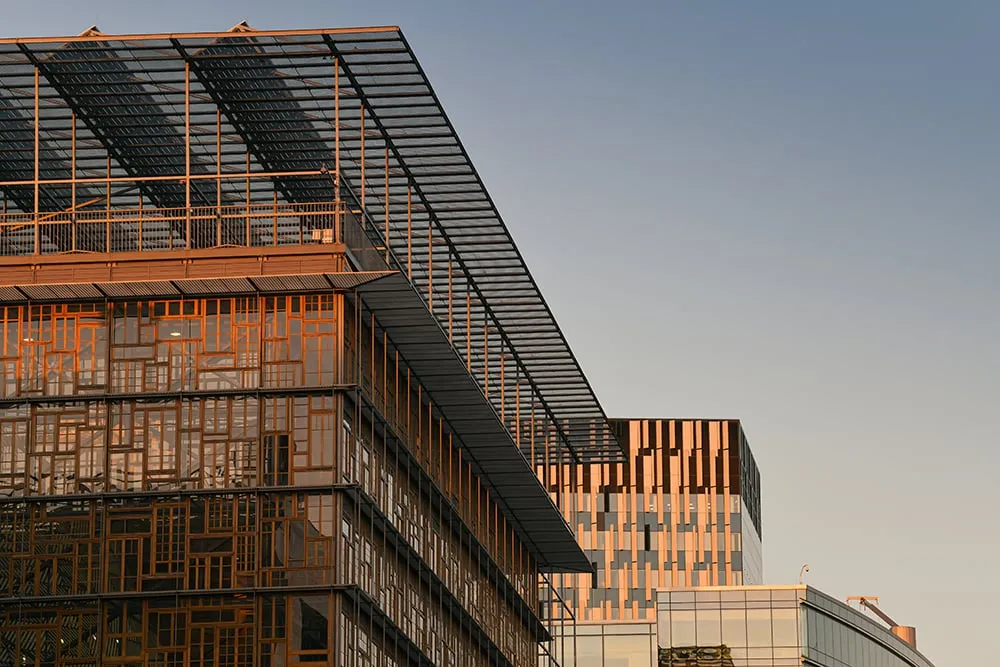
Credit insurance, surety bonds and debt collection services are important for a range of reasons, both for businesses themselves and for the wider economy. At their core, these services manage financial risks, helping to stabilise and facilitate domestic and international trade. Atradius plays a significant role in this worldwide, while always maintaining a strong local presence …
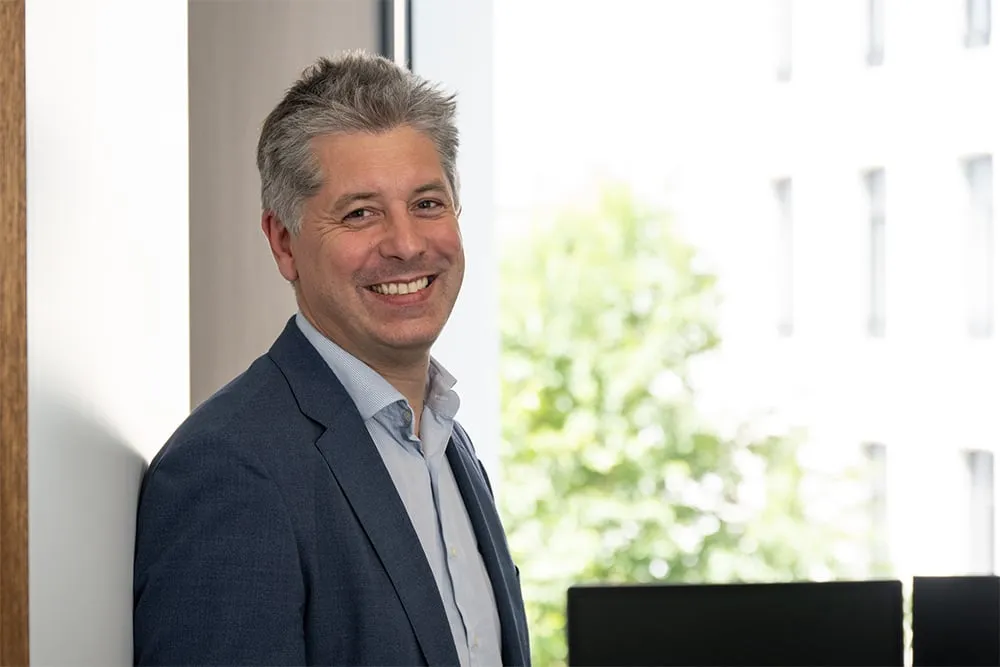
Dimitri Pelckmans, Head of Risk Services BELUX at Atradius: “However you look at it, there is always a risk that customers will be unable to pay for goods or services supplied. This may be due to insolvency, bankruptcy, economic difficulties and so on. Credit insurance protects suppliers against this risk, allowing them to continue growing their businesses with less concern about potential financial losses. By insuring against the risk of non-payment, businesses can also stabilise their own cash flow. This also makes it easier for businesses to obtain finance, as credit insurance improves the quality of their accounts receivable portfolio.”
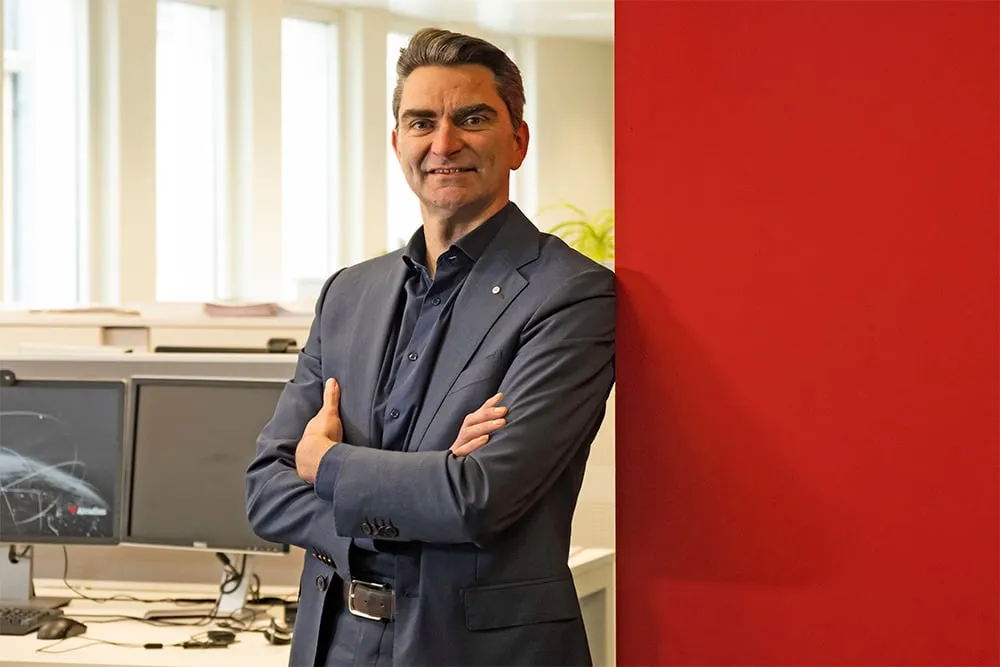
Frederik Devooght, Country Manager BELUX: “Atradius operates in this market worldwide. That said, we also have a local presence in the ‘key’ countries. In Belgium, we operate from Namur and Antwerp, where we can call on 235 colleagues every day. We have 3,400 employees worldwide, but have never lost our SME mentality. Our team is particularly stable, we like to get things done and know the ins and outs of every sector.”
Prevention and cure
“Broadly speaking, we insure our clients against two scenarios,” continues Frederik Devooght. “Either a customer goes bankrupt, or customers can no longer pay their bills. The insurance has two pillars: a preventive pillar and a remedial one. As a preventive measure, we check every debtor of our clients. We then continue to monitor how the figures develop. We analyse the customer portfolio, including any prospective new customers they are considering working with. The analysis indicates whether or not it is advisable to work with a particular debtor, or to continue doing so. If payment is not made, we step in as a debt collection specialist. If we are unable to recover the funds needed quickly enough, the ‘insurance’ element comes into play. An indemnity is paid, often amounting to 90% of the outstanding invoice. In other words, we pay on behalf of the customer to whom you supplied services or goods.”
A puzzle of economic challenges
Dimitri Pelckmans: “In today’s economy, we see a number of very specific challenges. One clear example is finding qualified and skilled staff. This ranges from people who mix the mortar to those responsible for estimating, managing entire projects and/or supervising work on site … Some steps are already being taken, but we believe much more needs to be done. The growing use of digital technology also brings specific challenges, often in combination with sustainability. If you want to work and live in a more energy-efficient way, both on site and at home, you will need the support of technology. But if there is no one to install that technology, let alone explain it properly and maintain it, practical problems are inevitable. The truth is simple: we have a big puzzle, with all the pieces, employment, demand for affordable housing …, laid out on the table. Unfortunately, the pieces do not fit together very well. We are waiting for those five minutes of political courage to smooth off the sharp edges of certain pieces and make the whole puzzle fit.”
The impact of unpaid invoices
“Our services are generally more necessary than people may initially think,” continues Dimitri Pelckmans. “Even if unpaid invoices account for ‘only’ 5%, you still have to generate a great deal of extra turnover to recover that loss in full. This is sometimes overlooked or not calculated correctly.”
“The construction sector is certainly a very important driver of our economy, though that engine can sometimes falter. According to Statbel, the number of bankruptcies has now reached record highs, and the construction sector accounts for some of them. Property developers in particular are currently facing difficulties. This then has a knock-on effect on all the companies involved later in the process. What is more, this phenomenon can be seen at every level, it is certainly not just the smaller firms that are affected. We have simply noticed that, after several changes of generation, rising raw material prices, automatic wage indexation and, of course, the pandemic, reserves are gradually running out. That said, it is not all doom and gloom. The same statistics also show that a great many permits are still being issued. The renovation market is gaining ground on new-build. Compared with our neighbouring countries, we are doing very well in this respect.”
“One important change we are seeing is that contracts and quotations now include a great many clauses to protect the parties issuing them against all kinds of external factors. Businesses have, of course, learnt a lot from the period of high inflation we have recently experienced. If they now combine that with our services, many entrepreneurs can once again rest easy about their finances. Whatever the circumstances, they can be sure of getting paid,” concludes Dimitri Pelckmans resolutely.
Question about this story? Ask your question
Keep following this
Get an email when a new story is published. No account needed.
- SubjectGeneral







