











How to get the most out of batteries for tower cranes
Text Kris VandekerckhoveImage Neargrid
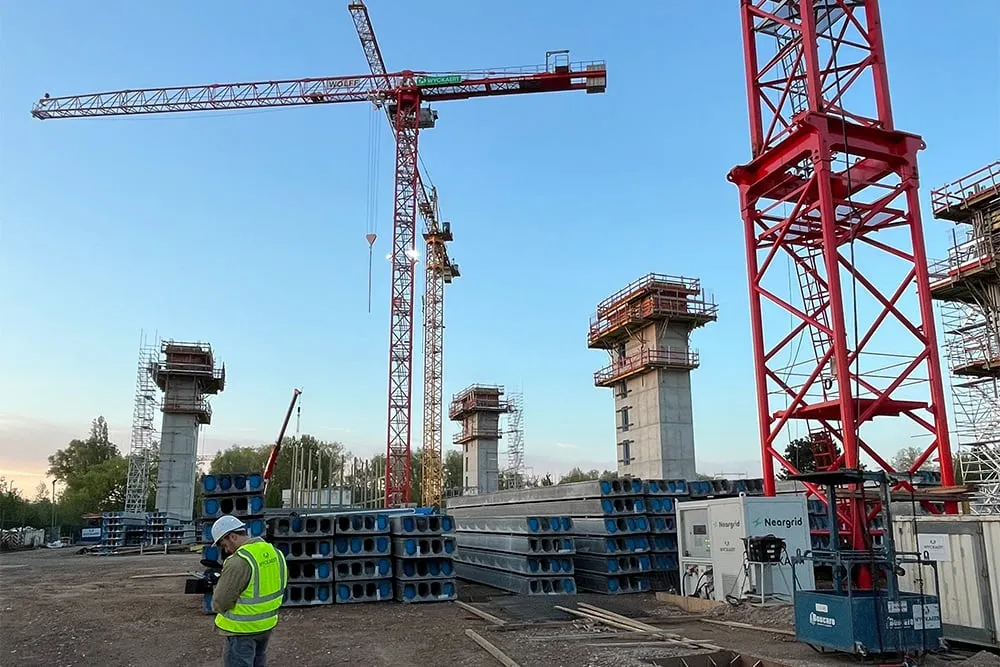
Grid operators can take weeks or months to provide a proper construction site connection. In some cases, it may not even be possible to supply sufficient capacity. Battery systems can offer a solution. Neargrid specialises in developing these systems, initially designed specifically for use with tower cranes. But the Lokeren-based company will soon be broadening its scope …
Tower cranes are essential for large-scale construction projects. However, they have one major drawback: intensive lifting operations cause a brief but significant spike in power consumption. This normally requires a high-capacity connection to the electricity grid, leading to long installation waiting times. In areas where the grid is congested, such a high-capacity connection may even be impossible, despite a tower crane’s relatively low average consumption over the course of a day. Battery systems offer a way forward in this scenario: they charge throughout the day and absorb peaks in power consumption, a process also known as peak shaving.
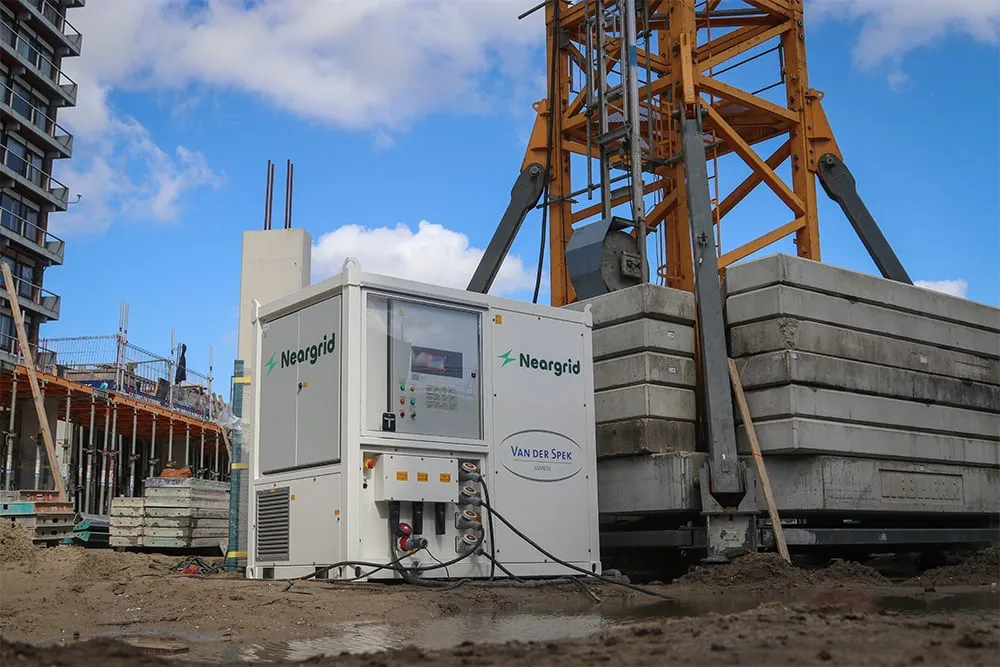
Battery systems tailored to temporary energy requirements
Neargrid is a manufacturer, product developer and service provider that focuses mainly on battery systems and accessories designed specifically for ‘vertical’ construction sites: sites with one or more tower cranes.
Gil De Backer, business development manager at Neargrid: “We see every construction site as a highly temporary situation, with a short-lived demand for energy, capacity or power. We also find that the distribution grid at these locations is often unable to meet this specific, ad hoc demand. Our battery systems bridge that mismatch. Over the past few years, we have developed several systems that we can tailor to almost any site. We also combine this with a comprehensive service offering.”
“At Neargrid, we are highly focused on applications. We know our customers inside out and understand their needs and challenges. Contractors typically have countless other tasks to deal with and lack the specialist knowledge needed to implement battery systems as efficiently and effectively as possible.”
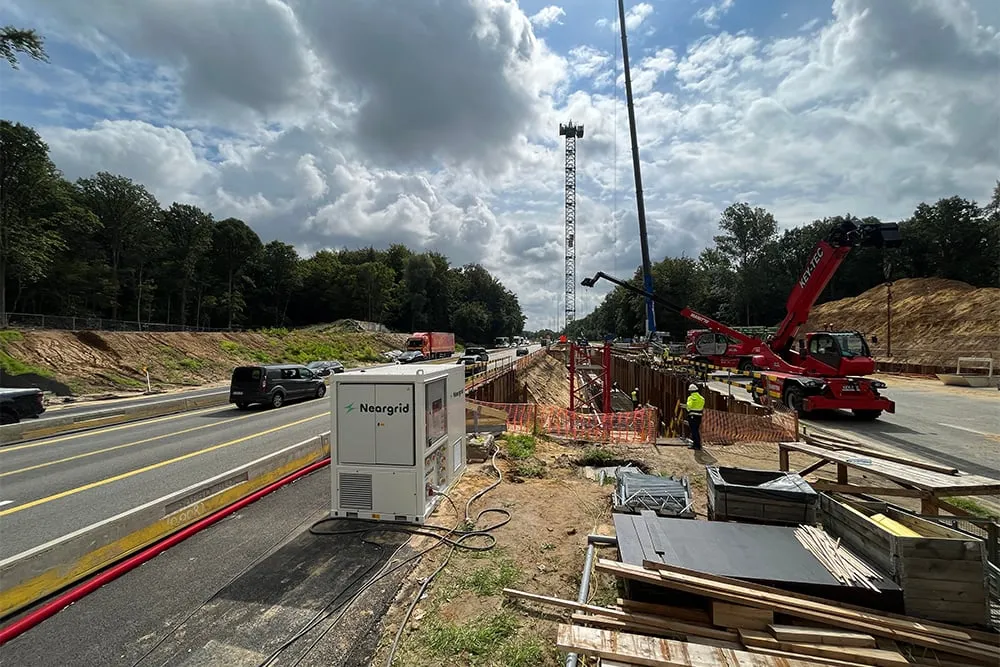
Tailored energy management
“Our battery technology not only absorbs large peaks in power demand, it is also reliable and cost-effective,” Gil continues. “The alternative today is still a diesel generator, running continuously throughout the working day.”
“In most cases, a simple low-voltage connection is perfectly adequate. If that is not enough, or no connection is available, we combine the system with a diesel generator. Some people tend to forget that batteries do not generate energy, but only store it. The key difference is that our system actively controls the diesel generator, ensuring it runs optimally. It only runs when the battery needs additional energy storage. We have not developed our systems as ‘multipurpose’ units, but tailored them to the applications they are intended for. This enables us to offer highly competitive, suitable solutions.”
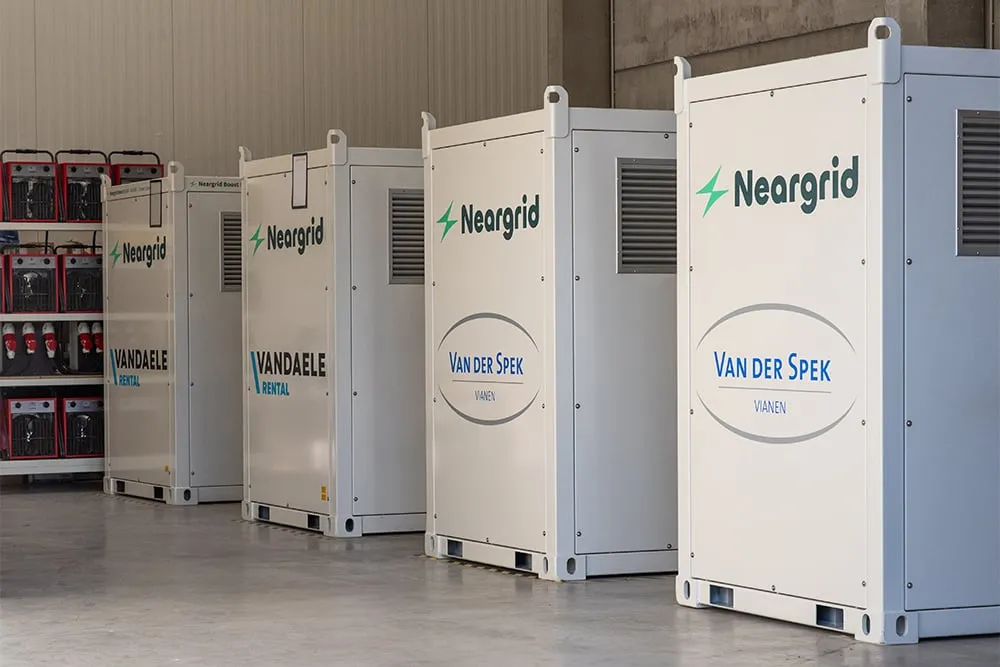
From high-rise construction to road building
“Today, we are also launching our first product that, in our view, is an ideal solution for horizontal construction sites. Vertical sites mainly require high peak power for short periods, and very little at other times, whereas horizontal sites, such as road and infrastructure projects, have very different power requirements. This is in addition to the fact that a great deal of work is carried out ‘off-grid’, because there is no connection available at the construction site. Alongside battery systems, we also offer mobile charging solutions for construction sites to meet the growing demand for charging vehicles and other electrified mobile equipment.”
Question about this story? Ask your question
Keep following this
Get an email when a new story is published. No account needed.
- SubjectGeneral







