











Innocent jokes
“So, are you going to work for AG Vespa now?” a young architect was asked by a colleague when she announced that she was pregnant. It is one of the anecdotes shared by PAF (platform voor architectuur & feminisme). An innocent joke, but one that inadvertently reinforces the prejudice that young women, especially once they become mothers, no longer ‘belong’ in architectural practice.
The latest annual report from the Flemish Council of the Order of Architects shows that the proportion of female architects drops sharply from the age of thirty onwards. While women still make up a majority, at 58 %, of architects under thirty, their share falls to 41 % in the 30-39 age group, 34 % among those aged 40-49, and just 24 % among those aged 50-59. However, the numbers of men and women studying architecture have long been equal. This is known as the ‘leaky pipeline’: the phenomenon whereby far more women than men leave design practice during their careers.
There are barely any figures on wider diversity, but we all know what it looks like in everyday practice. How many architects with a bicultural background do you encounter? Or with a disability? The architecture sector is losing many highly educated, talented people and missing out on a wealth of perspectives that could help shape our super-diverse society.
Why do people leave the sector? Although low fees and self-employed status are often cited first, the conversations we have at PAF show that the causes are broader, including deeply rooted sexism and discrimination.
A 2017 study by UGent, which surveyed 2,759 architects, found that 59 % of female architects had experienced sexist communication in the previous year. Half of female architects had at some point been treated in a patronising, child-like manner in the workplace. In addition, 26 % of women architects had experienced exclusionary attitudes towards mothers, while 14.5 % of female architects had experienced physical boundary violations in a professional setting.
At PAF, we also hear about women facing gender stereotyping. From students who feel they are taken less seriously to architect employees whose expertise is questioned more readily, often under the guise of innocent jokes. As one of our participants observed: “Women are still often seen in support roles and are not recognised for their creative and problem-solving skills.”
Sexist and discriminatory remarks are trivialised, leaving people feeling unsupported and their experiences not taken seriously. As women, we have often internalised these prejudices too, seeing them as ‘normal’. Speaking up remains a challenge, and sometimes the act of naming the problem is itself made into a problem. “Come on, surely you can take a joke?”
This is not just a matter of raising awareness, but above all of active involvement from all of us in creating an environment where everyone, regardless of gender or background, feels valued and respected. At PAF, we discuss ways to make architectural practice more equitable and inclusive. You are very welcome to join us.
The pen is now passed to architect Eyukewe Dogo, senior architect at UNStudio in Amsterdam and a member of the board of directors of the Vlaams Architectuurinstituut.
Evelien Pieters,
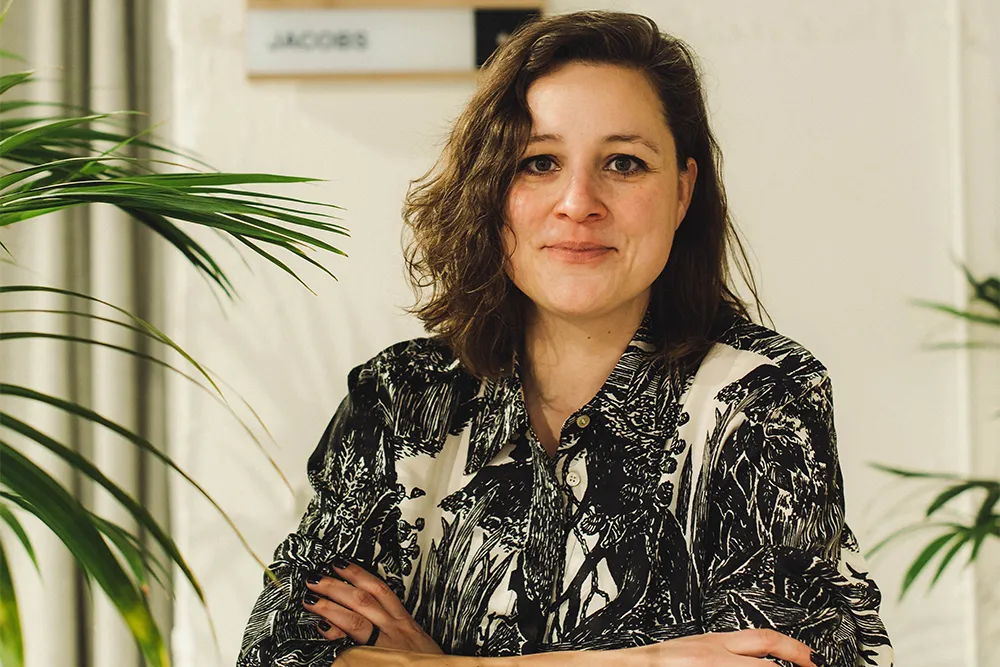
architect and initiator of PAF, platform voor architectuur & feminisme.
Question about this story? Ask your question
Keep following this
Get an email when a new story is published. No account needed.
- SubjectGeneral







