











Minister Diependaele visits CIRCL, a new start-up building a sustainable terraced house in just a few weeks
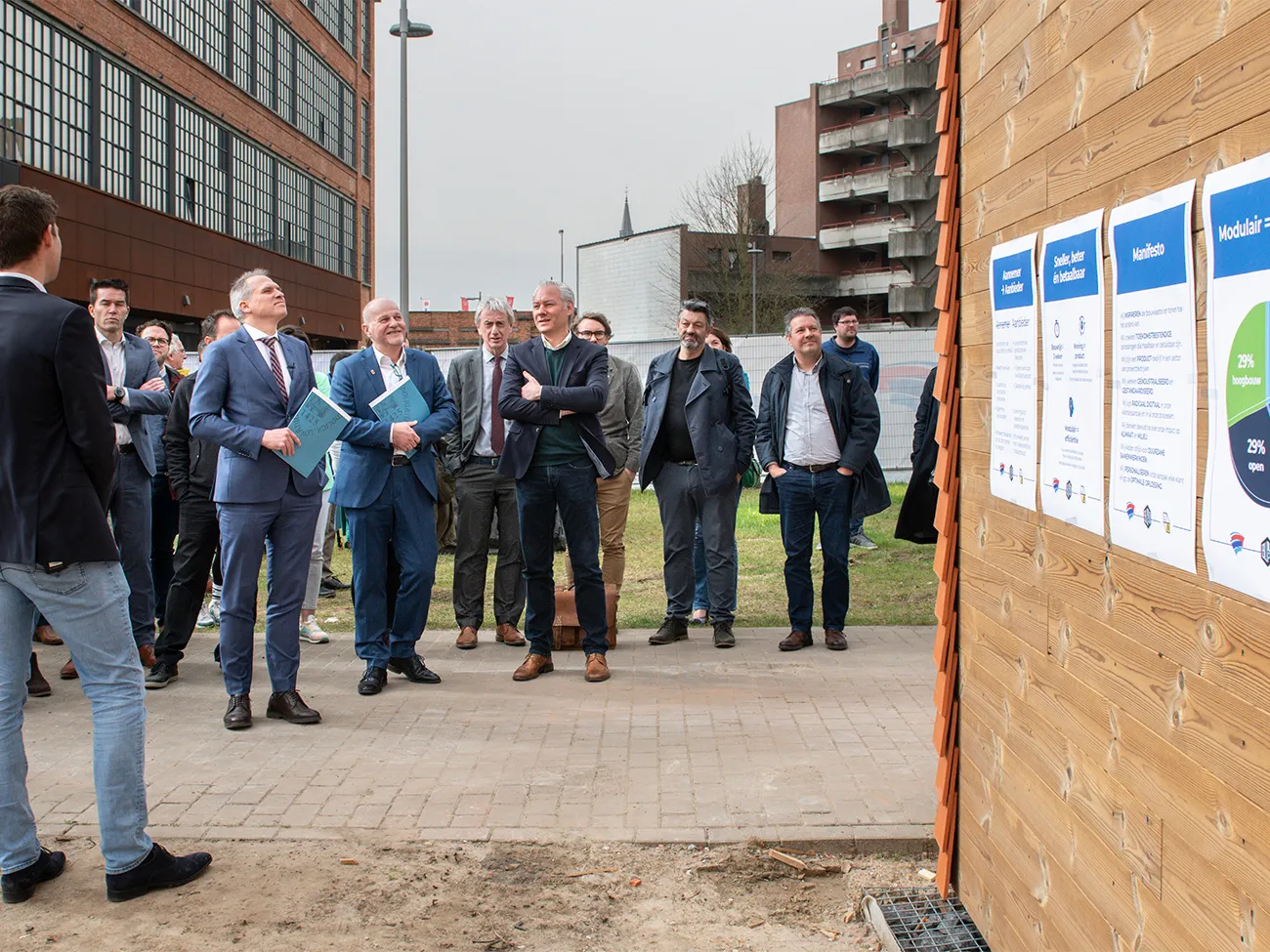
Building a terraced house that is energy-efficient both to produce and to use, with construction principles that also make it easy to disassemble and reuse. Over the past year, several companies within Groep Vanhout have taken on these challenges alongside KU Leuven’s Social and Ecological Building research group at its Technology Campus in Ghent. This led to the creation of a new start-up. On Wednesday 16 March, Flemish Minister Matthias Diependaele, responsible for Housing, visited this innovative building concept developed by the new start-up CIRCL.
If Europe is to meet its target of becoming climate-neutral by 2050, the construction sector will also have to make a radical shift. Thirty to fifty per cent of all materials used in Europe go into construction. Building materials also account for more than a third of Europe’s waste. A more circular approach based on sustainable materials and their reuse is therefore needed.
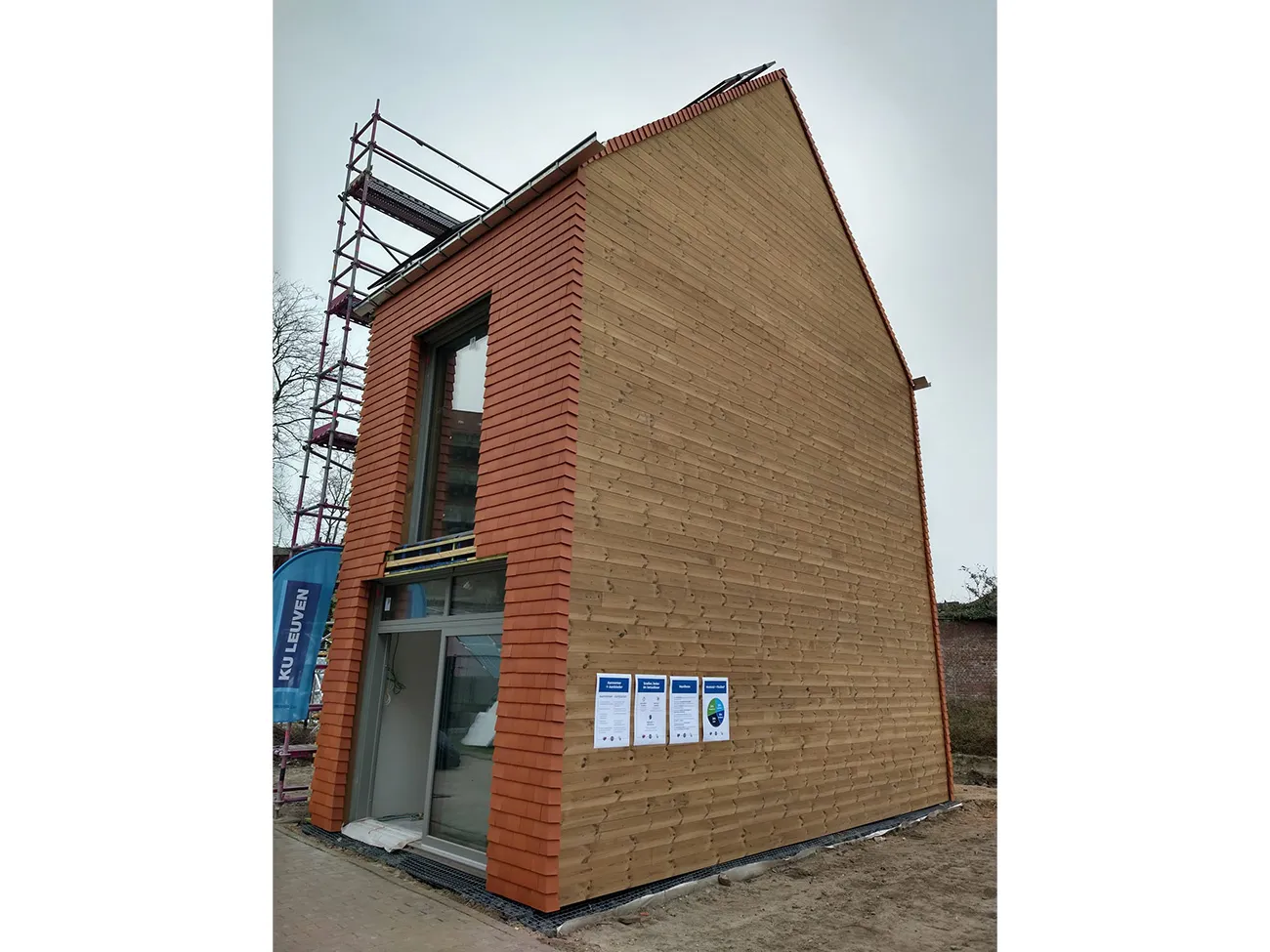
Circular construction is the answer, but how does it work in practice? The options were explored in the European research project ‘Circular Bio-based Construction Industry’ (CBCI). A terraced house was built in just a few weeks as a test building at KU Leuven’s Technology Campus in Ghent. The house is made up of large industrial modules stacked on top of and alongside one another like Lego bricks. This makes the building easy to adapt, extend and dismantle. The plan is to rebuild the terraced house at another location in a few years’ time.
Off-site construction is the key to working quickly and efficiently. Construction is very fast thanks to the industrial nature of the modules. What is more, the house can be dismantled and reused at the end of its life cycle, reducing the amount of waste. Its environmental impact is also limited, both during production and in use. It is a win-win situation: more sustainable materials and greater reuse of resources on the one hand, and lower energy consumption, less waste and reduced CO2 emissions on the other.
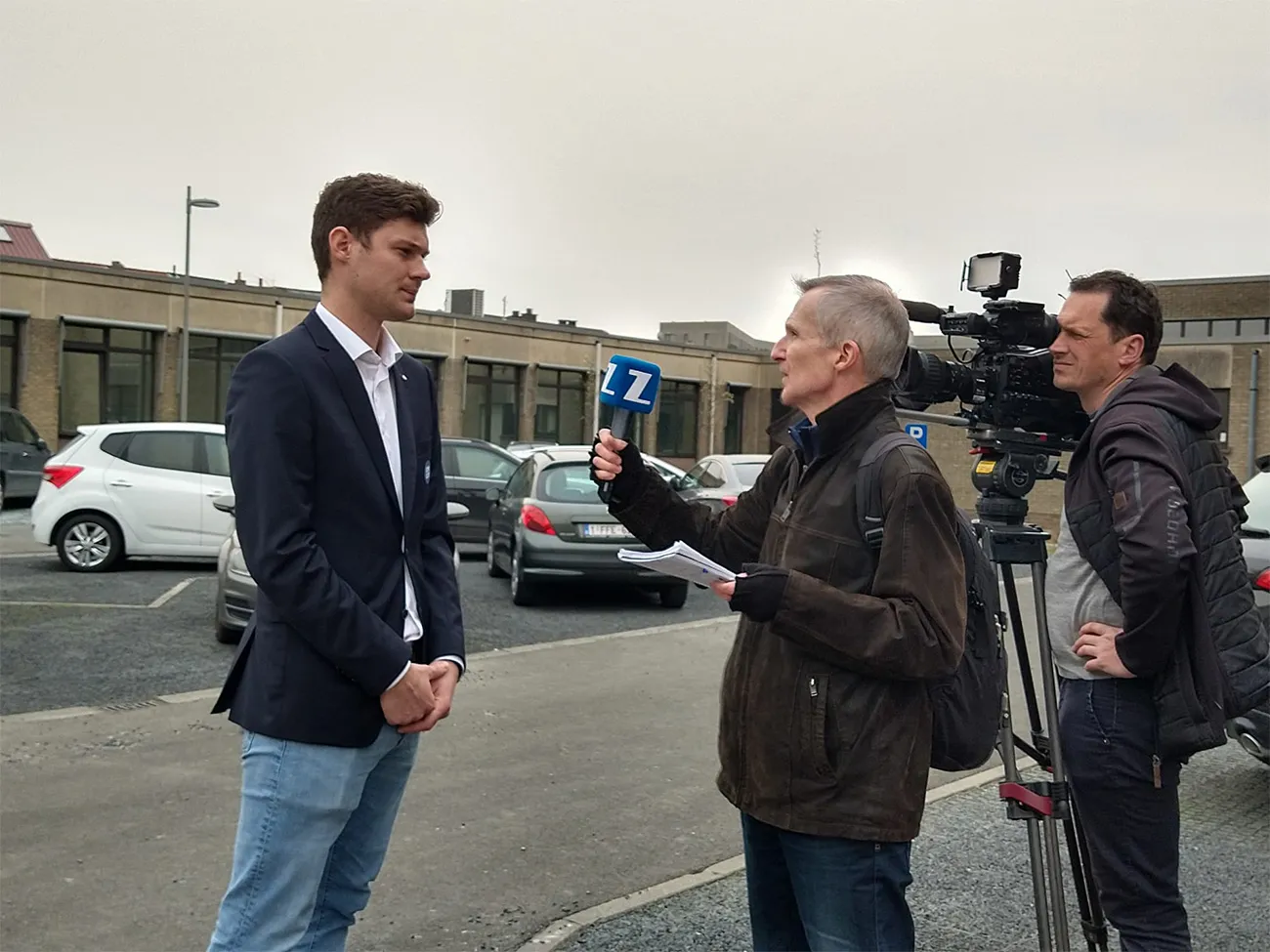
The start-up ‘CIRCL’ builds on the practical expertise and materials knowledge of its various partners, as well as the research findings from the CBCI project. CIRCL continues the close collaboration between BuildUp, a company specialising in off-site construction and modular building, and other companies such as Litobox, ComTIS Installations and ComTIS Energy. “We have now worked together perfectly to design and build one house using sustainable materials, with all the building services coordinated with one another. In the future, we will scale this up so that, in principle, we can build the perfect circular home for every plot in Flanders!” says Wim Pieters, coordinator of the CIRCL start-up.
Flemish Minister for Housing Matthias Diependaele: “The challenges facing the Flemish housing market are significant. On the one hand, there is a clear shortage of affordable, high-quality rental homes, in both the private and social sectors. On the other hand, major, sustainable energy renovations are needed to meet climate targets. This should prompt us to find creative and innovative solutions. Due attention will undoubtedly need to be paid to circular construction and buildings designed to adapt to changing needs. On top of this, the flow of refugees from Ukraine is putting the construction sector under pressure: Flanders urgently needs new homes. I am therefore pleased that researchers and companies here in Ghent are joining forces to find sustainable solutions to the challenges of today and tomorrow.”
Question about this story? Ask your question
Keep following this
Get an email when a new story is published. No account needed.
- SubjectGeneral







